My husband looked up from his plate and said, “I didn’t know vegetables could taste like this.” And he meant it. Not in that polite, “this is good honey” way. He actually stopped chewing for a second, which if you know him, never happens. I had just pulled a sheet pan of maple roasted root vegetables out of the oven, the rosemary still crackling on the hot pan, and I honestly wasn’t expecting much. I mean, it’s just vegetables, right? But watching him go back for thirds, I realized this wasn’t just another side dish. This was the kind of recipe that makes you crave vegetables. And I don’t say that lightly.
There’s something about the way maple syrup caramelizes on the edges of a carrot or a parsnip. It gets all sticky and browned, almost like candy, but with this earthy backbone from the rosemary that keeps it grounded. The first time I made this, I was just trying to use up a sad bag of root vegetables sitting in my crisper drawer. I had no grand plan. No secret family recipe. Just a hunch that roasting them with something sweet might make them disappear faster than my usual salt-and-pepper approach. And honestly? It worked better than I ever expected.
That first batch taught me something. Vegetables don’t have to be boring. They don’t have to be a chore you eat because you should. When you treat them right—with a little heat, a little sweetness, and a little patience—they turn into something you actually look forward to. And that’s what this recipe is all about. It’s not complicated. It’s not fancy. It’s just really, really good food that happens to be good for you.
So if you’ve ever wondered how to make roasted vegetables that your whole family will actually fight over, you’re in the right place. Let me show you how.
Why You’ll Love This Recipe
Let me be honest with you. I’ve tested a lot of roasted vegetable recipes over the years. Some were too dry. Some were too bland. And some just didn’t have that magic factor that makes you want to make them again and again. This one? It’s different.
- Simple Ingredients, Big Flavor : You don’t need a specialty grocery store for this. Carrots, parsnips, sweet potatoes, and a few pantry staples are all you need. The maple syrup does the heavy lifting here, and the rosemary brings it all together.
- One Pan, Minimal Mess : Everything roasts on a single sheet pan. That means less cleanup and more time enjoying your meal. I’m all about recipes that don’t leave me with a mountain of dishes.
- Perfect for Fall and Winter : This dish screams cozy. It’s the kind of thing you want alongside a roast chicken on a chilly Sunday, or piled next to a cozy slow cooker ramen noodle chicken bowl on a busy weeknight.
- Naturally Sweet and Savory : The caramelized maple coating pairs beautifully with the woodsy rosemary. It’s that sweet-savory balance that keeps you coming back for one more bite.
- Kid-Approved : I’m not kidding. My own kids asked for seconds, and then thirds. Something about the maple glaze makes even the pickiest eaters forget they’re eating vegetables.
- Meal Prep Friendly : These reheat beautifully, so you can make a big batch and enjoy them all week long. They’re great cold in salads too, if you’re into that sort of thing.
This isn’t just another roasted vegetable recipe. It’s the one I turn to when I want something that feels special but takes almost no effort. The one that makes people ask, “What did you do to these?” And honestly, that never gets old.
What Ingredients You Will Need
This recipe relies on simple, wholesome ingredients that work together to create something truly memorable. Here’s what you’ll need and why each one matters.
For the Roasted Vegetables:
- 2 large carrots, peeled and cut into 1-inch chunks — Carrots bring natural sweetness and a lovely orange color. Look for firm, not rubbery carrots. I prefer organic when I can find them, but conventional works just fine.
- 2 large parsnips, peeled and cut into 1-inch chunks — Parsnips have a slightly peppery, nutty flavor that mellows beautifully when roasted. They add a subtle complexity that carrots alone can’t match.
- 1 medium sweet potato, peeled and cut into 1-inch chunks — Sweet potato adds creaminess and extra sweetness. I like using a variety called Garnet or Jewel for their deep orange flesh.
- 1 red onion, cut into 1-inch wedges — Red onion caramelizes into sweet, tender bites. It adds a pop of purple color and a mild oniony sweetness that’s not overpowering.
- 3 tablespoons olive oil — You need a good quality olive oil here. It helps everything brown evenly and carries the flavors. I use a mild extra virgin olive oil so it doesn’t compete with the maple.
- 3 tablespoons pure maple syrup — This is the star of the show. Use real maple syrup, not pancake syrup. The Grade A dark amber works beautifully here for a deeper maple flavor.
- 2 tablespoons fresh rosemary, finely chopped — Fresh rosemary makes a huge difference. It’s woodsy and aromatic, and it pairs perfectly with the sweet maple. Dried rosemary can work in a pinch, but use half the amount.
- 3 cloves garlic, minced — Garlic adds a savory backbone that balances the sweetness. Fresh garlic is non-negotiable here; the jarred stuff just won’t give you the same result.
- 1 teaspoon salt — I use kosher salt for its clean flavor and easy pinch-ability. It helps draw out moisture and concentrate flavors during roasting.
- ½ teaspoon black pepper, freshly ground — Freshly ground pepper adds a subtle heat that cuts through the sweetness. Don’t skip it.
- Optional: 2 tablespoons balsamic vinegar — If you want a little tangy brightness, a splash of balsamic vinegar adds another layer of flavor. I add it sometimes when I’m feeling fancy.
Ingredient Selection Tips: When choosing root vegetables, look for ones that feel heavy for their size and have smooth, unblemished skin. Avoid any that feel soft or have sprouted. For the maple syrup, I personally recommend a brand like Coombs Family Farms or Runamok for their rich, authentic flavor. And for the rosemary, if you can’t find fresh, you can substitute 1 tablespoon of dried rosemary, but honestly, fresh really does make this dish shine.
Substitution Guidance: If you don’t have parsnips, you can use more carrots or add some chopped celery root or turnips. Sweet potatoes can be swapped with regular potatoes or butternut squash. For a lower-sugar option, you can reduce the maple syrup to 2 tablespoons, though the caramelization won’t be quite as dramatic. And if you’re avoiding oil, try using avocado oil spray or even a little vegetable broth for roasting, though the texture will be slightly different.
Equipment Needed
You don’t need a fancy kitchen to make this recipe. Here’s what you’ll need:
- Large sheet pan — A half-sheet pan (about 18×13 inches) works perfectly. I recommend a heavy-duty one with rolled edges so it doesn’t warp in the oven. If you don’t have one, you can use two smaller baking sheets.
- Sharp chef’s knife — A good knife makes cutting root vegetables much easier and safer. I use a 8-inch chef’s knife. Dull knives are more dangerous than sharp ones, so keep yours sharp.
- Cutting board — A sturdy wooden or plastic cutting board. I prefer wood because it’s gentler on knives.
- Vegetable peeler — A Y-shaped peeler works best for root vegetables. It’s faster and gives you more control than a standard straight peeler.
- Large mixing bowl — For tossing the vegetables with the oil and seasonings. Any large bowl will do.
- Measuring spoons — For measuring the maple syrup, oil, and seasonings accurately.
- Garlic press or microplane — For mincing the garlic. A microplane is faster and gives you a finer mince, but a garlic press works too.
- Spatula or tongs — For flipping the vegetables halfway through roasting. Tongs give you more control.
Budget-Friendly Options: If you don’t have a sheet pan, you can use a cast iron skillet or even a glass baking dish. Just keep in mind that glass doesn’t conduct heat as well, so your vegetables might not brown as evenly. A pizza pan can also work in a pinch. And if you don’t have a garlic press, just chop the garlic finely with your knife—it’ll still taste great.
Preparation Method
Let me walk you through this step by step. I’ve made this recipe more times than I can count, so I’ll share all the little tricks I’ve picked up along the way.
- Preheat your oven to 425°F (220°C). This is important. A hot oven is what gives you those caramelized edges. While the oven heats up, position a rack in the middle of the oven. This ensures even cooking.
- Prepare your vegetables. Peel the carrots, parsnips, and sweet potato. Cut them into roughly 1-inch chunks. Try to make them all about the same size so they cook evenly. The red onion should be cut into wedges, about 1 inch wide at the widest part. Don’t worry about being perfect, but consistency helps. I usually take about 10 minutes for this step.
- Make the maple rosemary mixture. In a large mixing bowl, whisk together the olive oil, maple syrup, chopped rosemary, minced garlic, salt, and pepper. If you’re using the balsamic vinegar, add it now. Give it a good stir until everything is combined. The smell at this point is already amazing.
- Toss the vegetables. Add all the cut vegetables to the bowl with the maple mixture. Use your hands or a spatula to toss everything until every piece is evenly coated. Don’t be shy here—really get in there. The vegetables should look glossy and well-seasoned. This takes about 2 minutes.
- Spread on the sheet pan. Arrange the vegetables in a single layer on your sheet pan. This is crucial. If they’re crowded, they’ll steam instead of roast, and you won’t get that beautiful caramelization. Leave a little space between each piece. If your pan is too small, use two pans. I usually put the onions cut-side down for better browning.
- Roast for 20 minutes. Place the pan in the preheated oven and let it do its thing. Don’t peek too often—every time you open the oven door, you let heat escape. After 20 minutes, the vegetables should be starting to brown on the bottom.
- Flip and rotate. Remove the pan from the oven and use tongs or a spatula to flip each piece over. This ensures even browning on all sides. If you’re using two pans, also rotate their positions in the oven. This step takes about 3 minutes.
- Roast for another 15-20 minutes. Return the pan to the oven and continue roasting. The exact time depends on the size of your pieces and your oven. Start checking at the 15-minute mark. The vegetables are done when they’re tender all the way through and have deep golden-brown edges. A fork should slide in easily with no resistance.
- Optional: Broil for 2-3 minutes. If you want extra caramelization, switch your oven to broil for the last 2-3 minutes. Watch them closely—they can go from perfect to burnt very quickly. I only do this if I’m feeling extra indulgent.
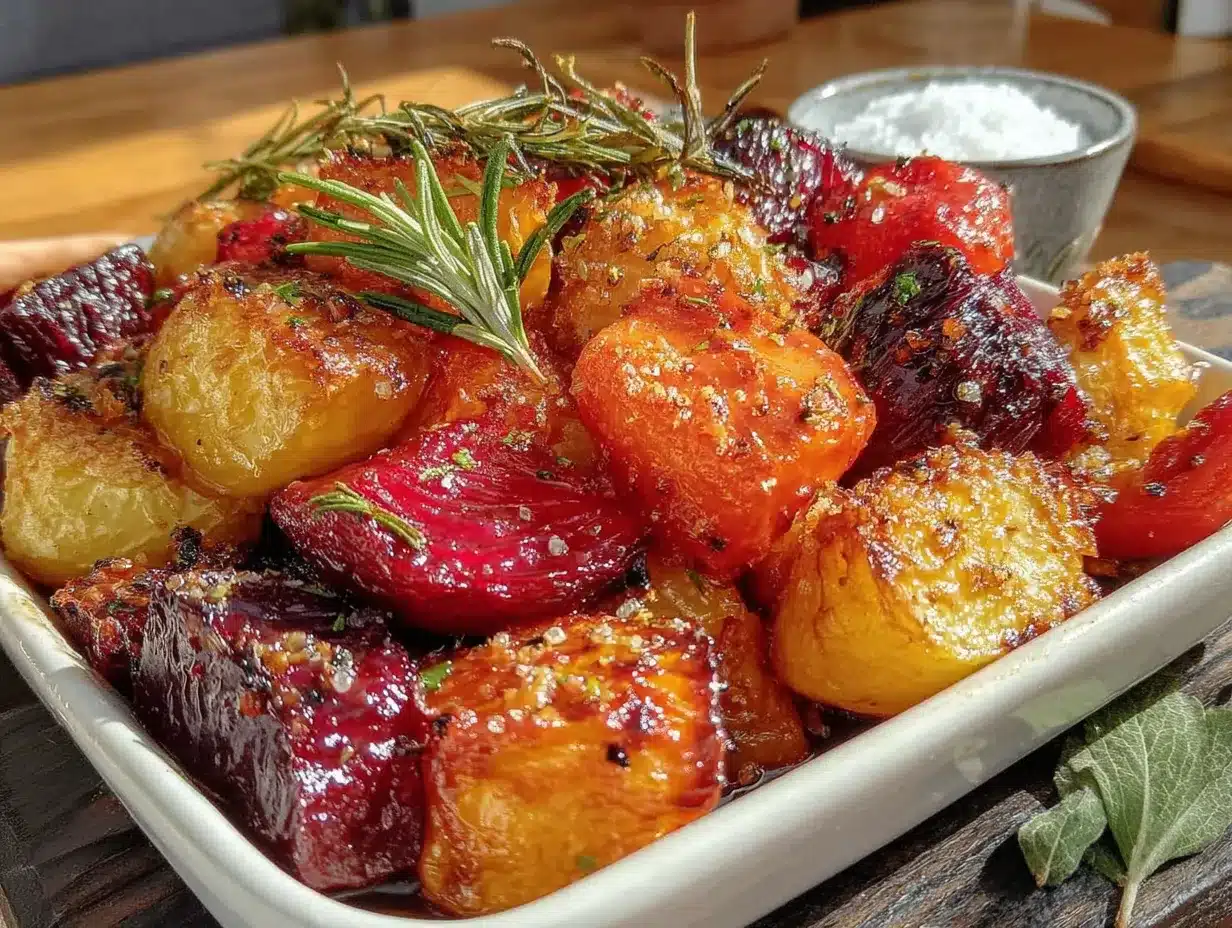
- Rest and serve. Let the vegetables rest on the pan for 5 minutes before serving. This allows the flavors to settle and the caramelized coating to set slightly. Transfer to a serving dish and garnish with a few fresh rosemary sprigs if you want to get fancy.
Troubleshooting Tip: If your vegetables are browning too quickly but aren’t tender yet, reduce the oven temperature to 400°F (200°C) and cover loosely with foil for the remaining cooking time. This happened to me once when I cut my pieces too small, and it saved the batch.
Cooking Tips & Techniques
I’ve learned a few things the hard way so you don’t have to. Here are my best tips for perfect maple roasted root vegetables every time.
Don’t overcrowd the pan. This is the number one mistake people make. If your vegetables are piled on top of each other, they’ll steam and release moisture instead of roasting and caramelizing. Give them room to breathe. If you have to use two pans, do it. Your patience will be rewarded.
Cut uniform pieces. I know I mentioned this already, but it’s worth repeating. Pieces that are roughly the same size cook at the same rate. If some are tiny and some are huge, you’ll end up with burnt bits and raw bits. I aim for 1-inch chunks, and I take the extra 30 seconds to even out any pieces that are way off.
Use fresh rosemary. I know dried herbs are convenient, but fresh rosemary really does make a difference here. It has a brighter, more aromatic flavor that stands up to the maple syrup. If you absolutely must use dried, reduce the amount to 1 tablespoon and crumble it between your fingers before adding to release the oils.
Flip halfway through. This ensures even browning on all sides. I set a timer so I don’t forget. And when you flip, take a moment to rearrange any pieces that are touching—give them a little space.
Let them rest. I know it’s tempting to dig in right away, but letting the vegetables rest for 5 minutes after roasting allows the caramelized coating to set. They’ll be easier to serve and the flavors will be more concentrated. Trust me on this one.
My biggest failure: The first time I made this, I used way too much maple syrup. I thought, “more is better,” right? Wrong. The vegetables turned out overly sweet and sticky, and they didn’t brown properly. The excess sugar just burned. Stick to the 3 tablespoons—it’s the perfect amount for that glossy, caramelized finish without being cloying.
Variations & Adaptations
One of the best things about this recipe is how flexible it is. Here are some ways to make it your own.
Dietary Variations:
- Vegan : This recipe is already vegan as written. Just make sure your maple syrup is pure maple syrup (most are).
- Gluten-Free : All the ingredients here are naturally gluten-free. Just double-check any seasonings or vinegars you add.
- Low-Sugar : Reduce the maple syrup to 2 tablespoons. The vegetables will still caramelize, just not as intensely. You can also add a pinch of cinnamon to enhance the sweetness without adding sugar.
Vegetable Swaps:
- Use butternut squash or acorn squash instead of sweet potato for a different texture.
- Add Brussels sprouts (halved) for a more complex flavor profile. They roast beautifully with the maple glaze.
- Try beets for a deeper, earthier flavor. Just be prepared for pink-stained everything.
- Include celery root or rutabaga for a more rustic, hearty version.
Flavor Twists:
- Herb Swap : Replace rosemary with fresh thyme or sage for a different aromatic profile. Thyme is more delicate, while sage is earthier.
- Spice It Up : Add ½ teaspoon of smoked paprika or a pinch of cayenne pepper for a smoky, spicy kick.
- Citrus Brightness : Squeeze fresh orange juice over the vegetables before roasting, or add orange zest to the maple mixture for a citrusy twist.
- Balsamic Version : Increase the balsamic vinegar to 3 tablespoons for a tangier, more complex glaze. This is my personal favorite variation.
Seasonal Adaptations:
- Summer : Swap root vegetables for summer squash, bell peppers, and zucchini. Reduce roasting time to 20-25 minutes total.
- Spring : Use baby carrots, new potatoes, and spring onions. The cooking time will be shorter since the pieces are smaller.
- Winter : Add chunks of parsnips, turnips, and celeriac. These heartier vegetables can handle a slightly longer roasting time.
My Personal Favorite Variation: I once added a handful of chopped pecans and dried cranberries to the pan during the last 10 minutes of roasting. The nuts toasted in the maple glaze, and the cranberries plumped up and added little bursts of tartness. It was so good I’ve made it that way ever since. Try it—you won’t regret it.
Serving & Storage Suggestions
These maple roasted root vegetables are incredibly versatile. Here’s how to serve and store them.
Serving Temperature: Serve these warm, straight from the oven. The caramelized edges are at their best when they’re still hot and glossy. They’re also delicious at room temperature, which makes them perfect for potlucks and holiday buffets.
Presentation Ideas: Transfer the roasted vegetables to a large, shallow serving platter. Garnish with a few fresh rosemary sprigs and a sprinkle of flaky sea salt for a beautiful finish. The deep orange, golden, and purple colors look stunning against a white platter.
What to Serve With Them:
- Alongside a cozy slow-roasted tomato soup with grilled cheese croutons for a comforting fall meal.
- As a side dish for roast chicken, turkey, or pork tenderloin. The sweetness pairs beautifully with savory meats.
- Piled onto a bed of quinoa or farro with a simple vinaigrette for a hearty vegetarian main dish.
- Alongside a crispy sourdough focaccia with rosemary and sea salt for the ultimate carb-on-carb comfort meal.
- Topped with a dollop of creamy goat cheese or a sprinkle of feta for a tangy contrast.
Storage Instructions:
- Refrigerator: Store leftovers in an airtight container for up to 5 days. The flavors actually deepen overnight, making them even better the next day.
- Freezer: These freeze well for up to 3 months. Spread the cooled vegetables on a baking sheet and freeze until solid, then transfer to a freezer-safe bag. This prevents them from clumping together.
- Reheating: For best results, reheat in a 350°F (175°C) oven for 10-15 minutes. This restores the crispy edges. You can also reheat in a skillet over medium heat for 5-7 minutes. The microwave works in a pinch, but the texture won’t be as good.
How Flavors Develop: These vegetables taste even better the next day. The maple glaze soaks into the vegetables overnight, and the rosemary flavor becomes more pronounced. I actually look forward to leftovers more than the first serving!
Nutritional Information & Benefits
This recipe isn’t just delicious—it’s packed with nutrients too. Here’s the estimated nutritional breakdown per serving (about 1 cup):
| Nutrient | Amount |
|---|---|
| Calories | 180 |
| Total Fat | 8g |
| Saturated Fat | 1g |
| Carbohydrates | 28g |
| Fiber | 5g |
| Sugar | 14g |
| Protein | 2g |
| Vitamin A | 200% DV |
| Vitamin C | 25% DV |
| Potassium | 15% DV |
Health Benefits: Root vegetables are nutritional powerhouses. Carrots are loaded with beta-carotene, which supports eye health and immune function. Sweet potatoes are rich in vitamin A and fiber, promoting healthy digestion and glowing skin. Parsnips are a good source of folate, which is important for cell growth and repair. And rosemary contains compounds that have anti-inflammatory properties.
Dietary Considerations: This recipe is naturally vegan, gluten-free, dairy-free, and nut-free. It’s also low in saturated fat and contains no cholesterol. If you’re watching your sugar intake, you can reduce the maple syrup as mentioned earlier. The fiber content helps slow down sugar absorption, making this a more balanced option than many sweetened dishes.
Potential Allergens: This recipe is free of the top 8 allergens (milk, eggs, fish, shellfish, tree nuts, peanuts, wheat, and soy). However, if you have specific allergies, always double-check your ingredient labels, especially for the maple syrup and olive oil.
I love that I can serve this dish to my family knowing it’s not just tasty but genuinely good for them. It’s comfort food you can feel great about eating.
Conclusion
This maple roasted root vegetables recipe has become a staple in my kitchen for good reason. It’s simple enough for a busy weeknight but impressive enough for a holiday table. The combination of sweet maple syrup, earthy rosemary, and caramelized vegetables is just unbeatable.
I hope you give this recipe a try and make it your own. Maybe you’ll add a little extra garlic like I sometimes do, or throw in some pecans for crunch. That’s the beauty of cooking—you can tweak and adjust until it feels like yours. And when you do, I’d love to hear about it.
Leave a comment below and let me know how it turned out. Did your family love it? Did you try a fun variation? I read every single comment, and your feedback helps me create better recipes for you. And if you loved this, don’t forget to share it with a friend who needs a little more cozy in their life.
Happy roasting, friend. Your oven is waiting.
Frequently Asked Questions
Can I use other vegetables in this recipe?
Absolutely! This recipe is very adaptable. Try adding Brussels sprouts, butternut squash, beets, or even chunks of celery root. Just keep the pieces roughly the same size for even cooking. Harder vegetables like beets may need a few extra minutes of roasting time.
Can I make this ahead of time?
Yes, you can prep the vegetables up to a day in advance. Toss them with the maple mixture and store them in an airtight container in the refrigerator. When you’re ready to cook, spread them on a sheet pan and roast as directed. You may need to add 5-10 minutes to the cooking time since the vegetables will be cold from the fridge.
Why are my vegetables not getting crispy?
The most common reason is overcrowding the pan. If the vegetables are too close together, they’ll steam instead of roast. Make sure they’re in a single layer with space between each piece. Also, make sure your oven is fully preheated to 425°F (220°C) before you put the pan in. A hot oven is essential for caramelization.
Can I use dried rosemary instead of fresh?
Yes, but use half the amount. Dried herbs are more concentrated in flavor than fresh. So if the recipe calls for 2 tablespoons of fresh rosemary, use 1 tablespoon of dried. Crumble it between your fingers before adding to release the oils. The flavor won’t be quite as bright, but it will still be delicious.
How do I store leftovers and reheat them?
Store leftovers in an airtight container in the refrigerator for up to 5 days. To reheat, spread them on a baking sheet and warm in a 350°F (175°C) oven for 10-15 minutes. This helps restore the crispy edges. You can also reheat them in a skillet over medium heat for 5-7 minutes. Avoid the microwave if possible, as it can make the vegetables soggy.
Pin This Recipe!
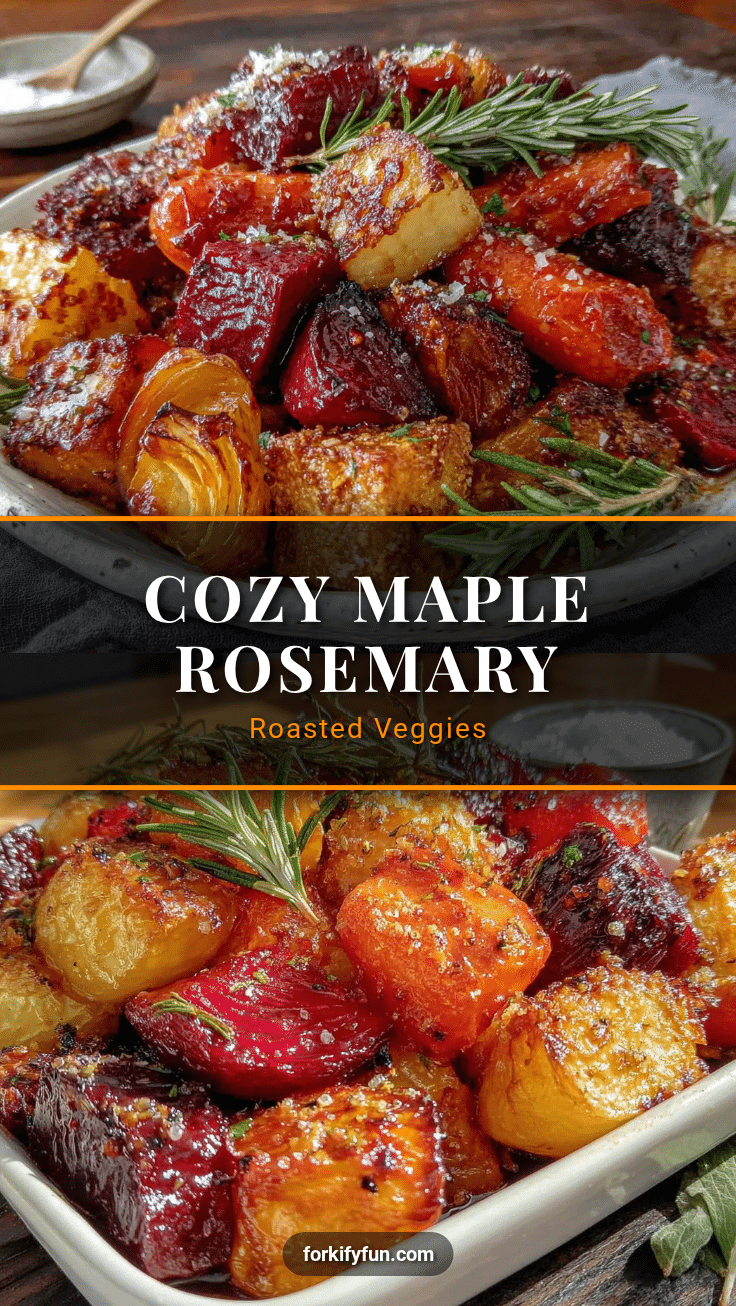
Best Easy Maple Roasted Root Vegetables with Rosemary
These maple roasted root vegetables are caramelized to perfection with a sweet and savory glaze. A simple, one-pan side dish that turns humble vegetables into a crave-worthy favorite.
- Prep Time: 15 minutes
- Cook Time: 35 minutes
- Total Time: 50 minutes
- Yield: 4 servings 1x
- Category: Side Dish
- Cuisine: American
Ingredients
- 2 large carrots, peeled and cut into 1-inch chunks
- 2 large parsnips, peeled and cut into 1-inch chunks
- 1 medium sweet potato, peeled and cut into 1-inch chunks
- 1 red onion, cut into 1-inch wedges
- 3 tablespoons olive oil
- 3 tablespoons pure maple syrup
- 2 tablespoons fresh rosemary, finely chopped
- 3 cloves garlic, minced
- 1 teaspoon salt
- ½ teaspoon black pepper, freshly ground
- Optional: 2 tablespoons balsamic vinegar
Instructions
- Preheat your oven to 425°F (220°C). Position a rack in the middle of the oven.
- Prepare your vegetables: peel the carrots, parsnips, and sweet potato. Cut them into roughly 1-inch chunks. Cut the red onion into 1-inch wedges.
- In a large mixing bowl, whisk together the olive oil, maple syrup, chopped rosemary, minced garlic, salt, and pepper. If using balsamic vinegar, add it now.
- Add all the cut vegetables to the bowl with the maple mixture. Toss until every piece is evenly coated.
- Spread the vegetables in a single layer on a large sheet pan. Leave space between each piece. If needed, use two pans.
- Roast for 20 minutes.
- Remove the pan from the oven and flip each piece over using tongs or a spatula.
- Return to the oven and roast for another 15-20 minutes, until tender and deep golden-brown.
- Optional: For extra caramelization, broil for 2-3 minutes, watching closely.
- Let the vegetables rest on the pan for 5 minutes before serving. Garnish with fresh rosemary sprigs if desired.
Notes
Don’t overcrowd the pan to ensure caramelization. Cut vegetables into uniform 1-inch pieces for even cooking. Use fresh rosemary for best flavor. Let vegetables rest for 5 minutes after roasting to set the glaze. For a lower-sugar option, reduce maple syrup to 2 tablespoons. Leftovers can be stored in the refrigerator for up to 5 days or frozen for up to 3 months.
Nutrition
- Serving Size: 1 cup
- Calories: 180
- Sugar: 14
- Sodium: 600
- Fat: 8
- Saturated Fat: 1
- Carbohydrates: 28
- Fiber: 5
- Protein: 2
Keywords: maple roasted root vegetables, roasted vegetables, maple syrup, rosemary, side dish, fall recipe, winter recipe, vegan, gluten-free