Third time this week I pulled that slow cooker out of the cabinet, and my husband didn’t even raise an eyebrow this time. He just sniffed the air and said, “Ramen again?” with this little half-smile that told me everything. The first batch had been good—fine, even—but the broth was a little thin, and the chicken came out drier than I wanted. Second time, I added more ginger and let it cook on low instead of high. Better, but the noodles turned to mush by the time I got home from work. Third time? That was the one where everything clicked. The chicken shredded like butter, the broth turned that deep golden color you see in restaurant photos, and the noodles stayed bouncy and perfect even after sitting in the broth for ten minutes.
I’d been chasing this bowl for months, honestly. Not in a dramatic way—more like a low-grade obsession that kept me scrolling through ramen videos at 11 p.m. and eyeballing every Asian market shelf for the right kind of miso paste. There’s something about a slow cooker ramen bowl that feels like cheating, you know? Like you’re getting all that complex, long-simmered flavor without actually standing at the stove for hours. But the trick is knowing which corners you can cut and which ones will ruin the whole thing. I learned that the hard way, bowl by bowl, until this version finally made me close my eyes on the first bite.
This isn’t fancy ramen. It’s not the kind you’d find in a Tokyo alleyway with a 45-minute wait. But it’s the kind you make on a Wednesday when the weather turns cold and you need something that feels like a hug in a bowl. The kind where you dump everything in before work and come home to a house that smells like dinner is already handled. And honestly? That’s a kind of magic all its own.
Why You’ll Love This Recipe
I’ve tested this recipe more times than I care to admit, and each batch taught me something new about timing, temperature, and which ingredients actually hold up to hours of slow cooking. This version represents the sweet spot—where convenience meets real, honest flavor that doesn’t taste like you took shortcuts.
- Set It and Forget It : Ten minutes of prep in the morning, and dinner takes care of itself. The slow cooker does all the heavy lifting while you go about your day.
- Pantry-Friendly Ingredients : No trips to specialty stores required. Most of these ingredients are already in your kitchen or easily found at any grocery store.
- Perfect for Cold Weather Comfort : This bowl was made for rainy evenings, snowy afternoons, or any day when you need something warm and deeply satisfying.
- Customizable for Any Diet : Easily swap in gluten-free noodles, use vegetable broth for a lighter version, or load up on extra veggies for more nutrition.
- Restaurant-Quality Broth at Home : The slow cooker coaxes out layers of flavor from ginger, garlic, soy sauce, and sesame oil that you just can’t get from a packet.
What makes this recipe different from all the other slow cooker ramen recipes out there? It’s the timing. Most recipes dump everything in at once and call it done. I learned the hard way that noodles need to be added at the very end, and the chicken needs to cook low and slow to stay tender. The broth gets a little boost from a secret ingredient—a spoonful of white miso paste stirred in right before serving—that gives it that umami depth without making you simmer bones for hours.
This is the kind of meal that makes you forget you’re eating from a slow cooker. It’s comfort food that feels thoughtful, even when you barely lifted a finger. And honestly, that’s the best kind of dinner there is.
What Ingredients You Will Need
This recipe relies on simple, flavorful ingredients that work together to create a broth that tastes like it simmered all day—because it did, but without any fussy techniques or hard-to-find items. Most of these are pantry staples or easy to pick up on a regular grocery run.
- Boneless, skinless chicken thighs (1.5 pounds / 680 grams) — Thighs stay juicier than breasts during long cooking. I prefer organic, but any good-quality thighs work fine.
- Low-sodium chicken broth (6 cups / 1.4 liters) — Controls the salt level so you can season to taste. Use vegetable broth for a lighter version.
- Soy sauce (¼ cup / 60 ml) — Adds salty, savory depth. Tamari or coconut aminos work for gluten-free needs.
- Mirin (2 tablespoons / 30 ml) — A sweet rice wine that balances the saltiness. Dry sherry or a pinch of sugar mixed with rice vinegar can substitute.
- Sesame oil (1 tablespoon / 15 ml) — Toasted sesame oil adds that unmistakable nutty aroma. Don’t skip this one—it makes the broth sing.
- Fresh ginger (2-inch piece, thinly sliced) — Use a Microplane or sharp knife. Pre-grated ginger from a jar works in a pinch but fresh is noticeably better.
- Garlic cloves (4 cloves, smashed) — Smashing releases more flavor than mincing. Let them float freely in the broth.
- White miso paste (2 tablespoons / 30 grams) — The secret weapon. Stirred in at the end, it adds creamy umami without making the broth cloudy. I recommend Hikari organic white miso for consistent results.
- Dried ramen noodles (3 packs, about 9 ounces / 255 grams) — Look for Sun Noodles or any brand with curly, springy noodles. Instant ramen packs work in a pinch—just toss the seasoning packet.
- Shiitake mushrooms (4 ounces / 115 grams, sliced) — Dried shiitakes rehydrated in hot water add even more flavor; fresh ones are quicker and still delicious.
- Baby spinach (3 cups / 90 grams) — Wilted in at the end for color and nutrients. Bok choy or kale also work beautifully.
- Green onions (4 stalks, sliced) — For garnish and a fresh, sharp finish.
- Soft-boiled eggs (2-4, optional but highly recommended) — The jammy yolk enriches the broth. Make these while the noodles cook.
- Chili crisp or sriracha (to taste) — For heat lovers. I’m partial to Lao Gan Ma chili crisp for that extra crunch.
Equipment Needed
You don’t need a fancy kitchen to pull this off. Here’s what you’ll actually use:
- Slow cooker (5-6 quart / 4.7-5.7 liter capacity) — Any brand works. I’ve used a basic Crock-Pot for years and it’s never let me down.
- Small saucepan — For soft-boiling eggs and cooking noodles separately.
- Fine-mesh strainer — Optional, but handy if you want to strain the broth for a clearer finish.
- Cutting board and sharp knife — For prepping ginger, garlic, mushrooms, and green onions.
- Measuring cups and spoons — For accuracy, especially with soy sauce and miso paste.
- Tongs or a slotted spoon — For removing chicken from the slow cooker without breaking it apart.
- Two forks — For shredding the chicken. Works better than any gadget I’ve tried.
If you don’t own a slow cooker, a Dutch oven on the stovetop at the lowest setting works similarly—just keep an eye on the liquid level and cook for 2-3 hours instead of 6-8. A pressure cooker can also work in a pinch, but the texture won’t be quite the same.
Preparation Method
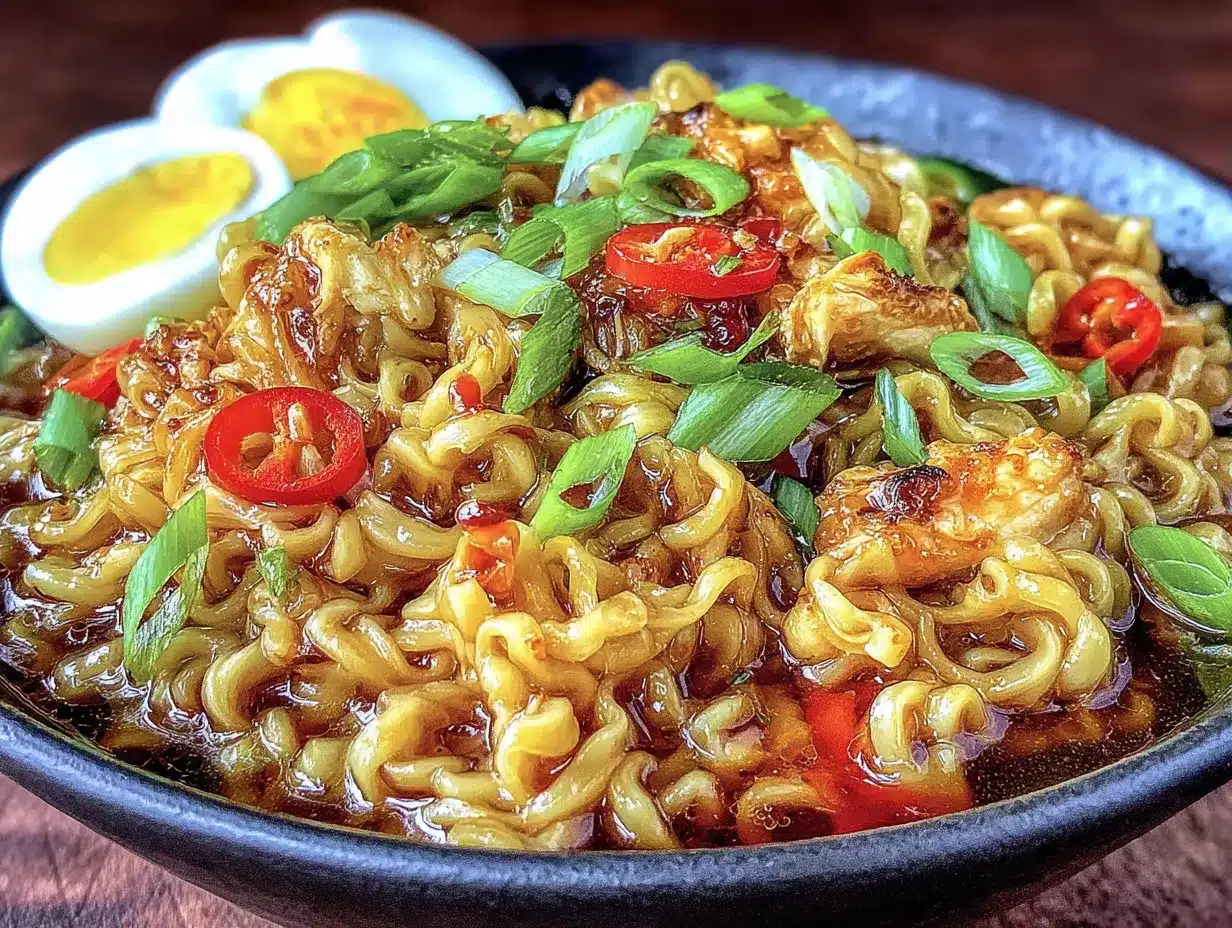
Let’s walk through this step by step. The process is straightforward, but a few timing tricks make all the difference between good ramen and great ramen.
- Prep the aromatics. Thinly slice the ginger into rounds—no need to peel it first, just wash it well. Smash the garlic cloves with the flat side of your knife. This releases their oils without turning them into a paste that might burn during cooking.
- Build the broth base. Place the chicken thighs in the bottom of the slow cooker. Pour in the chicken broth, soy sauce, mirin, and sesame oil. Add the sliced ginger, smashed garlic, and shiitake mushrooms. Give everything a gentle stir to combine. The chicken should be mostly submerged—if it’s not, add a little more broth or water.
- Cook low and slow. Cover and cook on LOW for 6-7 hours or on HIGH for 3-4 hours. I strongly recommend LOW—the chicken stays noticeably more tender. You’ll know it’s done when the chicken shreds easily with a fork and the broth smells deeply aromatic.
- Shred the chicken. Using tongs, carefully transfer the chicken thighs to a cutting board. Let them rest for 2-3 minutes, then shred with two forks. Don’t rush this step—the resting time lets the juices redistribute. Return the shredded chicken to the slow cooker and stir gently.
- Stir in the miso. In a small bowl, whisk the white miso paste with ¼ cup of hot broth from the slow cooker until smooth. Pour this mixture back into the slow cooker and stir well. This prevents clumps and ensures the miso distributes evenly. Taste the broth and adjust with additional soy sauce or a pinch of salt if needed.
- Cook the noodles separately. About 10 minutes before serving, bring a small pot of water to a boil. Cook the ramen noodles according to package directions, but reduce the cooking time by 1 minute—they’ll continue cooking slightly in the hot broth. Drain and rinse briefly with cold water to stop the cooking and remove excess starch. Divide the noodles among serving bowls.
- Wilt the spinach. While the noodles cook, stir the baby spinach into the slow cooker. It will wilt in about 1-2 minutes. If you’re using bok choy or kale, add it 5 minutes earlier to give it time to soften.
- Soft-boil the eggs (optional but worth it). Bring a small saucepan of water to a gentle boil. Gently lower in the eggs using a slotted spoon. Boil for exactly 6 minutes and 30 seconds for jammy yolks. Transfer immediately to an ice bath. Peel carefully under running water—the shells come off easier this way. Slice each egg in half right before serving.
- Assemble the bowls. Ladle the hot broth, chicken, and mushrooms over the noodles. Top with halved soft-boiled eggs, sliced green onions, and a generous drizzle of chili crisp if you like heat. Serve immediately while everything is hot and the noodles are still springy.
Cooking Tips & Techniques
I’ve made every mistake you can imagine with this recipe, so you don’t have to. Here’s what I learned the hard way:
Don’t add noodles to the slow cooker. I know it’s tempting to dump everything in and walk away, but noodles left in hot liquid for more than 15 minutes turn into a pasty, swollen mess. Cook them separately and add them to individual bowls right before serving. The broth stays clean, and the noodles stay perfectly chewy.
Low and slow wins every time. The first time I made this, I cranked the slow cooker to high because I was impatient. The chicken came out dry, and the broth tasted flat. Cooking on low for 6-7 hours gives the chicken time to break down collagen and the aromatics time to infuse the broth. Trust the process.
Miso goes in last. Miso paste is a living ingredient—it contains beneficial probiotics that die at high temperatures. Stirring it in at the end preserves its flavor and health benefits. Plus, it adds a creamy richness that makes the broth feel luxurious without any cream or butter.
Toast your sesame oil. If you have an extra minute, heat the sesame oil in a small pan for 30 seconds before adding it to the broth. This deepens the nutty flavor and makes the whole kitchen smell incredible. I started doing this after a friend’s Japanese grandmother showed me the trick, and I’ve never gone back.
Season in layers. Soy sauce and miso both bring salt, so don’t add all the soy sauce at once. Start with ¼ cup, taste after the miso goes in, and adjust from there. You can always add more salt, but you can’t take it out.
Variations & Adaptations
This recipe is a starting point, not a rulebook. Here are some ways to make it your own:
- Vegetarian version: Swap the chicken for extra firm tofu (pressed and cubed) and use vegetable broth. Add the tofu during the last 30 minutes of cooking so it absorbs the broth without falling apart. Oyster mushrooms or king trumpet mushrooms make excellent meaty substitutes.
- Spicy miso ramen: Add 1-2 tablespoons of gochujang (Korean chili paste) along with the miso for a spicy, fermented kick. Top with a spoonful of chili crisp for extra heat and crunch. This version has become my personal favorite—the gochujang adds a fruity heat that plays beautifully with the ginger.
- Gluten-free option: Use tamari instead of soy sauce and swap the ramen noodles for rice noodles or gluten-free soba noodles. Check your miso paste label—most white miso is gluten-free, but some brands use barley koji.
- Extra vegetable load: Add sliced carrots, bell peppers, or snap peas during the last 30 minutes of cooking. Stir in a handful of bean sprouts right before serving for crunch. I often add a handful of frozen corn and peas when I’m trying to use up odds and ends from the fridge.
- Coconut curry ramen: Stir in ½ cup of full-fat coconut milk and 1 tablespoon of red curry paste along with the miso. This creates a creamy, aromatic broth that’s completely different from the original but equally comforting. Top with fresh cilantro and a squeeze of lime.
Serving & Storage Suggestions
Serve this ramen piping hot in deep bowls—the wider the bowl, the better for holding broth and toppings. I like to set up a little topping bar with green onions, chili crisp, extra sesame oil, and soft-boiled eggs so everyone can customize their bowl. A side of pickled ginger or a simple cucumber salad makes a refreshing contrast to the rich broth. If you’re feeling ambitious, try my creamy dill cucumber salad on the side—the cool, tangy flavors balance the warm, savory ramen beautifully.
For storage, keep the broth, chicken, and noodles separate. The broth and chicken will keep in an airtight container in the refrigerator for up to 4 days. Store cooked noodles in a separate container with a splash of sesame oil to prevent sticking—they’ll keep for 2-3 days. To reheat, warm the broth and chicken on the stovetop or in the microwave, then pour over freshly boiled noodles. The broth actually deepens in flavor overnight, so leftovers might taste even better the next day.
This ramen also freezes beautifully. Portion the broth and chicken into freezer-safe containers, leaving ½ inch of headroom for expansion. Freeze for up to 3 months. Thaw overnight in the refrigerator and reheat gently on the stovetop. Cook fresh noodles when you’re ready to serve—frozen noodles turn mushy when thawed.
If you’re meal-prepping for the week, consider making a double batch of the broth and chicken and portioning it out with fresh noodles each day. This approach works especially well for busy weeks when you want something comforting without the daily effort. Pair it with a side of Greek chicken bowls for variety in your weekly meal prep rotation—they use similar ingredients but offer a completely different flavor profile.
Nutritional Information & Benefits
This cozy ramen bowl isn’t just delicious—it’s surprisingly nutritious. One serving (about 1.5 cups of broth with chicken, noodles, and vegetables) contains approximately:
- Calories: 420-480
- Protein: 32-38 grams
- Carbohydrates: 38-45 grams
- Fat: 14-18 grams
- Fiber: 4-6 grams
- Sodium: 900-1100 mg (varies by soy sauce and miso brand)
Chicken thighs provide high-quality protein and essential B vitamins for energy metabolism. Ginger and garlic are known for their anti-inflammatory properties and immune-supporting benefits—perfect for cold and flu season. Shiitake mushrooms contain beta-glucans that support immune function, and the miso paste offers probiotics that promote gut health. The spinach adds iron, vitamin K, and antioxidants without overwhelming the dish.
For a lower-sodium version, use low-sodium broth and tamari, and reduce the miso to 1 tablespoon. You can also swap the ramen noodles for shirataki noodles or spiralized zucchini to cut carbohydrates. This recipe is naturally dairy-free and can easily be made gluten-free with the substitutions mentioned above.
Conclusion
This slow cooker ramen has become my go-to for those days when I need dinner to feel like an event without actually being one. It’s the kind of meal that fills your house with good smells and your belly with warmth, and it asks almost nothing of you in return. The broth is rich without being heavy, the chicken is tender enough to fall apart, and the noodles—if you follow the timing—stay perfectly springy every single time.
I love that this recipe leaves room for your own creativity. Maybe you’ll go heavy on the chili crisp like I do, or maybe you’ll load it up with extra veggies and keep it mild. Maybe you’ll discover that a splash of rice vinegar at the end brightens everything up, or that a handful of fresh cilantro takes it somewhere unexpected. That’s the beauty of a good base recipe—it’s a starting point, not a finish line.
If you make this cozy slow cooker ramen, I’d love to hear how it turns out. Drop a comment below and tell me what toppings you chose, what substitutions worked for you, or even what went wrong so we can troubleshoot together. And if you’re looking for another easy, comforting meal that comes together in the slow cooker, don’t miss this creamy slow cooker white chicken chili—it’s the perfect companion recipe for chilly nights. Happy cooking, friends!
Frequently Asked Questions
Can I use chicken breasts instead of thighs?
Yes, but they’ll be drier. Chicken breasts cook faster and have less fat, so check them at the 4-hour mark on low. Shred them carefully—they can turn stringy if overcooked. I recommend thighs for the best texture, but breasts work in a pinch.
What if I don’t have mirin?
No problem. Mix 1 tablespoon of rice vinegar with 1 teaspoon of sugar as a substitute. The sweetness and acidity will mimic mirin’s balance. Dry sherry also works well—use the same amount as mirin.
Can I make this in an Instant Pot?
Absolutely. Use the slow cooker function on low for 6 hours, or pressure cook on high for 15 minutes with a natural release. If pressure cooking, add the noodles and miso after the pressure cooking cycle—they can’t handle the high heat and pressure.
How do I keep the noodles from getting mushy in leftovers?
Store noodles separately from the broth. When reheating, bring the broth to a simmer, then pour over freshly boiled noodles. If you must store them together, undercook the noodles by 2 minutes and expect them to soften overnight. They’ll still be edible, just not as springy.
Is this recipe freezer-friendly?
Yes, but freeze only the broth and chicken. Portion into freezer-safe containers, leaving headroom for expansion. Freeze for up to 3 months. Thaw overnight in the fridge and reheat gently. Cook fresh noodles when serving—frozen noodles turn mushy and lose their texture completely.
Pin This Recipe!
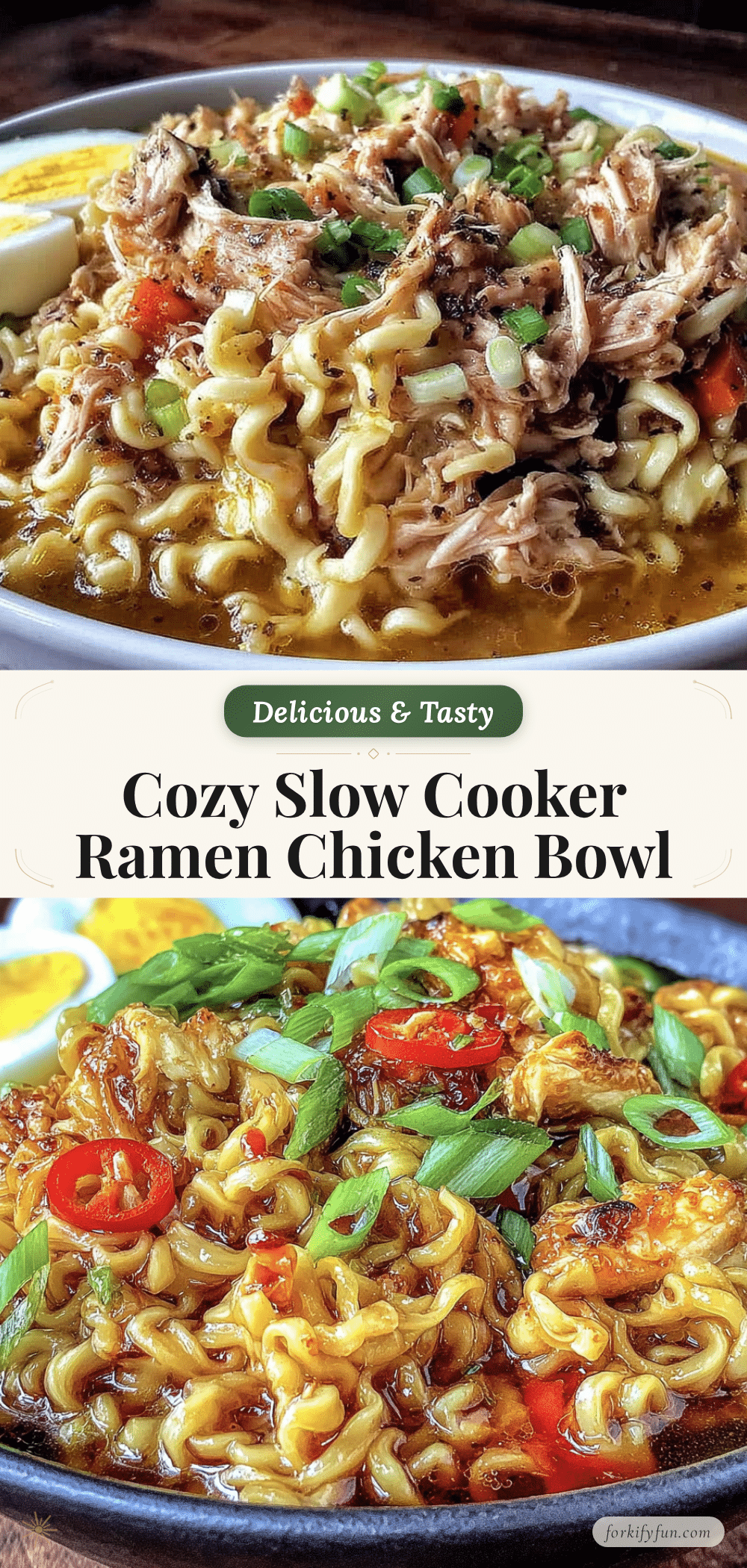
Cozy Slow Cooker Ramen Noodle Chicken Bowl

A comforting slow cooker ramen bowl with tender chicken, rich umami broth, and perfectly springy noodles. This set-it-and-forget-it recipe delivers restaurant-quality flavor with minimal effort, perfect for cold weather comfort.
- Prep Time: 15 minutes
- Cook Time: 6 hours 30 minutes
- Total Time: 6 hours 45 minutes
- Yield: 4 servings 1x
- Category: Main Course
- Cuisine: Japanese
Ingredients
- 1.5 pounds (680 grams) boneless, skinless chicken thighs
- 6 cups (1.4 liters) low-sodium chicken broth
- 1/4 cup (60 ml) soy sauce
- 2 tablespoons (30 ml) mirin
- 1 tablespoon (15 ml) sesame oil
- 2-inch piece fresh ginger, thinly sliced
- 4 garlic cloves, smashed
- 2 tablespoons (30 grams) white miso paste
- 3 packs (about 9 ounces / 255 grams) dried ramen noodles
- 4 ounces (115 grams) shiitake mushrooms, sliced
- 3 cups (90 grams) baby spinach
- 4 stalks green onions, sliced
- 2–4 soft-boiled eggs (optional)
- Chili crisp or sriracha (to taste)
Instructions
- Prep the aromatics. Thinly slice the ginger into rounds—no need to peel it first, just wash it well. Smash the garlic cloves with the flat side of your knife.
- Build the broth base. Place the chicken thighs in the bottom of the slow cooker. Pour in the chicken broth, soy sauce, mirin, and sesame oil. Add the sliced ginger, smashed garlic, and shiitake mushrooms. Give everything a gentle stir to combine.
- Cook low and slow. Cover and cook on LOW for 6-7 hours or on HIGH for 3-4 hours. The chicken is done when it shreds easily with a fork.
- Shred the chicken. Using tongs, carefully transfer the chicken thighs to a cutting board. Let them rest for 2-3 minutes, then shred with two forks. Return the shredded chicken to the slow cooker and stir gently.
- Stir in the miso. In a small bowl, whisk the white miso paste with 1/4 cup of hot broth from the slow cooker until smooth. Pour this mixture back into the slow cooker and stir well. Taste and adjust with additional soy sauce or salt if needed.
- Cook the noodles separately. About 10 minutes before serving, bring a small pot of water to a boil. Cook the ramen noodles according to package directions, but reduce the cooking time by 1 minute. Drain and rinse briefly with cold water. Divide the noodles among serving bowls.
- Wilt the spinach. While the noodles cook, stir the baby spinach into the slow cooker. It will wilt in about 1-2 minutes.
- Soft-boil the eggs (optional). Bring a small saucepan of water to a gentle boil. Gently lower in the eggs using a slotted spoon. Boil for exactly 6 minutes and 30 seconds for jammy yolks. Transfer immediately to an ice bath. Peel carefully under running water. Slice each egg in half right before serving.
- Assemble the bowls. Ladle the hot broth, chicken, and mushrooms over the noodles. Top with halved soft-boiled eggs, sliced green onions, and a generous drizzle of chili crisp if desired. Serve immediately.
Notes
Don’t add noodles to the slow cooker—they’ll turn mushy. Cook them separately and add to individual bowls. Low and slow cooking yields the most tender chicken. Miso goes in last to preserve its flavor and probiotics. For a deeper sesame flavor, toast the sesame oil in a small pan for 30 seconds before adding. Season in layers to avoid over-salting.
Nutrition
- Serving Size: 1.5 cups of broth wi
- Calories: 420480
- Sugar: 68
- Sodium: 9001100
- Fat: 1418
- Saturated Fat: 35
- Carbohydrates: 3845
- Fiber: 46
- Protein: 3238
Keywords: slow cooker ramen, chicken ramen, easy ramen, comfort food, miso ramen, slow cooker chicken, ramen noodle bowl