My butcher, a quiet man named Sal who’d been behind the counter at the same market for thirty years, watched me one Thursday afternoon as I stood there, staring at the rib roasts like they held the secrets to the universe. He didn’t say anything at first. He just leaned on the glass case, wiping his hands on his apron, and let me fumble through my indecision. I was planning a holiday dinner, and the pressure was real—I wanted something that felt special but wouldn’t leave me chained to the oven all day. Finally, he pointed a thick finger at a beautiful, bone-in prime rib and said, “That one. And when you get it home, remember two things: garlic and butter. Everything else is just noise.”
I laughed, thanked him, and walked out with a ten-pound roast and a mission. That conversation—simple, direct, and full of hard-won wisdom—stuck with me. I mean, honestly, Sal had probably seen a thousand panicked shoppers just like me. His advice was so basic it felt almost too simple, but you know what? He was right. That first time I made a Garlic Butter Prime Rib with Horseradish Cream, the garlic butter seeped into every crevice, creating a crust that was golden, fragrant, and impossibly tender. The horseradish cream on the side? It cut through the richness like a sharp, cool whisper. I’ve been making it this way ever since, and let me tell you, it never fails to get that moment of silence at the table—the kind where everyone takes their first bite and forgets to talk. Maybe you’ve been there, standing in front of a beautiful cut of meat, wondering how to do it justice. This recipe is the answer you didn’t know you needed.
Why You’ll Love This Recipe
This Garlic Butter Prime Rib with Horseradish Cream has become my go-to for every special occasion, and I think it will be yours too. I’ve tested this method more times than I can count—through holiday dinners, birthday celebrations, and even a few random Tuesday nights when I needed something glorious. It’s been chef-tested at a friend’s pop-up dinner and family-approved by my notoriously picky uncle, so I can vouch for it from every angle.
- Incredibly Easy for a Showstopper: Despite looking like something from a fancy steakhouse, this recipe is surprisingly hands-off. The oven does most of the work, and the garlic butter prep takes less than ten minutes.
- Simple, High-Impact Ingredients: You don’t need a pantry full of exotic spices. A good prime rib roast, fresh garlic, quality butter, and a few pantry staples are all that stand between you and perfection.
- Perfect for Holidays and Celebrations: Whether it’s Christmas dinner, a New Year’s feast, or a milestone birthday, this roast feels like an event. It’s impressive without being stressful.
- Always a Crowd-Pleaser: The rich, savory meat paired with the bright, tangy horseradish cream is a combination that wins over everyone—from kids who think they don’t like prime rib to adults who consider themselves connoisseurs.
- Unbelievably Juicy and Flavorful: The secret is the compound butter. It melts over the roast as it cooks, basting it from the inside out, resulting in meat that is tender, juicy, and packed with garlic flavor in every single bite.
What makes this version different from the rest? It’s the balance. So many prime rib recipes rely on heavy, complicated rubs or fussy techniques. This one lets the meat shine, using the garlic butter to enhance, not mask, the natural flavor. It’s comfort food reimagined for a special occasion—rich, satisfying, and just fancy enough to feel like a treat, but simple enough that you won’t be stressed in the kitchen.
What Ingredients You Will Need
This recipe relies on a handful of high-quality ingredients to build layers of flavor. Each one plays a specific role, from creating that gorgeous crust to providing the perfect cooling contrast. Here’s what you will need, with a few notes from my own kitchen trials.
- For the Prime Rib:
- 1 (4-5 pound) bone-in prime rib roast – Look for a roast with good marbling; that fat is what keeps it juicy. I prefer bone-in for the extra flavor, but boneless works too (just adjust cooking time slightly). Ask your butcher for a roast from the large end for more even cooking.
- 4 tablespoons unsalted butter, softened – Let it come to room temperature so it blends smoothly with the garlic. I use Kerrygold for its rich, grassy flavor.
- 6-8 cloves garlic, minced – Fresh garlic is non-negotiable here. The pre-minced stuff in a jar just won’t give you the same aromatic punch. I like to use a microplane to get it almost paste-like.
- 2 teaspoons kosher salt – Diamond Crystal is my go-to; it’s less salty by volume than Morton’s, so you have more control. Don’t skip the salt—it’s crucial for drawing out moisture and creating a flavorful crust.
- 1 teaspoon black pepper, freshly ground – Freshly ground pepper makes a difference. It adds a warm, floral heat that pre-ground pepper just can’t match.
- 2 teaspoons fresh rosemary, chopped – Rosemary and beef are a classic pair. It adds an earthy, piney note that complements the garlic beautifully.
- 1 teaspoon fresh thyme leaves – Thyme is more subtle than rosemary, but it adds a layer of complexity. Strip the leaves from the stems before chopping.
- For the Horseradish Cream:
- 1/2 cup sour cream – Full-fat sour cream gives the sauce a luxurious texture. If you’re watching calories, light sour cream works, but it won’t be as rich.
- 1/4 cup prepared horseradish, drained – This is the star of the sauce. I recommend Boar’s Head or a refrigerated brand for the best kick. Drain off the excess liquid so the sauce doesn’t get watery.
- 1 tablespoon fresh chives, chopped – Chives add a mild onion flavor and a pop of green color. If you don’t have them, you can use the green part of a scallion.
- 1 teaspoon Dijon mustard – A little Dijon adds tang and helps emulsify the sauce. Maille is my preferred brand.
- 1/2 teaspoon white wine vinegar – A splash of acidity brightens everything up. You could also use lemon juice in a pinch.
- Salt and pepper to taste – Season the sauce gently; the horseradish and sour cream already have some salt.
Substitution Guidance: If you’re feeding a crowd, you can easily double the horseradish cream recipe. For a dairy-free version of the sauce, use a high-quality vegan sour cream. If you don’t have fresh herbs, you can use dried rosemary and thyme, but use about half the amount—dried herbs are more concentrated.
Equipment Needed
You don’t need a professional kitchen to make this Garlic Butter Prime Rib with Horseradish Cream, but a few key tools will make the process smoother. Here’s what I recommend, along with some budget-friendly alternatives I’ve used myself.
- Roasting Pan with a Rack: A sturdy roasting pan is essential for catching the drippings and allowing heat to circulate around the roast. The rack keeps the meat elevated so it cooks evenly and doesn’t sit in its own juices. If you don’t have a rack, you can roll up a few long strips of aluminum foil into coils and place the roast on top.
- Instant-Read Meat Thermometer: This is the most important tool for perfect prime rib. Guessing the doneness is a recipe for disaster. I use a Thermapen, but any reliable instant-read thermometer will do. Trust me on this—it’s worth the investment.
- Chef’s Knife: A sharp chef’s knife makes mincing garlic and chopping herbs effortless. I’ve been using a Wüsthof for years, but a good Victorinox is a fraction of the price and works just as well.
- Mixing Bowls: You’ll need a small bowl for the compound butter and a medium bowl for the horseradish cream. Nothing fancy—any set of nesting bowls will do.
- Kitchen Twine: While not strictly necessary, tying the roast between the bones helps it hold a uniform shape and cook more evenly. Your butcher might do this for you if you ask.
- Aluminum Foil: You’ll need foil for tenting the roast while it rests. This step is crucial for redistributing the juices.
Personal Tip: I once forgot my roasting rack and used a overturned muffin tin as a makeshift alternative. It was a little wobbly, but it worked! Don’t let a missing tool stop you from making this recipe.
Preparation Method
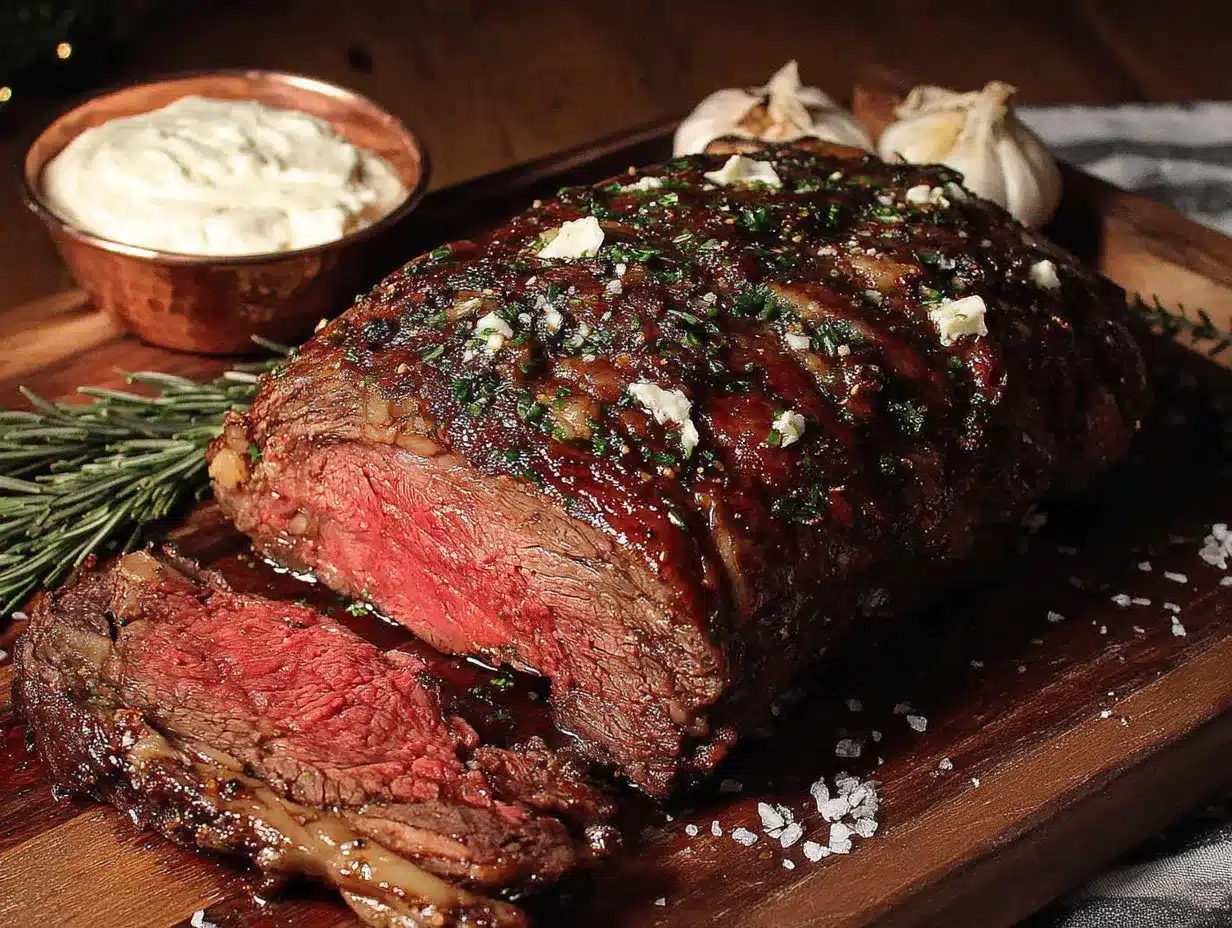
Let’s get cooking. This method is designed to be straightforward, but I’ve included all the little details I’ve learned from years of making this roast. Take your time, and trust the process.
- Take the Chill Off: Remove the prime rib from the refrigerator about 1-2 hours before you plan to cook it. This step is important—a cold roast will cook unevenly. Let it sit on a cutting board, uncovered, to come to room temperature. Sal, my butcher, told me this is the single most important step, and he was right.
- Make the Garlic Butter: In a small bowl, combine the softened butter, minced garlic, chopped rosemary, and thyme. Mix until everything is evenly distributed. The butter should be soft enough to spread easily. If it’s too firm, let it sit out for another 10 minutes.
- Prepare the Roast: Pat the prime rib dry with paper towels. This is crucial for a good crust—moisture is the enemy of browning. Season the roast generously on all sides with the kosher salt and black pepper. Don’t be shy with the salt; it seasons the meat all the way through.
- Apply the Garlic Butter: Using your hands, rub the garlic butter all over the roast, making sure to get it into any crevices and between the bones. This is the messy, satisfying part. The butter will create a beautiful crust as it melts.
- Preheat the Oven: Preheat your oven to 450°F (230°C). A hot oven is essential for that initial sear, which locks in flavor and creates a gorgeous exterior.
- Roast at High Heat: Place the seasoned prime rib on a rack in a roasting pan, bone-side down. Roast at 450°F (230°C) for 20 minutes. This high-heat blast creates the crust. You’ll see the butter sizzling and the meat starting to brown.
- Lower the Heat: Without opening the oven door (I know, it’s tempting), reduce the temperature to 325°F (160°C). Continue roasting until the internal temperature reaches your desired level of doneness. For medium-rare (my personal favorite), aim for 120-125°F (49-52°C) when measured in the thickest part of the meat, away from the bone. This typically takes about 15-18 minutes per pound, but always rely on your thermometer, not the clock.
- Rest the Roast: This is the hardest part—waiting. Once the roast hits your target temperature, remove it from the oven and transfer it to a cutting board. Tent it loosely with aluminum foil and let it rest for at least 20-30 minutes. The internal temperature will continue to rise by about 5-10°F during this time (carryover cooking), so pull it out a little early if you’re aiming for a specific doneness. Resting allows the juices to redistribute throughout the meat, resulting in a tender, juicy roast.
- Make the Horseradish Cream: While the roast is resting, make the sauce. In a medium bowl, combine the sour cream, drained horseradish, chopped chives, Dijon mustard, and white wine vinegar. Stir until smooth. Season with salt and pepper to taste. Cover and refrigerate until ready to serve. The flavors will meld together beautifully as it sits.
- Carve and Serve: After the roast has rested, remove the kitchen twine (if used). Place the roast on a cutting board with a well to catch the juices. Using a sharp carving knife, slice the meat against the grain into 1/2-inch to 3/4-inch thick slices. Between the bones, you’ll find the most tender pieces—save those for yourself! Arrange the slices on a warm platter and spoon any accumulated juices over the top. Serve immediately with the horseradish cream on the side.
Sensory Cue: When you first open the oven after the high-heat blast, you should be hit with the incredible aroma of garlic and herbs. The butter should be bubbling and the meat should have a deep, golden-brown crust. When you insert the thermometer, you should feel a slight resistance that gives way to tender meat.
Cooking Tips & Techniques
Over the years, I’ve made every mistake you can imagine with prime rib. I’ve undercooked it, overcooked it, and once, I even forgot to add the garlic butter entirely (don’t ask). Here are the lessons I’ve learned so you don’t have to repeat them.
The Most Common Mistake: Skipping the rest time. I know, you’re hungry, and the roast smells incredible. But if you carve it immediately, all those beautiful juices will run out onto the cutting board, leaving you with dry meat. That 20-30 minute rest is non-negotiable. I usually set a timer and force myself to make the sauce and set the table while I wait.
Timing and Multitasking: Plan your meal backwards. Work from the time you want to serve. If you’re aiming for a 6:00 PM dinner, and your roast needs about 2 hours to cook (including the high-heat blast) plus 30 minutes to rest, you should have it in the oven by 3:30 PM. That gives you plenty of time to make the horseradish cream, prepare any side dishes, and set the table without feeling rushed.
Consistency Tips: For the most even cooking, let the roast come to room temperature as directed. A cold center will lead to uneven doneness—the outside will be well-done while the inside is still raw. Also, invest in a good thermometer. I cannot stress this enough. Guessing the temperature by touch or by color is a gamble you don’t want to take with an expensive cut of meat.
My Biggest Failure: The first time I made this recipe, I used salted butter and then added the full amount of kosher salt. The result was an inedible, salty crust. I had to scrape off the exterior and start over. Now I always use unsalted butter for the compound butter so I can control the salt level myself. Learn from my mistake!
Variations & Adaptations
This recipe is a fantastic base, and I love experimenting with different flavors. Here are a few variations I’ve tried and loved.
- Herb-Crusted Variation: Add 2 tablespoons of finely chopped fresh parsley and 1 tablespoon of chopped fresh oregano to the garlic butter. This creates a beautifully green, herby crust that is especially good with roasted potatoes.
- Spicy Horseradish Cream: If you like things hot, add an extra tablespoon of prepared horseradish and a pinch of cayenne pepper to the cream. You can also stir in a teaspoon of hot sauce for an extra kick. I did this for a game-day gathering, and it was a huge hit.
- Dairy-Free Adaptation: For the garlic butter, use a high-quality vegan butter stick (like Miyoko’s). For the horseradish cream, use a full-fat coconut cream or a thick cashew cream in place of the sour cream. The flavor will be slightly different, but still delicious.
- Garlic-Lover’s Version: I am a garlic fiend, so sometimes I’ll roast a whole head of garlic alongside the prime rib. Once it’s soft and caramelized, I squeeze the cloves into the compound butter for an extra mellow, sweet garlic flavor. It’s incredible.
- Smoked Prime Rib: If you have a smoker, you can adapt this recipe. Smoke the prime rib at 225°F (110°C) using hickory or oak wood until it reaches 115°F (46°C) for medium-rare. Then, sear it in a hot oven or on a grill to create the crust. This adds a wonderful smoky depth that pairs beautifully with the horseradish cream.
Serving & Storage Suggestions
This Garlic Butter Prime Rib with Horseradish Cream is a meal in itself, but the right accompaniments can turn it into a true feast.
Serving Temperature and Presentation: Prime rib is best served warm, not hot. After resting, the meat should be around 120-130°F (49-54°C). Arrange the slices on a large, warm platter, slightly overlapping. Spoon any accumulated juices from the cutting board over the slices. Garnish with a few sprigs of fresh rosemary or thyme for a beautiful presentation. Serve the horseradish cream in a small bowl on the side, garnished with extra chives.
Complementary Dishes: This roast pairs wonderfully with classic sides. Creamy mashed potatoes or roasted garlic mashed potatoes are a natural choice. A simple roasted balsamic asparagus or a crisp green salad with a light vinaigrette cuts through the richness. Yorkshire puddings are also a traditional and delicious option. For wine, a full-bodied Cabernet Sauvignon or a rich Malbec is a perfect match.
Storage Instructions: Leftover prime rib is a gift. Store any leftover slices in an airtight container in the refrigerator for up to 4 days. The meat will actually become more tender as it sits.
Reheating Methods: The key to reheating prime rib is to do it gently to avoid drying it out. The best method is to place the slices in a single layer in a baking dish, add a tablespoon of beef broth or water, cover tightly with foil, and warm in a 300°F (150°C) oven for 10-15 minutes. You can also reheat individual slices in a skillet over medium-low heat with a pat of butter for about 2 minutes per side. Avoid the microwave at all costs—it will turn your beautiful roast into rubber.
How Flavors Develop Over Time: The horseradish cream actually gets better after a day in the fridge as the flavors meld. The prime rib itself is delicious cold, sliced thin for sandwiches with a smear of the horseradish cream and some arugula. It’s almost better than the original meal!
Nutritional Information & Benefits
While this is an indulgent dish, it also offers some nutritional benefits. Here’s a general breakdown for a 6-ounce serving of prime rib with 2 tablespoons of horseradish cream.
- Calories: Approximately 550-650
- Protein: 45-50 grams (excellent for muscle repair and satiety)
- Fat: 40-45 grams (includes healthy monounsaturated fats from the beef)
- Carbohydrates: 2-3 grams (very low-carb friendly)
- Iron: 25% of the Daily Value (important for oxygen transport in the blood)
- Zinc: 35% of the Daily Value (supports immune function)
- Vitamin B12: 80% of the Daily Value (crucial for nerve health and energy)
Health Benefits: Prime rib is an excellent source of high-quality protein, which is essential for building and repairing tissues. It’s also rich in B vitamins, particularly B12, which is vital for energy metabolism and brain function. The horseradish contains compounds that may have antibacterial properties and can aid digestion. While this is not a low-fat dish, it can be part of a balanced diet when enjoyed in moderation. I like to serve it with a generous portion of roasted vegetables to round out the meal.
Dietary Considerations: This recipe is naturally low-carb and gluten-free. It is not suitable for vegetarian, vegan, or dairy-free diets (without the substitutions mentioned above). The horseradish cream contains dairy. Always check the labels on your prepared horseradish, as some brands may contain added sugars or gluten.
Conclusion
This Garlic Butter Prime Rib with Horseradish Cream is more than just a recipe—it’s a centerpiece for memories. It’s the dish you bring out when you want to say “this is special” without saying a word. The garlic butter creates a crust that is fragrant and golden, while the tender, juicy meat practically melts in your mouth. And that horseradish cream? It’s the perfect finishing touch—cool, tangy, and just a little bit sharp.
I hope you give this recipe a try, whether it’s for a holiday dinner, a birthday celebration, or just because you want to treat yourself and your family to something extraordinary. Don’t be afraid to make it your own—add extra garlic, swap the herbs, or experiment with the spice level. That’s the beauty of cooking. I’d love to hear how it turns out for you. Leave a comment below and let me know your favorite way to serve prime rib, or share a photo of your beautiful roast on social media and tag me. Happy cooking, friends!
Frequently Asked Questions
How do I know when my prime rib is done without a thermometer?
Honestly, I really recommend using a meat thermometer for the most accurate results. However, if you don’t have one, you can use the “hand test” as a very rough guide. The fleshy part of your palm under your thumb, when relaxed, feels like raw meat. Touch your thumb to your index finger, and feel the same spot—that’s roughly medium-rare. It’s not perfect, but it can help in a pinch. For prime rib, I strongly advise investing in a thermometer for foolproof results.
Can I prepare the garlic butter and horseradish cream ahead of time?
Absolutely! This is a great way to reduce stress on the day of cooking. The garlic butter can be made up to 3 days in advance and stored in the refrigerator. Just let it soften at room temperature for about 30 minutes before using. The horseradish cream can be made up to 2 days ahead and stored in the fridge. The flavors will actually meld and become even better.
What if my prime rib is boneless? How do I adjust the cooking time?
Boneless prime rib will cook slightly faster than bone-in because the bone acts as an insulator. I generally reduce the estimated cooking time by about 5-10 minutes per pound. However, the most reliable method is still to use your meat thermometer. Start checking the internal temperature about 15 minutes earlier than you would for a bone-in roast of the same weight.
My horseradish cream turned out too thin. How can I thicken it?
This usually happens if the prepared horseradish wasn’t drained well enough. To fix it, you can stir in an additional tablespoon of sour cream or a teaspoon of cream cheese. Alternatively, you can let it sit in the refrigerator for an hour or two—it will often thicken up as it chills. Next time, make sure to press the horseradish in a fine-mesh sieve to remove as much liquid as possible.
Can I use this same garlic butter method for a prime rib roast that is already tied?
Yes, you can. If your roast is already tied by the butcher, you can still apply the garlic butter. Use your fingers to work it into all the exposed surfaces and between the twine as much as possible. The butter will melt and flavor the meat even where it doesn’t directly touch. Just be sure to remove the twine before carving the rested roast.
Pin This Recipe!
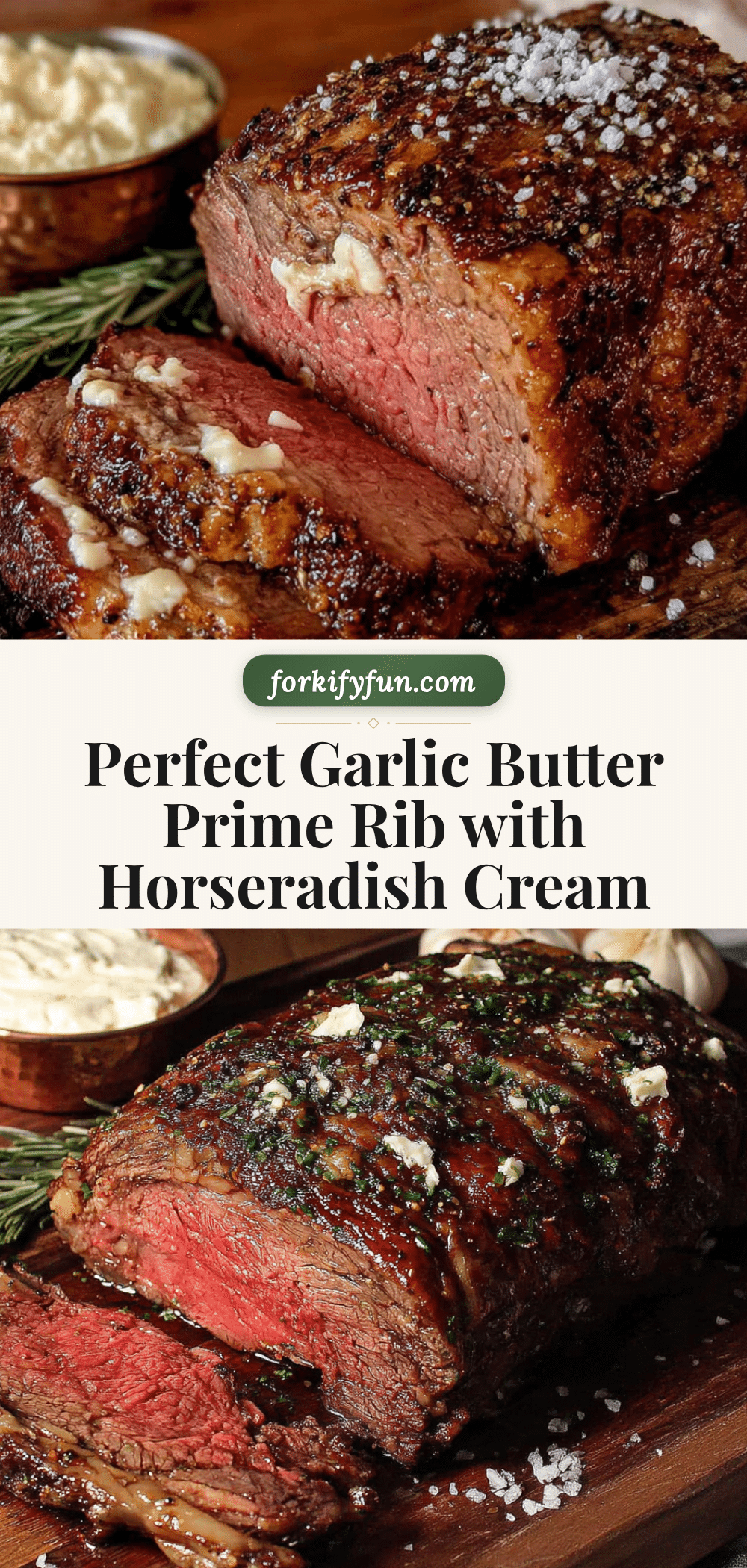
Perfect Garlic Butter Prime Rib – Easy & Juicy Recipe
This Garlic Butter Prime Rib with Horseradish Cream is a showstopper that’s surprisingly easy to make. The garlic butter creates a golden, fragrant crust while the horseradish cream cuts through the richness for a perfect balance.
- Prep Time: 15 minutes
- Cook Time: 1 hour 30 minutes
- Total Time: 2 hours 15 minutes
- Yield: 8 servings 1x
- Category: Main Course
- Cuisine: American
Ingredients
- 1 (4-5 pound) bone-in prime rib roast
- 4 tablespoons unsalted butter, softened
- 6–8 cloves garlic, minced
- 2 teaspoons kosher salt
- 1 teaspoon black pepper, freshly ground
- 2 teaspoons fresh rosemary, chopped
- 1 teaspoon fresh thyme leaves
- 1/2 cup sour cream
- 1/4 cup prepared horseradish, drained
- 1 tablespoon fresh chives, chopped
- 1 teaspoon Dijon mustard
- 1/2 teaspoon white wine vinegar
- Salt and pepper to taste
Instructions
- Remove the prime rib from the refrigerator about 1-2 hours before cooking to bring to room temperature.
- In a small bowl, combine softened butter, minced garlic, chopped rosemary, and thyme until evenly distributed.
- Pat the prime rib dry with paper towels. Season generously on all sides with kosher salt and black pepper.
- Rub the garlic butter all over the roast, getting into crevices and between the bones.
- Preheat oven to 450°F (230°C).
- Place seasoned prime rib on a rack in a roasting pan, bone-side down. Roast at 450°F for 20 minutes.
- Reduce oven temperature to 325°F (160°C) without opening the door. Continue roasting until internal temperature reaches 120-125°F (49-52°C) for medium-rare, about 15-18 minutes per pound.
- Remove roast from oven, transfer to a cutting board, tent loosely with foil, and rest for 20-30 minutes.
- While roast rests, make horseradish cream: combine sour cream, drained horseradish, chopped chives, Dijon mustard, and white wine vinegar. Stir until smooth. Season with salt and pepper to taste.
- After resting, carve the roast against the grain into 1/2-inch to 3/4-inch thick slices. Serve with horseradish cream on the side.
Notes
Let the roast come to room temperature before cooking for even doneness. Use unsalted butter to control salt level. Resting the roast for 20-30 minutes is crucial for juicy meat. The horseradish cream can be made up to 2 days ahead.
Nutrition
- Serving Size: 6 ounces with 2 tabl
- Calories: 600
- Sugar: 1
- Sodium: 680
- Fat: 42
- Saturated Fat: 18
- Carbohydrates: 3
- Protein: 48
Keywords: prime rib, garlic butter, horseradish cream, holiday dinner, roast beef, Christmas dinner, special occasion