The woman at the farmers’ market stall watched me eyeing her oranges for the third week in a row. She didn’t say anything at first, just kept arranging the piles of citrus like they were precious gems. Finally, she picked up a particularly knobby-looking orange and handed it to me. “You keep coming back,” she said. “So you need this one. And you need to do something with it besides just eating it plain.”
I laughed, a little embarrassed, and admitted I’d been stockpiling her oranges with no real plan. She reached under her table and pulled out a crumpled index card with handwriting so tiny I had to squint. “Orange cranberry bread,” she said. “My grandmother’s recipe. But lighten it up a bit, will you? It’s too heavy for modern taste.”
Honestly, I almost lost that card twice before I made it home. It fell out of my pocket in the car, got stuck between the seats, and I didn’t find it until three days later when I was cleaning out the change. But when I finally tried the recipe, I understood why she’d been so insistent. The original was good, but it needed something—a little less butter, a little more brightness, and a glaze that actually soaked into the crumb instead of just sitting on top.
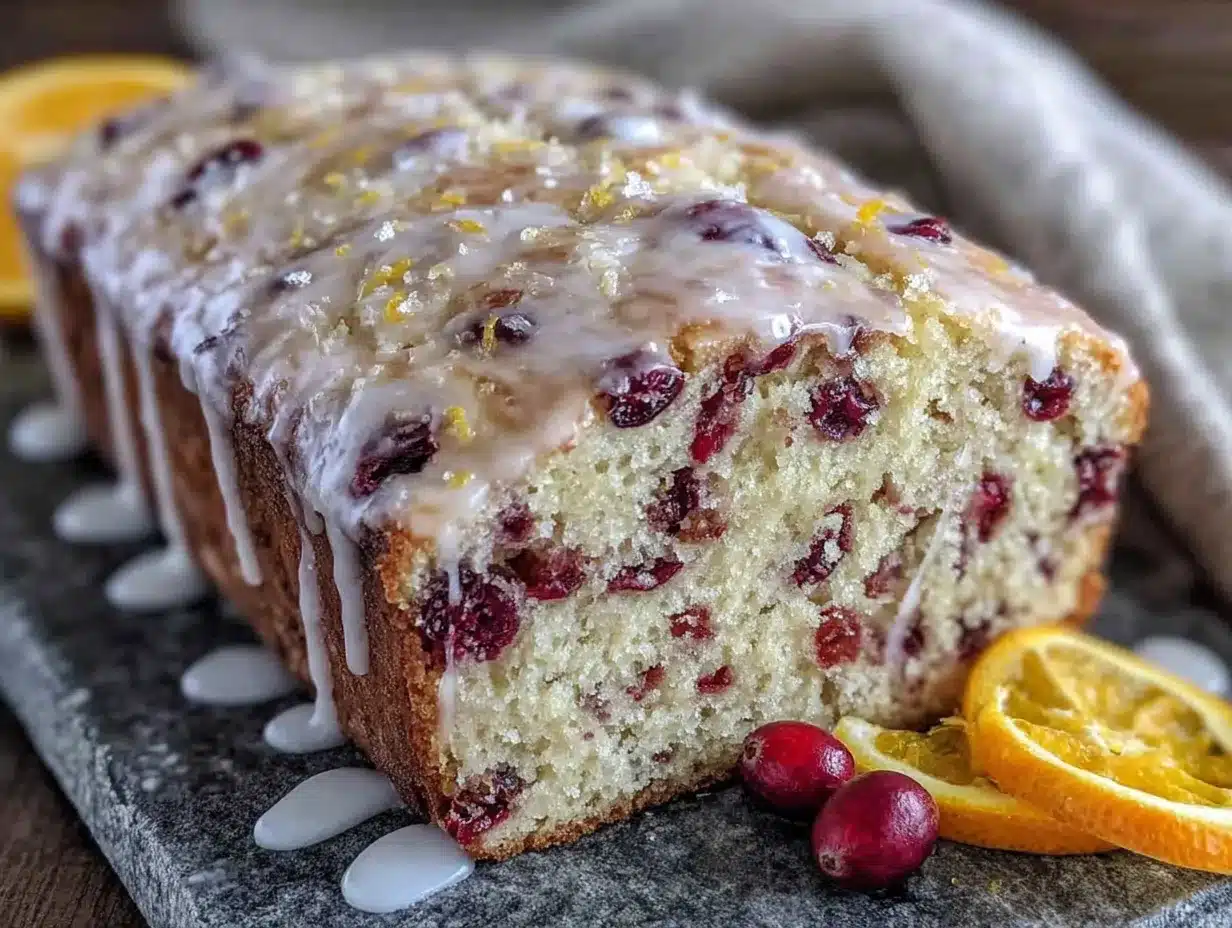
This Light Orange Cranberry Quick Bread with Glaze is what came out of that conversation. It’s the kind of bread that disappears faster than you expect, with a tender crumb that’s not too sweet and pops of tart cranberry in every slice. The glaze seeps into the cracks while it’s still warm, creating this thin, crackly layer that honestly might be my favorite part. Maybe you’ve had a moment like that with a stranger who turned out to know exactly what you needed. That’s what this bread tastes like—a little unexpected, a little generous, and exactly right.
Why You’ll Love This Recipe
Let me tell you why this quick bread has earned a permanent spot in my baking rotation. I’ve tested it at least seven times, tweaking the orange ratio, adjusting the cranberry distribution, and fighting with the glaze until it behaved. Here’s what makes it worth your time:
- Quick & Easy: From mixing bowl to cooling rack in about an hour and fifteen minutes. No yeast, no kneading, no complicated techniques.
- Simple Ingredients: You probably have most of this in your kitchen right now. Fresh oranges, frozen cranberries, basic pantry staples. Nothing weird or hard to find.
- Perfect for Breakfast or Snack: This bread works for morning coffee, afternoon tea, or even dessert. It’s not too sweet, not too tart—just balanced enough for any time of day.
- Crowd-Pleaser: I brought this to a book club meeting thinking I’d take half home. It was gone in twelve minutes. Twelve minutes, you guys.
- Unbelievably Light: The trick here is using Greek yogurt and a touch of oil instead of a whole stick of butter. The texture stays tender and moist without feeling heavy or greasy.
What makes this different from every other cranberry orange bread out there? It’s the combination of fresh orange zest and juice in both the batter and the glaze, plus a method that keeps the cranberries from sinking to the bottom. I learned that the hard way after my first attempt turned into a loaf with all the berries huddled at the bottom like they were scared of the oven. Tossing them in a little flour before folding them in changes everything.
This recipe isn’t just good—it’s the kind that makes you close your eyes after the first bite. The citrus hits you first, then the tart cranberry, then that sweet glaze that’s somehow both delicate and present. It’s comfort food that feels fresh and bright, perfect for when you want something baked but don’t want to spend your whole afternoon in the kitchen.
What Ingredients You Will Need
This recipe uses simple, wholesome ingredients that work together to create something genuinely special. Most of these are pantry staples, which means you can probably make this bread without a special trip to the store.
For the Bread
- All-purpose flour, 1 ¾ cups (210g) — Standard flour works perfectly here. I’ve tried this with half whole wheat pastry flour, and it’s good, but the texture is denser. Stick with all-purpose for the lightest crumb.
- Granulated sugar, ⅔ cup (130g) — This is less sugar than most quick bread recipes, but the glaze adds sweetness. If you like things sweeter, you can bump it up to ¾ cup.
- Baking powder, 1 ½ teaspoons — Make sure it’s fresh. Old baking powder is the number one reason quick breads turn out flat and dense.
- Baking soda, ½ teaspoon — Helps with browning and lift.
- Salt, ½ teaspoon — Don’t skip this. Salt makes the sweet flavors pop.
- Fresh orange zest, 2 tablespoons — This is from about 2 large oranges. Zest them before you juice them—it’s so much easier that way. I recommend using a microplane for the finest zest.
- Fresh orange juice, ½ cup (120ml) — Fresh is non-negotiable here. Bottled orange juice has a flat, cooked flavor that won’t give you the same brightness.
- Plain Greek yogurt, ½ cup (120g) — This is my secret for keeping the bread light and moist. Full-fat works best, but 2% is fine too. Don’t use nonfat—it’s too thin and won’t give the same tenderness.
- Vegetable oil, ¼ cup (60ml) — Any neutral oil works. Canola, avocado, or grapeseed are all good. Olive oil will overpower the orange.
- Large eggs, 2 — Room temperature, please. Cold eggs can make the batter seize up.
- Vanilla extract, 1 teaspoon — Pure vanilla is worth it here. The imitation stuff has a chemical aftertaste.
- Fresh or frozen cranberries, 1 cup (100g) — If using frozen, don’t thaw them first. Thawed cranberries turn to mush and bleed into the batter. If using fresh, give them a quick rinse and pat them dry.
- Flour for tossing cranberries, 1 tablespoon — This little step prevents the berries from sinking. Trust me on this one.
For the Glaze
- Powdered sugar, 1 cup (120g) — Sift it if it’s lumpy. Nobody wants lumpy glaze.
- Fresh orange juice, 2-3 tablespoons (30-45ml) — Start with 2 tablespoons and add more if needed. You want the glaze to be thick but pourable.
- Orange zest, ½ teaspoon — For that extra hit of citrus in the glaze.
- Pinch of salt — Balances the sweetness.
Equipment Needed
You don’t need a fancy kitchen for this bread. Here’s what you’ll actually use:
- 9×5-inch loaf pan — Standard size. If you use an 8×4, the bread will take longer to bake and might dome too much. If you use a 10-inch, it’ll be shorter and bake faster.
- Mixing bowls — One large, one medium. I use glass because I can see if everything is mixed properly.
- Whisk and rubber spatula — The whisk for dry ingredients, the spatula for folding. A wooden spoon works too, but you’ll have to be more gentle.
- Microplane or fine grater — For zesting the oranges. A box grater works, but the zest won’t be as fine.
- Citrus juicer or reamer — Or just use your hands. I’ve squeezed plenty of oranges with just my fingers.
- Cooling rack — Essential for even cooling. If you leave the bread in the pan, the bottom gets soggy.
- Parchment paper — Not strictly necessary, but it makes removal so much easier. I leave a two-inch overhang on the long sides as handles.
If you don’t have a loaf pan, you can bake this in an 8×8 square pan and adjust the time to about 30-35 minutes. It won’t look as pretty, but it’ll taste the same.
Preparation Method
Alright, let’s make some bread. I’ve broken this down into clear steps with all the little notes I wish someone had told me the first time.
Step 1: Preheat and Prep
Preheat your oven to 350°F (175°C). Grease your loaf pan with butter or cooking spray, then line it with parchment paper, leaving overhang on the two long sides. This makes lifting the bread out so much easier—I learned that after destroying my first loaf trying to flip it out of the pan.
Step 2: Zest and Juice Your Oranges
Before you do anything else, zest both oranges. Use a microplane and go gently—you want the orange part, not the white pith underneath, which is bitter. You need about 2 tablespoons of zest total, with a little extra reserved for the glaze. Then juice the oranges until you have ½ cup. I usually need 2 large oranges for this, sometimes 3 if they’re small.
Step 3: Toss the Cranberries
In a small bowl, toss the cranberries with 1 tablespoon of flour. This coats them lightly and helps them stay suspended in the batter instead of sinking to the bottom. If you’re using frozen cranberries, keep them frozen and toss them right before adding to the batter. Don’t let them thaw—trust me, I made that mistake once and ended up with purple bread.
Step 4: Mix the Dry Ingredients
In a large bowl, whisk together the flour, sugar, baking powder, baking soda, and salt. Make sure everything is evenly distributed. I like to use a whisk for this because it aerates the flour and breaks up any clumps.
Step 5: Mix the Wet Ingredients
In a separate medium bowl, whisk together the orange zest, orange juice, Greek yogurt, vegetable oil, eggs, and vanilla extract. Whisk until smooth and well combined. The mixture should be pale and creamy looking. If it looks separated or curdled, your eggs might have been too cold—let everything come to room temperature next time.
Step 6: Combine Wet and Dry
Pour the wet ingredients into the dry ingredients. Use a rubber spatula to fold them together gently. Stir just until you don’t see any more streaks of flour—overmixing is the enemy here. A few lumps are fine. Quick bread batter should be thick but scoopable, not runny.
Step 7: Fold in the Cranberries
Add the floured cranberries to the batter and fold them in with just a few strokes. Don’t overmix here either, or the cranberries might start to break apart and bleed color into the batter. You want them distributed evenly but intact.
Step 8: Bake
Pour the batter into your prepared loaf pan and spread it evenly with the spatula. Bake for 50-60 minutes, or until a toothpick inserted in the center comes out clean or with just a few moist crumbs. If the top is browning too quickly (after about 40 minutes), tent loosely with aluminum foil. My oven runs hot, so I usually check at 45 minutes.
The bread should be golden brown on top and feel springy when you gently press the center. Let it cool in the pan for 10 minutes, then use the parchment handles to lift it out onto a cooling rack.
Step 9: Make the Glaze
While the bread is still warm (but not hot), make the glaze. In a small bowl, whisk together the powdered sugar, 2 tablespoons of orange juice, the reserved orange zest, and a pinch of salt. Whisk until smooth. If it’s too thick, add another tablespoon of orange juice. If it’s too thin, add a little more powdered sugar. You want it thick enough to coat the back of a spoon but thin enough to drizzle.
Step 10: Glaze and Cool
Drizzle the glaze over the warm bread. Use the back of a spoon to spread it gently if needed. The warmth will help the glaze soak into the top of the bread, creating that lovely crackly layer. Let the bread cool completely on the rack before slicing—about 1 hour. I know it’s hard to wait, but warm bread crumbles when you cut it.
Cooking Tips & Techniques
I’ve made this bread enough times to learn a few things the hard way. Here’s what I wish I’d known from the start:
Don’t overmix the batter. This is the number one mistake people make with quick breads. Mix until the flour just disappears, then stop. Overmixing develops gluten, which makes the bread tough and dense instead of light and tender. You want a few lumps—honestly, they’ll bake out.
Room temperature ingredients matter. Cold eggs and cold yogurt can make the batter seize up and create an uneven texture. Take everything out of the fridge about 30 minutes before you start. If you forget, you can warm the eggs in a bowl of lukewarm water for 5 minutes.
The toothpick test can lie. Sometimes a toothpick comes out clean but the bread is still underbaked in the center. I’ve started using an instant-read thermometer—the bread is done when the internal temperature reaches 200°F (93°C). This is especially helpful if you’re using frozen cranberries, which can cool down the batter.
Let it cool before slicing. I know, I know. The smell is incredible and you want to eat it immediately. But cutting into warm bread compresses the crumb and makes it gummy. Give it that full hour on the cooling rack. Use the time to make tea or clean up your kitchen.
Glaze while warm, not hot. If the bread is too hot, the glaze will melt right off and pool on the rack. If it’s too cool, the glaze will just sit on top without soaking in. The sweet spot is about 15-20 minutes after it comes out of the pan—still warm to the touch but not steaming.
Variations & Adaptations
One of the best things about this recipe is how flexible it is. Here are some variations I’ve tried and loved:
Gluten-Free Version
Substitute the all-purpose flour with a 1:1 gluten-free baking blend that contains xanthan gum. I’ve had good results with Bob’s Red Mill 1-to-1 Baking Flour. Add an extra tablespoon of yogurt to help with moisture, since gluten-free flours tend to be more absorbent.
Dairy-Free Adaptation
Use a dairy-free yogurt alternative—I like coconut yogurt or almond milk yogurt. Make sure it’s plain and unsweetened. The texture will be slightly less tender, but still delicious. Use a neutral oil like avocado or grapeseed instead of butter.
Berry Swap
Not a cranberry fan? Swap in fresh or frozen blueberries, raspberries, or chopped strawberries. If using blueberries, add an extra tablespoon of flour to the toss to prevent them from sinking. Raspberries are more delicate, so fold them in even more gently.
Spiced Version
Add 1 teaspoon of cinnamon and ¼ teaspoon of nutmeg to the dry ingredients. This gives the bread a warm, cozy flavor that pairs beautifully with the orange and cranberry. I make this version in the fall and it’s always a hit.
Extra Citrus Kick
Replace 2 tablespoons of the orange juice with fresh lemon juice and add 1 teaspoon of lemon zest. The combination of orange and lemon is bright and refreshing, perfect for spring.
Serving & Storage Suggestions
This bread is at its best the day it’s made, but it keeps beautifully for several days. Here’s how to handle it:
Serving: Slice the bread and serve at room temperature. It’s wonderful on its own, but if you want to gild the lily, spread a little softened butter or cream cheese on each slice. For a special breakfast, toast the slices lightly and drizzle with honey.
Storage: Store the bread wrapped tightly in plastic wrap or in an airtight container at room temperature for up to 3 days. The glaze will soften slightly over time, but that’s part of the charm. Don’t refrigerate it—the fridge dries out baked goods.
Freezing: This bread freezes beautifully. Wrap the cooled, unglazed loaf in plastic wrap, then in foil, and freeze for up to 3 months. When you’re ready to eat, thaw overnight in the refrigerator, then bring to room temperature and glaze before serving. You can also freeze individual slices for quick breakfasts.
Reheating: Pop a slice in the microwave for 10-15 seconds, or toast it lightly in a toaster oven. The glaze will get slightly melty and the bread will taste almost fresh-baked.
One thing I’ve noticed—the flavors actually develop and deepen after the first day. The orange becomes more pronounced and the cranberries seem to distribute their tartness more evenly. So if you can resist eating it all on day one, day two might be even better.
Nutritional Information & Benefits
This Light Orange Cranberry Quick Bread is a healthier take on traditional quick breads, thanks to the Greek yogurt and reduced sugar. Here’s the approximate nutritional breakdown per slice (based on 10 slices):
- Calories: 215
- Fat: 6g
- Carbohydrates: 37g
- Fiber: 1.5g
- Sugar: 21g
- Protein: 4g
The Greek yogurt adds protein and calcium while keeping the bread moist without needing extra butter or oil. Cranberries are packed with antioxidants and vitamin C, and oranges provide a healthy dose of immune-boosting vitamin C as well. This bread fits into a balanced diet as a sensible treat—it’s satisfying without being overly indulgent.
If you’re watching your sugar intake, you can reduce the granulated sugar to ½ cup and use a lighter hand with the glaze. The bread will be a little less sweet, but the orange and cranberry flavors will shine through even more.
Conclusion
This Light Orange Cranberry Quick Bread with Glaze is the kind of recipe that becomes a staple—the one you make for holidays, for brunches with friends, or just because you have an orange and a bag of cranberries that need using. It’s forgiving enough for beginner bakers and satisfying enough for experienced ones.
I love this recipe because it reminds me of that farmers’ market conversation and the unexpected kindness of strangers. It’s proof that the best recipes often come from the most ordinary moments—a shared laugh, a crumpled index card, a willingness to try something new.
Give it a try, and don’t be afraid to make it your own. Swap in different berries, adjust the sweetness, or double the orange zest if that’s your thing. Leave a comment below and let me know how it turned out—I genuinely love hearing about your baking adventures. And if you share it on social media, tag me so I can see your beautiful loaf. Happy baking!
Frequently Asked Questions
Can I use dried cranberries instead of fresh or frozen?
Yes, but the texture will be different. Dried cranberries are chewier and sweeter than fresh. If using dried, reduce the sugar in the recipe by 2 tablespoons and soak the cranberries in warm water for 10 minutes before draining and adding to the batter. This plumps them up so they don’t dry out the bread.
Why did my cranberries sink to the bottom?
This usually happens when the batter is too thin or the cranberries aren’t coated in flour. Make sure you’re using the right amount of Greek yogurt—too much liquid makes the batter too loose to support the berries. And always toss the cranberries in that tablespoon of flour before folding them in.
Can I make this bread without the glaze?
Absolutely. The bread is delicious on its own—the glaze just adds a little extra sweetness and a pretty finish. If you skip the glaze, you can sprinkle the top of the batter with coarse sugar before baking for a crunchy crust, or just leave it plain.
How do I know when the bread is fully baked?
Insert a toothpick into the center of the bread. If it comes out clean or with just a few moist crumbs, it’s done. If it comes out with wet batter, bake for another 5 minutes and check again. For the most accurate result, use an instant-read thermometer—the internal temperature should be 200°F (93°C).
Can I double this recipe?
Yes, you can double all the ingredients and bake in two loaf pans. The baking time will be about the same, but check at 50 minutes. Don’t try to bake it in one large pan—it won’t cook through evenly and the edges will burn before the center is done.
Pin This Recipe!

Light Orange Cranberry Quick Bread: Best Easy Glazed Recipe

This Light Orange Cranberry Quick Bread with Glaze is a tender, moist quick bread with pops of tart cranberry and a bright citrus glaze that soaks into the crumb. Made with Greek yogurt for a lighter texture, it’s perfect for breakfast, snack, or dessert.
- Prep Time: 15 minutes
- Cook Time: 55 minutes
- Total Time: 1 hour 10 minutes
- Yield: 10 servings 1x
- Category: Quick Bread
- Cuisine: American
Ingredients
- 1 ¾ cups (210g) all-purpose flour
- ⅔ cup (130g) granulated sugar
- 1 ½ teaspoons baking powder
- ½ teaspoon baking soda
- ½ teaspoon salt
- 2 tablespoons fresh orange zest
- ½ cup (120ml) fresh orange juice
- ½ cup (120g) plain Greek yogurt
- ¼ cup (60ml) vegetable oil
- 2 large eggs, room temperature
- 1 teaspoon vanilla extract
- 1 cup (100g) fresh or frozen cranberries
- 1 tablespoon flour for tossing cranberries
- 1 cup (120g) powdered sugar
- 2–3 tablespoons (30-45ml) fresh orange juice
- ½ teaspoon orange zest
- Pinch of salt
Instructions
- Preheat oven to 350°F (175°C). Grease a 9×5-inch loaf pan and line with parchment paper, leaving overhang on the long sides.
- Zest and juice oranges. You need 2 tablespoons zest total (reserve ½ teaspoon for glaze) and ½ cup juice.
- In a small bowl, toss cranberries with 1 tablespoon flour. If using frozen, keep frozen and toss just before adding to batter.
- In a large bowl, whisk together flour, sugar, baking powder, baking soda, and salt.
- In a medium bowl, whisk together orange zest, orange juice, Greek yogurt, vegetable oil, eggs, and vanilla until smooth.
- Pour wet ingredients into dry ingredients. Fold gently with a rubber spatula until just combined—do not overmix. A few lumps are fine.
- Fold in floured cranberries with a few strokes until evenly distributed.
- Pour batter into prepared loaf pan and spread evenly. Bake for 50-60 minutes, until a toothpick inserted in center comes out clean or with a few moist crumbs. If top browns too quickly, tent with foil after 40 minutes.
- Let bread cool in pan for 10 minutes, then lift out onto a cooling rack using parchment handles.
- While bread is still warm (not hot), make glaze: whisk together powdered sugar, 2 tablespoons orange juice, reserved orange zest, and a pinch of salt. Add more juice if needed for a thick but pourable consistency.
- Drizzle glaze over warm bread. Let cool completely on rack before slicing, about 1 hour.
Notes
Don’t overmix the batter—mix until flour just disappears. Room temperature ingredients matter for even texture. The toothpick test can be unreliable; use an instant-read thermometer (internal temp 200°F/93°C) for accuracy. Glaze while warm, not hot, for best absorption. Let bread cool completely before slicing to avoid gummy texture. Store wrapped at room temperature for up to 3 days. Freezes well unglazed for up to 3 months.
Nutrition
- Serving Size: 1 slice
- Calories: 215
- Sugar: 21
- Sodium: 180
- Fat: 6
- Saturated Fat: 1
- Carbohydrates: 37
- Fiber: 1.5
- Protein: 4
Keywords: orange cranberry bread, quick bread, glazed bread, cranberry orange loaf, easy bread recipe, breakfast bread, holiday bread