It was 11:47 PM on a random Wednesday in November, and I was lying awake obsessing over a dry turkey I’d had at a friend’s Friendsgiving three years prior. I mean, honestly, that bird haunted me. Not in a dramatic way, but in a “there has to be a better way” kind of way. I got out of bed, tiptoed past my sleeping dog, and stood in front of the open fridge in my pajamas. I didn’t have a fresh turkey—that would’ve been weird for a random Wednesday—but I had a whole chicken and a stick of butter that was perfectly softened. And then the idea arrived, fully formed, like a culinary ghost in the machine: what if I didn’t just rub the butter on top, but actually worked it under the skin, all the way down to the meat? What if I added garlic and herbs until it was almost absurd? Maybe you’ve been there, standing in your kitchen at a ridiculous hour, chasing a flavor memory that doesn’t even belong to you. That night, I made the prototype of what would become the juiciest garlic herb butter turkey recipe I’ve ever tasted. I forgot to set a timer and the chicken got a little dark on one wing, but the meat was so tender and flavorful I actually laughed out loud. That’s the thing about cooking at odd hours—the usual rules loosen up, and you end up with something weirdly brilliant.
Why You’ll Love This Recipe
Let me tell you something honestly: I’ve tested this recipe on four different birds over two Thanksgivings and one random Sunday dinner, and it has never once let me down. This isn’t just another turkey recipe—it’s the one that makes people pause mid-bite and ask, “What did you do to this?” Here’s why it works:
- Incredibly Juicy: The garlic herb butter gets massaged directly under the skin, so every single bite stays moist and flavorful. No more white meat that tastes like sawdust.
- Simple Ingredients: Butter, garlic, fresh herbs, salt, pepper—that’s it. No weird brining setups or specialty stores required.
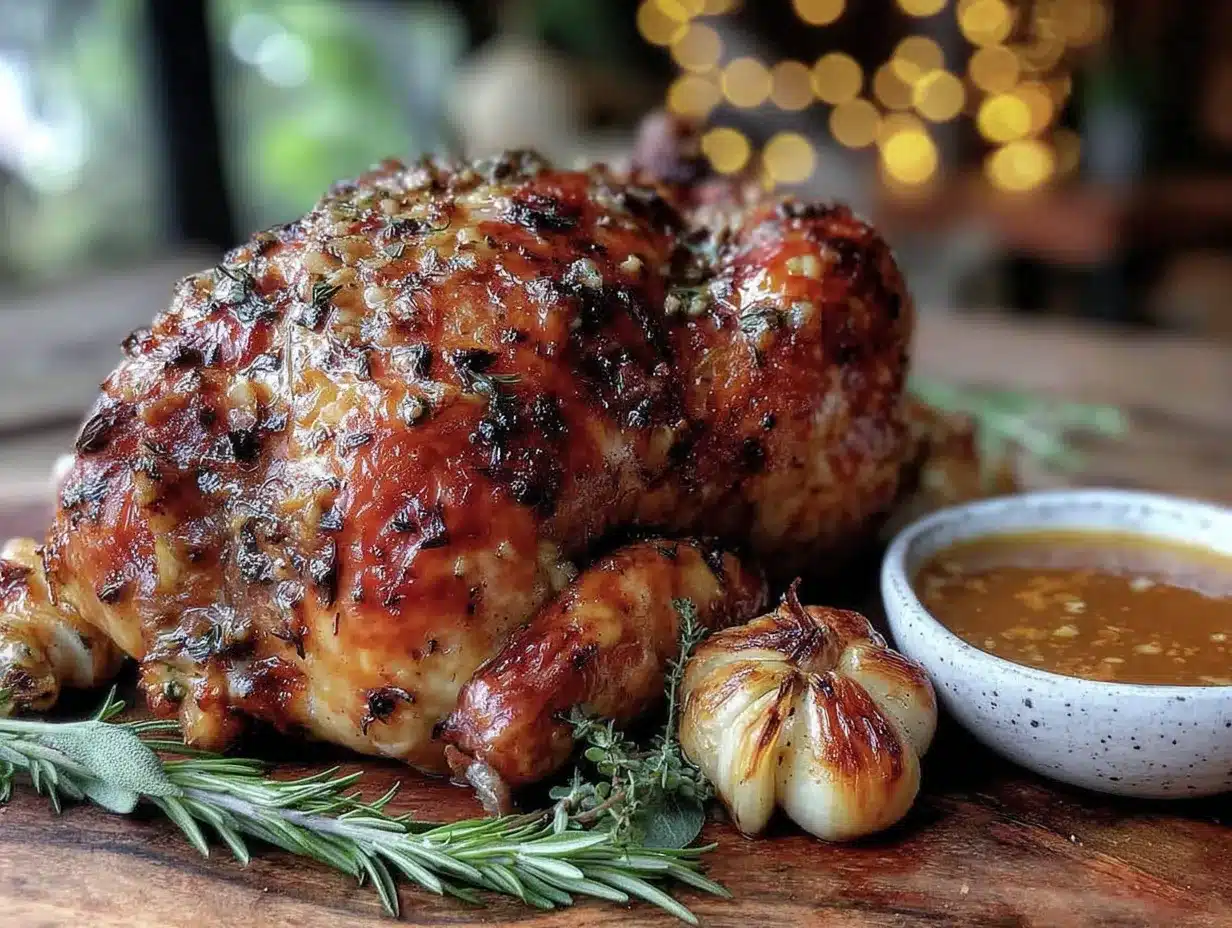
- Perfect for Thanksgiving: This bird is the centerpiece your holiday table deserves. It looks stunning coming out of the oven, all golden and herb-freckled.
- Crowd-Pleaser: I’ve served this to picky eaters, turkey skeptics, and my aunt who “only likes the dark meat”—and everyone went back for seconds.
- Unbelievably Flavorful: The garlic roasts into something sweet and mellow, the herbs perfume every layer, and the butter does its magic. It is comfort food at its finest.
What makes this recipe different from the rest? It’s the technique. Most recipes tell you to rub butter on top of the skin, which looks nice but does almost nothing for the meat. By getting the butter mixture underneath the skin, you’re essentially basting the bird from the inside out. It’s a small shift that changes everything.
This is the kind of recipe that makes you close your eyes after the first bite. It’s Thanksgiving dinner reimagined—simpler, juicier, and with the same soul-soothing satisfaction that makes the holiday special. Perfect for impressing guests without spending all day in the kitchen.
What Ingredients You Will Need
This recipe uses simple, wholesome ingredients to deliver bold flavor and satisfying texture without the fuss. Most of these are pantry staples or easy to find at any grocery store.
- 1 whole turkey (12-14 pounds), thawed completely if frozen. Look for a bird that isn’t pre-brined if you want full control over seasoning. I personally prefer organic or free-range for better flavor and texture.
- 1 cup unsalted butter, softened to room temperature. (Adds richness and helps the herbs stick.) I recommend Kerrygold or Plugrà for the best taste—European-style butter has a higher fat content that makes everything better.
- 8-10 cloves garlic, minced finely. (Use fresh garlic here, not the jarred stuff. It makes a real difference.)
- 3 tablespoons fresh rosemary, chopped. (Dried won’t give you the same pop of flavor, but in a pinch, use 1 tablespoon dried.)
- 3 tablespoons fresh thyme leaves, stripped from stems. (Lemon thyme is lovely if you can find it.)
- 2 tablespoons fresh sage, chopped finely. (Sage and turkey are a classic pairing for good reason.)
- 2 tablespoons fresh parsley, chopped. (Adds a fresh, bright note.)
- 1 tablespoon kosher salt, plus more for seasoning the cavity. (Diamond Crystal is my go-to—it’s less salty by volume, so you have more control.)
- 1 teaspoon freshly ground black pepper.
- 1 lemon, halved. (For stuffing the cavity—it adds moisture and a subtle brightness.)
- 1 onion, quartered. (Also for the cavity, for aromatic flavor.)
- 4-6 sprigs fresh herbs (rosemary, thyme, sage) for stuffing the cavity.
- 2 cups low-sodium chicken or turkey broth, for the bottom of the roasting pan. (This creates steam and prevents the pan drippings from burning.)
Ingredient Selection Tips: If you’re using a larger turkey (16-18 pounds), increase the butter to 1.5 cups and the garlic to 12-14 cloves. For a smaller bird (10-12 pounds), 3/4 cup butter should be plenty. Always choose fresh herbs over dried for the butter mixture—the texture and flavor are noticeably better.
Substitution Guidance: Need a dairy-free option? Use a high-quality vegan butter stick, like Miyoko’s. It won’t be quite as rich, but it still works beautifully. If you don’t have fresh herbs, you can use 1 tablespoon each of dried rosemary, thyme, and sage, but reduce the amount by half—dried herbs are more concentrated.
Equipment Needed
- Roasting pan with a rack. A sturdy metal pan is best for even heat distribution. I’ve used a disposable aluminum one in a pinch, but it can warp—invest in a good one if you roast poultry regularly.
- Instant-read thermometer. This is non-negotiable, honestly. A $15 thermometer will save you from overcooking an expensive bird. I’ve learned this the hard way.
- Kitchen twine for trussing the legs. Not strictly necessary, but it helps the turkey cook more evenly.
- Small bowl for mixing the butter compound.
- Chef’s knife and cutting board for prepping herbs and garlic.
- Basting brush (optional, but helpful for the broth mixture).
- Aluminum foil for tenting the turkey if the skin browns too quickly.
- Large platter for serving.
Preparation Method
- Prep the turkey: Remove the turkey from its packaging. Take out the giblets and neck from the cavities—save them for making gravy if you’re into that. Pat the turkey completely dry with paper towels, inside and out. This is crucial for crispy skin. Let it sit at room temperature for about 30 minutes while you make the butter. (Don’t skip this—a cold bird cooks unevenly.)
- Make the garlic herb butter: In a small bowl, combine the softened butter, minced garlic, chopped rosemary, thyme, sage, parsley, 1 tablespoon kosher salt, and 1 teaspoon black pepper. Mix until everything is evenly distributed. The mixture should be spreadable but not melted. Taste a tiny bit—it should taste boldly seasoned, because it has to flavor a whole turkey.
- Loosen the skin: Using your hands, gently work your fingers under the turkey skin, starting at the neck cavity and moving down over the breast, thighs, and drumsticks. Be careful not to tear the skin—go slow and use your fingertips. This is the most important step for getting that butter where it needs to go.
- Apply the butter: Take about two-thirds of the garlic herb butter and push it under the loosened skin, spreading it evenly over the breast meat, thighs, and drumsticks. Massage the skin from the outside to distribute the butter in an even layer. Rub the remaining butter all over the outside of the skin, covering every surface. Don’t forget the wings and legs.
- Season the cavity: Stuff the turkey cavity with the halved lemon, quartered onion, and the extra herb sprigs. This adds moisture and aroma from the inside out. Don’t pack it too tightly—you want air to circulate.
- Truss the turkey: Using kitchen twine, tie the legs together at the ankles. Tuck the wing tips under the body of the turkey so they don’t burn. This helps the turkey cook evenly and look beautiful when it comes out of the oven.
- Set up the pan: Place the turkey breast-side up on the rack in your roasting pan. Pour the 2 cups of broth into the bottom of the pan, being careful not to splash the turkey. The broth creates steam and keeps the drippings from burning, which means better gravy later.
- Roast: Place the turkey in a preheated 425°F (220°C) oven. Roast for 30 minutes at this high temperature to get the skin started on its golden journey. Then, without opening the oven, reduce the temperature to 350°F (175°C) and continue roasting. The total cooking time will be about 13-15 minutes per pound for an unstuffed turkey. For a 14-pound bird, that’s roughly 3 hours to 3 hours 15 minutes.
- Baste (optional): Every 45 minutes or so, baste the turkey with the pan juices. This isn’t strictly necessary since the butter is already under the skin, but it does help the skin stay moist and develop a gorgeous color. Work quickly so the oven doesn’t lose too much heat.
- Check for doneness: About 30 minutes before the estimated end time, start checking the temperature. Insert your instant-read thermometer into the thickest part of the thigh, avoiding the bone. You’re looking for 165°F (74°C). Also check the breast—it should be around 160°F (71°C), as it will continue to rise while resting. The juices should run clear when you cut between the leg and thigh.
- Rest: Once the turkey hits 165°F, remove it from the oven. Transfer it to a large platter or cutting board and tent it loosely with aluminum foil. Let it rest for at least 30 minutes, and up to 45 minutes. This is not optional—resting allows the juices to redistribute throughout the meat. If you cut into it too soon, all that beautiful moisture will end up on the cutting board instead of in your mouth.
- Carve and serve: After resting, carve the turkey and arrange it on a serving platter. Spoon a little of the pan juices over the top for extra moisture and flavor. Watch everyone’s eyes light up.
Cooking Tips & Techniques
Here’s the thing I learned from my 11:47 PM chicken experiment: the butter-to-meat contact is everything. Most home cooks slather butter on the skin and call it a day, but that butter mostly slides off into the pan. By getting it under the skin, you’re essentially creating a self-basting system that keeps the meat tender no matter what.
One mistake I’ve made more than once: not drying the turkey thoroughly enough. Water is the enemy of crispy skin. If the skin is damp, the butter won’t adhere properly, and you’ll end up with a pale, rubbery exterior. Use extra paper towels and really pat it down, including the crevices.
Another lesson from the trenches: don’t open the oven every ten minutes to check on it. I know it’s tempting, especially if you’re anxious about the big meal, but every time you open that door, you lose heat and extend the cooking time. Trust the thermometer, not the clock.
Timing strategy: If you’re making this for Thanksgiving, plan for the turkey to come out of the oven at least 45 minutes before you want to serve. That resting time is your window for making gravy, reheating sides, and taking a deep breath. I usually aim for the turkey to be done about an hour before dinner, which gives me plenty of buffer time.
For consistency: Use an oven thermometer to make sure your oven is actually at the temperature it says it is. Ovens can be wildly inaccurate, and a 25-degree difference can throw off your entire timing.
Variations & Adaptations
- Citrus Herb Butter Turkey: Add the zest of one lemon and one orange to the butter mixture. Replace the lemon half in the cavity with a halved orange. The citrus brightens the richness of the butter and pairs beautifully with the herbs. I tried this last year and it was a revelation.
- Spicy Chipotle Herb Turkey: Add 1-2 minced chipotle peppers in adobo sauce to the butter mixture, along with 1 teaspoon of smoked paprika. This gives the turkey a subtle smokiness and a gentle heat that doesn’t overwhelm. My spice-loving brother-in-law requests this version now.
- Dairy-Free Version: Substitute the butter with a high-quality vegan butter stick. Add 2 tablespoons of olive oil to the mixture to help it spread. The texture won’t be quite as luxurious, but the flavor is still fantastic. I’ve tested this with Miyoko’s and it works well.
- Herb-Forward Version: Double the fresh herbs and add 2 tablespoons of fresh tarragon and 1 tablespoon of fresh marjoram. Tarragon has a subtle anise flavor that’s surprisingly good with poultry. This is my go-to for a spring roast chicken, but it works beautifully on a turkey too.
- Garlic Lovers Version: Use 15-20 cloves of garlic. Roast half of them first (toss in olive oil, roast at 400°F for 20 minutes until soft), then mash them into the butter along with the raw minced garlic. The roasted garlic adds a sweet, nutty depth that’s incredible.
Serving & Storage Suggestions
Serve the turkey warm, ideally within 30-45 minutes of carving. Arrange the slices on a large platter, overlapping them slightly, and spoon a few tablespoons of the pan juices over the top to keep everything moist. Garnish with fresh herb sprigs and lemon wedges for a beautiful presentation.
What to serve alongside: This turkey pairs beautifully with classic sides—mashed potatoes, green bean casserole, roasted root vegetables, and a tangy cranberry sauce. The garlic herb flavors also complement a simple arugula salad with lemon vinaigrette, which cuts through the richness. For drinks, a crisp Sauvignon Blanc or a dry Riesling works wonderfully.
Storage: Remove all meat from the bones within two hours of cooking. Store leftover turkey in an airtight container in the refrigerator for up to 4 days. The meat stays surprisingly moist thanks to the butter, but it’s best used within the first few days.
Freezer instructions: Shred or slice the leftover turkey and pack it in freezer-safe bags, pressing out as much air as possible. It will keep for up to 3 months. Thaw overnight in the refrigerator before using.
Reheating: The best way to reheat turkey without drying it out is to add a splash of chicken broth or turkey gravy to a skillet, add the turkey, and warm it over medium-low heat, covered, for about 5-7 minutes. You can also reheat it in a 300°F oven, covered with foil, for 15-20 minutes. Avoid the microwave if possible—it tends to make the meat tough and rubbery.
Flavor development: Honestly, leftover turkey is sometimes even better the next day. The flavors have had time to meld, and the meat is still tender. I love making turkey sandwiches with leftover garlic herb butter spread on the bread—it’s a whole new level of delicious.
Nutritional Information & Benefits
Here’s an estimated breakdown per 4-ounce serving of roasted turkey breast (without skin):
- Calories: 190
- Protein: 29g
- Fat: 7g (from the butter)
- Carbohydrates: 1g
- Fiber: 0g
- Sugar: 0g
- Sodium: 380mg
Turkey is an excellent source of lean protein, which supports muscle health and keeps you feeling full. It’s also rich in B vitamins, particularly B6 and B12, which help with energy metabolism and brain function. The garlic in this recipe contains allicin, a compound known for its immune-supporting properties—perfect for the cold and flu season that often coincides with Thanksgiving.
Dietary considerations: This recipe is naturally gluten-free and low-carb. For a lower-sodium version, reduce the salt to 1.5 teaspoons and use unsalted butter. The herb butter adds flavor without relying heavily on salt, so you won’t miss it.
Allergen note: This recipe contains dairy (butter). For a dairy-free version, use vegan butter as noted in the variations section.
From a wellness perspective, I love that this recipe lets you enjoy a rich, satisfying meal without feeling like you’ve completely abandoned your health goals. It’s about balance—indulging in something delicious while still eating real, whole ingredients.
Conclusion
Look, I know turkey can be intimidating. It’s big, it’s expensive, and there’s a lot of pressure to get it right, especially for a holiday like Thanksgiving. But this garlic herb butter turkey recipe is genuinely foolproof. The technique is simple, the ingredients are straightforward, and the result is the juiciest, most flavorful bird you’ll ever pull out of your oven.
I love this recipe because it reminds me of that late-night experiment in my pajamas—the one that proved that sometimes the best ideas come when you’re not trying so hard. It’s forgiving, it’s flexible, and it makes people happy. Whether you’re serving it for a holiday feast or a random Sunday dinner, this turkey delivers.
So go ahead and give it a try. Customize the herbs based on what you have, adjust the garlic to your liking, and make it your own. And when you take that first bite and close your eyes because it’s so good, come back and tell me about it. I’d love to hear how it turned out for you. Share your photos, your questions, your variations—let’s keep this conversation going. Happy cooking, friends!
Frequently Asked Questions
Can I use dried herbs instead of fresh for the butter?
Yes, but reduce the amount by half. Dried herbs are more concentrated than fresh, so you’ll need less. For this recipe, use about 1 tablespoon each of dried rosemary, thyme, sage, and parsley. The texture won’t be quite as vibrant, but the flavor will still be lovely.
Do I need to brine the turkey before using this recipe?
Not at all. The garlic herb butter does the work of keeping the meat moist and flavorful without the extra step of brining. If you prefer a brined turkey, you can certainly do that, but it’s not necessary for this recipe to succeed.
How do I keep the turkey from drying out if I’m cooking it ahead of time?
Cook the turkey as directed, let it rest, and then carve it. Place the carved meat in a baking dish, add a few tablespoons of pan juices or broth, cover tightly with foil, and keep it in a 200°F oven for up to an hour. The added liquid and low heat will keep it moist without overcooking it.
Can I use this recipe for a turkey breast instead of a whole bird?
Absolutely. The technique works perfectly for a bone-in, skin-on turkey breast. Reduce the butter to 1/2 cup and the cooking time to about 1.5 to 2 hours, depending on the size. Use the same temperature method—start at 425°F for 20 minutes, then reduce to 350°F until the internal temperature reaches 165°F.
What should I do with the leftover garlic herb butter?
If you have any leftover butter mixture, you can spread it on bread and toast it for garlic herb bread, or melt it and drizzle it over roasted vegetables. It also freezes beautifully—roll it into a log in plastic wrap and slice off rounds as needed for future roasts or sautés.
Pin This Recipe!
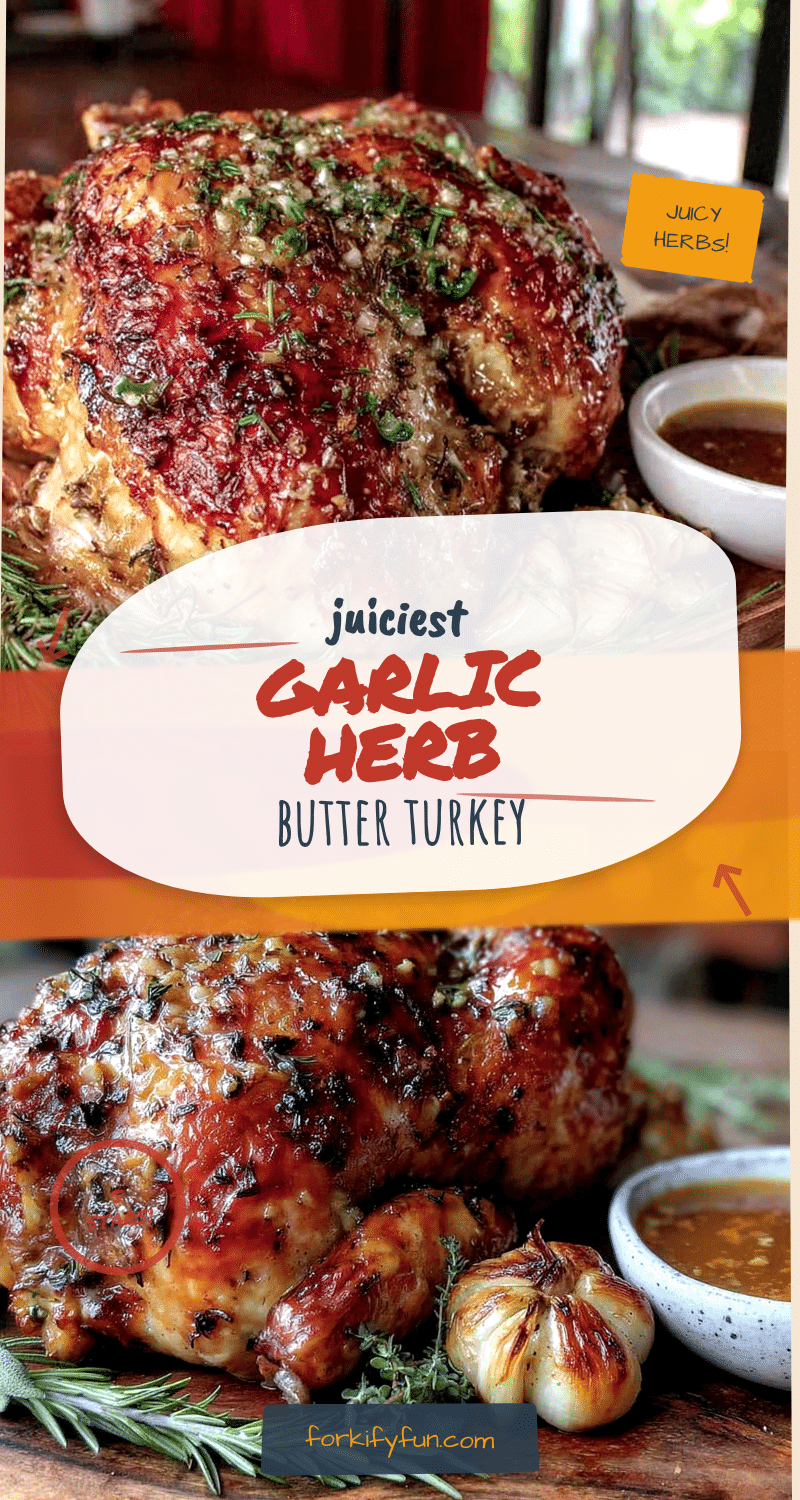
Juiciest Garlic Herb Butter Turkey – Easy Perfect Thanksgiving Recipe
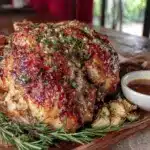
This foolproof turkey recipe uses a garlic herb butter massaged under the skin to ensure every bite is moist and flavorful. Perfect for Thanksgiving or any special occasion, it delivers a golden, herb-freckled bird that will have everyone asking for seconds.
- Prep Time: 30 minutes
- Cook Time: 3 hours to 3 hours 15 minutes
- Total Time: 3 hours 45 minutes to 4 hours
- Yield: 12-14 servings 1x
- Category: Main Course
- Cuisine: American
Ingredients
- 1 whole turkey (12–14 pounds), thawed completely if frozen
- 1 cup unsalted butter, softened to room temperature
- 8–10 cloves garlic, minced finely
- 3 tablespoons fresh rosemary, chopped
- 3 tablespoons fresh thyme leaves, stripped from stems
- 2 tablespoons fresh sage, chopped finely
- 2 tablespoons fresh parsley, chopped
- 1 tablespoon kosher salt, plus more for seasoning the cavity
- 1 teaspoon freshly ground black pepper
- 1 lemon, halved
- 1 onion, quartered
- 4–6 sprigs fresh herbs (rosemary, thyme, sage) for stuffing the cavity
- 2 cups low-sodium chicken or turkey broth
Instructions
- Prep the turkey: Remove the turkey from its packaging. Take out the giblets and neck from the cavities. Pat the turkey completely dry with paper towels, inside and out. Let it sit at room temperature for about 30 minutes.
- Make the garlic herb butter: In a small bowl, combine the softened butter, minced garlic, chopped rosemary, thyme, sage, parsley, 1 tablespoon kosher salt, and 1 teaspoon black pepper. Mix until evenly distributed.
- Loosen the skin: Using your hands, gently work your fingers under the turkey skin, starting at the neck cavity and moving down over the breast, thighs, and drumsticks. Be careful not to tear the skin.
- Apply the butter: Take about two-thirds of the garlic herb butter and push it under the loosened skin, spreading it evenly over the breast meat, thighs, and drumsticks. Massage the skin from the outside to distribute the butter. Rub the remaining butter all over the outside of the skin.
- Season the cavity: Stuff the turkey cavity with the halved lemon, quartered onion, and the extra herb sprigs.
- Truss the turkey: Using kitchen twine, tie the legs together at the ankles. Tuck the wing tips under the body of the turkey.
- Set up the pan: Place the turkey breast-side up on the rack in your roasting pan. Pour the 2 cups of broth into the bottom of the pan.
- Roast: Place the turkey in a preheated 425°F (220°C) oven. Roast for 30 minutes. Then, without opening the oven, reduce the temperature to 350°F (175°C) and continue roasting. Total cooking time will be about 13-15 minutes per pound for an unstuffed turkey.
- Baste (optional): Every 45 minutes or so, baste the turkey with the pan juices.
- Check for doneness: About 30 minutes before the estimated end time, start checking the temperature. Insert an instant-read thermometer into the thickest part of the thigh, avoiding the bone. Look for 165°F (74°C). The breast should be around 160°F (71°C). The juices should run clear when you cut between the leg and thigh.
- Rest: Once the turkey hits 165°F, remove it from the oven. Transfer it to a large platter or cutting board and tent it loosely with aluminum foil. Let it rest for at least 30 minutes, and up to 45 minutes.
- Carve and serve: After resting, carve the turkey and arrange it on a serving platter. Spoon a little of the pan juices over the top.
Notes
For a larger turkey (16-18 pounds), increase butter to 1.5 cups and garlic to 12-14 cloves. For a smaller bird (10-12 pounds), use 3/4 cup butter. Always use fresh herbs for the butter mixture. Let the turkey rest for at least 30 minutes before carving to allow juices to redistribute.
Nutrition
- Serving Size: 4 ounces
- Calories: 190
- Sodium: 380
- Fat: 7
- Saturated Fat: 4
- Carbohydrates: 1
- Protein: 29
Keywords: turkey, garlic herb butter, Thanksgiving, roasted turkey, juicy turkey, holiday recipe