My sister asked why I couldn’t just make the mashed potatoes the day before. It was Thanksgiving morning, and I was already elbow-deep in turkey brine, peeling a mountain of russets with a dull peeler I’d been meaning to replace for three years. I started to explain why that wouldn’t work—something about them getting gluey, or losing that fresh-fluffed texture. Then I stopped. Honestly, I had no good reason. I just assumed it was a bad idea because that’s what I’d always heard.
So I tried it. I made a double batch, spread it in a baking dish, covered it with foil, and shoved it in the fridge. The next day, I slid it into the oven while the turkey rested, and let me tell you—it was possibly the best mashed potato moment of my life. The top got this golden, slightly crisp crust, the inside stayed creamy and rich, and I didn’t have to boil a single potato while guests were knocking on the door. My sister just smiled. She didn’t even say “I told you so,” which was honestly worse.
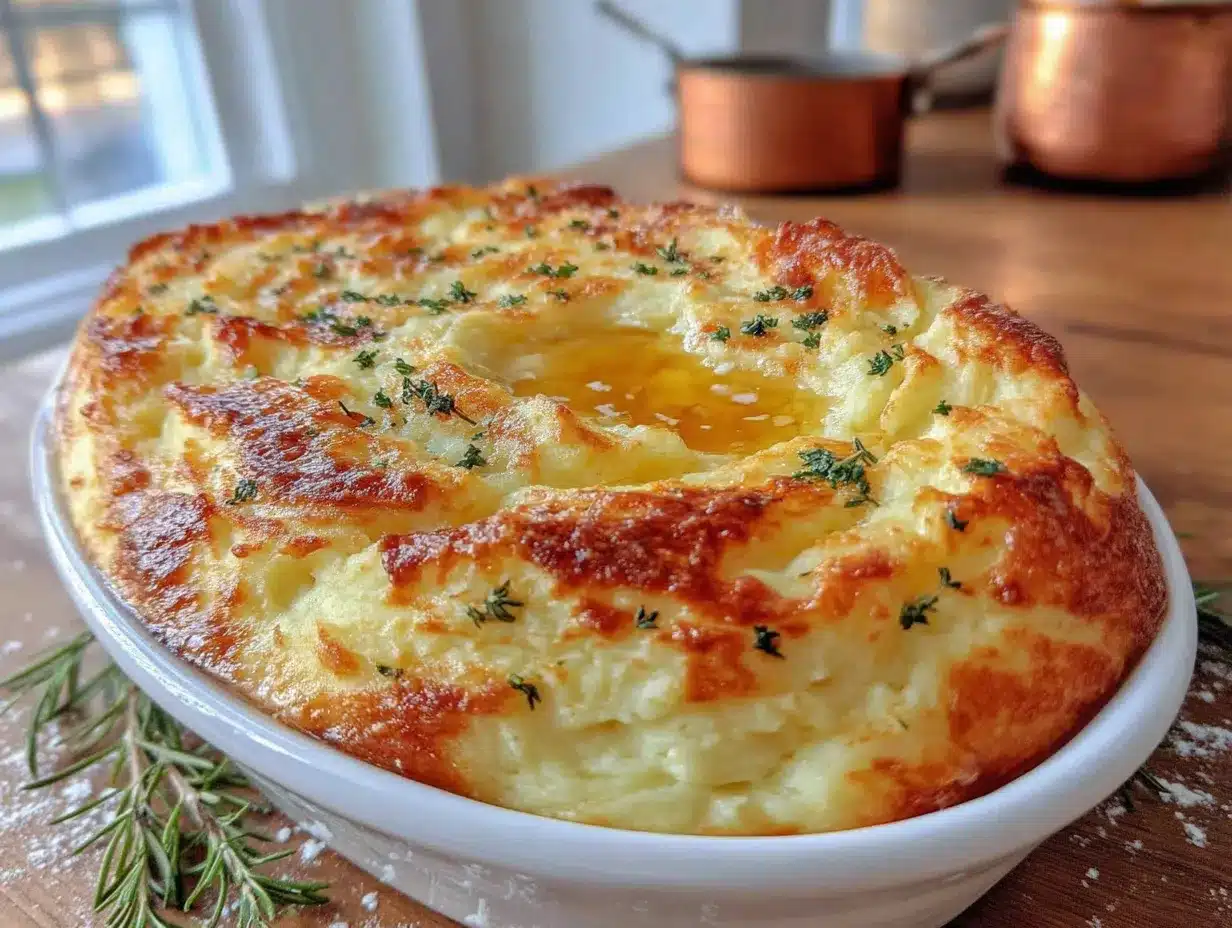
That moment changed how I host. This make-ahead mashed potato casserole isn’t just a convenience thing—it’s a stress-reduction strategy disguised as comfort food. You get all the buttery, fluffy goodness of classic mashed potatoes, but with a crispy, golden top that makes it feel like something special. And you make it the day before, which means you can actually enjoy your own party. Maybe you’ve been there—standing over a pot of boiling water while everyone else is having fun. This recipe fixes that.
Why You’ll Love This Recipe
This isn’t just another mashed potato recipe. It’s the one that saves your sanity and steals the show at the same time. Here’s why it works so well for hosting:
- Totally Make-Ahead: Assemble it up to two days in advance. Pop it in the oven when you’re ready. No last-minute mashing, no frantic seasoning adjustments.
- Crowd-Sized: This recipe scales beautifully. Feed 8 or 80—it’s the same process, just more potatoes.
- That Golden Top: The panko and butter topping creates a crispy, crunchy crust that contrasts perfectly with the creamy interior. It’s the part everyone fights over.
- Foolproof Texture: No gluey, gummy potatoes here. The technique—using a potato ricer and just the right amount of warm dairy—keeps them light and fluffy even after refrigeration.
- Stress-Free Hosting: You can focus on the main dish, the appetizers, or actually talking to your guests. This casserole handles itself.
I’ve tested this recipe for Christmas dinners, Easter brunches, and casual potlucks. It’s never let me down. The key is using Yukon Gold potatoes—they have that natural buttery flavor and waxy texture that holds up beautifully to being reheated. Russets work too, but they can get a bit mealy. Trust me on the Yukons.
This is the kind of dish that makes people close their eyes after the first bite. It’s comfort food that lets you be a guest at your own party. And honestly, isn’t that the whole point of hosting?
What Ingredients You Will Need
This recipe uses simple, everyday ingredients that come together for something truly special. Most of these are pantry staples, but a few key choices make all the difference.
- 5 pounds Yukon Gold potatoes (peeled and cut into 2-inch chunks) — Yukon Golds have a natural buttery flavor and creamy texture that holds up perfectly to make-ahead preparation. Russets work in a pinch, but they can turn grainy after reheating.
- 1 cup whole milk (warmed) — Using warm milk helps the potatoes absorb the liquid without getting gluey. Cold milk can shock the starches and make them gummy. I recommend whole milk for richness, but 2% works too.
- 1/2 cup unsalted butter (cubed, plus 2 tablespoons for the topping) — Salted butter will work, just reduce the added salt slightly. The butter adds richness and helps create that golden crust on top.
- 1 cup sour cream (full-fat preferred) — This is the secret to creamy, tangy mashed potatoes that stay fluffy even after a day in the fridge. Greek yogurt works as a substitute, but the texture will be slightly less rich.
- 4 ounces cream cheese (softened) — This adds an extra layer of creaminess and helps stabilize the potatoes so they don’t separate when reheated. Don’t skip it—it’s the make-ahead magic ingredient.
- 1 teaspoon garlic powder — For a subtle savory note without the sharpness of fresh garlic, which can become bitter overnight.
- 1 teaspoon salt (plus more for the water) — I use fine sea salt. Season the boiling water generously—it’s your only chance to season the potatoes from the inside out.
- 1/2 teaspoon black pepper (freshly ground) — Fresh ground pepper makes a difference here. Pre-ground just doesn’t have the same pop.
- 1/2 cup panko breadcrumbs — These create a light, crispy topping that stays crunchy even after baking. Regular breadcrumbs work but won’t be as airy.
- 2 tablespoons fresh chives (chopped, for garnish) — Optional, but they add a nice pop of color and fresh onion flavor that cuts through the richness.
I recommend using Land O’Lakes butter and Philadelphia cream cheese—they’re consistent and give reliable results. For the sour cream, Daisy is my go-to because it’s thick and doesn’t have any weird additives.
Equipment Needed
You don’t need a ton of fancy tools for this recipe, but a few key pieces make the process much smoother.
- Large stockpot (at least 6 quarts) — For boiling the potatoes. Make sure it’s big enough so the potatoes have room to cook evenly.
- Potato ricer or food mill — This is the best tool for fluffy, lump-free mashed potatoes. A hand masher works too, but you’ll get a denser texture. I’ve used both, and the ricer is worth the investment if you make mashed potatoes regularly.
- 9×13-inch baking dish — A standard casserole dish works perfectly. Glass or ceramic both work well—just adjust baking time slightly if using glass (it holds heat longer).
- Large mixing bowl — For combining the potatoes with the dairy ingredients.
- Wooden spoon or rubber spatula — For folding everything together gently. Avoid over-mixing, which can make the potatoes gluey.
- Aluminum foil — For covering the casserole while it bakes initially, and for storage.
If you don’t have a ricer, you can use a hand mixer on low speed, but be careful not to over-whip. I learned that lesson the hard way—gluey potatoes are a sad thing. A potato masher is my backup option, and it gives a more rustic texture that some people actually prefer.
Preparation Method
Let’s walk through this step by step. The process is straightforward, but a few details make all the difference.
- Prep the potatoes: Peel 5 pounds of Yukon Gold potatoes and cut them into uniform 2-inch chunks. This ensures even cooking. Rinse them in cold water to remove excess starch—this helps prevent gummy potatoes.
- Boil the potatoes: Place the potato chunks in a large stockpot and cover with cold water by about 2 inches. Add 2 tablespoons of salt to the water—this seasons the potatoes from the inside. Bring to a boil over high heat, then reduce to a simmer. Cook for 15-20 minutes, until the potatoes are fork-tender. You should be able to pierce them easily with no resistance. Don’t overcook them, or they’ll absorb too much water and become waterlogged.
- Drain and dry: Drain the potatoes in a colander, then return them to the hot pot for 1-2 minutes. This lets any excess steam escape and dries them out slightly. You want them as dry as possible for the fluffiest texture.
- Rice the potatoes: While the potatoes are still hot, pass them through a potato ricer into a large mixing bowl. Work in batches—don’t overcrowd the ricer. If you’re using a masher, mash until smooth but don’t overwork them.
- Warm the dairy: In a small saucepan or microwave-safe bowl, warm the 1 cup of milk and 1/2 cup of butter together until the butter is melted and the mixture is warm to the touch. This step is crucial—cold dairy will make the potatoes gluey.
- Combine the ingredients: Pour the warm milk and butter mixture over the riced potatoes. Add the sour cream, softened cream cheese, garlic powder, 1 teaspoon salt, and 1/2 teaspoon pepper. Fold everything together gently with a rubber spatula or wooden spoon. Mix just until combined—over-mixing develops the starch and creates a gluey texture. You want it creamy but still light.
- Transfer to baking dish: Spread the potato mixture evenly into a greased 9×13-inch baking dish. Smooth the top with a spatula.
- Make the topping: In a small bowl, melt the remaining 2 tablespoons of butter. Stir in the 1/2 cup of panko breadcrumbs until evenly coated. Sprinkle this mixture evenly over the top of the potatoes.
- Bake or refrigerate: If baking immediately, cover with foil and bake at 350°F for 30 minutes. Remove the foil and bake for another 15-20 minutes, until the top is golden and the edges are bubbling. If making ahead, cover tightly with foil and refrigerate for up to 2 days.
- Reheat from refrigerated: When ready to bake, remove the casserole from the fridge and let it sit at room temperature for 30 minutes while the oven preheats. Bake covered at 350°F for 40 minutes, then uncover and bake for 15-20 minutes more until golden and heated through. The internal temperature should reach 165°F.
A quick note: if the top starts browning too quickly, just tent it loosely with foil. Every oven runs a little differently, so keep an eye on it after the first 30 minutes.
Cooking Tips & Techniques
After making this casserole more times than I can count, I’ve picked up a few tricks that make a real difference.
Don’t overwork the potatoes. This is the number one mistake I see. When you mash or mix too much, you break down the starch cells and release too much starch, which turns your potatoes into glue. Use a ricer if you can, and fold the ingredients together gently. Stop as soon as everything is combined.
Season the water generously. The potatoes absorb salt as they cook, so salting the water is your best chance to season them from the inside out. I use about 2 tablespoons of salt for 5 pounds of potatoes. It sounds like a lot, but most of it goes down the drain.
Warm your dairy. I cannot stress this enough. Cold milk or butter will cool down the potatoes and make them gummy as you try to mix them. Warm the milk and butter together until the butter is melted and the mixture is warm to the touch. It takes 30 seconds and makes a huge difference.
Let the casserole rest before serving. After it comes out of the oven, let it sit for 5-10 minutes. This allows the structure to set slightly and makes serving easier. It also lets the flavors meld together. I once served it straight from the oven and it was a bit loose—the rest really helps.
Double the topping. If you’re a topping person like me, consider doubling the panko and butter mixture. The crunchy contrast against the creamy potatoes is the best part, and more is always better. Just watch it closely so it doesn’t burn.
I once forgot to warm the dairy and ended up with lumpy, cold potatoes that I had to rescue by adding more hot milk. It worked out, but it was a stressful 10 minutes. Learn from my mistakes!
Variations & Adaptations
This recipe is incredibly flexible. Here are some ways to make it your own.
Garlic Lover’s Version: Roast a head of garlic—cut the top off, drizzle with olive oil, wrap in foil, and bake at 400°F for 40 minutes until soft. Squeeze the roasted cloves into the potatoes along with the other ingredients. The sweetness of roasted garlic is incredible here.
Cheesy Mashed Potato Casserole: Fold in 1 cup of shredded cheddar or Gruyère cheese along with the sour cream. Sprinkle another 1/2 cup on top before adding the panko. The cheese adds richness and a savory depth that’s hard to beat.
Herb-Infused Version: Stir in 2 tablespoons of fresh chopped rosemary, thyme, or parsley along with the chives. The herbs add freshness that balances the richness. I’ve used this version for Easter dinner and it was a hit.
Dairy-Free Adaptation: Substitute the milk with unsweetened oat milk or almond milk, use vegan butter, and replace the sour cream and cream cheese with dairy-free alternatives. The texture will be slightly less creamy, but it still works well. I’ve tested this with Kite Hill brand cream cheese and it was surprisingly good.
Loaded Baked Potato Style: Fold in 1/2 cup cooked, crumbled bacon, 1/2 cup shredded cheddar, and 1/4 cup chopped green onions. Top with extra cheese and bacon before baking. This version disappears fastest at potlucks.
One Christmas, I made a sweet potato version by swapping half the Yukon Golds with peeled sweet potatoes. I added a pinch of cinnamon and nutmeg, and it was a lovely, unexpected twist. Don’t be afraid to experiment!
Serving & Storage Suggestions
This casserole is designed to be served hot, straight from the oven. Let it rest for 5-10 minutes after baking, then garnish with fresh chives for a pop of color. It’s the perfect side dish for roasted turkey, glazed ham, prime rib, or even a simple roast chicken. For a vegetarian main, serve it alongside a hearty mushroom gravy and a crisp green salad.
For storage, cover the cooled casserole tightly with foil or plastic wrap and refrigerate for up to 4 days. The flavors actually deepen and meld together over time, so leftovers are often even better than the first serving. To reheat individual portions, microwave for 1-2 minutes, stirring halfway through. For the whole dish, cover with foil and reheat at 350°F for 20-25 minutes until warmed through.
This casserole freezes beautifully. Assemble it completely, but don’t add the panko topping. Wrap the dish tightly in plastic wrap, then a layer of foil, and freeze for up to 3 months. To bake from frozen, remove the plastic wrap, cover with foil, and bake at 350°F for 60-70 minutes. Add the panko topping during the last 20 minutes of baking. The texture is just as good as fresh—I’ve done this for surprise dinner guests and they never knew.
If you’re serving a crowd, this casserole is a lifesaver. It frees up your oven space and your mental energy. You can focus on the main dish and the appetizers while this beauty does its thing in the background.
Nutritional Information & Benefits
Here’s the approximate nutritional breakdown per serving (based on 12 servings):
- Calories: 320
- Fat: 18g
- Saturated Fat: 11g
- Carbohydrates: 35g
- Fiber: 3g
- Sugar: 4g
- Protein: 6g
- Sodium: 480mg
Yukon Gold potatoes are a good source of vitamin C, potassium, and fiber (especially if you leave the skins on—though this recipe works best peeled). The dairy adds calcium and protein, which helps make this a more balanced side dish. Using sour cream and cream cheese adds richness without requiring excessive amounts of butter.
For a lighter version, you can reduce the butter to 1/4 cup and use low-fat sour cream and cream cheese. The texture will be slightly less creamy but still delicious. This recipe contains dairy and gluten (from the panko). For a gluten-free version, use gluten-free panko breadcrumbs or crushed potato chips as a topping.
I personally love that this dish feels indulgent but uses real, whole ingredients. It’s comfort food that you can feel good about serving to your family.
Conclusion
This make-ahead mashed potato casserole has become my secret weapon for hosting. It’s the dish that lets me actually enjoy my own parties, because I’m not stuck in the kitchen peeling potatoes while everyone else is having fun. The creamy, buttery interior with that golden, crunchy top is pure comfort food magic.
I love that this recipe is forgiving and flexible. You can dress it up with cheese and bacon, keep it simple and classic, or adapt it for dietary needs. It’s the kind of recipe that becomes a tradition—the one your family asks for every Thanksgiving and Christmas. And honestly, that’s the best compliment a cook can get.
I’d love to hear how this recipe works for you. Leave a comment below and let me know your favorite variation, or tag me in your photos if you share them online. Happy hosting, and may your potatoes always be fluffy!
Frequently Asked Questions
Can I use red potatoes or Russets instead of Yukon Golds?
Yes, but the texture will be different. Russets are starchier and can become mealy or gluey if overworked. Red potatoes are waxier and will hold their shape better, but they won’t be as creamy. Yukon Golds are the sweet spot for this recipe.
How far in advance can I make this casserole?
You can assemble the casserole up to 2 days ahead and keep it covered in the refrigerator. If you need longer, freeze it for up to 3 months (without the panko topping). Just add the topping before baking.
Can I make this recipe dairy-free?
Absolutely. Use unsweetened oat milk, vegan butter, and dairy-free sour cream and cream cheese. The texture will be slightly less rich, but it still works beautifully. I’ve tested it with Kite Hill brand and it was very good.
Why did my mashed potatoes turn out gluey?
This usually happens from over-mixing or using cold dairy. Use a ricer for the fluffiest texture, fold ingredients gently, and always warm your milk and butter before adding them. Also, don’t over-boil the potatoes—they absorb too much water and become waterlogged.
Can I double this recipe?
Yes, this recipe scales easily. Use a larger baking dish (like a 10×15-inch pan) or make two 9×13-inch casseroles. The baking time may increase by 10-15 minutes, so check for doneness with a thermometer (165°F internal temperature).
Pin This Recipe!
Easy Make-Ahead Mashed Potato Casserole Recipe
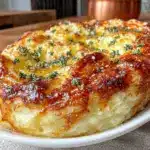
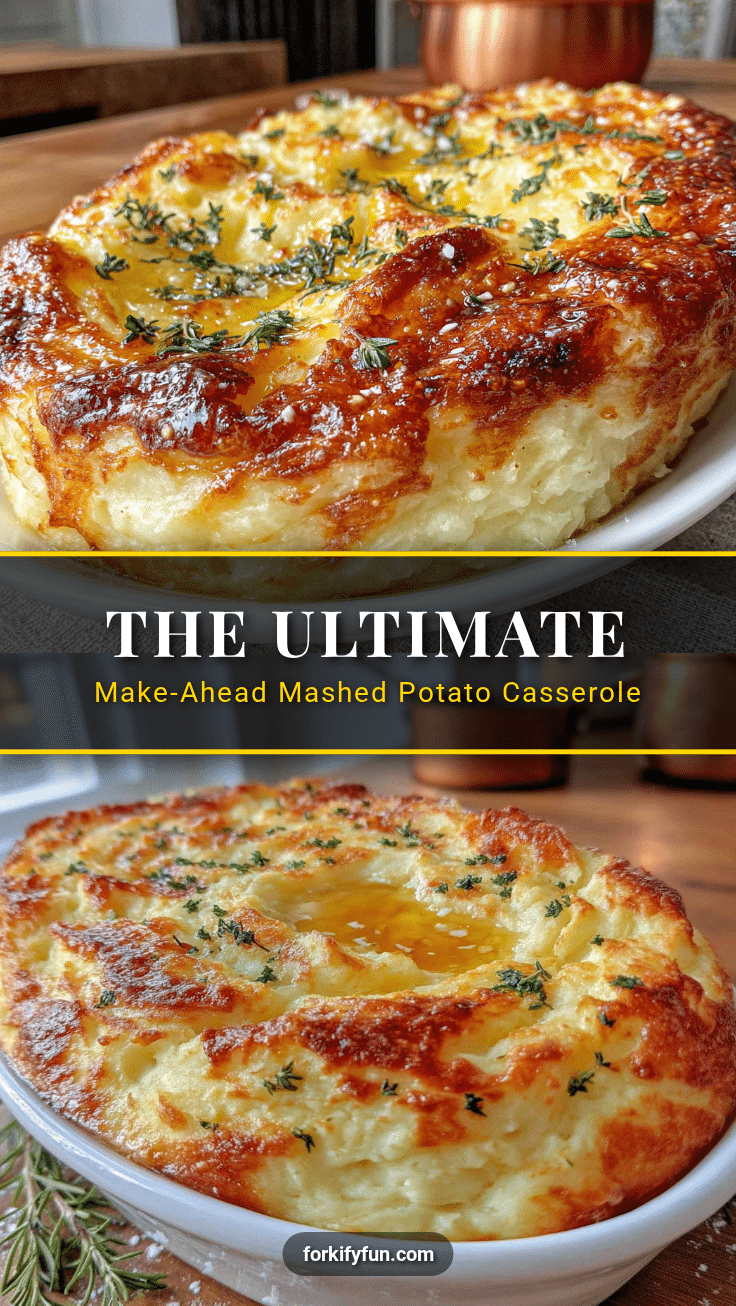
This make-ahead mashed potato casserole is a stress-reduction strategy disguised as comfort food. You get all the buttery, fluffy goodness of classic mashed potatoes, but with a crispy, golden top that makes it feel like something special, and you make it the day before.
- Prep Time: 30 minutes
- Cook Time: 45 minutes
- Total Time: 1 hour 15 minutes
- Yield: 12 servings 1x
- Category: Side Dish
- Cuisine: American
Ingredients
- 5 pounds Yukon Gold potatoes, peeled and cut into 2-inch chunks
- 1 cup whole milk, warmed
- 1/2 cup unsalted butter, cubed, plus 2 tablespoons for the topping
- 1 cup sour cream, full-fat preferred
- 4 ounces cream cheese, softened
- 1 teaspoon garlic powder
- 1 teaspoon salt, plus more for the water
- 1/2 teaspoon black pepper, freshly ground
- 1/2 cup panko breadcrumbs
- 2 tablespoons fresh chives, chopped, for garnish
Instructions
- Prep the potatoes: Peel 5 pounds of Yukon Gold potatoes and cut them into uniform 2-inch chunks. Rinse them in cold water to remove excess starch.
- Boil the potatoes: Place the potato chunks in a large stockpot and cover with cold water by about 2 inches. Add 2 tablespoons of salt to the water. Bring to a boil over high heat, then reduce to a simmer. Cook for 15-20 minutes, until the potatoes are fork-tender.
- Drain and dry: Drain the potatoes in a colander, then return them to the hot pot for 1-2 minutes to let excess steam escape.
- Rice the potatoes: While the potatoes are still hot, pass them through a potato ricer into a large mixing bowl. Work in batches.
- Warm the dairy: In a small saucepan or microwave-safe bowl, warm the 1 cup of milk and 1/2 cup of butter together until the butter is melted and the mixture is warm to the touch.
- Combine the ingredients: Pour the warm milk and butter mixture over the riced potatoes. Add the sour cream, softened cream cheese, garlic powder, 1 teaspoon salt, and 1/2 teaspoon pepper. Fold everything together gently with a rubber spatula or wooden spoon until just combined.
- Transfer to baking dish: Spread the potato mixture evenly into a greased 9×13-inch baking dish. Smooth the top with a spatula.
- Make the topping: In a small bowl, melt the remaining 2 tablespoons of butter. Stir in the 1/2 cup of panko breadcrumbs until evenly coated. Sprinkle this mixture evenly over the top of the potatoes.
- Bake or refrigerate: If baking immediately, cover with foil and bake at 350°F for 30 minutes. Remove the foil and bake for another 15-20 minutes, until the top is golden and the edges are bubbling. If making ahead, cover tightly with foil and refrigerate for up to 2 days.
- Reheat from refrigerated: When ready to bake, remove the casserole from the fridge and let it sit at room temperature for 30 minutes while the oven preheats. Bake covered at 350°F for 40 minutes, then uncover and bake for 15-20 minutes more until golden and heated through. The internal temperature should reach 165°F.
Notes
Don’t overwork the potatoes to avoid gluey texture. Season the water generously. Warm your dairy before adding. Let the casserole rest for 5-10 minutes before serving. Double the panko topping if desired. For variations: add roasted garlic, shredded cheese, fresh herbs, or bacon and cheddar for loaded baked potato style.
Nutrition
- Serving Size: 1 serving
- Calories: 320
- Sugar: 4
- Sodium: 480
- Fat: 18
- Saturated Fat: 11
- Carbohydrates: 35
- Fiber: 3
- Protein: 6
Keywords: make-ahead mashed potatoes, mashed potato casserole, Thanksgiving side dish, holiday potatoes, creamy mashed potatoes, golden top mashed potatoes