The way the honey caramelizes against the salmon’s fat, forming these little dark amber patches that catch the kitchen light—that’s what I made this for. Everything else is secondary. That sticky, almost-burnt edge where the mustard meets the heat, the way the asparagus gets just enough char to squeak when you bite it. I didn’t set out to create a weeknight hero or a “healthy dinner” that actually tastes good. I just wanted one pan, one piece of fish, and that specific glossy crust that makes you forget you’re eating something good for you.
This recipe came from a Tuesday. A tired Tuesday where I had a salmon filet thawing on the counter, a bunch of asparagus that was starting to look sad, and a fridge with exactly three condiments that could plausibly work together. Honey. Dijon. A little bit of olive oil. I threw them in a bowl, painted it over the fish, and crossed my fingers. Honestly, I was expecting something edible at best. What came out of the oven was the kind of dinner that makes you text a photo to your mom unprompted. The honey mustard salmon with asparagus was born out of necessity, but it stuck around because of that crust.
It’s not fancy. It’s not complicated. But there’s something about that balance—sweet from the honey, sharp from the mustard, salty from the salmon—that feels like a cheat code. I’ve made it at least twice a month since that Tuesday. It’s the recipe I pull out when I want to feel like I have my life together, even on nights when I absolutely do not. And if you’ve ever stood in front of your oven wondering how to make a 20-minute dinner that doesn’t taste like a compromise, this one’s for you.
Why You’ll Love This Recipe
Let me tell you why this one’s different. I’ve tested this honey mustard salmon with asparagus more times than I can count—different oven temperatures, different mustard ratios, different thicknesses of filet. I even tried it with wild-caught versus farmed salmon to see which held up better. (Spoiler: both work, but wild-caught needs a minute less in the oven.) This isn’t just another recipe I threw together; it’s the version I actually make for my family, for company, and for myself on nights when I need a win.
- Quick & Easy: From fridge to table in 20 minutes flat. No marinating, no complicated steps, no waiting around. This is the kind of dinner you can make after a long workday without losing your mind.
- Simple Ingredients: You probably have honey and mustard in your pantry right now. The salmon and asparagus are the only things you might need to grab, and they’re available at pretty much any grocery store.
- Perfect for Busy Weeknights: It’s elegant enough for a quiet dinner party but simple enough for a Tuesday. I’ve served it to guests who thought I spent an hour in the kitchen, and I’ve eaten it standing at the counter on nights when I couldn’t be bothered to sit down.
- Crowd-Pleaser: Even people who claim they don’t like salmon end up asking for seconds. The honey mustard glaze is sweet enough to win over skeptics but tangy enough to keep it interesting.
- Unbelievably Delicious: That caramelized crust. That tender, flaky fish. Those perfectly roasted asparagus spears. It’s the kind of meal that makes you close your eyes after the first bite.
What makes this version different from every other honey mustard salmon recipe out there? It’s the ratio. Most recipes use too much honey, which burns before the salmon is cooked through. Or too much mustard, which overpowers the fish. I spent weeks tweaking the balance until I found the sweet spot—literally. The glaze is sticky without being cloying, tangy without being sharp, and it forms that perfect crust without burning. This isn’t just another version; it’s my best version. And I think you’ll agree.
What Ingredients You Will Need
This recipe uses simple, pantry-friendly ingredients to deliver that signature sweet-tangy glaze and perfectly roasted vegetables. Nothing fancy here—just good, honest food that works together beautifully. Most of these are staples I keep on hand, and the ones that aren’t are worth picking up because you’ll use them again and again.
- Salmon Fillets (4 fillets, about 6 ounces each): Look for fillets that are similar in thickness so they cook evenly. I prefer center-cut fillets because they’re the meatiest and most forgiving. If you’re using frozen salmon, thaw it completely in the refrigerator overnight and pat it very dry before cooking. I’ve had good luck with both Atlantic and sockeye salmon here—Atlantic is richer and more forgiving, while sockeye has a firmer texture and stronger flavor. (I personally lean toward Atlantic for this recipe because it stays juicier.)
- Honey (1/4 cup): Use a good-quality honey that you actually like the taste of. I recommend a mild, floral honey like clover or orange blossom for this recipe. Stronger honeys like buckwheat can overpower the mustard. If your honey has crystallized, warm it gently in the microwave for about 10 seconds to loosen it up.
- Dijon Mustard (2 tablespoons): Dijon is non-negotiable here. Yellow mustard is too sharp, and whole-grain mustard changes the texture. Dijon gives you that smooth, slightly spicy tang that balances the honey perfectly. I use Grey Poupon or Maille, but any good Dijon will work.
- Whole-Grain Mustard (1 tablespoon, optional but recommended): This adds little pops of mustard seed that burst in your mouth. It’s not essential, but it takes the glaze from good to great. If you don’t have it, just use an extra tablespoon of Dijon.
- Olive Oil (2 tablespoons, plus more for the pan): Use a good extra-virgin olive oil for the glaze and a lighter olive oil or avocado oil for greasing the pan. The olive oil in the glaze helps it emulsify and keeps the salmon from drying out.
- Garlic (2 cloves, minced): Fresh garlic is best here. Pre-minced garlic from a jar has a different flavor—it’s more bitter and less sweet. Take the extra 30 seconds to mince a fresh clove. Your taste buds will thank you.
- Fresh Asparagus (1 pound, trimmed): Look for spears that are bright green with tight tips. Thicker spears hold up better to roasting and are less likely to get mushy. To trim them, just bend each spear near the bottom until it snaps naturally—that’s where the woody part ends. (I used to cut them all to the same length until I realized the snap method is faster and more accurate.)
- Salt and Black Pepper (to taste): I use kosher salt for its clean flavor and flaky texture. Freshly ground black pepper makes a difference here—the pre-ground stuff just doesn’t have the same punch.
- Optional Garnishes: Fresh dill, chopped parsley, or a sprinkle of red pepper flakes for heat. Lemon wedges for squeezing over the top.
Substitution Guidance: If you need a dairy-free option, this recipe is naturally dairy-free. For a lower-sugar version, you can reduce the honey to 3 tablespoons, but the glaze won’t caramelize as much. Maple syrup can replace honey in a pinch, but it has a stronger flavor that changes the profile. If you’re gluten-free, this recipe is naturally gluten-free as written. For a nut-free option, no changes needed—there are no nuts in this recipe.
Equipment Needed
You don’t need a lot of fancy equipment for this honey mustard salmon with asparagus, which is part of why I love it. Here’s what you’ll need:
- Baking Sheet or Sheet Pan: A rimmed baking sheet is ideal because it catches any glaze that drips off the salmon. I use a half-sheet pan (18×13 inches) for this recipe. If you don’t have one, any oven-safe dish with a rim will work—just make sure it’s large enough to hold the salmon and asparagus in a single layer. (I learned the hard way that crowding the pan leads to steaming instead of roasting.)
- Parchment Paper or Aluminum Foil: Lining your pan makes cleanup a breeze. I prefer parchment paper because it’s non-stick and doesn’t react with the honey. If you use foil, spray it lightly with cooking spray to prevent sticking.
- Small Bowl: For mixing the glaze. Any small bowl will do—I use a cereal bowl most of the time.
- Whisk or Fork: To combine the glaze ingredients. A fork works fine if you don’t want to dirty another dish.
- Pastry Brush or Spoon: For brushing the glaze onto the salmon. A pastry brush gives you more even coverage, but a spoon works in a pinch. (I’ve used the back of a spoon more times than I’ll admit.)
- Chef’s Knife and Cutting Board: For mincing the garlic and trimming the asparagus. A sharp knife makes this job much easier and safer.
- Instant-Read Thermometer (optional but recommended): For checking the internal temperature of the salmon. It should reach 125°F to 130°F for medium-rare. If you don’t have one, you can check doneness by flaking the fish with a fork—it should be opaque and flake easily.
Budget-Friendly Options: Don’t have a pastry brush? Use a silicone basting brush from the dollar store, or just use a spoon to drizzle the glaze over the fish. No instant-read thermometer? You can test doneness by pressing gently on the salmon—it should feel firm but still give a little. I cooked without one for years and did just fine.
Preparation Method
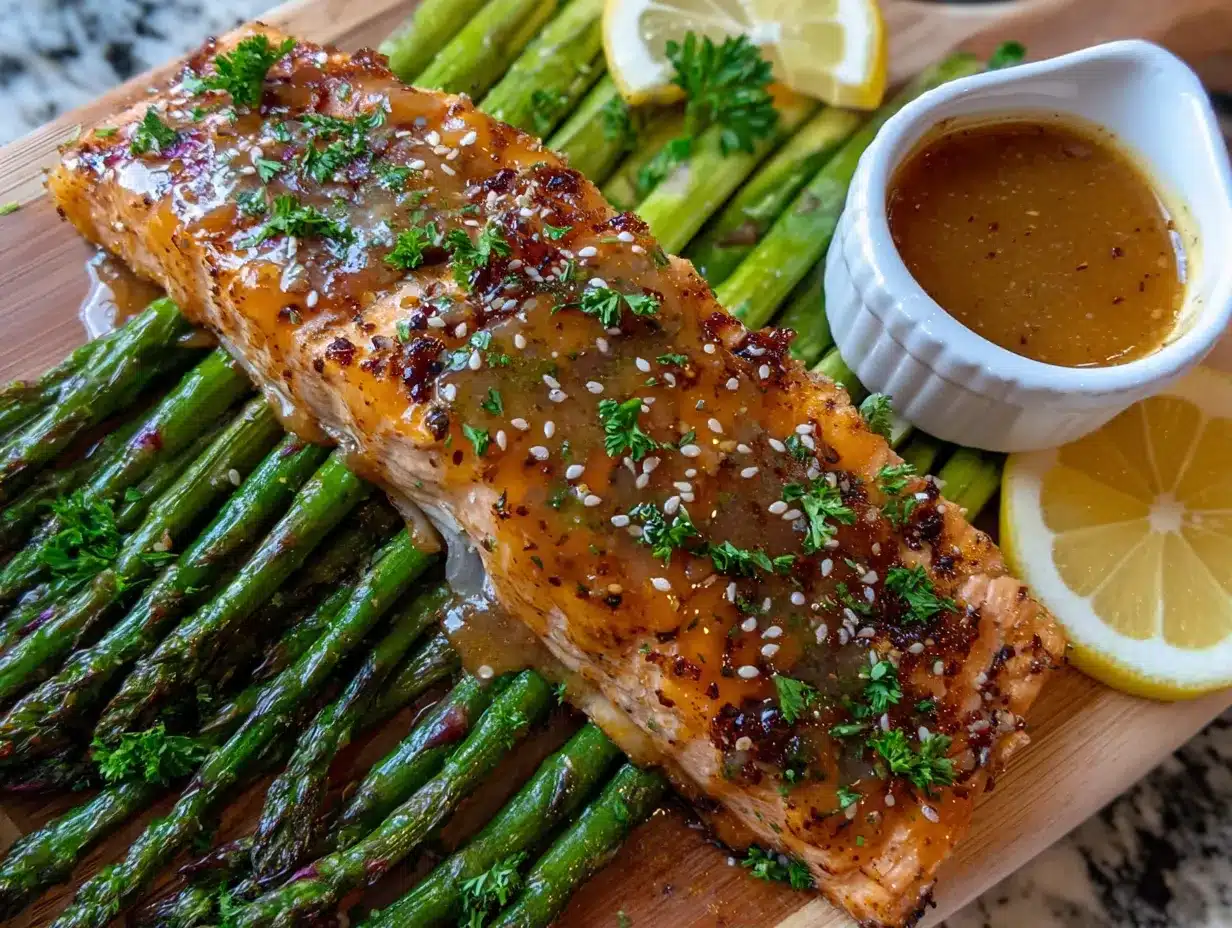
This honey mustard salmon with asparagus comes together in about 20 minutes, and most of that time is hands-off oven time. Here’s how to do it:
- Preheat your oven to 400°F (200°C). Position the rack in the center of the oven. While the oven is heating, line a rimmed baking sheet with parchment paper or aluminum foil. This step saves you from scrubbing later—trust me on this.
- Make the honey mustard glaze. In a small bowl, whisk together 1/4 cup honey, 2 tablespoons Dijon mustard, 1 tablespoon whole-grain mustard (if using), 2 tablespoons olive oil, and 2 minced garlic cloves. Whisk until smooth and well combined. The glaze should be thick but pourable. If it’s too thick, add a teaspoon of water. Taste it—it should be sweet with a sharp, tangy finish. Adjust the honey or mustard to your preference. (I’ve been known to add an extra squeeze of honey when I’m feeling indulgent.)
- Prepare the salmon. Pat the salmon fillets dry with paper towels. This is crucial—dry salmon gets a better sear and absorbs the glaze more evenly. Season both sides generously with salt and black pepper. Place the fillets skin-side down on the prepared baking sheet, leaving space between them for the heat to circulate.
- Prepare the asparagus. Trim the woody ends off the asparagus by bending each spear near the bottom until it snaps. (This is faster and more accurate than cutting them all to the same length.) Place the asparagus spears around the salmon fillets on the baking sheet. Drizzle with a little olive oil and season with salt and pepper. Toss gently to coat.
- Glaze the salmon. Using a pastry brush or the back of a spoon, brush a generous layer of the honey mustard glaze over the top of each salmon fillet. Don’t be shy—you want a good coating. Reserve about half of the glaze for later. (I learned this the hard way: if you use all the glaze at once, the second coat won’t have anything to stick to.)
- Roast for 10 minutes. Place the baking sheet in the preheated oven. Set a timer for 10 minutes. During this time, the salmon will start to cook through and the glaze will begin to caramelize. The asparagus will soften and get those lovely charred spots.
- Apply the second coat of glaze. After 10 minutes, remove the baking sheet from the oven. Brush the remaining glaze over the salmon fillets. This second coat is what gives you that thick, sticky, caramelized crust. Return the pan to the oven.
- Roast for another 3-7 minutes. The total cooking time depends on the thickness of your salmon fillets. For 1-inch thick fillets, 13-14 minutes total is usually perfect. For thinner fillets, check at 12 minutes. The salmon is done when it flakes easily with a fork and the internal temperature reaches 125°F to 130°F for medium-rare. The asparagus should be tender but still have a little bite—it should be bright green and slightly charred at the tips.
- Rest for 2 minutes. Remove the baking sheet from the oven and let the salmon rest for 2 minutes. This allows the juices to redistribute and the glaze to set. Don’t skip this step—it makes a real difference in texture.
- Serve immediately. Transfer the salmon and asparagus to plates. Garnish with fresh dill, chopped parsley, a squeeze of lemon, or a sprinkle of red pepper flakes if desired. Serve hot.
Sensory Cues: At 10 minutes, the glaze should be bubbly and starting to darken around the edges. The salmon should look opaque on the outside but still translucent in the center when you peek at the side. The asparagus should be bright green and starting to wrinkle slightly. When you apply the second coat, the glaze should sizzle slightly on contact. At the end, the salmon should feel firm but give slightly when pressed, and the asparagus should bend easily but not be mushy.
Troubleshooting Tips: If your glaze is burning before the salmon is cooked, your oven runs hot. Reduce the temperature to 375°F next time. If the salmon is cooking too fast on the outside but still raw in the center, your fillets are too thick—try cutting them in half lengthwise or pounding them slightly. If the asparagus is undercooked, cut the spears into smaller pieces so they cook faster.
Cooking Tips & Techniques
I’ve made this honey mustard salmon with asparagus more times than I can count, and I’ve learned a few things along the way. Here are my best tips for getting it right every time:
Pat the salmon dry. This is the single most important step. Wet salmon won’t brown properly, and the glaze will slide right off instead of sticking. Use paper towels to get the fillets as dry as possible before seasoning. I’ve made the mistake of rushing this step, and the result was pale, sad-looking fish with a glaze that pooled on the pan instead of clinging to the salmon.
Don’t overcrowd the pan. If the salmon fillets are too close together, they’ll steam instead of roast. Leave at least an inch of space between each fillet. If you’re making a double batch, use two baking sheets and rotate them halfway through cooking. The same goes for the asparagus—spread them out in a single layer so they get those nice charred spots instead of turning into steamed vegetables.
Use room-temperature ingredients. Cold salmon straight from the fridge will cook unevenly. Let the fillets sit at room temperature for about 10 minutes before cooking. This helps them cook more evenly and prevents the outside from overcooking before the inside is done. (I’ve forgotten this step on busy nights, and the difference is noticeable—cold salmon takes longer to cook and ends up drier.)
Watch the glaze. Honey burns easily. If you notice the glaze getting too dark before the salmon is cooked, tent the pan loosely with foil to protect it. This happened to me the first time I made this recipe—I walked away for two minutes and came back to smoke pouring out of the oven. Now I set a timer and check the salmon every few minutes during the last stage of cooking.
Use an instant-read thermometer. This is the most reliable way to check doneness. Insert the thermometer into the thickest part of the fillet. For medium-rare salmon, you’re looking for 125°F to 130°F. For medium, aim for 130°F to 135°F. For well-done (please don’t), anything above 140°F. The salmon will continue to cook slightly as it rests, so pull it out a few degrees before your target temperature.
Multitask strategically. While the salmon is roasting, use that time to set the table, make a quick side salad, or pour yourself a glass of wine. The 10-minute mark is when you need to apply the second coat of glaze, so set a timer and don’t wander too far. I like to prep any garnishes during this time so everything is ready to go when the salmon comes out of the oven.
Variations & Adaptations
One of the best things about this honey mustard salmon with asparagus is how adaptable it is. Here are some variations I’ve tried and loved:
Dietary Variations:
- Low-Carb/Keto: This recipe is naturally low in carbs. If you want to reduce the sugar even further, use a sugar-free honey substitute or reduce the honey to 2 tablespoons and add an extra tablespoon of Dijon. The glaze won’t caramelize as much, but it’ll still be delicious.
- Dairy-Free: This recipe is already dairy-free as written. No substitutions needed.
- Gluten-Free: All the ingredients in this recipe are naturally gluten-free. Just double-check your mustard labels to make sure there’s no hidden gluten.
- Paleo/Whole30: Use a compliant honey or omit it for a Whole30 version. Replace the honey with a date paste or leave it out entirely—the mustard and garlic will still give you plenty of flavor.
Flavor Variations:
- Spicy Honey Mustard: Add 1/2 teaspoon of cayenne pepper or sriracha to the glaze for a kick. I tried this on a whim one night and ended up loving it—the heat cuts through the sweetness beautifully.
- Herb-Crusted: Sprinkle fresh or dried herbs (thyme, rosemary, or dill) over the glazed salmon before roasting. The herbs get crispy and fragrant in the oven.
- Lemon-Honey Mustard: Add the zest of one lemon and a tablespoon of fresh lemon juice to the glaze. The citrus brightens everything up and balances the richness of the salmon.
- Maple-Dijon: Swap the honey for maple syrup for a deeper, earthier sweetness. This version pairs especially well with roasted root vegetables.
Vegetable Variations:
- Broccoli or Broccolini: Substitute the asparagus with broccoli florets or broccolini. Broccoli needs a few extra minutes in the oven, so add it 5 minutes before the salmon.
- Green Beans: Trimmed green beans work beautifully. They cook faster than asparagus, so check them at the 10-minute mark.
- Brussels Sprouts: Halved Brussels sprouts are delicious roasted alongside the salmon. They need a head start—roast them for 10 minutes before adding the salmon to the pan.
- Zucchini or Summer Squash: Slice into half-moons and toss with olive oil, salt, and pepper. They cook quickly and absorb the glaze beautifully.
Personal Variation I’ve Tried: I once made this with a splash of balsamic vinegar added to the glaze, and it was amazing. The vinegar adds a tangy depth that complements the honey and mustard perfectly. I’ve also tried it with a sprinkle of toasted sesame seeds on top for a nutty crunch. Both variations are keepers.
Serving & Storage Suggestions
This honey mustard salmon with asparagus is best served fresh out of the oven, but there are plenty of ways to enjoy it beyond the initial meal.
Serving Temperature and Presentation: Serve the salmon hot, straight from the oven. The glaze is at its best when it’s warm and sticky. Arrange the salmon fillets on individual plates with the asparagus alongside. A squeeze of fresh lemon juice over the top brightens everything up and cuts through the richness. For a more elegant presentation, place the salmon on a bed of arugula or mixed greens and drizzle any extra glaze from the pan over the top.
Complementary Dishes: This salmon pairs beautifully with simple sides that don’t compete with its flavor. I love serving it with:
- Rice or Quinoa: A simple bed of steamed rice or fluffy quinoa soaks up the extra glaze.
- Roasted Potatoes: Crispy roasted baby potatoes or smashed potatoes are a hearty addition.
- Fresh Salad: A simple green salad with a light vinaigrette balances the richness of the salmon. Try this grilled peach and burrata salad for a seasonal twist.
- Bread: Crusty bread or dinner rolls are perfect for sopping up any leftover glaze on the plate.
Storage Instructions: Leftover salmon can be stored in an airtight container in the refrigerator for up to 3 days. The asparagus will soften over time, but the flavor will still be good. I don’t recommend freezing cooked salmon—the texture changes and becomes dry and mealy.
Reheating Methods: The best way to reheat leftover salmon is in the oven at 300°F for about 5-7 minutes. This warms it through without drying it out. You can also reheat it in a skillet over medium-low heat with a splash of water or chicken broth to keep it moist. Avoid the microwave—it will overcook the salmon and make it rubbery.
How Flavors Develop Over Time: The honey mustard glaze will continue to soak into the salmon as it sits, so leftovers are actually quite flavorful. The asparagus won’t be as crisp, but the overall dish is still delicious. I’ve been known to flake leftover salmon over a salad for lunch the next day—it’s a great way to use up leftovers.
Nutritional Information & Benefits
This honey mustard salmon with asparagus is not just delicious—it’s also packed with nutrients that make it a smart choice for any meal.
Estimated Nutritional Values (per serving, based on 4 servings):
| Nutrient | Amount |
|---|---|
| Calories | 380-420 |
| Protein | 35-40g |
| Fat | 18-22g |
| Saturated Fat | 3-4g |
| Carbohydrates | 20-25g |
| Fiber | 3-4g |
| Sugar | 15-18g |
| Sodium | 400-500mg |
Health Benefits of Key Ingredients:
- Salmon: Rich in omega-3 fatty acids, which support heart health, brain function, and reduce inflammation. It’s also an excellent source of high-quality protein, B vitamins, and selenium.
- Asparagus: Packed with fiber, folate, vitamins A, C, E, and K. It’s also a natural diuretic and supports digestive health.
- Honey: A natural sweetener with antioxidants and antibacterial properties. It also provides quick energy.
- Garlic: Contains allicin, which has anti-inflammatory and immune-boosting properties. It also supports heart health.
Dietary Considerations: This recipe is naturally gluten-free, dairy-free, and low-carb. It’s also suitable for pescatarian diets. If you’re watching your sodium intake, reduce the salt or use a low-sodium alternative.
Potential Allergens: Fish (salmon). This recipe does not contain common allergens like dairy, eggs, nuts, or soy, but always check your mustard labels for hidden ingredients.
Personal Wellness Perspective: I love that this recipe feels indulgent but is actually really good for you. It’s the kind of meal that makes you feel nourished without feeling deprived. I’ve served it to friends who are health-conscious and friends who just want a good dinner, and everyone leaves happy. That’s the sweet spot, if you ask me.
Conclusion
This honey mustard salmon with asparagus is the kind of recipe that earns a permanent spot in your dinner rotation. It’s quick enough for a busy weeknight, elegant enough for company, and simple enough that you don’t need to be a professional chef to pull it off. The honey mustard glaze caramelizes into this sticky, glossy crust that’s sweet, tangy, and absolutely irresistible. The asparagus roasts right alongside it, picking up those lovely charred bits that make it taste like you spent way more effort than you actually did.
I love this recipe because it reminds me that good food doesn’t have to be complicated. A few quality ingredients, a little bit of patience, and 20 minutes in the oven—that’s all it takes to create something that feels special. It’s the recipe I turn to when I want to impress without stressing, when I want to eat well without spending hours in the kitchen, and when I just need a win at the end of a long day.
Now I want to hear from you. Have you tried this honey mustard salmon with asparagus? Did you make any substitutions or add your own twist? Drop a comment below and let me know how it turned out. And if you loved it as much as I do, share it with a friend who needs a quick, delicious dinner idea. Happy cooking, friends!
Frequently Asked Questions
Can I use frozen salmon for this recipe?
Yes, you can use frozen salmon. Just make sure to thaw it completely in the refrigerator overnight and pat it very dry with paper towels before cooking. Frozen salmon tends to release more water as it cooks, so drying it thoroughly is extra important to get that caramelized glaze.
Can I make the honey mustard glaze ahead of time?
Absolutely. You can make the glaze up to 3 days in advance and store it in an airtight container in the refrigerator. Let it come to room temperature before using, or warm it gently in the microwave for about 10 seconds to loosen it up. The flavors actually meld together nicely over time.
What if I don’t have Dijon mustard?
If you don’t have Dijon mustard, you can use yellow mustard or whole-grain mustard in a pinch. The flavor will be different—yellow mustard is sharper and less complex—but it’ll still be tasty. For the closest match, mix equal parts yellow mustard and mayonnaise with a splash of vinegar.
How do I know when the salmon is done?
The most reliable way is to use an instant-read thermometer. Insert it into the thickest part of the fillet—it should read 125°F to 130°F for medium-rare. Without a thermometer, look for these signs: the salmon should be opaque and flake easily with a fork, and the glaze should be caramelized and sticky. The center should still be slightly translucent if you prefer it on the rare side.
Can I double this recipe for a crowd?
Yes, but you’ll need to use two baking sheets to avoid overcrowding the pan. Place the sheets on the upper and lower oven racks and rotate them halfway through cooking. The cooking time may increase by a few minutes, so keep an eye on the salmon and check for doneness early.
Pin This Recipe!
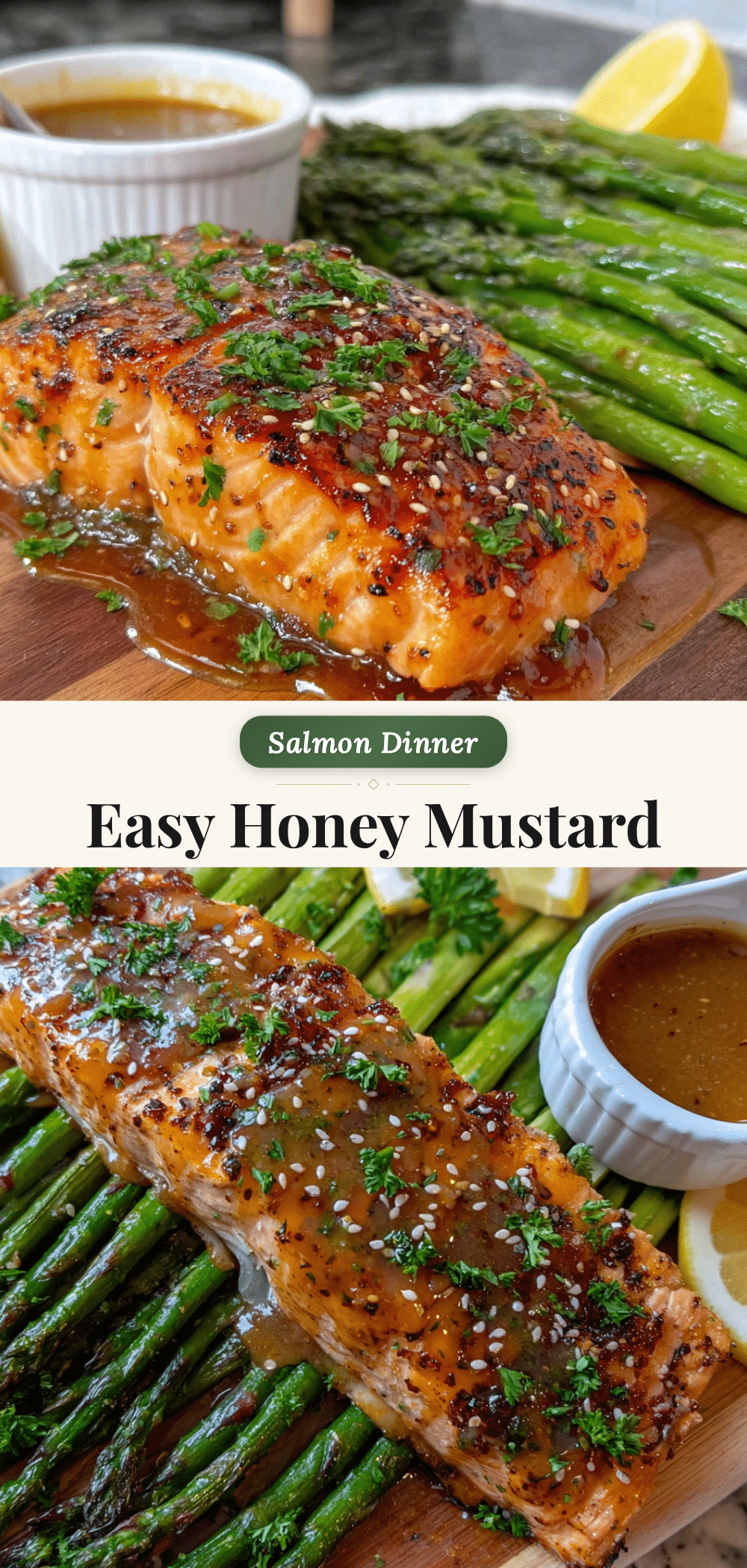
Easy Honey Mustard Salmon with Asparagus – Best 20-Minute Dinner
A quick and easy weeknight dinner featuring honey mustard glazed salmon and roasted asparagus, all cooked on one pan in 20 minutes. The caramelized glaze is sweet, tangy, and absolutely irresistible.
- Prep Time: 5 minutes
- Cook Time: 15 minutes
- Total Time: 20 minutes
- Yield: 4 servings 1x
- Category: Main Course
- Cuisine: American
Ingredients
- 4 salmon fillets (about 6 ounces each)
- 1/4 cup honey
- 2 tablespoons Dijon mustard
- 1 tablespoon whole-grain mustard (optional but recommended)
- 2 tablespoons olive oil, plus more for the pan
- 2 cloves garlic, minced
- 1 pound fresh asparagus, trimmed
- Salt and black pepper to taste
- Optional garnishes: fresh dill, chopped parsley, red pepper flakes, lemon wedges
Instructions
- Preheat your oven to 400°F (200°C). Line a rimmed baking sheet with parchment paper or aluminum foil.
- In a small bowl, whisk together honey, Dijon mustard, whole-grain mustard (if using), olive oil, and minced garlic until smooth.
- Pat salmon fillets dry with paper towels. Season both sides generously with salt and black pepper. Place skin-side down on the prepared baking sheet, leaving space between fillets.
- Trim the woody ends off the asparagus by bending each spear near the bottom until it snaps. Place asparagus around the salmon on the baking sheet. Drizzle with a little olive oil and season with salt and pepper. Toss gently to coat.
- Brush a generous layer of the honey mustard glaze over the top of each salmon fillet. Reserve about half of the glaze for later.
- Roast for 10 minutes. Remove from oven and brush the remaining glaze over the salmon fillets.
- Return to oven and roast for another 3-7 minutes, depending on thickness. Salmon is done when it flakes easily with a fork and internal temperature reaches 125°F to 130°F for medium-rare. Asparagus should be tender but still have a bite.
- Let the salmon rest for 2 minutes before serving. Garnish with fresh dill, parsley, lemon squeeze, or red pepper flakes if desired. Serve hot.
Notes
Pat the salmon dry for best caramelization. Don’t overcrowd the pan. Use room-temperature ingredients for even cooking. Watch the glaze as honey burns easily. For thicker fillets, increase cooking time slightly. Leftovers can be stored in the refrigerator for up to 3 days.
Nutrition
- Serving Size: 1 salmon fillet with
- Calories: 400
- Sugar: 16
- Sodium: 450
- Fat: 20
- Saturated Fat: 3.5
- Carbohydrates: 22
- Fiber: 3.5
- Protein: 37
Keywords: honey mustard salmon, salmon with asparagus, one pan salmon, quick salmon dinner, healthy salmon recipe, 20 minute dinner, weeknight salmon