There used to be a tiny café tucked into a converted garage on a side street in Burlington called The Gilded Gourd that made this soup that I still dream about. When they closed their doors back in 2019—something about the landlord tripling the rent—I honestly felt a little pang of loss that surprised me. It wasn’t just the soup, though that was incredible. It was the whole feeling of walking in there on a chilly October afternoon, the steam fogging up the windows, the smell of something warm and slightly sweet hitting you before you even got to the counter. After about seven tries—some too watery, one that was weirdly gritty, and a couple that just tasted like sad, boiled squash—I finally cracked the code. This crockpot version is it. The one that finally made my husband say, “Okay, that’s the one from that place.” And let me tell you, getting that seal of approval felt better than it probably should have.
I remember the Tuesday I finally got it right. My youngest was home with a cold, so I was stuck inside anyway, and I had a butternut squash sitting on the counter that was starting to look a little desperate. I threw everything in the slow cooker more out of obligation than hope, honestly. I chopped the apple a little unevenly, forgot to peel the garlic (rookie move, but it actually worked out fine), and let it cook while I made a fort out of couch cushions. When I blended it that afternoon, the color was this deep, golden orange that just looked like happiness in a bowl. The texture was silky, not gluey, and the apple gave it this brightness that the café’s version always had but I could never quite place. Maybe you’ve been there—chasing a flavor memory for years, convinced you’ll never get it right. Well, this is me telling you that you absolutely can.
Why You’ll Love This Recipe
This isn’t just another butternut squash soup recipe that leaves you feeling like something’s missing. This is the one that makes everyone at the table go quiet for a minute after that first spoonful, and honestly, that’s the highest compliment a home cook can get. I’ve tested this more times than I care to count, tweaking the apple-to-squash ratio, playing with cook times, and even dragging my neighbor Linda over for a blind taste test (she’s brutally honest, which I appreciate). Here’s what makes this version stand out from the crowd:
- Set It and Forget It: This is a true crockpot recipe. You chop a few things, toss them in, and walk away for hours. No stirring, no babysitting, no standing over a hot stove. Perfect for those days when you’re juggling school pickups, work calls, or just need a nap.
- Budget-Friendly Pantry Staples: Butternut squash and apples are almost always affordable, especially in the fall. You don’t need any fancy ingredients, and you probably already have the onions, garlic, and broth in your kitchen right now.
- Picky Eater Approved: My kids have no idea there’s a whole vegetable masquerading as a creamy, slightly sweet soup. The apple adds just enough natural sweetness to win over even the most suspicious little eaters. It’s a total game-changer for family dinners.
- Cozy Comfort Without the Guilt: This soup is rich and satisfying without being heavy. It’s dairy-free as written (though you can add cream if you want), and it’s packed with fiber and vitamins. It’s the kind of meal that makes you feel good from the inside out.
- Leftovers That Actually Get Better: Like most soups, this one tastes even better the next day. The flavors have time to meld and deepen, so you get an even more delicious lunch the following afternoon. It also freezes beautifully, which is a lifesaver for busy weeks.
What really sets this recipe apart is the method. By roasting the squash and apples before they go into the crockpot—wait, no, I don’t do that here. That’s the old way. This recipe skips the roasting step entirely, which saves you time and an extra dirty pan. The slow cooker does all the caramelizing work for you, drawing out the natural sugars in the squash and apple over those long, gentle hours. The result is a soup that tastes like it simmered all day in a fancy restaurant kitchen, but it came together in your crockpot with minimal effort. It’s comfort food reimagined—simpler, faster, but with the same soul-soothing satisfaction that makes you close your eyes after that first bite.
What Ingredients You Will Need
This recipe uses simple, wholesome ingredients that work together to create something truly special. The beauty of this soup is that you don’t need a long list of exotic items—just a few good things, treated right. Here’s what you’ll need to gather:
- 1 medium butternut squash (about 2.5 to 3 pounds), peeled, seeded, and cut into 1-inch cubes — Look for a squash that feels heavy for its size and has a solid, beige-colored skin without any soft spots. I usually buy the pre-peeled and cubed squash from the grocery store when I’m in a hurry, but fresh is always better for flavor. The cubes should be roughly the same size so they cook evenly.
- 2 medium apples (I prefer Honeycrisp or Fuji), peeled, cored, and roughly chopped — The apple is the secret weapon here. It adds a natural sweetness that balances the earthiness of the squash without making the soup taste like dessert. Honeycrisp apples hold up well during the long cook time and don’t turn into complete mush. You can use Gala or Braeburn in a pinch, but avoid Granny Smith—they’re too tart and can make the soup taste sharp.
- 1 medium yellow onion, roughly chopped — Onion provides that savory backbone that keeps the soup from being one-dimensionally sweet. A yellow onion is perfect because it’s mellow and sweetens as it cooks. You can use a white onion if that’s what you have, but it will be a little more pungent.
- 3 cloves garlic, smashed (no need to chop finely) — I used to mince my garlic for this soup, but honestly, smashing the cloves and throwing them in whole makes life easier. The slow cooker does all the work, and you’re going to blend everything anyway. Plus, smashed garlic releases its flavor more gently, so you don’t get any harsh, raw garlic notes.
- 4 cups vegetable broth or chicken broth — Use a good-quality broth here because it’s a major flavor component. I prefer a low-sodium vegetable broth so I can control the salt level. If you’re using chicken broth, the soup will have a slightly richer, more savory taste. Either works beautifully.
- 1/2 cup canned coconut milk (full-fat) or heavy cream (optional, for creaminess) — This is completely optional, but it adds a lovely velvety texture. I use coconut milk when I want to keep things dairy-free, and it adds a subtle tropical note that pairs surprisingly well with the apple. Heavy cream makes it extra indulgent. You can also skip it entirely for a lighter soup.
- 1 tablespoon maple syrup or honey (optional, depending on sweetness of apples) — I only add this if my apples are on the tart side. Taste your soup before adding any sweetener—you might not need it at all. The squash and apples provide plenty of natural sweetness on their own.
- 1 teaspoon ground cinnamon — Cinnamon is a classic fall spice that warms up the whole soup. It complements both the squash and the apple perfectly. Don’t skip it—it’s essential for that cozy, autumnal flavor.
- 1/2 teaspoon ground nutmeg (freshly grated if you have it) — Nutmeg adds a subtle, nutty warmth that rounds out the cinnamon. Freshly grated nutmeg is a game-changer if you can swing it, but pre-ground works just fine.
- 1/2 teaspoon ground ginger — Ginger adds a little zing that cuts through the sweetness and keeps the soup from feeling heavy. You can use fresh ginger (about a 1-inch piece, peeled and grated) if you prefer, but ground ginger is more convenient and blends smoothly.
- Salt and black pepper to taste — Don’t be shy with the salt. It’s crucial for bringing out all the flavors. Start with a teaspoon and adjust at the end. Freshly ground black pepper adds a tiny kick that brightens everything up.
- Optional toppings: toasted pumpkin seeds, a drizzle of coconut milk or cream, fresh thyme, a sprinkle of cinnamon — These are for presentation and texture. The pumpkin seeds add a nice crunch, and a swirl of cream makes it look restaurant-worthy. But honestly, the soup is delicious all on its own.
Equipment Needed
You don’t need a lot of fancy gear for this recipe, which is part of what makes it so approachable. Here’s what you’ll need to have on hand:
- A 6-quart or larger slow cooker — This is the star of the show. A 6-quart model gives you plenty of room to layer in all the ingredients without overcrowding. If your crockpot is smaller, you can halve the recipe or cook it in batches. I’ve used an old 4-quart model before and it worked, but I had to really cram everything in there.
- A sharp chef’s knife and a sturdy cutting board — Butternut squash is a tough customer, so a good knife makes all the difference. A dull knife is not only frustrating but also dangerous—it can slip off the hard squash skin. Take your time and cut safely.
- A vegetable peeler — A simple Y-shaped peeler works best for getting that tough squash skin off. I’ve tried using a knife, and it’s a nightmare. Trust me on this one.
- An immersion blender or a regular blender — An immersion blender is my preferred tool because you can blend the soup right in the crockpot—less mess, fewer dishes. If you’re using a regular blender, work in batches and be careful with the hot liquid. Never fill the blender more than halfway, and remove the center cap from the lid to let steam escape. Cover the lid with a kitchen towel to avoid splatters.
- Measuring cups and spoons — For the broth and spices. Eyeballing is fine for most things, but the spices are worth measuring to get the balance right.
- A large spoon or ladle — For stirring and serving.
If you don’t have an immersion blender, don’t run out and buy one just for this recipe. A regular blender works perfectly—just let the soup cool slightly before blending, and always vent the lid. I’ve had a lid blow off before, and cleaning hot butternut squash soup off the ceiling is not a fun afternoon activity. Lesson learned.
Preparation Method
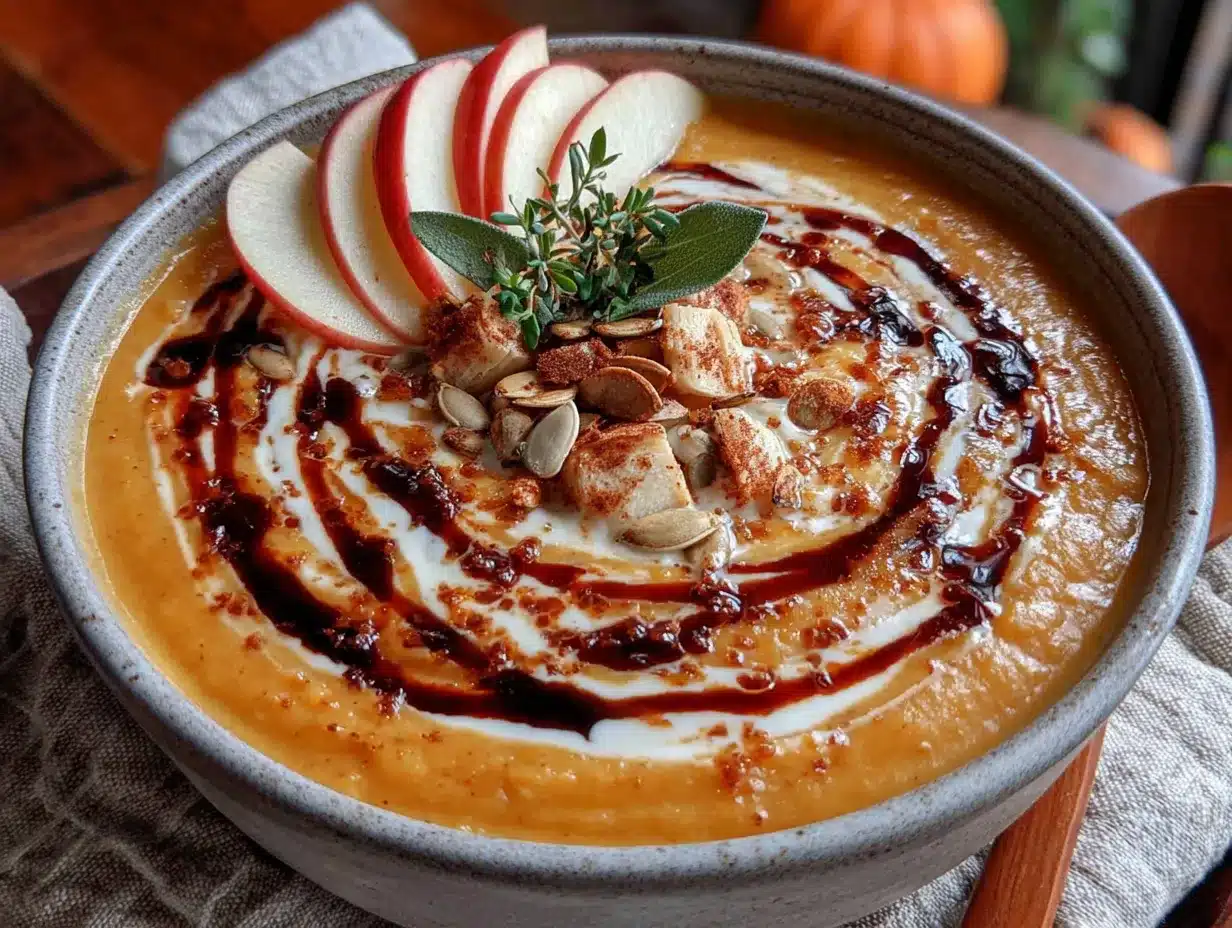
This recipe is almost laughably simple, but I’ll walk you through each step so you get perfect results every time. The key is to let the crockpot do the heavy lifting—your job is just to prep the ingredients and then walk away.
- Prep the squash: Start by peeling the butternut squash with your vegetable peeler. Cut off the stem end and the bottom, then slice the squash in half where the narrow neck meets the round bulb. Cut each piece in half lengthwise and scoop out the seeds with a spoon. Now cut the squash into 1-inch cubes. Don’t stress about making them perfect—they just need to be roughly the same size so they cook evenly. This is the most time-consuming part of the whole recipe, so put on some music or a podcast and take your time. You’ve got this.
- Prep the apples and onion: Peel the apples, cut them in half, remove the cores, and chop them into chunks about the same size as the squash cubes. Roughly chop the onion. Smash the garlic cloves with the flat side of your knife—no need to peel them first, the skin will come right off after smashing.
- Layer everything in the crockpot: Place the cubed squash, chopped apples, onion, and smashed garlic cloves into your slow cooker. Don’t worry about layering them perfectly—just dump them in and give it a quick stir with your hands or a spoon. The order doesn’t matter much since everything will cook down together.
- Add the broth and spices: Pour the vegetable or chicken broth over the vegetables. Add the cinnamon, nutmeg, ginger, and about a teaspoon of salt. Give everything a good stir to distribute the spices. At this point, the liquid should come about halfway up the vegetables—if it looks low, you can add a little more broth or water. You don’t want to drown the squash, just give it enough liquid to cook in.
- Cook on low for 6-7 hours or high for 3-4 hours: Cover the crockpot and set it to low if you have the time. Low and slow is always my preference for this soup because it gives the flavors more time to develop and meld together. The squash should be fork-tender when it’s done—if you can easily pierce a cube with a fork, it’s ready. If it’s still firm, give it another 30 minutes.
- Blend until smooth: Once the squash is tender, turn off the slow cooker. If you’re using an immersion blender, carefully blend the soup right in the crockpot until it’s completely smooth and velvety. If you’re using a regular blender, let the soup cool for about 10 minutes first, then blend in batches. Be extremely careful—hot liquid expands and can blow the lid off a blender. Fill the blender no more than halfway, remove the center cap, and cover the opening with a folded kitchen towel while you blend.
- Stir in the coconut milk or cream (optional): If you’re adding coconut milk or heavy cream, stir it in after blending. This is the moment the soup transforms from good to glorious. The color lightens to a beautiful creamy orange, and the texture becomes luxuriously smooth. Taste and adjust the seasoning—you might want a little more salt, a pinch more cinnamon, or a drizzle of maple syrup if it needs sweetness.
- Serve and garnish: Ladle the soup into bowls and top with your favorite garnishes. A swirl of extra coconut milk or cream, a sprinkle of toasted pumpkin seeds, a few fresh thyme leaves, or a light dusting of cinnamon all work beautifully. Serve hot with crusty bread or a simple green salad on the side.
Cooking Tips & Techniques
After making this soup more times than I can count, I’ve picked up a few tricks that make the process smoother and the results more consistent. Here are my best tips for crockpot butternut squash soup success:
Don’t skip the salt at the beginning. I know it’s tempting to wait until the end to season, but adding salt at the start helps the squash and apples release their moisture and cook more evenly. It also allows the salt to penetrate the vegetables rather than just sitting on the surface. Start with a teaspoon and adjust at the end—you can always add more, but you can’t take it out.
Cut your squash and apples the same size. This is probably the most important tip for even cooking. If some pieces are huge and others are tiny, the small ones will turn to mush while the big ones are still crunchy. Aim for 1-inch cubes and try to be consistent. I know it’s tedious, but it makes a real difference.
Resist the urge to peek. Every time you lift that crockpot lid, you release heat and steam, which adds cooking time. I know it’s hard, especially when your kitchen starts smelling amazing, but try to leave the lid on until at least the 5-hour mark on low or the 3-hour mark on high. Trust the process.
Blend carefully to avoid a mess. I learned this one the hard way. The first time I used a regular blender for hot soup, I filled it too full and the lid popped off, sending hot liquid all over my counter and, unfortunately, my arm. Now I always let the soup cool for at least 10 minutes before blending, and I never fill the blender more than halfway. An immersion blender is safer and easier, but if you don’t have one, just be patient and work in small batches.
Adjust the consistency to your liking. Some people like their soup thick enough to stand a spoon in, while others prefer it thinner and more sippable. After blending, if the soup is too thick for your taste, stir in a little extra broth or water until it reaches your desired consistency. If it’s too thin, you can simmer it on the stovetop for a while to reduce it, or stir in a tablespoon of cornstarch mixed with cold water to thicken it up.
Make it ahead for better flavor. This soup is one of those rare dishes that actually tastes better the next day. The flavors continue to meld and deepen overnight, so don’t hesitate to make it a day ahead. Just let it cool completely, store it in the fridge, and reheat gently on the stovetop or in the microwave when you’re ready to serve.
Variations & Adaptations
One of the best things about this soup is how customizable it is. Over the years, I’ve tried all sorts of variations, and here are some of my favorites. Feel free to experiment and make this recipe your own:
Spicy Pumpkin Seed Version: For a little heat, add a pinch of cayenne pepper or red pepper flakes along with the other spices. Then top the finished soup with pumpkin seeds that you’ve toasted in a dry skillet with a sprinkle of chili powder and salt. The spicy crunch against the creamy, sweet soup is an incredible contrast. My husband loves this version, and it’s become our go-to for game day dinners.
Curried Butternut Squash Soup: Swap the cinnamon, nutmeg, and ginger for 1 to 2 tablespoons of curry powder. Add a tablespoon of tomato paste for depth and a squeeze of lime juice at the end for brightness. This version has a completely different personality—warm, aromatic, and slightly exotic. It’s perfect for when you want something a little different from the classic fall flavors.
Dairy-Free and Vegan: This recipe is already dairy-free if you use vegetable broth and coconut milk. The coconut milk adds a lovely richness without any dairy. For a completely vegan version, make sure your broth is vegetable-based and skip the honey in favor of maple syrup. I’ve served this to dairy-loving friends who had no idea it was dairy-free—they just thought it was delicious.
Roasted Version for More Depth: If you have a little extra time, you can roast the squash and apples on a baking sheet at 400°F for about 25 minutes before adding them to the crockpot. This adds a deeper, caramelized flavor that’s absolutely gorgeous. It’s not necessary by any means, but it’s a nice trick for special occasions when you want to go the extra mile.
Add Some Greens: Stir in a few handfuls of fresh spinach or kale during the last 30 minutes of cooking. The greens will wilt right into the soup and add extra nutrients and a beautiful fleck of green. My kids don’t even notice the spinach, and I feel like a supermom sneaking in those extra veggies.
Serving & Storage Suggestions
This soup is incredibly versatile when it comes to serving. Here’s how to make it a complete meal and how to store leftovers for later:
Serving Suggestions: Serve this soup piping hot, ladled into deep bowls. A swirl of coconut milk or cream on top not only looks beautiful but also adds a touch of richness. I like to top mine with toasted pumpkin seeds for crunch and a few fresh thyme leaves for a pop of color and freshness. A sprinkle of cinnamon or a drizzle of maple syrup is also lovely. For a complete meal, pair the soup with a crusty baguette or sourdough bread for dipping, or serve it alongside a simple green salad with a tangy vinaigrette to cut through the sweetness. It also works beautifully as a starter for a fall dinner party—serve it in small cups or mugs for a cozy, casual vibe.
Storage Instructions: Let the soup cool completely before storing. Transfer it to an airtight container and refrigerate for up to 5 days. The flavors will continue to develop, so it might even taste better on day two or three. To reheat, simply warm it on the stovetop over medium heat, stirring occasionally, or microwave individual portions in a microwave-safe bowl. If the soup has thickened in the fridge, stir in a splash of broth or water to thin it back to your desired consistency.
Freezer Instructions: This soup freezes like a dream. Let it cool completely, then transfer it to freezer-safe containers or zip-top bags. Leave a little headroom in the containers because the soup will expand as it freezes. Label the containers with the date and freeze for up to 3 months. To thaw, place the container in the refrigerator overnight, then reheat gently on the stovetop. You can also thaw it in the microwave if you’re in a hurry. I like to freeze individual portions in mason jars for quick, easy lunches—just remember to leave room for expansion and never fill the jars all the way to the top.
Nutritional Information & Benefits
This soup is not only delicious but also packed with nutrients that make you feel good about eating it. Here’s a rough estimate of the nutritional content per serving (based on 6 servings, without optional toppings):
- Calories: Approximately 180-220 per serving (depending on whether you add coconut milk or cream)
- Protein: 3-5 grams
- Fat: 5-10 grams (mostly from the coconut milk or cream)
- Carbohydrates: 30-35 grams
- Fiber: 6-8 grams
- Sugar: 12-15 grams (naturally occurring from the squash and apples)
- Vitamin A: Over 400% of the daily recommended intake (thanks to the butternut squash!)
- Vitamin C: About 30% of the daily recommended intake
- Potassium: A good source, which is great for heart health
Butternut squash is a powerhouse of nutrition. It’s loaded with beta-carotene, which your body converts into vitamin A for healthy vision and immune function. The apples add fiber and vitamin C, while the onions and garlic provide antioxidants and anti-inflammatory compounds. This soup is naturally gluten-free and can easily be made vegan and dairy-free. It’s also relatively low in calories for how satisfying it is, making it a great option for anyone watching their weight without feeling deprived.
Conclusion
This crockpot butternut squash and apple soup is the kind of recipe that becomes a fall tradition. It’s the soup you make on a lazy Sunday when the leaves are turning and there’s a chill in the air. It’s the soup you bring to a friend who’s had a rough week, because it feels like a hug in a bowl. It’s the soup your kids will ask for again and again, even though they have no idea it’s packed with vegetables. After all those failed attempts to recreate that café’s version, I can honestly say this one is better. It’s more forgiving, more flexible, and it comes with the satisfaction of knowing you made it yourself, in your own kitchen, with your own two hands.
I’d love to hear how this soup turns out for you. Did you add your own twist? Did your picky eater ask for seconds? Did you serve it at a fall dinner party and impress everyone? Drop a comment below and let me know—I read every single one, and your stories and ideas inspire me to keep experimenting in the kitchen. And if you’re looking for more cozy, family-friendly recipes that won’t break the bank, be sure to check out my cozy chicken and dumplings and this easy slow cooker beef stew—they’re both crowd-pleasers that your family will love. Happy cooking, and here’s to warm bowls and happy hearts!
Frequently Asked Questions
Can I use frozen butternut squash for this recipe?
Absolutely! Frozen butternut squash is a fantastic shortcut. You don’t even need to thaw it—just add it directly to the crockpot frozen. The cooking time might be slightly longer (add about 30 minutes to an hour), but the results are just as delicious. Just make sure to buy plain frozen squash, not the seasoned or sauced kind.
Can I make this soup in an Instant Pot instead of a crockpot?
Yes, you can! To make this in an Instant Pot, sauté the onion and garlic in a little oil using the sauté function, then add the remaining ingredients (except the coconut milk). Pressure cook on high for 10 minutes, then let the pressure release naturally for 10 minutes before releasing the remaining pressure manually. Blend and stir in the coconut milk as directed. It’s even faster than the crockpot version!
Why is my soup bitter?
Bitterness in butternut squash soup usually comes from one of two things: overcooked garlic or a squash that was past its prime. If you added a lot of garlic or cooked it for too long, it can develop a bitter edge. To fix it, try adding a pinch of sugar or a drizzle of maple syrup to balance the bitterness. You can also stir in a splash of apple cider vinegar or lemon juice—acidity can help counteract bitter flavors.
Can I leave the apple peel on?
You can, but I don’t recommend it. Apple peels can become tough and chewy even after long cooking, and they don’t blend as smoothly as the flesh. The peel can also add a slightly bitter, astringent note that detracts from the sweet, creamy flavor of the soup. It only takes a minute to peel the apples, and the result is a much silkier, more luxurious soup.
How can I make this soup more filling for a main course?
To turn this soup into a heartier main dish, try adding a can of drained and rinsed chickpeas or white beans during the last hour of cooking. They’ll add protein and fiber, making the soup more substantial. You can also serve it over cooked quinoa or rice, or with a generous handful of croutons on top. A side of grilled cheese sandwiches is always a winning combination, too!
Pin This Recipe!
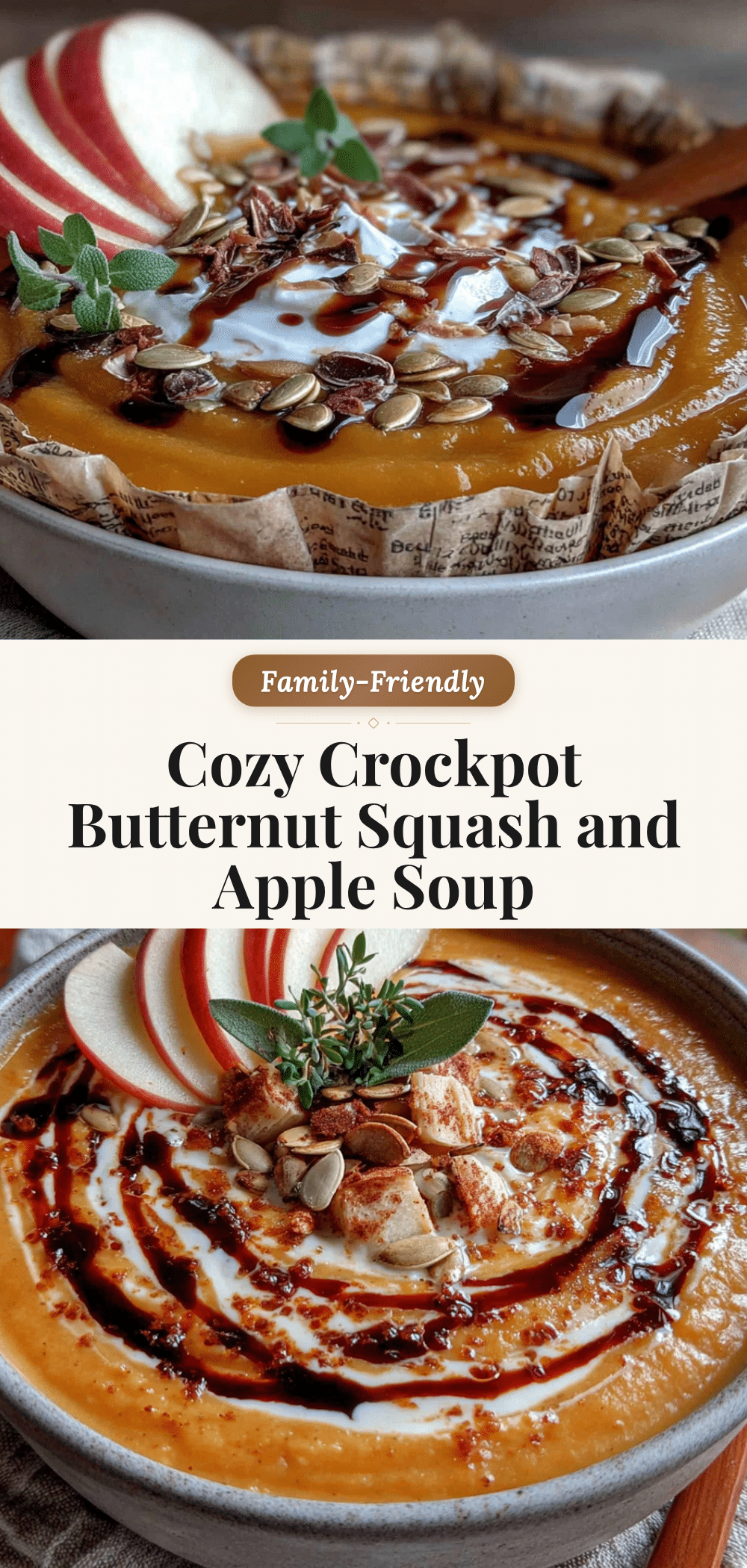
Easy Crockpot Butternut Squash and Apple Soup Recipe
A creamy, comforting crockpot butternut squash and apple soup that’s easy to make and tastes like a hug in a bowl. Perfect for fall, this dairy-free soup is packed with flavor and nutrients.
- Prep Time: 20 minutes
- Cook Time: 6 hours
- Total Time: 6 hours 20 minutes
- Yield: 6 servings 1x
- Category: Soup
- Cuisine: American
Ingredients
- 1 medium butternut squash (about 2.5 to 3 pounds), peeled, seeded, and cut into 1-inch cubes
- 2 medium apples (Honeycrisp or Fuji), peeled, cored, and roughly chopped
- 1 medium yellow onion, roughly chopped
- 3 cloves garlic, smashed
- 4 cups vegetable broth or chicken broth
- 1/2 cup canned coconut milk (full-fat) or heavy cream (optional)
- 1 tablespoon maple syrup or honey (optional)
- 1 teaspoon ground cinnamon
- 1/2 teaspoon ground nutmeg
- 1/2 teaspoon ground ginger
- Salt and black pepper to taste
- Optional toppings: toasted pumpkin seeds, a drizzle of coconut milk or cream, fresh thyme, a sprinkle of cinnamon
Instructions
- Prep the squash: Peel the butternut squash, cut off the stem and bottom, slice in half where the narrow neck meets the round bulb. Cut each piece in half lengthwise, scoop out seeds, and cut into 1-inch cubes.
- Prep the apples and onion: Peel the apples, core, and chop into chunks similar to squash. Roughly chop the onion. Smash the garlic cloves.
- Layer everything in the crockpot: Place cubed squash, chopped apples, onion, and smashed garlic into the slow cooker. Stir briefly.
- Add the broth and spices: Pour broth over vegetables. Add cinnamon, nutmeg, ginger, and about 1 teaspoon salt. Stir to distribute.
- Cook on low for 6-7 hours or high for 3-4 hours, until squash is fork-tender.
- Blend until smooth: Use an immersion blender directly in the crockpot, or let cool slightly and blend in batches in a regular blender (fill no more than halfway, remove center cap, cover with towel).
- Stir in the coconut milk or cream (optional) after blending. Adjust seasoning with salt, pepper, or maple syrup if needed.
- Serve hot with desired garnishes.
Notes
For best flavor, make a day ahead. To thicken, simmer on stovetop or stir in cornstarch slurry. To thin, add extra broth. For Instant Pot: sauté onion and garlic, add remaining ingredients (except coconut milk), pressure cook on high 10 minutes, natural release 10 minutes, then blend.
Nutrition
- Serving Size: 1 bowl (about 1.5 cu
- Calories: 200
- Sugar: 14
- Sodium: 600
- Fat: 7
- Saturated Fat: 5
- Carbohydrates: 33
- Fiber: 7
- Protein: 4
Keywords: crockpot butternut squash soup, apple soup, slow cooker soup, fall soup, dairy-free soup, vegan soup, easy soup recipe