I figured a one-pan bratwurst and sauerkraut dinner would be good, but probably just okay. You know, the kind of meal you throw together on a Tuesday because you’re out of ideas and the fridge is looking sad. It took about ten minutes of that skillet sizzling, with the smell of caraway and browned pork filling my entire kitchen, for that assumption to fall apart completely. I was standing there, spatula in hand, genuinely surprised by how something so simple could smell so incredibly, mouthwateringly good.
Honestly, this recipe started as a pantry clean-out. I had a package of bratwurst in the fridge that needed cooking, a jar of sauerkraut that had been hanging out for a while, and an apple that was starting to get a little soft. I figured I’d just brown the sausages, dump in the kraut, and call it a night. But then I remembered a trick from a German friend about adding a little apple and onion to balance the tang, and a splash of broth to keep everything from drying out. The result was way more than the sum of its parts. The sausages get perfectly browned and juicy, the sauerkraut softens and sweetens, and the whole thing comes together in one skillet with almost no cleanup. It’s the kind of meal that makes you feel like you actually have your life together, even when you don’t.
This easy bratwurst and sauerkraut skillet has become my go-to for those nights when I want something deeply satisfying without a lot of fuss. It’s hearty enough for a cold winter evening but light enough for a quick spring supper. And the best part? It tastes even better the next day, if there’s any left. So, let’s get into it. This is one of those recipes that proves the best dinners are often the simplest.
Why You’ll Love This Recipe
This isn’t just another sausage recipe. This is the one that’ll earn a permanent spot in your weekly rotation. Here’s why it works so well:
- One Pan, Minimal Mess: Everything cooks in a single skillet. That means less time washing dishes and more time actually enjoying your meal. Perfect for a busy weeknight.
- Simple, Everyday Ingredients: You probably already have most of these things in your kitchen. Onion, apple, broth, a little mustard. No fancy grocery store trips required.
- Deep, Complex Flavor: The magic happens when the bratwurst browns and the sauerkraut caramelizes with the apple and onion. It tastes like it simmered for hours, but it’s ready in about 30 minutes.
- Incredibly Versatile: Serve it over mashed potatoes, with a crusty piece of bread, or all on its own. It’s a meal that adapts to whatever you have on hand.
- Crowd-Pleaser, Every Time: I’ve served this to friends who thought they didn’t like sauerkraut, and they went back for seconds. The sweetness from the apple and the savory depth from the broth completely transform it.
What makes this version different from all the others? It’s the balance. So many recipes either drown the sausage in sauerkraut or leave the kraut tasting too sharp and acidic. Here, the apple and onion are sautéed until they’re soft and sweet, creating a natural counterpoint to the tangy kraut. A splash of chicken broth (or beer, if you’re feeling adventurous) adds a savory richness that ties everything together. It’s not just a meal; it’s a little moment of comfort. The kind of dinner that makes you close your eyes after the first bite and just… sigh.
What Ingredients You Will Need
This recipe uses simple, wholesome ingredients that work together to create a surprisingly complex and satisfying dish. Most are pantry staples, making it perfect for a last-minute dinner.
- Bratwurst (4-6 links, about 1.5 lbs): The star of the show. I prefer using fresh, uncooked bratwurst for the best texture and flavor. Johnsonville is a reliable brand, but any good-quality bratwurst from your grocery store’s meat case will work beautifully. You can also use pre-cooked bratwurst, just reduce the initial browning time.
- Sauerkraut (1 lb, drained): The classic companion. Look for sauerkraut in the refrigerated section of the grocery store for the best flavor and crunch. It has a much better texture than the canned stuff. I like to give it a quick rinse under cold water if it seems too salty or sour.
- Yellow Onion (1 large, thinly sliced): Adds a fundamental savory sweetness as it caramelizes. A sweet onion like Vidalia would also work great here.
- Apple (1 medium, such as Granny Smith or Honeycrisp): This is the secret ingredient. The apple adds a touch of natural sweetness and a hint of fruitiness that perfectly balances the tangy sauerkraut. Don’t skip it!
- Chicken Broth (½ cup): Provides moisture and helps create a light, flavorful sauce as it simmers. You can substitute with vegetable broth or even a light beer (like a lager or pilsner) for a more traditional flavor profile.
- Caraway Seeds (1 teaspoon): A classic spice in German cooking. It has a slightly anise-like, earthy flavor that pairs perfectly with cabbage and pork. If you don’t have it, you can leave it out, but it really adds a wonderful authenticity.
- Brown Sugar (1 tablespoon): Just a touch to help caramelize the onions and balance the acidity of the sauerkraut. You can substitute with maple syrup or honey.
- Dijon Mustard (1 tablespoon): Adds a sharp, tangy kick that cuts through the richness of the sausage. I recommend using a good quality Dijon for the best flavor.
- Butter or Oil (1-2 tablespoons): For browning the sausages and sautéing the aromatics. I like using butter for flavor, but a neutral oil like avocado or canola works just as well.
- Salt and Black Pepper: To taste. Remember that the sauerkraut and broth can be salty, so season carefully at the end.
Equipment Needed
You don’t need a lot of fancy tools for this one. That’s part of the beauty of it.
- Large, Heavy-Bottomed Skillet or Dutch Oven (12-inch): This is your main tool. A cast-iron skillet is ideal for even browning, but a good quality stainless steel or non-stick pan will work perfectly. The heavy bottom helps prevent the sausages from burning.
- Sharp Knife and Cutting Board: For slicing the onion and apple. A good chef’s knife makes this job quick and easy.
- Wooden Spoon or Spatula: For stirring and scraping up the delicious browned bits from the bottom of the pan.
- Tongs: Essential for turning the bratwurst without piercing them and losing their juicy goodness.
- Measuring Spoons and Liquid Measuring Cup: For the spices, broth, and other small ingredients.
If you don’t have a heavy-bottomed skillet, a large saucepan will do in a pinch. Just keep a closer eye on the heat to prevent sticking. Honestly, a good, well-seasoned cast-iron skillet is a worthwhile investment for recipes like this. It gets better with every use.
Preparation Method

This easy bratwurst and sauerkraut skillet comes together in a few simple steps. The key is to not rush the browning process—that’s where all the flavor lives.
- Prep Your Ingredients (5 minutes): Before you start cooking, get everything ready. Thinly slice the onion. Core and thinly slice the apple (no need to peel it, the skin adds nice texture). Drain the sauerkraut and give it a quick rinse if you prefer a milder flavor. Pat the bratwurst dry with paper towels—this helps them brown better.
- Brown the Bratwurst (8-10 minutes): Heat 1 tablespoon of butter or oil in your large skillet over medium-high heat. Once it’s shimmering, carefully add the bratwurst links. Don’t crowd the pan—work in batches if necessary. Cook, turning occasionally with tongs, until they are deeply browned on all sides. This should take about 8-10 minutes. Don’t pierce the sausages! You want to keep all those juices locked inside. Once browned, transfer the sausages to a plate and set aside. They will finish cooking later.
- Sauté the Aromatics (5-7 minutes): Reduce the heat to medium. There should be some lovely browned bits (fond) on the bottom of the pan. Add the remaining 1 tablespoon of butter or oil if the pan looks dry. Add the sliced onion and a pinch of salt. Cook, stirring occasionally, for 3-4 minutes until it starts to soften and turn translucent. Your kitchen will start smelling amazing right about now.
- Add the Apple and Spices (2 minutes): Stir in the sliced apple, caraway seeds, and brown sugar. Cook for another 2 minutes, stirring frequently, until the apple just starts to soften and the sugar begins to caramelize. This step adds that beautiful sweet-savory depth.
- Combine and Simmer (15-20 minutes): Add the drained sauerkraut, chicken broth, and Dijon mustard to the skillet. Stir everything together, scraping up any browned bits from the bottom of the pan. Nestle the browned bratwurst back into the sauerkraut mixture. Bring the liquid to a gentle simmer, then reduce the heat to low, cover the skillet, and let it cook for 15-20 minutes. The sausages will cook through completely, and the flavors will meld together beautifully. The sauerkraut should be tender and the liquid should have reduced slightly.
- Finish and Serve (2 minutes): Remove the lid and let it simmer for another minute or two if you want the liquid to reduce a bit more. Taste the sauerkraut and adjust the seasoning with salt and pepper. Remember, the sauerkraut and broth are already salty, so you might not need much. Serve the bratwurst hot, topped with plenty of the sauerkraut mixture.
Cooking Tips & Techniques
I’ve made this easy bratwurst and sauerkraut skillet more times than I can count, and I’ve learned a few things along the way. Here are my best tips for getting it perfect every time.
- Don’t Skip the Browning: This is the most important step. The deep, caramelized crust on the bratwurst is where the flavor is. Don’t rush it. Let them sit undisturbed for a few minutes on each side to develop a good sear. If you try to move them too early, they’ll stick.
- Deglaze the Pan: When you add the broth, make sure to scrape up all those browned bits from the bottom of the pan. That’s pure, concentrated flavor—don’t leave it behind! It’s the foundation of the sauce.
- Manage Your Heat: Browning the sausages needs medium-high heat. But once you add the broth and cover the pan, you want a gentle simmer, not a rolling boil. Too high a heat will make the sausages tough and dry out the sauerkraut.
- Customize Your Kraut: The level of tanginess in sauerkraut can vary a lot. If you’re new to it or prefer a milder flavor, give it a good rinse in a colander before using it. If you love that sour punch, just drain it and add it straight to the pan.
- Let It Rest: Once it’s done, let the skillet sit off the heat for about 5 minutes before serving. This allows the juices to redistribute and the flavors to settle. I once served it straight away and it was good, but after a short rest, it was incredible.
Variations & Adaptations
One of the best things about this recipe is how easy it is to adapt to your own tastes or what you have in your pantry. Here are a few of my favorite ways to switch it up.
- Beer-Braised Version: For a more traditional German flavor, replace the chicken broth with ½ cup of a light lager or pilsner beer. It adds a wonderful malty depth. Just let it simmer for an extra 5 minutes to cook off the alcohol.
- Add Some Heat: If you like a little spice, add ½ teaspoon of red pepper flakes along with the caraway seeds. You can also use spicy Italian sausage instead of bratwurst for a completely different flavor profile.
- Make It a Full Meal: Toss in some halved baby potatoes or chunks of carrot along with the broth. They’ll cook perfectly in the simmering liquid and make this an even heartier one-pan meal. I’ve also added a can of drained cannellini beans for extra protein and fiber.
- Dietary Adaptations: To make this gluten-free, simply ensure your bratwurst and broth are certified gluten-free. Most standard bratwurst is, but it’s always good to check the label. For a lower-carb version, skip the brown sugar (or use a sugar substitute) and serve it over cauliflower rice or a simple green salad.
- Herb It Up: A sprinkle of fresh parsley or chives right before serving adds a pop of color and freshness. A few sprigs of fresh thyme added with the broth also works beautifully.
Serving & Storage Suggestions
This easy bratwurst and sauerkraut skillet is wonderfully versatile when it comes to serving. Here’s how I like to enjoy it and how to keep the leftovers for later.
Serving: Serve the bratwurst hot, directly from the skillet, with a generous spoonful of the sauerkraut mixture on top. It’s fantastic on its own, but even better with a side of creamy mashed potatoes to soak up all the juices. A slice of crusty rye bread or a soft pretzel is also a classic choice. For a lighter meal, try it over a bed of buttered egg noodles or with a simple side of steamed green beans. A dollop of whole-grain mustard on the side is non-negotiable in my house!
Storage: This dish is a dream for meal prep. Let the skillet cool completely, then transfer the sausages and sauerkraut to an airtight container. It will keep beautifully in the refrigerator for up to 4 days. In fact, the flavors actually continue to meld and deepen, making the leftovers even better than the first meal.
Reheating: The best way to reheat this is in a skillet over medium-low heat. Add a splash of water or broth to loosen the sauce, cover, and heat gently for 5-7 minutes, until warmed through. You can also reheat individual portions in the microwave, but the skillet method gives you a much better texture. I don’t recommend freezing this dish, as the texture of the sauerkraut and sausages can become a bit mushy upon thawing.
Nutritional Information & Benefits
This meal is more than just delicious—it also offers some surprising nutritional benefits. Please note that these are estimates and will vary based on the specific brands and ingredients you use.
Estimated Per Serving (1 bratwurst + ½ cup sauerkraut mixture): Calories: 450-550, Fat: 35g, Protein: 20g, Carbohydrates: 15g, Fiber: 4g, Sugar: 8g, Sodium: 1200mg.
Health Benefits: The star of the show here is the sauerkraut. It’s a fermented food, meaning it’s packed with probiotics that are fantastic for your gut health. It’s also a good source of vitamin C and vitamin K. The apple and onion provide fiber and antioxidants, while the bratwurst offers a solid dose of protein. If you’re looking to lighten it up, you can use chicken or turkey bratwurst, which will significantly reduce the fat and calorie content. This recipe is naturally gluten-free (as long as you check your sausage and broth labels) and can be made low-carb by skipping the brown sugar.
Conclusion
This easy bratwurst and sauerkraut skillet is the definition of comfort food made simple. It’s proof that you don’t need a long list of ingredients or complicated techniques to create a meal that feels special. The deep, savory flavor, the perfectly juicy sausages, and the tangy-sweet sauerkraut all come together in one pan in about 30 minutes. It’s the kind of dinner that makes a Tuesday feel like a Sunday.
I love this recipe because it’s forgiving. You can tweak it, swap things out, and it always turns out delicious. That’s the sign of a truly great recipe. Whether you’re a seasoned cook or just starting out, I really hope you give this one a try. It’s become a staple in my kitchen for a reason.
Now I want to hear from you! Did you make any fun substitutions? Did you serve it with something unexpected? Drop a comment below and let me know how it turned out. And if you loved it, please share this post with a friend who needs a new weeknight dinner idea. Happy cooking!
Frequently Asked Questions
Can I use pre-cooked bratwurst for this recipe?
Absolutely. If you use pre-cooked bratwurst, you can skip the initial browning step or just give them a quick sear for color. Reduce the simmering time to about 10 minutes, just until everything is heated through.
How can I make this recipe less tangy?
If you’re sensitive to the sourness of sauerkraut, give it a good rinse in a colander under cold water before using it. This will wash away some of the brine and mellow the flavor considerably. You can also add an extra tablespoon of brown sugar to balance the acidity.
Can I make this in a slow cooker?
Yes, you can! Brown the bratwurst and sauté the onions and apple in a skillet first for the best flavor. Then, transfer everything to a slow cooker. Cook on low for 4-6 hours or on high for 2-3 hours. It won’t reduce quite as much, so you might want to remove the lid for the last 30 minutes.
What can I serve with this besides mashed potatoes?
The options are endless! It’s delicious over egg noodles, rice, or quinoa. Crusty bread for dipping is always a winner. For a low-carb option, serve it with roasted vegetables or a simple green salad. You could also try it with our creamy potato leek soup for a full German-inspired feast.
Can I freeze the leftovers?
I don’t recommend freezing this dish. The texture of the sauerkraut can become mushy and the sausages can become watery upon thawing. It keeps beautifully in the fridge for up to 4 days, so it’s best to just enjoy it throughout the week.
Pin This Recipe!
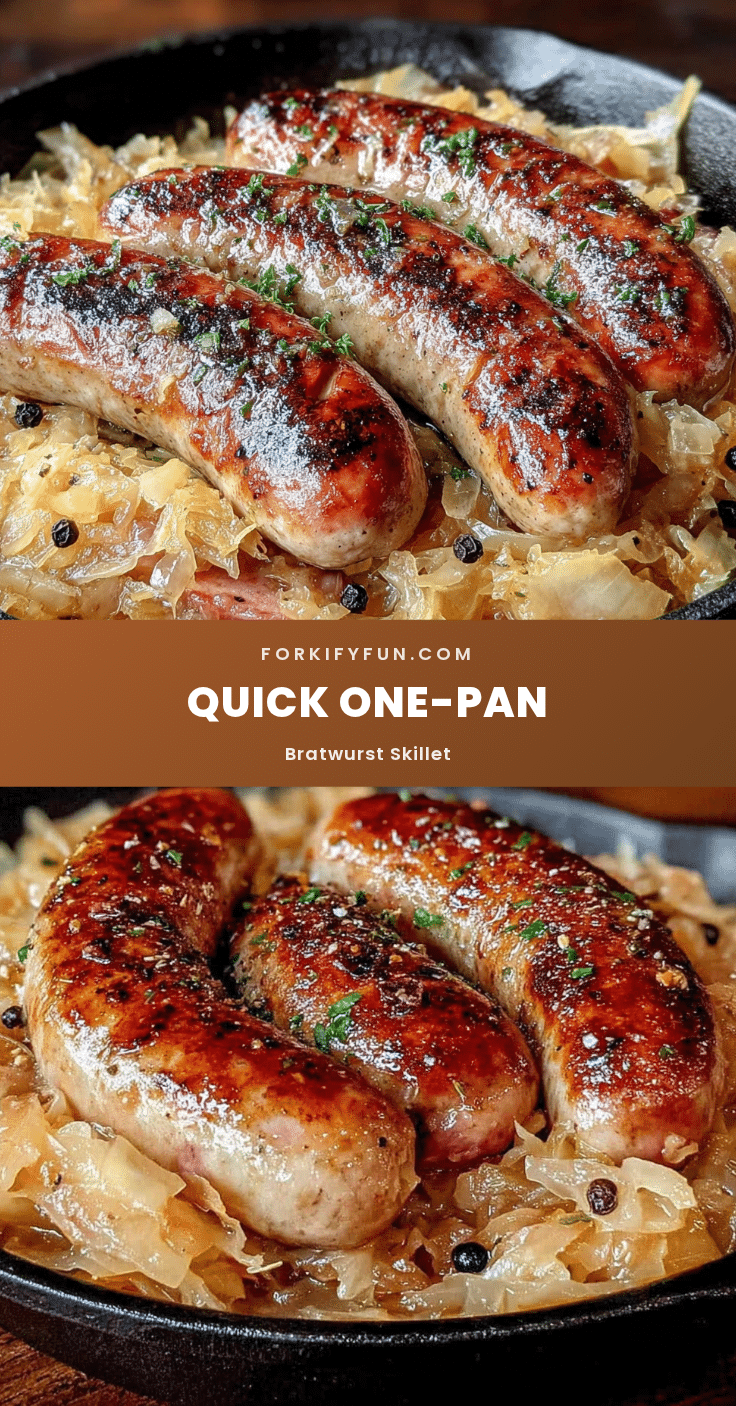
Easy Bratwurst and Sauerkraut Skillet: Best One-Pan Dinner

A simple one-pan bratwurst and sauerkraut dinner that comes together in about 30 minutes with deep, complex flavor. The apple and onion balance the tangy sauerkraut perfectly, creating a hearty and satisfying meal with minimal cleanup.
- Prep Time: 10 minutes
- Cook Time: 25 minutes
- Total Time: 35 minutes
- Yield: 4 servings 1x
- Category: Main Course
- Cuisine: German
Ingredients
- 4–6 bratwurst links (about 1.5 lbs)
- 1 lb sauerkraut, drained
- 1 large yellow onion, thinly sliced
- 1 medium apple (Granny Smith or Honeycrisp), cored and thinly sliced
- ½ cup chicken broth
- 1 teaspoon caraway seeds
- 1 tablespoon brown sugar
- 1 tablespoon Dijon mustard
- 1–2 tablespoons butter or oil
- Salt and black pepper to taste
Instructions
- Prep your ingredients: Thinly slice the onion. Core and thinly slice the apple (no need to peel). Drain the sauerkraut and rinse if desired for milder flavor. Pat the bratwurst dry with paper towels.
- Brown the bratwurst: Heat 1 tablespoon butter or oil in a large skillet over medium-high heat. Add bratwurst and cook, turning occasionally with tongs, until deeply browned on all sides, about 8-10 minutes. Do not pierce the sausages. Transfer to a plate and set aside.
- Sauté the aromatics: Reduce heat to medium. Add remaining 1 tablespoon butter or oil if needed. Add sliced onion and a pinch of salt. Cook, stirring occasionally, for 3-4 minutes until softened and translucent.
- Add the apple and spices: Stir in sliced apple, caraway seeds, and brown sugar. Cook for 2 minutes, stirring frequently, until apple starts to soften and sugar begins to caramelize.
- Combine and simmer: Add drained sauerkraut, chicken broth, and Dijon mustard. Stir to combine, scraping up browned bits from the bottom of the pan. Nestle the browned bratwurst back into the mixture. Bring to a gentle simmer, then reduce heat to low, cover, and cook for 15-20 minutes.
- Finish and serve: Remove lid and let simmer for 1-2 minutes if you want the liquid to reduce more. Taste and adjust seasoning with salt and pepper. Serve hot with sauerkraut mixture on top.
Notes
For a more traditional flavor, replace chicken broth with ½ cup light lager or pilsner beer. To reduce tanginess, rinse sauerkraut before using. Let the skillet rest for 5 minutes off heat before serving for best flavor. Leftovers keep in the refrigerator for up to 4 days and taste even better the next day.
Nutrition
- Serving Size: 1 bratwurst + ½ cup
- Calories: 500
- Sugar: 8
- Sodium: 1200
- Fat: 35
- Saturated Fat: 12
- Carbohydrates: 15
- Fiber: 4
- Protein: 20
Keywords: bratwurst, sauerkraut, one-pan dinner, easy skillet meal, German sausage, weeknight dinner, one-pot meal