I had been looking for a fall dinner that actually came together on a Tuesday night without turning the kitchen into a disaster zone. Not one of those recipes that claims to be quick but still has you chopping for twenty minutes, then washing three pans. Something that tasted like the season—warm, a little sweet, a little savory—but didn’t demand a whole afternoon. For a while, I just accepted that quick weeknight meals meant sacrificing that cozy fall feeling. You know the one. Where the house smells like cinnamon and apples and something hearty bubbling away. I figured that was reserved for weekends or special occasions.
Then one evening, I was staring at a package of sausage and a bowl of apples, thinking there had to be a way to make them work together without overcomplicating things. I wanted the apples to soften just enough, the sausage to get those crispy browned edges, and the whole thing to feel intentional—not like I just threw random ingredients in a pan. Honestly, it took a few tries to get the balance right. Too much apple and it felt like breakfast. Too much sage in the sausage and it overpowered everything. But when it clicked, it really clicked. This Easy 30-Minute Fall Sausage Apple Skillet became the answer to that gap I’d been feeling. It’s the kind of meal that makes you pause mid-bite and think, this is what fall should taste like. No fuss, no stress, just a pan full of comfort that’s ready before you’ve even finished pouring your glass of wine.
And honestly? That’s what kept it in our regular rotation. Not because it’s fancy or complicated, but because it delivers exactly what it promises—a real, satisfying fall dinner in half an hour. It’s the meal I turn to when I want the season to show up on my plate without the season’s worth of effort.
Why You’ll Love This Recipe
I’ve tested this Easy 30-Minute Fall Sausage Apple Skillet more times than I care to admit, and every time, it delivers the same reliable comfort. Here is why this one is different from the other skillet dinners out there:
- Quick & Easy: From start to finish, this comes together in under 30 minutes. Perfect for those busy weeknights when you want something homemade but don’t have time to babysit a pot.
- Simple Ingredients: You likely already have most of these in your kitchen. No fancy grocery store runs required—just good quality sausage, fresh apples, and a few pantry staples.
- Perfect for Fall: This is the ultimate seasonal dish. It works for a cozy family dinner, a casual gathering with friends, or even a hearty brunch spread.
- Crowd-Pleaser: I’ve served this to picky eaters, meat-lovers, and even folks who claim they don’t like apples in savory dishes. Every single person came back for seconds.
- One-Pan Wonder: Less cleanup means more time actually enjoying your evening. This skillet does all the work, and you only have one pan to wash at the end.
What really sets this recipe apart is the way the apples caramelize in the rendered sausage fat. That little bit of browning creates a sweetness that balances the savory, herby sausage perfectly. It’s not just another skillet meal—it’s the one where the flavors actually meld together in a way that feels intentional and thoughtful. I’ve tried versions with different sausages and apple varieties, and this combination has never let me down. It’s the kind of dish that makes you feel like you’ve got your act together, even on the busiest nights.
This isn’t just good. It’s the meal that makes you close your eyes after the first bite and think, yeah, this is what I needed.
What Ingredients You Will Need
This recipe uses simple, wholesome ingredients that come together to create something truly special. The key is choosing the right sausage and the right apple—everything else is just supporting the main event.
- 1 lb (450g) ground Italian sausage (mild or sweet): I prefer using sweet Italian sausage for its subtle fennel and herb notes, but mild works beautifully too. Look for sausage with a good fat content—it renders down and creates the base flavor for the whole dish. If you can find it, Johnsonville or a local butcher’s fresh sausage works best.
- 2 medium apples (such as Honeycrisp or Fuji), cored and diced into ½-inch cubes: You want an apple that holds its shape when cooked but softens enough to be tender. Honeycrisp offers the perfect balance of sweetness and tartness. Gala or Braeburn work well too. Avoid Red Delicious—they turn into mush.
- 1 medium yellow onion, diced: The onion adds a savory backbone that complements the sweetness of the apples. Yellow onions are ideal, but a sweet Vidalia works in a pinch.
- 2 cloves garlic, minced: Fresh garlic is non-negotiable here. It adds that aromatic punch that ties everything together.
- 1 tablespoon fresh sage, chopped (or 1 teaspoon dried): Sage is the quintessential fall herb. It pairs beautifully with both sausage and apples. If you only have dried, use half the amount—dried herbs are more concentrated.
- ½ teaspoon salt: Adjust based on the saltiness of your sausage. Start with less and add more to taste.
- ¼ teaspoon black pepper: Freshly ground is always better.
- 1 tablespoon olive oil: Just enough to get things started. The sausage will render its own fat, so you don’t need much.
- Optional garnish: Fresh parsley or additional sage leaves: A sprinkle of fresh herbs right before serving adds a pop of color and freshness.
For a little extra depth, I sometimes add a pinch of red pepper flakes or a drizzle of balsamic glaze at the end. But honestly, the recipe as written is already perfect. The ingredients are simple, but the way they work together is anything but.
Equipment Needed
You don’t need a fully stocked kitchen to make this Easy 30-Minute Fall Sausage Apple Skillet. Here’s what you’ll need:
- A large skillet or cast-iron pan (12-inch): This is your main workhorse. A cast-iron skillet is ideal because it holds heat evenly and gives the sausage those beautiful browned edges. If you don’t have cast iron, any heavy-bottomed skillet will work.
- A sharp chef’s knife: Dicing apples and onions goes much faster with a good knife. A dull blade will just frustrate you and crush the apples.
- A cutting board: Preferably one with a groove to catch juices from the apples.
- A wooden spoon or spatula: For breaking up the sausage and stirring everything together. I prefer wooden spoons because they don’t scratch your pan.
- A measuring spoon set: For the salt, pepper, and herbs.
If you don’t have a cast-iron skillet, don’t worry. A non-stick skillet will work just fine—just be careful not to crank the heat too high, as non-stick pans don’t handle high heat as well. The key is to let the sausage brown properly, so whatever pan you use, give it time without moving the meat around too much.
Honestly, I’ve made this in a stainless steel pan too, and it turned out great. The apples just needed a little more attention to avoid sticking. So use what you have, and adjust your heat accordingly.
Preparation Method
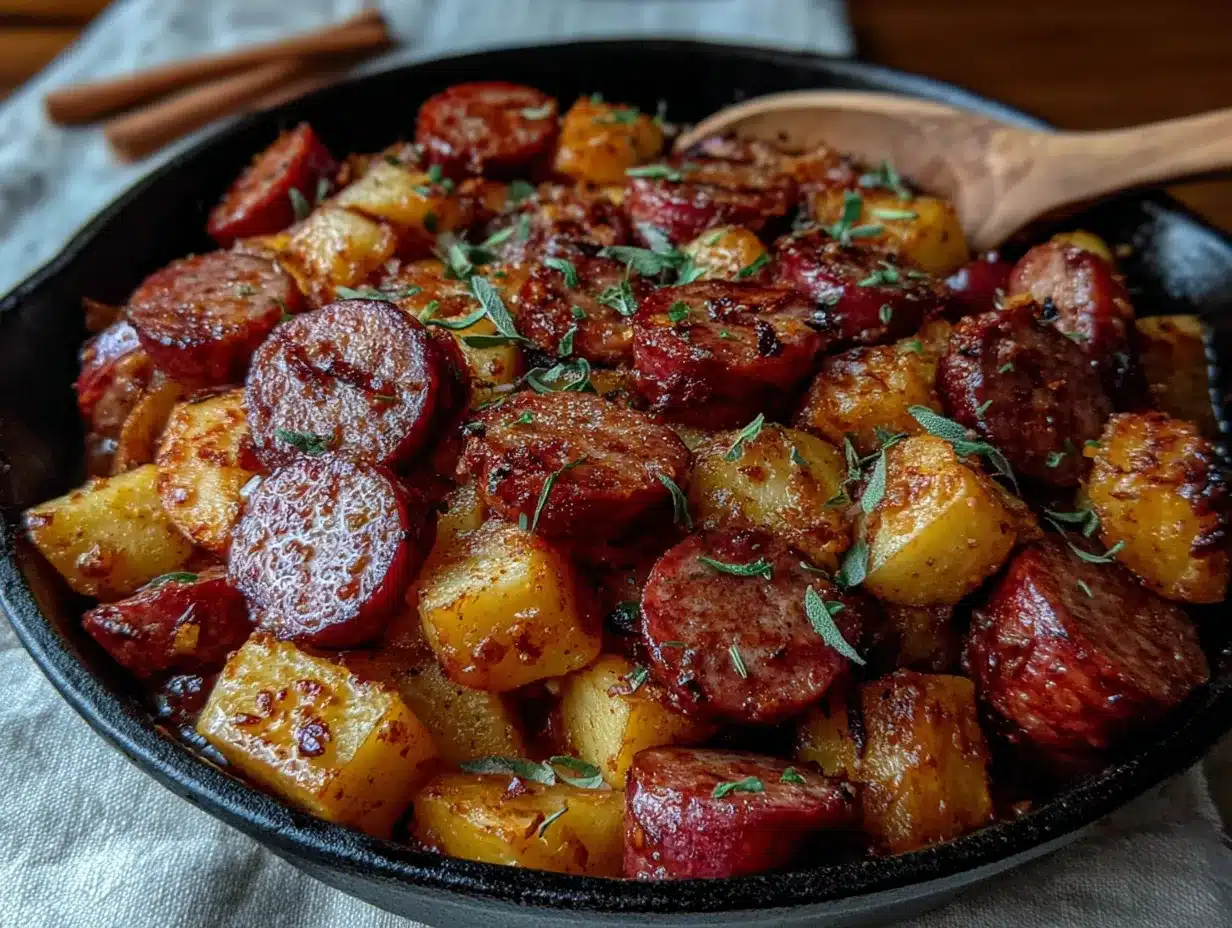
Let’s get cooking. This whole thing comes together in about 25-30 minutes, so have your ingredients prepped and ready before you start.
- Prep your ingredients. Dice the onion and apples into roughly ½-inch cubes. Mince the garlic. Chop the fresh sage if using. Having everything ready to go makes the cooking process smooth and stress-free.
- Heat the skillet. Place your large skillet over medium-high heat and add 1 tablespoon of olive oil. Let it heat for about 30 seconds until it shimmers.
- Cook the sausage. Add the ground Italian sausage to the hot skillet. Use your wooden spoon to break it up into small pieces. Let it cook undisturbed for 3-4 minutes to develop a nice brown crust on one side. Then stir and continue cooking for another 3-4 minutes until fully cooked through and nicely browned. The smell at this point is incredible—earthy, savory, with hints of fennel.
- Remove the sausage. Using a slotted spoon, transfer the cooked sausage to a plate or bowl, leaving the rendered fat in the skillet. This fat is liquid gold—it will flavor the apples and onions.
- Sauté the onions. Add the diced onion to the skillet with the rendered fat. Cook over medium heat for 4-5 minutes, stirring occasionally, until the onions are soft and translucent. They should start to pick up some of the browned bits from the bottom of the pan.
- Add the apples and garlic. Stir in the diced apples and minced garlic. Cook for 5-6 minutes, stirring every minute or so. The apples should soften and start to caramelize around the edges. You’ll know they’re ready when they’re tender but still hold their shape—not mushy.
- Add the sage and seasonings. Sprinkle the chopped sage, salt, and pepper over the apple-onion mixture. Stir to combine and cook for another minute until fragrant.
- Return the sausage to the pan. Add the cooked sausage back into the skillet. Stir everything together gently, making sure the sausage is evenly distributed among the apples and onions. Cook for 1-2 minutes to let the flavors meld.
- Taste and adjust. Give it a taste. Need more salt? Add a pinch. Want a little heat? Sprinkle in some red pepper flakes. This is your moment to make it exactly how you like it.
- Serve immediately. Transfer to a serving platter or straight from the skillet to plates. Garnish with fresh parsley or a few extra sage leaves if you’re feeling fancy. This dish is best enjoyed hot, right when the apples are still tender and the sausage is juicy.
One thing I’ve learned the hard way—don’t overcrowd the pan. If you try to cook too much sausage at once, it will steam instead of brown. Work in batches if your skillet isn’t big enough. Trust me, those browned bits are where all the flavor lives.
Cooking Tips & Techniques
Over the years, I’ve made every mistake you can imagine with this dish. Here are the lessons I learned so you don’t have to.
Don’t rush the browning. The number one mistake people make is moving the sausage around too much. Let it sit in the hot pan for a few minutes before stirring. That deep brown crust is packed with flavor—it’s called the Maillard reaction, and it’s what makes this dish taste so good. If you stir constantly, you’ll end up with gray, sad sausage.
Choose the right apple. I mentioned this earlier, but it bears repeating. You want an apple that holds its shape when cooked. Honeycrisp, Fuji, or Braeburn are my go-tos. Granny Smith works if you want a more tart flavor, but they can be a little firm. Avoid McIntosh or Red Delicious—they turn into applesauce in minutes.
Cut everything the same size. Consistency matters here. If your apple chunks are bigger than your onion chunks, they won’t cook evenly. Aim for ½-inch cubes across the board. This ensures everything finishes cooking at the same time.
Use the rendered fat. After you cook the sausage, don’t drain the fat. That fat is infused with all the spices and herbs from the sausage. Cooking the onions and apples in it adds layers of flavor you just can’t get from plain oil. If you’re concerned about grease, you can spoon off a little, but leave at least a tablespoon or two in the pan.
Season as you go. Don’t wait until the end to add all the salt and pepper. Season the onions as they cook, then taste the apples before adding the sausage back. Layering the seasoning builds depth.
I once forgot to add the sage until the very end, and the dish just felt flat. That herb really ties everything together, so don’t skip it. And if you’re using dried sage, rub it between your palms before adding it to release the oils.
Variations & Adaptations
This recipe is incredibly forgiving. Here are some ways to make it your own:
Make it spicy: Use hot Italian sausage instead of sweet, and add a pinch of red pepper flakes along with the garlic. The heat pairs beautifully with the sweet apples.
Go gluten-free: This recipe is naturally gluten-free as written. Just make sure your sausage brand doesn’t contain any fillers with gluten. Most Italian sausages are safe, but double-check the label.
Add some greens: Stir in a handful of fresh spinach or kale during the last 2 minutes of cooking. The greens will wilt down and add a nice pop of color and nutrients. I’ve done this on nights when I wanted to sneak in extra vegetables, and it works perfectly.
Swap the protein: Ground turkey or chicken sausage works well here. Just add an extra tablespoon of olive oil since poultry sausage is leaner and won’t render as much fat. The flavor will be slightly different, but still delicious.
Make it a meal bowl: Serve this skillet over cooked farro, quinoa, or rice. The grains soak up all the juices and make it even more satisfying. I’ve also spooned it over creamy polenta for a truly cozy dinner.
Seasonal twist: In the fall, I sometimes add diced butternut squash along with the apples. Just give the squash a 2-minute head start since it takes longer to soften. It adds another layer of autumn flavor.
I once tried this with crumbled bacon instead of sausage, and it was surprisingly good. Not the same dish, but definitely worth repeating. The salty-smoky bacon with the sweet apples was a winning combo.
Serving & Storage Suggestions
This Easy 30-Minute Fall Sausage Apple Skillet is best served hot, straight from the pan. But here’s how to make the most of it:
Serving temperature: Serve immediately while the apples are still tender and the sausage is juicy. It cools down relatively quickly, so have your plates ready and your family at the table before you start the final step.
What to serve with it: This skillet is substantial enough to be a meal on its own, but it pairs beautifully with a simple side salad dressed with a tangy vinaigrette. The acidity cuts through the richness. Crusty bread or warm dinner rolls are also great for soaking up any leftover juices. For a heartier meal, serve it alongside creamy one-pot Tuscan tortellini for a full Italian-inspired feast.
Storage: Leftovers can be stored in an airtight container in the refrigerator for up to 3 days. The apples will soften further as they sit, but the flavor actually deepens overnight. I’ve eaten this cold straight from the fridge, and it’s surprisingly good.
Reheating: Reheat in a skillet over medium heat with a splash of water or chicken broth to loosen things up. Microwave works in a pinch, but the stovetop method keeps the texture better. Don’t overheat or the apples will turn mushy.
Freezing: This dish freezes well for up to 2 months. Let it cool completely, then transfer to a freezer-safe container. Thaw overnight in the refrigerator and reheat as directed. The apples will be softer after freezing, but the flavor remains excellent.
One thing I’ve noticed—the flavors meld together beautifully overnight. So if you have leftovers, consider yourself lucky. It might taste even better the next day.
Nutritional Information & Benefits
Here’s a rough estimate of the nutritional breakdown per serving (based on 4 servings):
- Calories: Approximately 420-450 per serving
- Protein: 22g
- Fat: 30g (mostly from the sausage)
- Carbohydrates: 18g
- Fiber: 3g
- Sugar: 12g (naturally occurring from apples and onions)
This dish offers a good balance of protein and healthy fats from the sausage, along with fiber and vitamins from the apples and onions. Apples are rich in antioxidants and vitamin C, while onions provide prebiotic fiber that supports gut health. If you’re watching your sodium intake, opt for a low-sodium sausage and adjust the added salt accordingly.
It’s naturally gluten-free and can be made dairy-free without any adjustments. For a lower-fat version, use chicken or turkey sausage and reduce the olive oil to ½ tablespoon. The flavor will still be delicious, just slightly less rich.
I personally love that this meal feels indulgent but is actually quite balanced. It’s comfort food that doesn’t leave you feeling heavy or sluggish afterward.
Conclusion
This Easy 30-Minute Fall Sausage Apple Skillet has become my go-to for those evenings when I want the season to show up on my plate without spending hours in the kitchen. It’s simple, it’s satisfying, and it delivers that cozy fall feeling every single time. The combination of savory sausage and sweet, caramelized apples is one of those perfect pairings that just works—no fuss, no complicated techniques, just good food made quickly.
I hope you give this recipe a try and make it your own. Maybe you’ll add a little extra sage, or swap in a different apple variety, or serve it over a bed of greens. That’s the beauty of a simple skillet meal—it’s a canvas for your own creativity. And honestly, that’s what cooking should be about: finding what works for you and your family.
If you make this, I’d love to hear how it turns out. Drop a comment below and let me know what variations you tried, or share a photo of your skillet creation. And if you’re looking for another cozy fall meal, don’t miss this slow cooker beef and barley stew for those days when you want dinner ready when you walk through the door. Happy cooking, friends!
Frequently Asked Questions
Can I use pre-cooked sausage for this recipe?
Yes, you can use pre-cooked sausage like kielbasa or smoked sausage. Just slice it into rounds and brown it in the skillet for 3-4 minutes per side. You won’t get the same rendered fat, so add an extra tablespoon of olive oil for cooking the apples and onions.
What kind of apple is best for this skillet?
Honeycrisp, Fuji, or Braeburn are my top picks. They hold their shape well during cooking and offer a nice balance of sweetness and tartness. Avoid soft apples like Red Delicious or McIntosh, which will turn mushy.
Can I make this dish ahead of time?
Absolutely. You can cook the entire dish up to 2 days in advance and store it in the refrigerator. Reheat gently in a skillet with a splash of water or broth to revive the moisture. The flavors actually deepen overnight, making it even more delicious the next day.
Is this recipe suitable for meal prep?
Yes, it’s great for meal prep. Divide it into individual containers with a side of rice, quinoa, or roasted vegetables. It will stay fresh in the refrigerator for up to 3 days. Just reheat in the microwave or on the stovetop when you’re ready to eat.
Can I add other vegetables to this skillet?
Definitely. Diced butternut squash, chopped kale, or even sliced Brussels sprouts work beautifully. Just adjust cooking times accordingly—harder vegetables like squash need a few extra minutes, while greens like spinach wilt in the last minute of cooking.
Pin This Recipe!
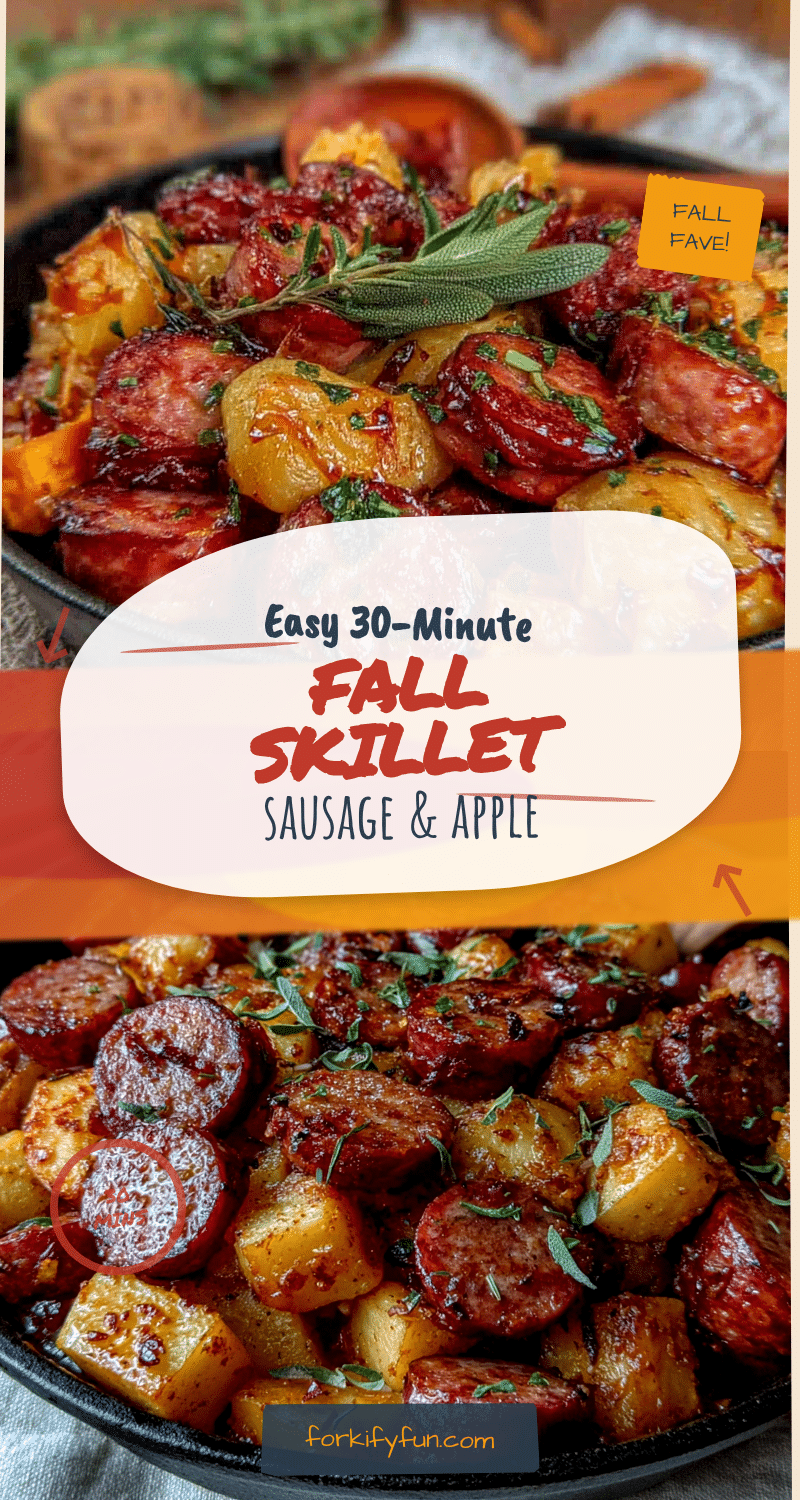
Easy 30-Minute Fall Sausage Apple Skillet

A quick and easy one-pan fall dinner featuring savory Italian sausage and sweet caramelized apples, ready in under 30 minutes. Perfect for busy weeknights when you want cozy seasonal flavors without the fuss.
- Prep Time: 10 minutes
- Cook Time: 20 minutes
- Total Time: 30 minutes
- Yield: 4 servings 1x
- Category: Main Course
- Cuisine: American
Ingredients
- 1 lb (450g) ground Italian sausage (mild or sweet)
- 2 medium apples (such as Honeycrisp or Fuji), cored and diced into ½-inch cubes
- 1 medium yellow onion, diced
- 2 cloves garlic, minced
- 1 tablespoon fresh sage, chopped (or 1 teaspoon dried)
- ½ teaspoon salt
- ¼ teaspoon black pepper
- 1 tablespoon olive oil
- Optional garnish: Fresh parsley or additional sage leaves
Instructions
- Prep your ingredients. Dice the onion and apples into roughly ½-inch cubes. Mince the garlic. Chop the fresh sage if using.
- Heat the skillet. Place your large skillet over medium-high heat and add 1 tablespoon of olive oil. Let it heat for about 30 seconds until it shimmers.
- Cook the sausage. Add the ground Italian sausage to the hot skillet. Use your wooden spoon to break it up into small pieces. Let it cook undisturbed for 3-4 minutes to develop a nice brown crust on one side. Then stir and continue cooking for another 3-4 minutes until fully cooked through and nicely browned.
- Remove the sausage. Using a slotted spoon, transfer the cooked sausage to a plate or bowl, leaving the rendered fat in the skillet.
- Sauté the onions. Add the diced onion to the skillet with the rendered fat. Cook over medium heat for 4-5 minutes, stirring occasionally, until the onions are soft and translucent.
- Add the apples and garlic. Stir in the diced apples and minced garlic. Cook for 5-6 minutes, stirring every minute or so. The apples should soften and start to caramelize around the edges.
- Add the sage and seasonings. Sprinkle the chopped sage, salt, and pepper over the apple-onion mixture. Stir to combine and cook for another minute until fragrant.
- Return the sausage to the pan. Add the cooked sausage back into the skillet. Stir everything together gently, making sure the sausage is evenly distributed among the apples and onions. Cook for 1-2 minutes to let the flavors meld.
- Taste and adjust. Give it a taste. Need more salt? Add a pinch. Want a little heat? Sprinkle in some red pepper flakes.
- Serve immediately. Transfer to a serving platter or straight from the skillet to plates. Garnish with fresh parsley or a few extra sage leaves if desired.
Notes
Don’t rush the browning of the sausage for maximum flavor. Choose apples that hold their shape like Honeycrisp or Fuji. Use the rendered fat from the sausage to cook the onions and apples for added depth. Leftovers can be stored in the refrigerator for up to 3 days or frozen for up to 2 months.
Nutrition
- Serving Size: 1 serving (about 1/4
- Calories: 435
- Sugar: 12
- Sodium: 800
- Fat: 30
- Saturated Fat: 10
- Carbohydrates: 18
- Fiber: 3
- Protein: 22
Keywords: fall sausage apple skillet, one-pan dinner, quick weeknight meal, Italian sausage recipe, apple and sausage skillet, easy fall dinner, 30-minute meal