“You’ve got to try this,” my friend messaged me one damp afternoon, almost as if daring me to trust her. I was skeptical — sticky rice soaked in coconut cream with mango? Seemed too simple to be anything special. But honestly, that creamy mango sticky rice dessert with coconut cream turned into my rainy day refuge faster than I expected. The moment I spooned that first bite, the silky coconut cream mingled with the tender, slightly chewy sticky rice, and the fresh mango slices brought a bright, sunny pop that felt like a little tropical getaway right in my kitchen.
It wasn’t fancy or complicated, just a humble treat born from a casual chat and a craving for something comforting yet fresh. I started making it over and over that week, tweaking the coconut cream until it hit just the right lusciousness. It became this quiet joy — a dessert that made me pause and savor something simple but deeply satisfying. And honestly, the best part? It’s easy enough to whip up on a whim, no special ingredients or equipment needed.
That’s why this creamy mango sticky rice dessert with coconut cream stuck with me. It’s not about impressing anyone with fancy techniques; it’s about the way food can feel like a warm hug. Now, whenever I crave something both soothing and bright, this recipe is my go-to treat, especially when I want a little comfort without the fuss.
Why You’ll Love This Creamy Mango Sticky Rice Dessert Recipe
This recipe isn’t just a quick fix—it’s a little celebration of textures and flavors that I’ve tested again and again to get just right. Here’s why it’s become a favorite in my kitchen:
- Quick & Easy: Ready in about 40 minutes, it’s perfect for when you want a fancy-feeling dessert without the wait.
- Simple Ingredients: You don’t need to hunt down exotic items. Sticky rice, coconut milk, mango, and a few basics—easy to find and easy to love.
- Perfect for Any Occasion: Whether it’s a casual family dinner or a special weekend treat, this dessert fits right in.
- Crowd-Pleaser: Even folks who usually shy away from tropical flavors find themselves asking for seconds.
- Unbelievably Delicious: The creamy coconut melds with the sticky rice’s chewiness, while the mango adds a fresh, fruity brightness that’s honestly addictive.
What sets this recipe apart? The coconut cream here is gently simmered with a touch of sugar and a pinch of salt to balance the sweetness perfectly. I avoid the overly thick versions you sometimes find; this one stays silky and pourable, giving the sticky rice that melt-in-your-mouth feel. Plus, I swear by using Thai glutinous rice—you can tell the difference in texture immediately. This isn’t just a throw-together dessert; it’s a recipe refined through multiple attempts to capture that authentic creamy mango sticky rice experience.
It’s the kind of dessert that makes you smile quietly after one bite, the kind that feels like a small escape. And if you’re looking to impress without stress, this recipe delivers every time.
Ingredients You Will Need for Creamy Mango Sticky Rice Dessert
This recipe relies on a handful of simple, wholesome ingredients to create bold flavors and satisfying textures without fuss. Most of these are pantry staples or easy to find at your local market.
- For the Sticky Rice:
- 1 cup Thai glutinous (sticky) rice, rinsed thoroughly (look for small-grain sticky rice for best results)
- 1 ¼ cups water (for steaming)
- For the Coconut Cream Sauce:
- 1 cup full-fat coconut milk (canned, preferably from Chaokoh or another trusted brand)
- ⅓ cup granulated sugar (adjust to taste)
- ¼ teaspoon fine sea salt (balances the sweetness)
- 1 tablespoon jasmine rice flour or cornstarch (for thickening; optional but recommended)
- For the Mango:
- 2 ripe Ataulfo or Kent mangoes, peeled and sliced (their sweetness and creaminess complement the rice perfectly)
- Optional Garnishes:
- Toasted sesame seeds or mung beans (adds crunch and nuttiness)
- Fresh mint leaves (for a refreshing touch)
Substitution tips: If you want a dairy-free option, the coconut milk works perfectly here, but for a lighter version, you can try reduced-fat coconut milk (just know it won’t be as creamy). For a gluten-free treat, ensure your rice flour or cornstarch is certified gluten-free. And if you can’t get Thai sticky rice, Japanese sweet rice is an okay backup, though the texture will slightly differ.
Equipment Needed
To make this creamy mango sticky rice dessert, you don’t need a fancy kitchen setup—just a few basics and maybe a couple of handy extras that make the process smoother.
- Steamer or Bamboo Steamer: Essential for cooking the sticky rice properly. If you don’t have one, a metal colander set over a pot with a lid works fine.
- Medium Saucepan: For simmering the coconut cream sauce.
- Mixing Bowls: For soaking and mixing rice.
- Measuring Cups and Spoons: Accuracy matters for rice and coconut sauce.
- Wooden Spoon or Silicone Spatula: To stir the coconut cream gently without scratching your pan.
Personally, I’ve found a bamboo steamer to be the secret weapon—it keeps the rice fluffy and perfectly cooked without being soggy. But if you’re just starting out, a simple metal steamer basket does the trick. Cleaning the coconut milk pot right away is a good habit since the sugars can stick. Budget-wise, you don’t need to invest much; most of these tools are kitchen staples.
Preparation Method for Creamy Mango Sticky Rice Dessert
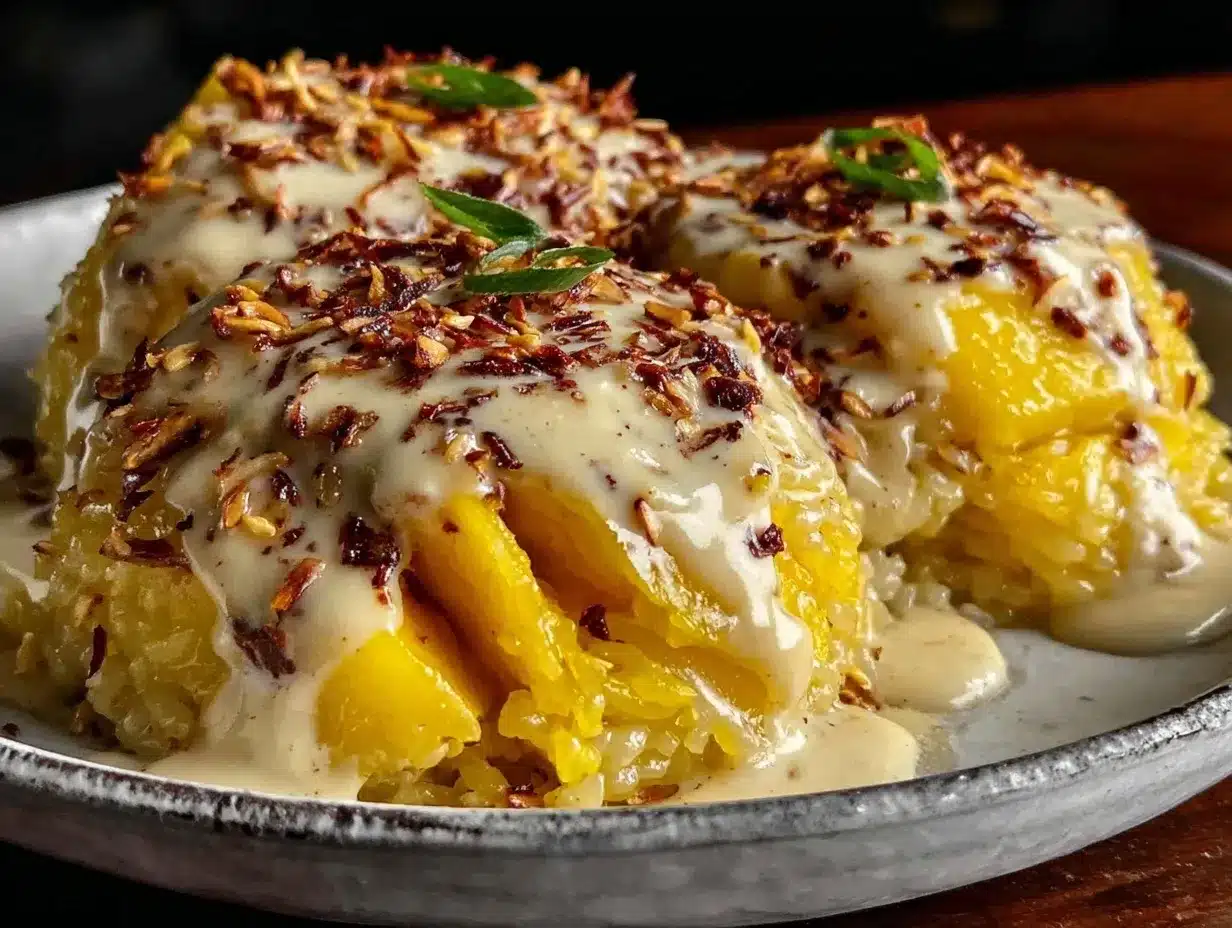
- Rinse and Soak the Sticky Rice: Rinse 1 cup of Thai glutinous rice under cold water until the water runs clear to remove excess starch. Soak the rice in cold water for at least 4 hours or overnight. This step is crucial for that perfect chewy texture.
- Prepare the Steamer: Fill your steamer pot with water, making sure the water doesn’t touch the rice basket. Bring it to a gentle boil.
- Steam the Rice: Drain the soaked rice and spread it evenly in a cheesecloth-lined steamer basket. Cover and steam for 15 minutes. Then, gently fluff the rice and steam for another 15 minutes until tender but still slightly chewy. You’ll notice the grains sticking together but not mushy.
- Make the Coconut Cream Sauce: While the rice steams, combine 1 cup coconut milk, ⅓ cup sugar, and ¼ teaspoon salt in a saucepan over low heat. Stir gently until the sugar dissolves. Mix 1 tablespoon rice flour with 2 tablespoons water to create a slurry, then whisk it slowly into the coconut milk. Simmer for 5 minutes until the sauce thickens slightly—smooth, glossy, and fragrant.
- Mix Rice and Coconut Cream: Transfer the hot steamed rice into a mixing bowl. Pour about ¾ of the coconut cream sauce over the rice and stir gently to combine. Cover and let it sit for 20-30 minutes to absorb the flavors and cool slightly.
- Prepare the Mango: Peel and slice your ripe mangoes into thin, elegant slices or cubes just before serving to keep them fresh.
- Serve: Spoon the creamy sticky rice onto serving plates, add the fresh mango slices on top or alongside, and drizzle with the reserved coconut cream sauce. Garnish with toasted sesame seeds or mung beans if you like.
Pro tip: Don’t skip resting the rice after mixing with the coconut cream—that’s when the magic happens. Also, if the coconut sauce thickens too much when cooling, just warm it gently before serving.
Cooking Tips & Techniques for Perfect Creamy Mango Sticky Rice
Getting creamy mango sticky rice just right can feel tricky the first time, but a few tricks make all the difference:
- Rice Selection: Use authentic Thai glutinous rice—other types won’t give that signature chewy, sticky texture.
- Soaking Time: Don’t rush soaking. It softens the grains and helps steam evenly. I once tried to cut corners, and the rice turned out unevenly cooked—definitely not worth it.
- Steaming, Not Boiling: Steaming keeps the rice fluffy yet sticky. Boiling sticky rice directly washes away the starches that give it its unique texture.
- Coconut Cream Consistency: Gently simmer your coconut milk mixture; boil it too hard and the fats separate. I learned this after a few batches of grainy sauce.
- Balancing Sweetness: Taste as you go! Mangoes vary in sweetness, so adjust sugar accordingly in the coconut cream.
- Resting Time: Let the rice rest with the sauce so it soaks up all the flavor. It’s worth the wait.
Multitasking tip: While the rice steams, you can prep your mango and coconut sauce, saving time without rushing.
Variations & Adaptations for Creamy Mango Sticky Rice Dessert
This recipe is wonderfully versatile and lends itself to several tasty twists:
- Flavor Variations: Add a splash of pandan extract or vanilla to the coconut cream for subtle aromatic layers.
- Dietary Adaptations: For a lower-sugar version, reduce the sugar in the coconut sauce and pair with tart green mango slices instead of sweet ripe mango.
- Texture Twists: Stir in toasted coconut flakes or chopped nuts for crunch. I love adding crushed peanuts for a nutty contrast.
- Seasonal Options: Swap mango with ripe peach or lychee when mangoes aren’t in season.
- Cooking Method Alternatives: If you don’t have a steamer, try cooking the rice in a rice cooker with slightly less water than usual—but watch the texture carefully.
Personally, I once tried mixing in a bit of coconut rum into the cream for a festive adult twist—delicious but definitely not kid-friendly!
Serving & Storage Suggestions
This creamy mango sticky rice dessert is best enjoyed fresh and slightly warm or at room temperature. Serve it on small plates or pretty bowls to make it feel extra special. A sprinkle of toasted mung beans or black sesame seeds adds a nice visual and textural contrast.
For pairing, it’s delightful alongside a cup of fragrant jasmine tea or a light tropical cocktail. If you love mango in savory dishes too, the zesty mango slaw with blackened shrimp tacos on our site offers a fun balance of sweet and spicy flavors.
Storage-wise, keep leftover sticky rice and coconut cream in separate airtight containers in the fridge for up to 2 days. Reheat the rice gently in a microwave or steamer, adding a little extra coconut cream to bring back creaminess. Mango slices are best freshly cut but can be stored for a day if well covered. Flavors mellow and blend a bit when refrigerated, making leftovers just as enjoyable.
Nutritional Information & Benefits
This dessert provides a comforting source of energy, mainly from the sticky rice’s carbohydrates and the healthy fats in coconut milk. A typical serving contains around 300-350 calories, depending on sugar amounts and portion size.
Coconut milk offers medium-chain triglycerides (MCTs) that may support metabolism, while mangoes deliver vitamin C, antioxidants, and dietary fiber. This combo makes the dessert not just indulgent but nourishing in a simple way.
Keep in mind this recipe is naturally gluten-free and dairy-free, ideal for many dietary needs. For those managing sugar intake, adjusting the sweetener or using ripe but less sugary mango varieties can help.
Conclusion
This creamy mango sticky rice dessert with coconut cream is truly a recipe worth keeping in your repertoire. It’s simple yet special, comforting yet fresh, and honestly, it’s become one of my favorite ways to snack or finish a meal. What I love most is how easy it is to customize for your tastes and the way it brings a little sunshine to any day.
Feel free to tweak the sweetness, try different garnishes, or make it a tropical feast paired with dishes like the creamy Filipino chicken adobo with coconut milk for a full coconut-infused meal experience. I’d love to hear how you make it your own—drop a comment or share your versions!
Here’s to many creamy, mango-filled moments ahead!
FAQs About Creamy Mango Sticky Rice Dessert
How do I know when the sticky rice is cooked perfectly?
The rice should be tender and sticky but not mushy. It will cling together slightly but still have a bit of chew. If it’s too hard, steam it a bit longer.
Can I use regular jasmine rice instead of sticky rice?
Regular jasmine rice won’t give the same sticky texture that makes this dessert unique. It’s best to use Thai glutinous rice for authentic results.
Is it okay to prepare the coconut cream sauce ahead of time?
Yes, you can make the sauce earlier and reheat gently before serving. Just stir well if it thickens too much when chilled.
Can I store leftovers, and how should I reheat them?
Store rice and coconut sauce separately in the fridge for up to 2 days. Reheat the rice gently with a bit of sauce to keep it creamy, either in a microwave or steamer.
What’s the best type of mango to use for this dessert?
Sweet, creamy varieties like Ataulfo or Kent mangoes are ideal. They complement the richness of the coconut cream beautifully.
Pin This Recipe!
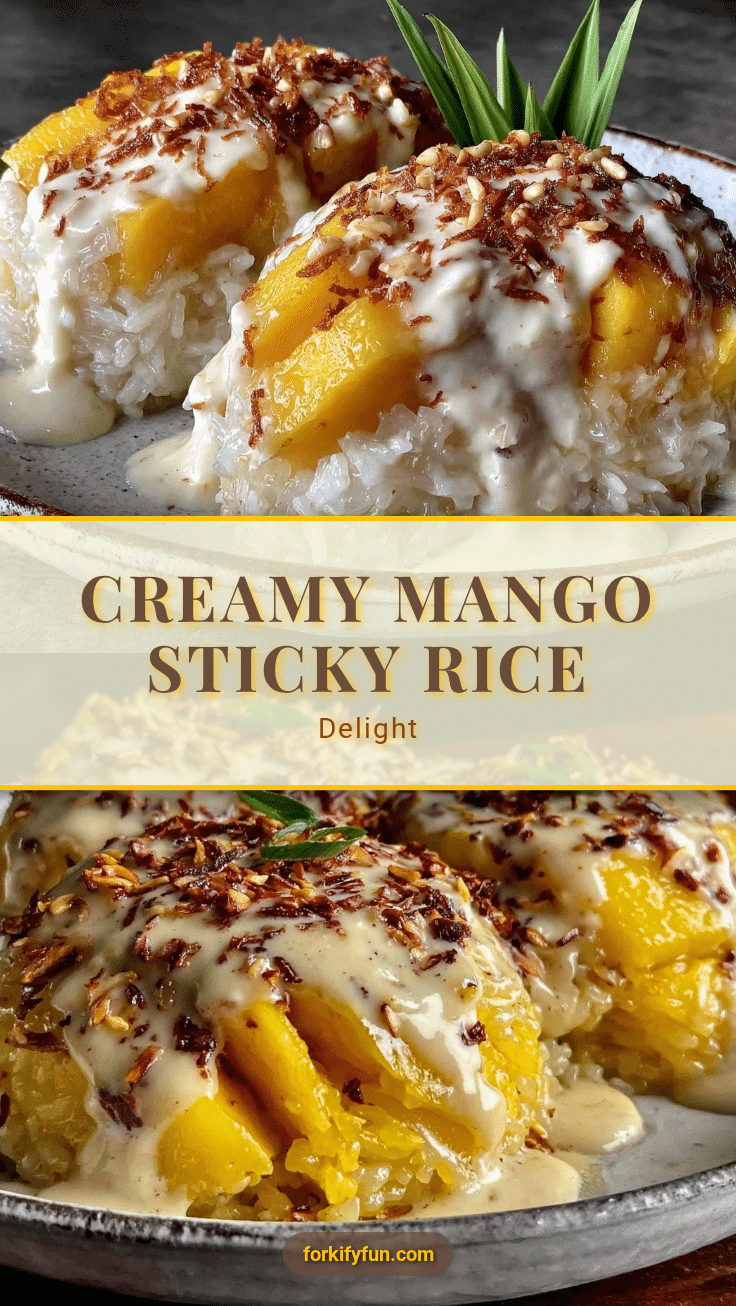
Creamy Mango Sticky Rice Dessert Recipe Easy Homemade Coconut Cream Treat
A simple and comforting dessert featuring tender Thai glutinous sticky rice soaked in silky coconut cream, paired with fresh, sweet mango slices for a tropical treat.
- Prep Time: 4 hours 15 minutes
- Cook Time: 35 minutes
- Total Time: 4 hours 50 minutes
- Yield: 4 servings 1x
- Category: Dessert
- Cuisine: Thai
Ingredients
- 1 cup Thai glutinous (sticky) rice, rinsed thoroughly
- 1 1/4 cups water (for steaming)
- 1 cup full-fat coconut milk (canned)
- 1/3 cup granulated sugar (adjust to taste)
- 1/4 teaspoon fine sea salt
- 1 tablespoon jasmine rice flour or cornstarch (optional, for thickening)
- 2 ripe Ataulfo or Kent mangoes, peeled and sliced
- Optional garnishes: toasted sesame seeds or mung beans, fresh mint leaves
Instructions
- Rinse 1 cup of Thai glutinous rice under cold water until the water runs clear to remove excess starch. Soak the rice in cold water for at least 4 hours or overnight.
- Fill your steamer pot with water, making sure the water doesn’t touch the rice basket. Bring it to a gentle boil.
- Drain the soaked rice and spread it evenly in a cheesecloth-lined steamer basket. Cover and steam for 15 minutes. Then, gently fluff the rice and steam for another 15 minutes until tender but still slightly chewy.
- While the rice steams, combine 1 cup coconut milk, 1/3 cup sugar, and 1/4 teaspoon salt in a saucepan over low heat. Stir gently until the sugar dissolves.
- Mix 1 tablespoon rice flour with 2 tablespoons water to create a slurry, then whisk it slowly into the coconut milk. Simmer for 5 minutes until the sauce thickens slightly.
- Transfer the hot steamed rice into a mixing bowl. Pour about 3/4 of the coconut cream sauce over the rice and stir gently to combine. Cover and let it sit for 20-30 minutes to absorb the flavors and cool slightly.
- Peel and slice your ripe mangoes into thin slices or cubes just before serving.
- Spoon the creamy sticky rice onto serving plates, add the fresh mango slices on top or alongside, and drizzle with the reserved coconut cream sauce. Garnish with toasted sesame seeds or mung beans if desired.
Notes
Use authentic Thai glutinous rice for the best chewy texture. Soak rice for at least 4 hours or overnight. Gently simmer coconut cream to avoid fat separation. Let rice rest with coconut cream to absorb flavors. If coconut sauce thickens too much when cooled, warm gently before serving. Substitute rice flour with cornstarch if preferred. Store leftover rice and coconut cream separately in airtight containers in the fridge for up to 2 days.
Nutrition
- Serving Size: 1 serving (approxima
- Calories: 325
- Sugar: 20
- Sodium: 150
- Fat: 18
- Saturated Fat: 16
- Carbohydrates: 40
- Fiber: 2
- Protein: 3
Keywords: mango sticky rice, creamy mango dessert, coconut cream dessert, Thai dessert, glutinous rice dessert, easy mango sticky rice