Rotisserie chicken was supposed to be my shortcut to a fancy weeknight dinner. It took about twenty minutes of staring at the bare bones in my fridge for that fantasy to fall apart completely. I had this grand vision of a perfectly plated, herb-crusted masterpiece. Instead, I ended up with a pile of picked-over meat and a sudden craving for something warm, simple, and deeply satisfying—something that felt like a hug in a bowl.
The thing about rotisserie chicken is that it gives you more than just cooked meat. It gives you a head start, a flavor base, and honestly, a bit of a cheat code. I remember standing there, the chicken still slightly warm, and deciding to just go with it. I tossed the carcass into a pot with some water, a halved onion, and a few sad-looking carrots from the crisper drawer. The result was so much better than my original plan. This cozy rotisserie chicken noodle soup was born from that moment of kitchen improvisation, and it stuck with me because it actually worked.
There is something quietly magical about a soup that comes together in thirty minutes but tastes like it simmered all day. This one manages that trick without any pretense. It is the kind of meal you make when you are tired, when the weather is turning, or when you just need something reliable. I make it now whenever I buy a rotisserie chicken, partly because it is smart and partly because it makes me feel like I have a secret weapon in my back pocket. You will feel the same way after the first spoonful.
Why You Will Love This Recipe
Let me be straight with you—I have made a lot of chicken noodle soup in my day. From scratch stocks that took hours to the canned stuff that tastes like salt water. This recipe sits right in the sweet spot between effort and reward. It is the version I actually make on a Tuesday night when I have zero energy left.
- Quick & Easy: From fridge to table in about 30 minutes flat. No long simmering, no complicated techniques. Just good soup, fast.
- Simple Ingredients: You probably have most of this already. Carrots, celery, onion, garlic, noodles, broth. The rotisserie chicken does the heavy lifting on flavor.
- Perfect for Sick Days or Cold Nights: This is the soup you want when you are under the weather or when the wind is howling outside. It is restorative without being fussy.
- Crowd-Pleaser: My kids fight over the noodles, my husband asks for seconds, and I feel good about serving something that actually has vegetables in it.
- Unbelievably Delicious: The secret is in the double-hit of chicken flavor. You get the rich broth from the carcass and the tender meat from the breast. It is next-level comfort food that tastes like you tried way harder than you did.
What makes this recipe different from every other chicken noodle soup out there? It is the method. Most recipes tell you to just dump everything in a pot and simmer. That works, sure. But this one builds flavor in layers. You start by sweating the vegetables in butter until they soften and release their sweetness. Then you add the garlic and let it perfume the whole kitchen. The broth gets a boost from the rotisserie chicken bones (or a quick simmer with the leftover skin and bits). It is not just another version—it is the best version for real life.
This is the kind of soup that makes you close your eyes after the first bite. It is comfort food reimagined—faster, yes, but with the same soul-soothing satisfaction. Perfect for impressing guests without stress, or turning a simple meal into something memorable.
What Ingredients You Will Need
This recipe uses simple, wholesome ingredients to deliver bold flavor and satisfying texture without the fuss. Most of these are pantry staples or easy to find at any grocery store. Here is what you need and why each one matters.
- 1 rotisserie chicken (about 2-3 pounds) – The star of the show. Pick one up from the deli section, or use leftover roasted chicken. I prefer the ones from Costco or my local grocery store because they are seasoned well and super juicy. You will use both the meat and the bones.
- 2 tablespoons unsalted butter – Adds richness and helps the vegetables soften without burning. You can swap in olive oil if you prefer, but butter gives that cozy flavor.
- 1 medium yellow onion, diced – The aromatic base. Yellow onions are sweeter and milder than white onions, which works perfectly here.
- 3 medium carrots, peeled and diced – For sweetness and color. I like to cut them into small, uniform pieces so they cook evenly.
- 3 celery stalks, diced – Adds that classic savory note and a bit of crunch. Do not skip these—they are essential for the flavor profile.
- 3 cloves garlic, minced – Fresh garlic is non-negotiable here. It adds a punch of flavor that jarred stuff just cannot match.
- 8 cups low-sodium chicken broth – Use a good quality brand like Swanson or Kitchen Basics. Low-sodium is important so you can control the salt level yourself.
- 2 cups water – Helps stretch the broth without making it too salty. Plus, it simmers with the chicken bones to extract extra flavor.
- 1 teaspoon dried thyme – Earthy and slightly floral. It pairs beautifully with chicken and adds depth.
- 1 teaspoon dried rosemary – Piney and aromatic. Crush it between your fingers before adding to release the oils.
- 1 bay leaf – Adds a subtle layer of flavor that you cannot quite identify but would miss if it were gone.
- 1/2 teaspoon black pepper – Freshly ground is best. It adds a gentle warmth without heat.
- Salt to taste – Start with 1/2 teaspoon and adjust at the end. The rotisserie chicken and broth already have salt, so go easy.
- 8 ounces wide egg noodles – The classic choice. They are soft, chewy, and perfect for soaking up broth. I like the Reames brand for frozen noodles, or any dried wide egg noodles work fine.
- 2 tablespoons fresh parsley, chopped (optional) – For garnish. Adds a pop of color and freshness right at the end.
- 1 tablespoon lemon juice (optional) – A squeeze of lemon at the end brightens everything up. It is not traditional, but I love the contrast.
Equipment Needed
You do not need a fancy kitchen to make this soup. Here is what you will need, along with a few tips from my own trials.
- Large stockpot or Dutch oven (6-8 quarts) – This is your main vessel. A heavy-bottomed pot distributes heat evenly and prevents scorching. I use my Le Creuset Dutch oven, but any large pot works.
- Cutting board and sharp chef’s knife – Dicing vegetables is easier with a sharp knife. A dull one makes the job frustrating and uneven.
- Wooden spoon or silicone spatula – For stirring. Wooden spoons are gentle on pots and do not scratch non-stick surfaces.
- Fine-mesh strainer – Optional, but useful if you want to strain the broth after simmering the bones. I skip this step most of the time because I like the rustic texture.
- Measuring cups and spoons – For accuracy. Eyeballing works for some things, but broth and noodles need proper measurements.
- Ladle – For serving. A deep ladle makes it easy to get both broth and solids into each bowl.
- Large bowl – For shredding the chicken. I use a separate bowl to catch any juices and keep my workspace clean.
- Tongs or two forks – For shredding the chicken. Tongs work great for handling hot meat, and forks help pull it apart quickly.
Budget-friendly tip: Do not have a Dutch oven? A regular stockpot from the grocery store works perfectly. If you do not have a fine-mesh strainer, just use a slotted spoon to fish out the bones. Simple tools get the job done.
Preparation Method
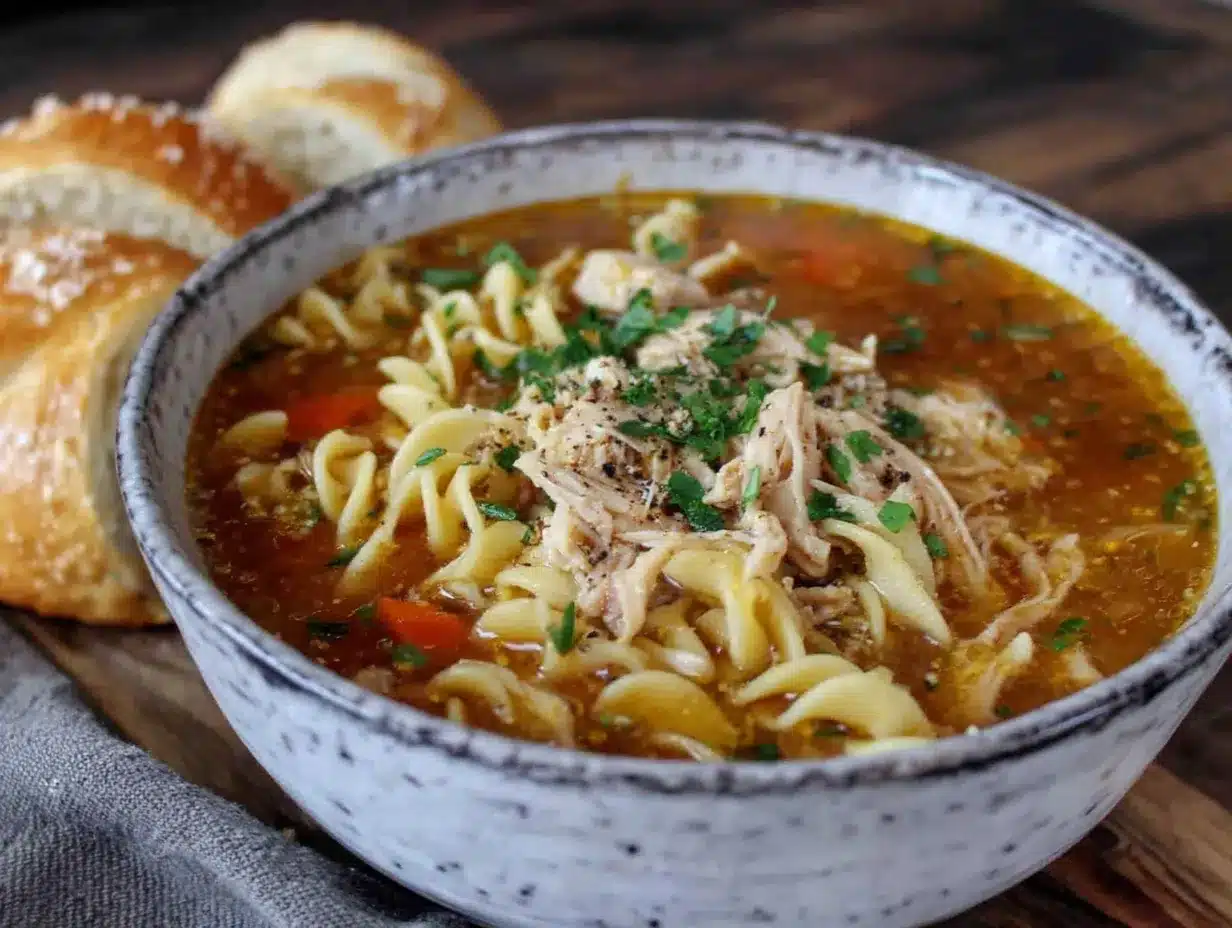
Let me walk you through this step by step. I have made this soup dozens of times, so I am including all the little details that make it work.
- Prep the chicken. Pull all the meat off the rotisserie chicken. Separate the white meat from the dark meat if you want, or just mix it all together. Shred or chop the meat into bite-sized pieces. Set it aside in a bowl. Do not throw away the bones, skin, or any little bits of meat still clinging to the carcass. You will use those for the broth.
- Sweat the vegetables. In your large pot, melt the butter over medium heat. Add the diced onion, carrots, and celery. Stir to coat them in the butter. Cook for about 5-7 minutes, stirring occasionally, until the onions turn translucent and the carrots start to soften. You should smell that sweet, savory aroma filling your kitchen. Do not rush this step—it builds the flavor foundation.
- Add the garlic. Toss in the minced garlic and stir for about 30 seconds until it becomes fragrant. Garlic burns fast, so keep it moving. The moment you smell it, you are ready for the next step.
- Build the broth. Pour in the chicken broth and water. Add the dried thyme, rosemary, bay leaf, and black pepper. Stir everything together. Now, add the chicken carcass (bones, skin, and all) directly into the pot. Submerge it as much as you can. This is where the magic happens—the bones release collagen and flavor into the broth, making it taste like it simmered for hours.
- Simmer the broth. Bring the pot to a boil over high heat. Once it reaches a boil, reduce the heat to medium-low so it maintains a gentle simmer. Let it simmer for 15 minutes. During this time, the broth will deepen in color and flavor. You will see little bubbles breaking the surface—that is perfect.
- Remove the bones. After 15 minutes, use tongs or a slotted spoon to carefully lift out the chicken carcass. It will be hot, so be careful. Discard the bones. If you want a cleaner broth, you can strain it through a fine-mesh strainer at this point. I usually skip this and just fish out any stray bits. The rustic texture is part of the charm.
- Cook the noodles. Bring the broth back to a gentle boil. Add the wide egg noodles. Stir them in so they do not stick together. Cook according to the package directions, usually about 6-8 minutes for dried noodles or 10-12 minutes for frozen ones. Taste a noodle to check for doneness—it should be tender but still have a little bite.
- Add the chicken. Once the noodles are cooked, stir in the shredded chicken. Let it heat through for about 2 minutes. The chicken is already cooked, so you just need to warm it up.
- Finish and season. Remove the bay leaf and discard it. Taste the soup and adjust the seasoning. You will likely need about 1/2 to 1 teaspoon of salt, depending on your broth and chicken. Add the lemon juice if using—it brightens the whole soup. Stir in the fresh parsley if you have it.
- Serve immediately. Ladle the soup into bowls. Make sure each bowl gets a good mix of broth, noodles, chicken, and vegetables. Garnish with extra parsley if desired. Serve hot with crusty bread or crackers on the side.
Pro tip from my kitchen: If you are meal prepping, cook the noodles separately and add them to individual bowls before pouring the hot broth over. This prevents the noodles from getting mushy when you reheat leftovers. I learned this the hard way after a few sad, bloated noodle experiences.
Cooking Tips & Techniques
After making this soup more times than I can count, I have picked up a few tricks that make a real difference. Here are the ones I swear by.
- Do not skip sweating the vegetables. This is not just about softening them. Sweating the onions, carrots, and celery in butter releases their natural sugars and creates a flavor base that carries through the whole soup. If you just dump them in the broth raw, you lose that depth.
- Use low-sodium broth. This gives you control over the salt level. Rotisserie chickens are already seasoned, sometimes heavily. If you use regular broth, you risk ending up with soup that tastes like a salt lick. Start with less salt and adjust at the end.
- Simmer, do not boil. Once you add the bones and broth, keep the heat at a gentle simmer. A rolling boil can make the broth cloudy and toughen the chicken. You want small bubbles, not a raging sea.
- Do not overcook the noodles. This is the most common mistake. Noodles continue to soften even after you turn off the heat. Cook them until they are just tender, then serve immediately. If you are making the soup ahead of time, follow my tip above and keep the noodles separate.
- Taste as you go. I cannot stress this enough. Broths vary in intensity, chickens vary in saltiness, and your personal preference matters. Taste the soup at the end and adjust. Sometimes it needs a pinch more thyme, sometimes a squeeze of lemon. Trust your palate.
- Let the soup rest before serving. If you have time, let the soup sit off the heat for 5 minutes before ladling it into bowls. This allows the flavors to meld together. The difference is subtle but noticeable.
My biggest failure: The first time I made this, I forgot to remove the bay leaf. My husband bit into it and spent the next five minutes picking bay leaf bits out of his teeth. Not my finest moment. Always fish that bay leaf out before serving!
Variations & Adaptations
This soup is a blank canvas. Here are some ways to make it your own, based on what I have tried and loved.
- Gluten-Free Option: Swap the egg noodles for gluten-free pasta or rice noodles. You can also use cooked rice or quinoa instead of noodles. The soup stays just as satisfying.
- Dairy-Free Version: Replace the butter with olive oil or avocado oil. The flavor changes slightly, but it is still delicious. Use a dairy-free broth to be safe.
- Extra Veggie Boost: Add a cup of frozen peas or corn in the last 5 minutes of cooking. They add color, sweetness, and extra nutrients. I do this when I want to sneak more vegetables into my kids’ bowls.
- Spicy Kick: Stir in 1/2 teaspoon of red pepper flakes along with the dried herbs. Or add a splash of hot sauce at the end. The heat cuts through the richness beautifully.
- Herb Swap: Use fresh herbs instead of dried if you have them. Add 2 tablespoons of fresh thyme and 1 tablespoon of fresh rosemary, finely chopped. Add them with the garlic for maximum flavor.
- Slow Cooker Method: Sweat the vegetables in a skillet first, then transfer them to a slow cooker. Add the broth, herbs, and chicken carcass. Cook on low for 6-8 hours. Remove the bones, shred the meat, and stir in cooked noodles before serving.
- Instant Pot Version: Use the sauté function to sweat the vegetables. Add the broth, herbs, and chicken carcass. Pressure cook on high for 10 minutes. Quick release, remove the bones, and stir in the noodles. Cook on sauté for 5 minutes or until noodles are tender.
I personally love adding a handful of spinach at the very end. It wilts into the broth and adds a pop of green that makes the soup look even more inviting. Try it once—you might get hooked.
Serving & Storage Suggestions
This soup is best served hot, straight from the pot. Here is how to make the most of it.
- Serving Temperature: Serve piping hot. Ladle into deep bowls and let everyone add their own garnishes. A sprinkle of fresh parsley, a crack of black pepper, or a drizzle of olive oil all work beautifully.
- What to Serve With: Crusty bread for dipping is my go-to. A warm baguette or sourdough slice slathered in butter is perfect. You can also serve it with saltine crackers, oyster crackers, or a simple side salad. For a heartier meal, try it alongside a creamy cheeseburger potato soup with bacon crumble for a soup night double feature.
- Storage: Store leftovers in an airtight container in the refrigerator for up to 4 days. The flavors actually deepen overnight, so it might taste even better the next day.
- Freezing: This soup freezes well, but with a caveat. If you froze it with the noodles, they will turn mushy when thawed. To avoid this, freeze the soup base (broth, vegetables, chicken) without the noodles. When you are ready to eat, thaw the base, reheat it, and cook fresh noodles directly in the broth.
- Reheating: Reheat on the stovetop over medium heat until bubbling. Add a splash of water or broth if it has thickened too much. You can also microwave individual portions in 30-second bursts, stirring in between.
- Flavor Development: The soup tastes best within the first two days. After that, the noodles start to soften and the vegetables lose their texture. That is why I recommend the separate noodle trick for meal prep.
Nutritional Information & Benefits
Here is an approximate breakdown per serving (based on 6 servings). Keep in mind this varies based on your specific ingredients and portion sizes.
- Calories: ~350 per serving
- Protein: 28g
- Carbohydrates: 35g
- Fat: 12g
- Fiber: 3g
- Sodium: 800mg (varies with broth and chicken)
This soup is a solid source of lean protein from the chicken, which helps keep you full and supports muscle health. The carrots and celery provide vitamin A and antioxidants. The broth is hydrating and soothing, especially if you are fighting off a cold. Using low-sodium broth keeps the salt in check, and the butter adds just enough richness without overdoing it.
If you are watching your carb intake, swap the noodles for zucchini noodles or skip them entirely. The soup is still satisfying and flavorful. For a lower-fat version, use olive oil instead of butter and remove the skin from the chicken before shredding.
I personally love that this soup feels indulgent but is actually pretty balanced. It is comfort food that does not leave you feeling heavy or guilty. That is a win in my book.
Conclusion
This cozy rotisserie chicken noodle soup is exactly what it sounds like—a warm, comforting bowl of goodness that comes together in half an hour. It uses a store-bought chicken to skip the long simmering, but it tastes like you spent all day in the kitchen. That is the kind of cooking I love: smart shortcuts that do not sacrifice flavor.
I hope you make this soup your own. Add extra vegetables, swap in different herbs, or spice it up if that is your thing. The recipe is a starting point, not a rulebook. And honestly, that is the beauty of soup. It is forgiving, adaptable, and always welcoming.
When you make it, let me know how it turned out. Drop a comment below or tag me in your photos. I love seeing your kitchen creations, and I am always here if you have questions. Until next time, stay warm and keep cooking.
Frequently Asked Questions
Can I use leftover homemade chicken instead of rotisserie?
Absolutely. Any cooked chicken works here. Just keep in mind that rotisserie chicken adds extra flavor from its seasoning. If using plain cooked chicken, you might want to boost the herbs slightly.
How do I prevent the noodles from getting mushy?
Cook the noodles separately and add them to individual bowls when serving. Pour the hot broth over the top. This keeps the noodles firm and prevents them from absorbing too much liquid.
Can I make this soup in a slow cooker?
Yes. Sweat the vegetables on the stovetop first, then transfer everything except the noodles to a slow cooker. Cook on low for 6-8 hours. Remove the bones, stir in cooked noodles, and serve.
What can I use instead of egg noodles?
Any small pasta shape works, like ditalini, orzo, or stelline. You can also use rice, quinoa, or gluten-free pasta. For a low-carb option, try zucchini noodles added at the very end.
How long does this soup last in the fridge?
Stored in an airtight container, it keeps for up to 4 days. The noodles will continue to soften, so it is best eaten within the first 2 days. If you want it to last longer, freeze the soup base without the noodles.
Pin This Recipe!
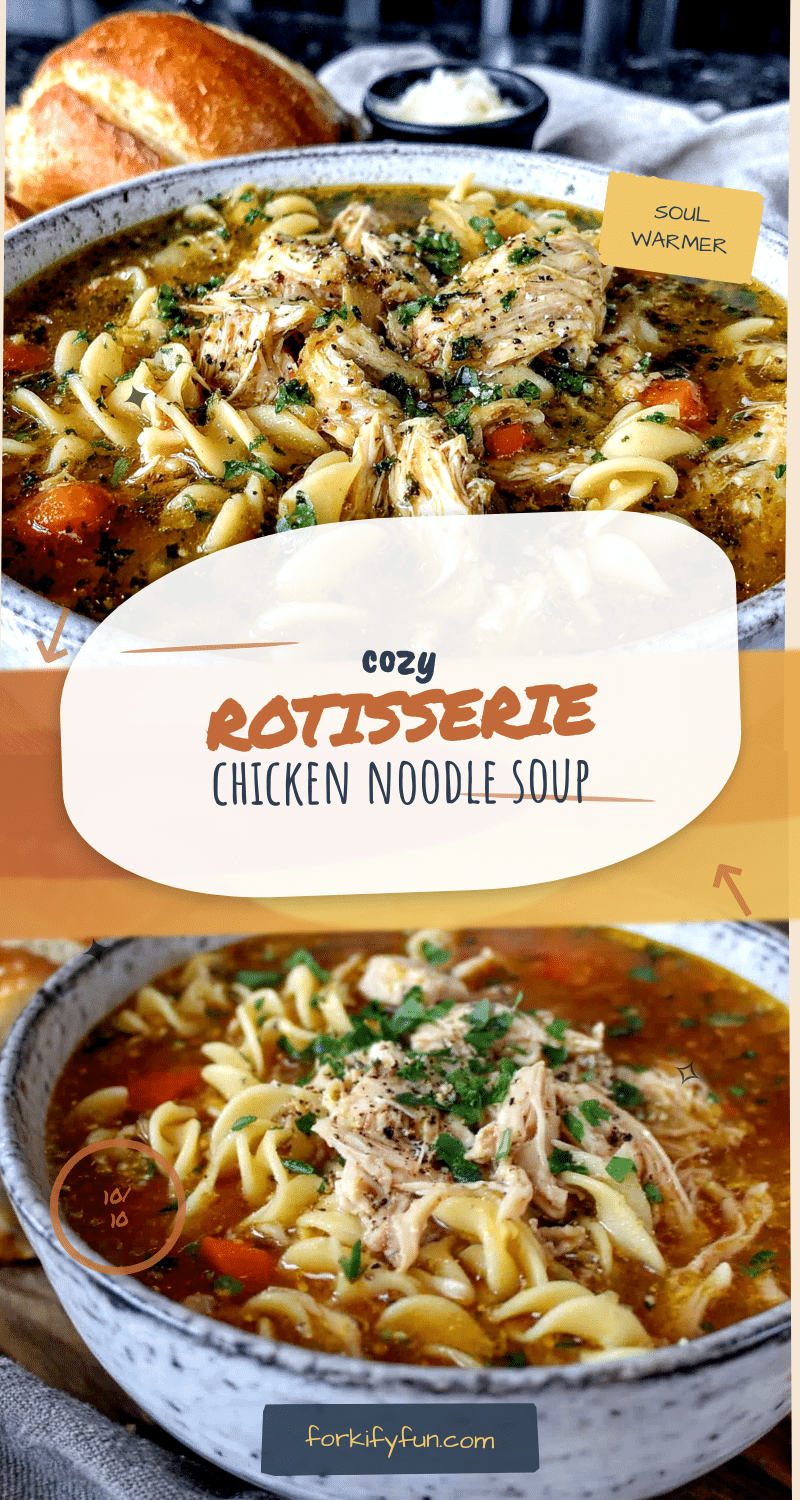
Cozy Rotisserie Chicken Noodle Soup: Easy 30-Minute Recipe
A warm, comforting bowl of chicken noodle soup that comes together in just 30 minutes using a store-bought rotisserie chicken. It tastes like it simmered all day but is perfect for busy weeknights.
- Prep Time: 10 minutes
- Cook Time: 20 minutes
- Total Time: 30 minutes
- Yield: 6 servings 1x
- Category: Soup
- Cuisine: American
Ingredients
- 1 rotisserie chicken (about 2–3 pounds)
- 2 tablespoons unsalted butter
- 1 medium yellow onion, diced
- 3 medium carrots, peeled and diced
- 3 celery stalks, diced
- 3 cloves garlic, minced
- 8 cups low-sodium chicken broth
- 2 cups water
- 1 teaspoon dried thyme
- 1 teaspoon dried rosemary
- 1 bay leaf
- 1/2 teaspoon black pepper
- Salt to taste
- 8 ounces wide egg noodles
- 2 tablespoons fresh parsley, chopped (optional)
- 1 tablespoon lemon juice (optional)
Instructions
- Pull all the meat off the rotisserie chicken. Shred or chop into bite-sized pieces and set aside. Reserve the bones, skin, and any bits of meat for the broth.
- In a large pot, melt the butter over medium heat. Add the diced onion, carrots, and celery. Cook for 5-7 minutes, stirring occasionally, until the onions are translucent and carrots start to soften.
- Add the minced garlic and stir for about 30 seconds until fragrant.
- Pour in the chicken broth and water. Add the dried thyme, rosemary, bay leaf, and black pepper. Stir to combine. Add the chicken carcass (bones, skin, and all) to the pot, submerging as much as possible.
- Bring the pot to a boil over high heat, then reduce heat to medium-low to maintain a gentle simmer. Simmer for 15 minutes.
- Use tongs or a slotted spoon to carefully remove the chicken carcass from the pot and discard it.
- Bring the broth back to a gentle boil. Add the wide egg noodles and cook according to package directions (usually 6-8 minutes for dried, 10-12 minutes for frozen), until tender but still with a little bite.
- Stir in the shredded chicken and let it heat through for about 2 minutes.
- Remove the bay leaf and discard. Taste and adjust seasoning with salt as needed (start with 1/2 teaspoon). Stir in lemon juice and fresh parsley if using.
- Ladle the soup into bowls, ensuring each gets a good mix of broth, noodles, chicken, and vegetables. Serve hot with crusty bread or crackers.
Notes
For meal prep, cook noodles separately and add to individual bowls before pouring hot broth over to prevent mushy noodles when reheating. The soup can be stored in the refrigerator for up to 4 days. To freeze, omit noodles and freeze the soup base; add fresh noodles when reheating.
Nutrition
- Serving Size: 1 bowl (about 1.5 cu
- Calories: 350
- Sugar: 5
- Sodium: 800
- Fat: 12
- Saturated Fat: 4
- Carbohydrates: 35
- Fiber: 3
- Protein: 28
Keywords: chicken noodle soup, rotisserie chicken, easy soup, 30-minute meal, comfort food, chicken soup