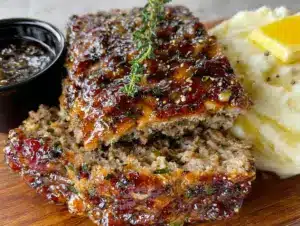
That sticky-sweet, tangy smell of brown sugar and ketchup caramelizing in the oven — the kind that drifts from the kitchen and wraps around you before you even take off your coat — still takes me straight to my grandmother’s small yellow house on a Sunday afternoon. She wasn’t one for fancy cooking, not at all. Her kitchen counters were cluttered with mismatched measuring cups and a well-worn wooden spoon that had seen more meatloaves than I could count. I remember standing on a step stool, watching her shape the meatloaf with her hands, the ground beef cool and soft against her fingers. She never used a recipe, just a pinch of this and a splash of that, and somehow it always came out perfect.
This classic old-fashioned meatloaf with brown sugar glaze is my attempt to bottle up that memory. It’s the kind of dinner that feels like a hug on a plate — simple, honest, and deeply satisfying. The glaze is the real star here, a sweet and tangy topping that bakes into a glossy, almost candied crust. Underneath, the meatloaf stays juicy and tender, thanks to a few key tricks I picked up along the way (like not overmixing the meat, which I learned the hard way). Honestly, I’ve made this recipe more times than I can remember, tweaking it here and there until it felt just right.
There’s something about a meatloaf that brings people together. It’s not flashy or trendy, but it’s reliable. And when that brown sugar glaze bubbles and sets into a beautiful, shiny finish, you know you’ve got something special. This isn’t just dinner — it’s a little piece of comfort that sticks with you.
Why You’ll Love This Recipe
Let me tell you, I have tested this meatloaf recipe more times than I care to admit. I’ve had dry ones, bland ones, and ones that fell apart the second I tried to slice them. This version? It’s the one I keep coming back to. It’s the one my family requests for birthdays, and the one I bring to potlucks where I know I’ll be asked for the recipe before the night is over.
- Incredibly Juicy: The combination of ground beef and pork, plus a panade (that’s just a fancy word for breadcrumbs soaked in milk), guarantees a moist, tender loaf every single time. No more dry, crumbly meatloaf.
- That Brown Sugar Glaze: Oh, the glaze. It’s a simple mix of brown sugar, ketchup, and a touch of mustard, but it transforms into this thick, sticky, sweet-and-savory crust that is absolutely addictive. It’s the part everyone fights over.
- Simple Pantry Ingredients: You probably have most of these ingredients in your kitchen right now. No weird or hard-to-find items here — just good, honest food.
- Perfect for Meal Prep: This meatloaf tastes even better the next day. The flavors have time to meld together, making leftovers a real treat. Slice it cold for sandwiches or reheat it for an easy weeknight dinner.
- Family-Approved: Kids love it. Adults love it. It’s one of those rare dishes that makes everyone at the table happy. It’s also fantastic served alongside some creamy cheesy pasta salad for a complete, crowd-pleasing meal.
This isn’t just another meatloaf recipe. It’s the one you’ll write down on a recipe card and pass down. It’s the one that makes you close your eyes after the first bite and think, “Yeah, that’s it.”
What Ingredients You Will Need
This recipe relies on simple, everyday ingredients that work together to create something truly special. Each one has a job to do, from adding moisture to building that unforgettable flavor. Here’s what you’ll need:
For the Meatloaf:
- 1 ½ pounds ground beef (80/20): The 80/20 ratio is key here. You need a little fat for moisture and flavor. Too lean, and your meatloaf will be dry. I prefer ground chuck for this.
- ½ pound ground pork: This adds a subtle sweetness and extra juiciness that beef alone can’t provide. You can use all beef if you prefer, but the pork makes it better.
- 1 cup plain breadcrumbs: These help bind the meatloaf and absorb moisture. Panko breadcrumbs work great too, giving a slightly lighter texture.
- ½ cup whole milk: This is used to soak the breadcrumbs, creating a panade that keeps the meatloaf incredibly tender. Don’t skip this step!
- 1 medium yellow onion, finely diced: Onion adds flavor and moisture. Make sure to dice it very finely so it melts into the meatloaf.
- 2 large eggs, lightly beaten: Eggs are the binder that holds everything together.
- 3 cloves garlic, minced: Fresh garlic is a must. It adds a savory depth that powder just can’t match.
- 2 tablespoons Worcestershire sauce: This adds a complex, umami richness. It’s a non-negotiable for a classic meatloaf.
- 1 teaspoon kosher salt: Don’t be shy with the salt. It seasons the meat all the way through.
- ½ teaspoon black pepper: Freshly ground is always best.
- ½ teaspoon smoked paprika: This adds a subtle smoky flavor that complements the sweet glaze perfectly.
- ¼ teaspoon dried thyme: A little herbaceous note that brightens up the richness of the meat.
For the Brown Sugar Glaze:
- ¾ cup ketchup: The base of the glaze. I prefer Heinz for its perfect balance of sweet and tangy.
- ½ cup packed light brown sugar: This is what gives the glaze its signature sweetness and that sticky, caramelized finish.
- 1 tablespoon apple cider vinegar: A little acidity to cut through the sweetness and balance the flavors.
- 1 teaspoon yellow mustard: Adds a slight tang and a beautiful color to the glaze.
- ½ teaspoon garlic powder: For a subtle savory kick in the glaze.
Ingredient Tips from My Kitchen: When I’m out of fresh thyme, I’ve used a pinch of dried oregano instead, and it’s still delicious. For a gluten-free version, swap the breadcrumbs for gluten-free panko or crushed pork rinds. And if you don’t have ground pork, you can substitute it with ground veal or just use two pounds of ground beef (though I’d recommend adding an extra tablespoon of Worcestershire for flavor).
Equipment Needed
You don’t need a lot of fancy gear to make this meatloaf, which is part of its charm. Here’s what I use every time:
- A large mixing bowl: You need room to get your hands in there and mix everything gently. A stainless steel or ceramic bowl works perfectly.
- A 9×5-inch loaf pan: This is the classic shape for a meatloaf. If you don’t have one, you can shape the loaf on a foil-lined baking sheet, which actually gives you more of that crispy crust all around.
- A small bowl: For whisking together the glaze ingredients.
- A whisk or fork: To mix the glaze until smooth.
- A chef’s knife and cutting board: For dicing the onion and mincing the garlic.
- Measuring cups and spoons: Accuracy matters, especially for the glaze.
- Aluminum foil: Essential for tenting the meatloaf while it bakes to prevent the top from burning.
- A meat thermometer: This is your best friend. Don’t guess when it’s done — the internal temperature should reach 160°F (71°C).
I’ve made this meatloaf in a glass loaf pan, a metal one, and even a ceramic dish. They all work, but I find metal pans give the best browning on the sides. And if you’re using a glass pan, just keep an eye on the cooking time as it can take a few minutes longer.
Preparation Method
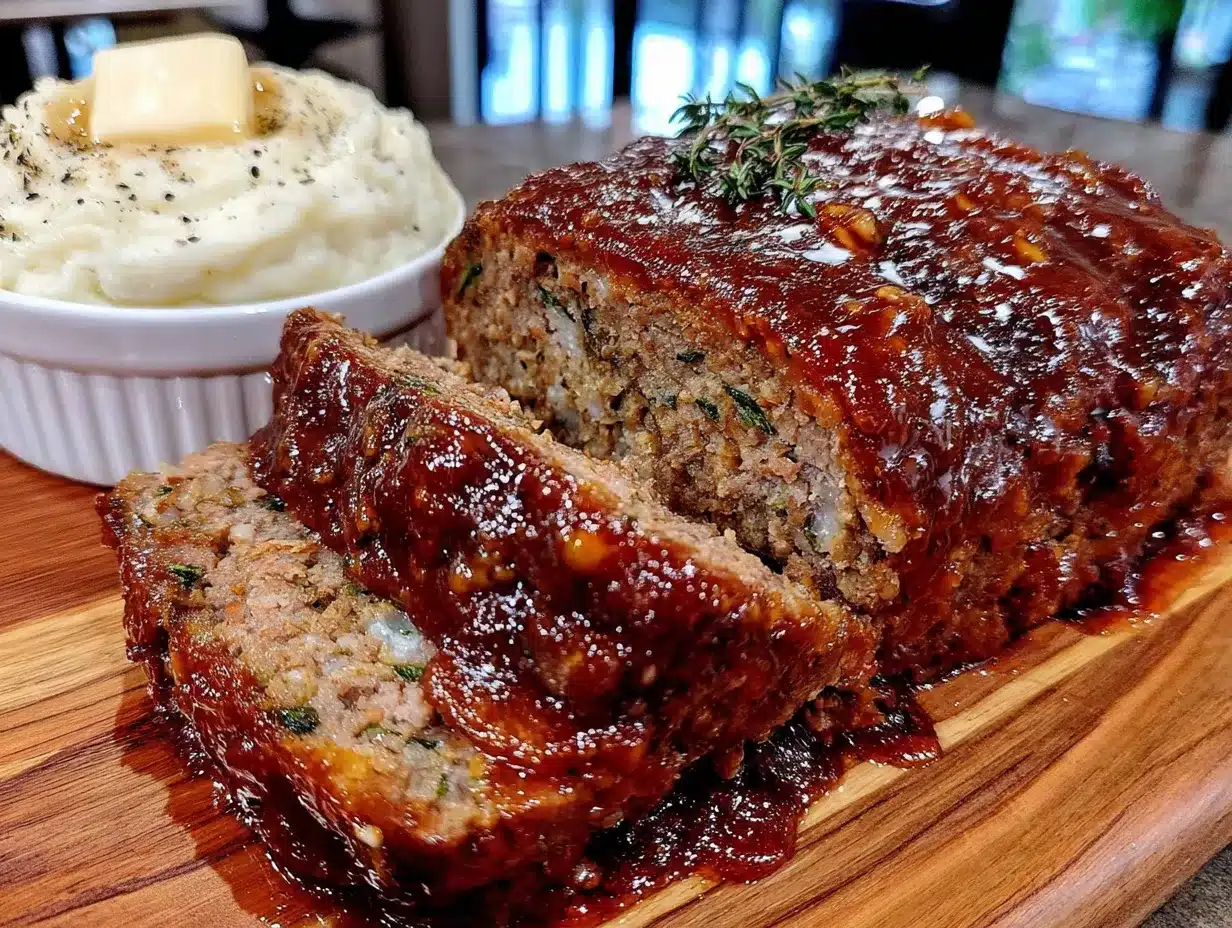
Alright, let’s get cooking. This process is straightforward, but I’ll share every little trick I’ve learned to make sure your meatloaf turns out perfect.
Step 1: Preheat and Prep
Preheat your oven to 350°F (175°C). While it’s heating up, lightly grease your 9×5-inch loaf pan with a little cooking spray or a thin layer of butter. This helps the meatloaf release easily after baking.
Step 2: Make the Panade
In your large mixing bowl, combine the breadcrumbs and milk. Stir them together and let them sit for about 5 minutes. The breadcrumbs will absorb the milk and turn into a soft, pasty mixture. This is the panade, and it’s the secret to a tender, non-dry meatloaf. Don’t rush this step.
Step 3: Sauté the Aromatics
In a small skillet over medium heat, add a drizzle of olive oil. Toss in the diced onion and cook for 3-4 minutes, until it becomes soft and translucent. Add the minced garlic and cook for another 30 seconds, just until fragrant. Let this cool for a minute or two before adding it to the meat mixture. (Hot onions can start to cook the meat, which we don’t want.)
Step 4: Mix the Meatloaf
To the bowl with the panade, add the ground beef, ground pork, sautéed onion and garlic, beaten eggs, Worcestershire sauce, salt, pepper, smoked paprika, and dried thyme. Now, here’s the most important part: use your hands to gently mix everything together. Don’t overmix! I know it’s tempting to really work it, but that will make your meatloaf tough. Just mix until everything is evenly combined, about 30 seconds of gentle folding and squeezing.
Step 5: Shape and Bake (First Stage)
Transfer the meat mixture to your prepared loaf pan. Press it in gently, making sure there are no air pockets. Don’t pack it down too hard — just a gentle, even press. Bake the meatloaf uncovered for 40 minutes. During this time, the fat will render out, and the meat will start to firm up.
Step 6: Make the Glaze
While the meatloaf is baking, make the glaze. In your small bowl, whisk together the ketchup, brown sugar, apple cider vinegar, yellow mustard, and garlic powder until the sugar is mostly dissolved. It will look a little grainy at first, but keep whisking. Set it aside.
Step 7: Glaze and Finish Baking
After 40 minutes, carefully remove the meatloaf from the oven. Spoon or brush about half of the glaze over the top of the meatloaf, spreading it evenly. Return the meatloaf to the oven and bake for another 15 minutes. Then, apply the remaining glaze and bake for a final 10-15 minutes. The total baking time should be about 65-70 minutes. The glaze will be bubbly, dark, and sticky.
Step 8: Rest and Serve
This is the hardest part — waiting. Remove the meatloaf from the oven and let it rest in the pan for at least 10-15 minutes. This allows the juices to redistribute throughout the loaf, so it doesn’t fall apart when you slice it. After resting, carefully pour off any excess fat from the pan. Then slice and serve. The internal temperature should read 160°F (71°C) on your meat thermometer.
Cooking Tips & Techniques
I’ve made every mistake in the book with meatloaf, so you don’t have to. Here are the lessons I’ve learned the hard way.
Don’t Skip the Panade: I once thought I could save time by skipping the milk-soaked breadcrumbs. The result was a dry, crumbly mess that no amount of glaze could save. The panade is non-negotiable for a moist meatloaf. It’s the same technique used in easy slow cooker buffalo chicken meatballs for that same tender texture.
Use a Meat Thermometer: Please, I beg you, use a thermometer. Meatloaf can go from perfect to dry in about two minutes. The safe internal temperature is 160°F (71°C). Insert the probe into the center of the loaf to get an accurate reading.
Let It Rest: I know you’re hungry, but slicing into a meatloaf right out of the oven is a recipe for disaster. It will crumble apart. The resting time allows the meat to reabsorb its juices, making for clean, beautiful slices.
Bake on a Sheet Pan for More Crust: If you’re a fan of a crispy, caramelized crust all around (and who isn’t?), shape the meatloaf into a free-form loaf on a foil-lined baking sheet. You’ll get much more surface area for that delicious brown sugar glaze to cling to. Just reduce the baking time by about 10 minutes since it’s not in a pan.
Don’t Overmix: This is the number one mistake. Overworking the meat mixture develops the proteins too much, resulting in a dense, tough loaf. Mix just until combined — a few streaks of red are fine.
Variations & Adaptations
This recipe is a fantastic base, and I’ve played around with it quite a bit. Here are some of my favorite twists.
Cheesy Stuffed Meatloaf: Before you press the meat into the pan, flatten half of it into a rectangle on a piece of plastic wrap. Place a layer of shredded mozzarella or cheddar cheese in the center, then use the plastic wrap to roll it up into a log. Place it seam-side down in the pan and top with the remaining meat mixture. You get a gooey, cheesy center that is absolutely divine.
Turkey Meatloaf: For a lighter version, swap the ground beef and pork for ground turkey (93/7 is best to keep it moist). You’ll need to add a little extra moisture — I like to add ¼ cup of grated zucchini (squeezed dry) and an extra tablespoon of olive oil. The cooking time will be about the same.
Spicy Southwest Meatloaf: Add a diced jalapeño (seeds removed for less heat) to the onion sauté, and mix in ½ cup of corn kernels and ¼ cup of chopped cilantro. For the glaze, add a teaspoon of chipotle powder or a tablespoon of your favorite hot sauce. It’s a fun, smoky twist that’s perfect with easy crockpot chicken tortilla soup with lime crema.
BBQ Meatloaf: Use your favorite barbecue sauce in place of the ketchup in the glaze, and add a tablespoon of brown sugar. You can also mix a little BBQ sauce directly into the meat mixture for extra flavor. This version is a huge hit at summer cookouts.
Low-Carb/Keto Meatloaf: Replace the breadcrumbs with ½ cup of almond flour or crushed pork rinds. Use a sugar-free ketchup and a brown sugar substitute (like Swerve) for the glaze. It’s surprisingly good and doesn’t sacrifice any of the flavor.
Serving & Storage Suggestions
This meatloaf is a meal in itself, but it shines with the right sides.
Serving: Slice the meatloaf into 1-inch thick slices. Serve it warm, straight from the oven. The classic pairing is creamy mashed potatoes and a simple green vegetable, like steamed green beans or roasted broccoli. A side of creamy cucumber salad with dill and vinegar adds a bright, refreshing contrast to the rich meatloaf. Leftover slices make the best sandwiches — toast some bread, add a little extra ketchup, and you’ve got lunch gold.
Storage: Let the meatloaf cool completely before storing. Wrap it tightly in plastic wrap or aluminum foil, or place slices in an airtight container. It will keep in the refrigerator for up to 4 days. The flavor honestly gets better after a day or two.
Freezing: This meatloaf freezes beautifully. You can freeze the whole cooked loaf (cooled and wrapped in a double layer of plastic wrap and foil) for up to 3 months. To thaw, place it in the refrigerator overnight. You can also freeze individual slices for quick lunches. Reheat slices in the microwave or in a 350°F oven for about 10 minutes.
Reheating: For the best results, reheat slices in a skillet over medium-low heat with a splash of water or beef broth. Cover the pan with a lid and steam for 3-4 minutes. This helps keep the meatloaf moist. You can also reheat it in the oven at 300°F, covered with foil, for about 15-20 minutes.
Nutritional Information & Benefits
Let’s be real — meatloaf isn’t a health food, but it can be part of a balanced diet. Here’s a rough estimate per serving (based on 8 servings):
- Calories: Approximately 420-480
- Protein: 28-32g
- Fat: 22-28g
- Carbohydrates: 25-30g
- Fiber: 1-2g
- Sugar: 15-18g (mostly from the glaze)
The ground beef and pork provide a good amount of high-quality protein and iron. The onions and garlic offer antioxidants and anti-inflammatory benefits. The brown sugar glaze is definitely the indulgence part, but hey — life’s about balance, right? If you’re watching your sodium, you can reduce the salt to ½ teaspoon and use a low-sodium ketchup. This recipe is not gluten-free in its standard form (due to the breadcrumbs), but it can easily be adapted as mentioned in the variations section. It does contain dairy (milk) and eggs.
Conclusion
This classic old-fashioned meatloaf with brown sugar glaze is more than just a recipe — it’s a little piece of home. It’s the kind of meal that makes a Tuesday night feel special, and it’s the dish that will earn you a reputation as a truly good cook. The sweet, sticky glaze, the tender, juicy meat, and the way it fills your kitchen with that unmistakable aroma — it’s comfort food at its absolute finest.
I really hope you give this one a try. Don’t be afraid to make it your own — add a little extra garlic, swap in your favorite BBQ sauce, or stuff it with cheese. That’s the beauty of a good meatloaf. It’s forgiving, it’s flexible, and it always delivers.
When you make it, I’d love to hear how it turned out. Drop a comment below and let me know if your family loved it as much as mine does. And if you tweaked it, share your twist! Happy cooking, friends.
Frequently Asked Questions
Can I make this meatloaf ahead of time?
Absolutely! You can assemble the meatloaf in the pan, cover it, and store it in the refrigerator for up to 24 hours before baking. Just add about 10-15 minutes to the baking time since you’ll be starting from cold. You can also bake it fully, let it cool, and reheat it when you’re ready to serve.
Why did my meatloaf fall apart?
This usually happens for one of two reasons: either the mixture was too wet (too many eggs or too much milk) or you didn’t let it rest long enough after baking. The resting time is crucial — it allows the proteins to set and the juices to redistribute. Also, make sure your panade is properly formed; the breadcrumbs need to fully absorb the milk.
Can I use quick-cooking oats instead of breadcrumbs?
Yes, you can! Rolled oats (not steel-cut) work great as a substitute for breadcrumbs. They add a slightly nutty flavor and a bit more texture. Use the same amount — 1 cup of oats for the 1 cup of breadcrumbs. Just note that the texture will be a little less fine.
How do I know when the meatloaf is done without a thermometer?
While a meat thermometer is the most reliable method, you can check by inserting a knife into the center of the loaf. If the juices run clear (not pink), it’s a good sign. Also, the meatloaf should pull away slightly from the sides of the pan, and the glaze should be thick and bubbly. But honestly, a $10 thermometer is a worthy investment.
Can I double this recipe?
Definitely! This recipe doubles beautifully. Just use a larger pan (like a 9×13-inch baking dish) or shape the meatloaf into a larger free-form loaf on a baking sheet. You will need to increase the baking time — start checking for doneness at around 75-80 minutes. The internal temperature is still your best guide.
Pin This Recipe!
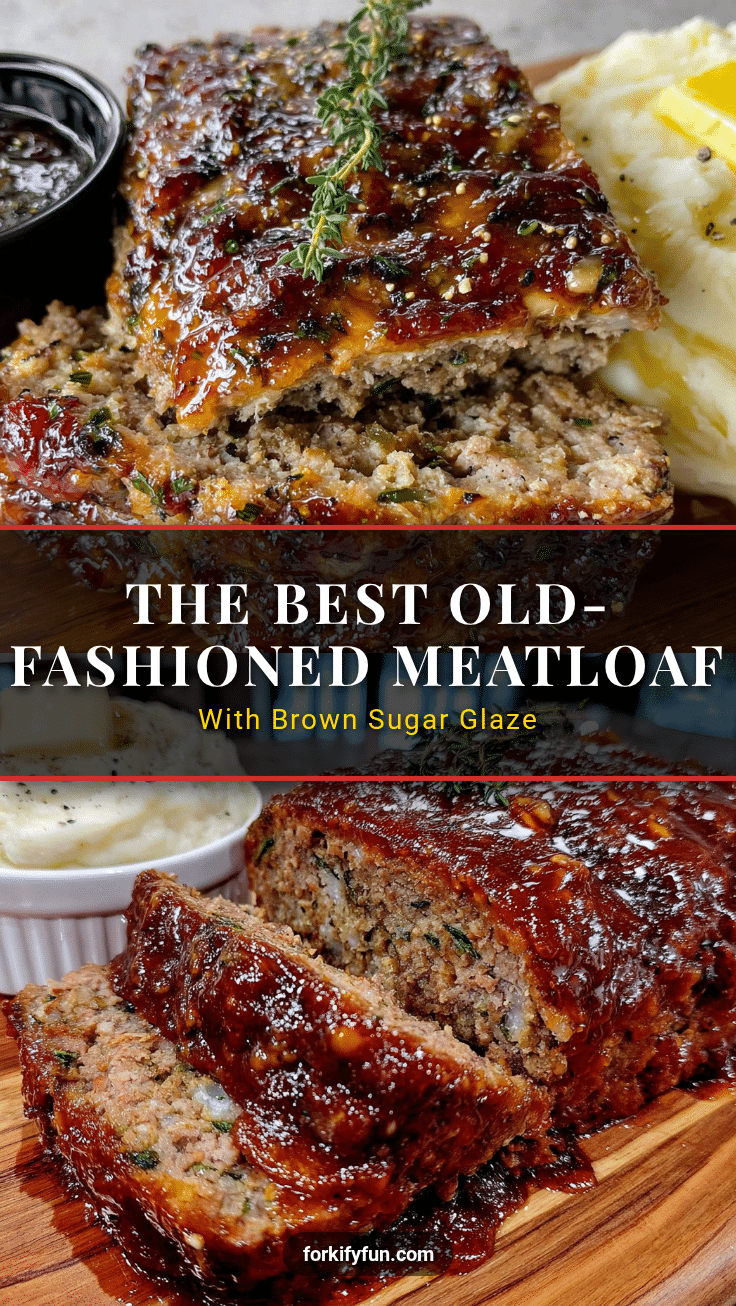
Classic Old-Fashioned Meatloaf with Brown Sugar Glaze
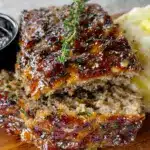
A tender, juicy meatloaf topped with a sweet and tangy brown sugar glaze that caramelizes into a glossy crust. This comforting, family-friendly recipe is perfect for weeknight dinners and leftovers.
- Prep Time: 20 minutes
- Cook Time: 65 minutes
- Total Time: 85 minutes
- Yield: 8 servings 1x
- Category: Main Course
- Cuisine: American
Ingredients
- 1 ½ pounds ground beef (80/20)
- ½ pound ground pork
- 1 cup plain breadcrumbs
- ½ cup whole milk
- 1 medium yellow onion, finely diced
- 2 large eggs, lightly beaten
- 3 cloves garlic, minced
- 2 tablespoons Worcestershire sauce
- 1 teaspoon kosher salt
- ½ teaspoon black pepper
- ½ teaspoon smoked paprika
- ¼ teaspoon dried thyme
- ¾ cup ketchup
- ½ cup packed light brown sugar
- 1 tablespoon apple cider vinegar
- 1 teaspoon yellow mustard
- ½ teaspoon garlic powder
Instructions
- Preheat your oven to 350°F (175°C). Lightly grease a 9×5-inch loaf pan with cooking spray or butter.
- In a large mixing bowl, combine the breadcrumbs and milk. Stir and let sit for about 5 minutes until the breadcrumbs absorb the milk and form a soft paste (panade).
- In a small skillet over medium heat, add a drizzle of olive oil. Sauté the diced onion for 3-4 minutes until soft and translucent. Add the minced garlic and cook for 30 seconds until fragrant. Let cool slightly.
- To the bowl with the panade, add the ground beef, ground pork, sautéed onion and garlic, beaten eggs, Worcestershire sauce, salt, pepper, smoked paprika, and dried thyme. Use your hands to gently mix until just combined (about 30 seconds). Do not overmix.
- Transfer the meat mixture to the prepared loaf pan. Press gently to remove air pockets, but do not pack too firmly.
- Bake uncovered for 40 minutes.
- While the meatloaf bakes, make the glaze: In a small bowl, whisk together the ketchup, brown sugar, apple cider vinegar, yellow mustard, and garlic powder until the sugar is mostly dissolved.
- After 40 minutes, remove the meatloaf from the oven. Spoon or brush about half of the glaze over the top. Return to the oven and bake for 15 minutes.
- Apply the remaining glaze and bake for another 10-15 minutes, until the internal temperature reaches 160°F (71°C) and the glaze is bubbly and sticky.
- Remove from the oven and let the meatloaf rest in the pan for 10-15 minutes. Pour off any excess fat, then slice and serve.
Notes
For a gluten-free version, swap breadcrumbs for gluten-free panko or crushed pork rinds. For a lighter version, use ground turkey (93/7) and add ¼ cup grated zucchini (squeezed dry) and an extra tablespoon of olive oil. To get more crispy crust, shape the meatloaf into a free-form loaf on a foil-lined baking sheet and reduce baking time by about 10 minutes.
Nutrition
- Serving Size: 1 slice (1/8 of loaf
- Calories: 450
- Sugar: 17
- Sodium: 780
- Fat: 25
- Saturated Fat: 9
- Carbohydrates: 28
- Fiber: 1
- Protein: 30
Keywords: meatloaf, brown sugar glaze, old-fashioned meatloaf, comfort food, ground beef, ground pork, easy dinner