My neighbor Claire poked her head over the fence and said, “Is that turkey I smell?” and I froze for a second, spatula in hand. It was a random Tuesday in November, not even Thanksgiving, and I had a whole turkey breast roasting away in my tiny kitchen like it was nobody’s business. I laughed and admitted yes, I was roasting a turkey breast for absolutely no reason other than I had been craving it for three days straight. She asked if she could come over, and twenty minutes later we were pulling apart herb-butter-slicked slices straight from the pan, no plates, just napkins and pure disbelief that something this good came from my regular old oven.
That moment—standing there with a friend, eating turkey off a sheet pan on a random Tuesday—is exactly why I keep coming back to this recipe. It’s not about the holidays or some big production. It’s about wanting that rich, buttery, herb-infused bite without committing to a full bird and a full day of cooking. Honestly, it felt almost rebellious to roast a turkey breast just because I wanted one. And you know what? It turned out so juicy and golden that Claire asked for the recipe before she even finished her second helping.
This juicy herb-butter roasted turkey breast has become my go-to for small gatherings, lazy Sunday dinners, and any time I want something that feels special but doesn’t require a culinary degree or a guest list of twelve. It’s proof that you don’t need a huge bird or a huge occasion to get that perfect roast turkey experience. Just a good piece of meat, some butter, herbs, and maybe a neighbor who catches the smell drifting over the fence.
Why You’ll Love This Recipe
This isn’t just another turkey breast recipe—it’s the one that makes you wonder why you ever bothered with a whole turkey in the first place. I’ve made this more times than I can count, tweaking the herb butter ratio, testing roasting times, and even burning one batch badly enough that I had to order pizza. Through all that trial and error, this version came out as the clear winner. Here’s why it works:
- Perfect for Small Gatherings : Feeds 4 to 6 people comfortably without the leftover mountain that comes with a full bird. Ideal for Thanksgiving for two, Friendsgiving, or just a cozy dinner with people you actually like.
- Incredibly Juicy : The herb butter gets rubbed under the skin, which keeps the meat moist and flavorful from the inside out. No dry turkey here, I promise.
- Simple Ingredients : Butter, fresh herbs, garlic, salt, pepper—you probably have most of this already. No weird specialty items or trips to three different stores.
- Impressive with Minimal Effort : It looks like you spent hours fussing, but the oven does most of the work. You just mix, rub, and roast.
- Versatile : Works for a holiday table, a Sunday roast, or even meal prep for sandwiches and salads throughout the week.
What makes this recipe different from the dozens of others out there is the technique. I spent weeks testing different butter-to-herb ratios, and this one hits that perfect balance where the herbs are present but not overwhelming, and the butter bastes the breast as it roasts, creating a golden, crispy skin that shatters when you cut into it. It’s the kind of recipe that makes you close your eyes after the first bite—not because it’s fancy, but because it’s exactly what you wanted. That quiet satisfaction of getting it right.
What Ingredients You Will Need
This recipe relies on simple, high-quality ingredients that work together to create something greater than the sum of their parts. The herb butter is the star here, so using fresh herbs and good butter really makes a difference. I’ve tested this with dried herbs in a pinch, and while it works, fresh herbs give that bright, aromatic flavor that makes this dish sing.
- Bone-in, skin-on turkey breast (3 to 4 pounds) — This is the most forgiving cut for roasting. The bone helps conduct heat evenly and keeps the meat from drying out. I usually buy a whole breast half from the butcher counter, but frozen works too—just thaw it completely in the fridge first.
- Unsalted butter (6 tablespoons, softened) — Use unsalted so you can control the salt level. I prefer Kerrygold for its rich flavor, but any good-quality butter works. Let it sit out for an hour before mixing so it’s soft enough to blend.
- Fresh rosemary (2 tablespoons, finely chopped) — Rosemary and turkey are a classic pairing. Strip the leaves from the woody stems before chopping. If you have to use dried, use 2 teaspoons instead.
- Fresh thyme leaves (1 tablespoon) — Thyme adds a subtle earthiness that rounds out the rosemary. Run your fingers down the stems to strip the leaves easily.
- Fresh sage (1 tablespoon, finely chopped) — Sage gives that almost peppery, slightly floral note that feels so right with poultry. I grow sage in a pot on my windowsill specifically for this recipe.
- Garlic (4 cloves, minced) — Fresh garlic is non-negotiable here. Don’t use the jarred stuff—it has a different flavor that doesn’t bloom the same way in the butter.
- Salt (1½ teaspoons, preferably kosher) — I use Diamond Crystal kosher salt. If you use table salt, reduce to 1 teaspoon. Salting the bird properly is what makes the difference between bland and brilliant.
- Black pepper (1 teaspoon, freshly ground) — Freshly ground pepper has more punch than pre-ground. Grind it right before using for maximum flavor.
- Lemon (1, halved) — You’ll squeeze this over the turkey before roasting. The acidity cuts through the richness of the butter and brightens everything up.
- Chicken or turkey broth (½ cup) — Pour this into the bottom of the roasting pan to create steam and prevent the drippings from burning. You can use water in a pinch, but broth adds more depth.
- Optional aromatics — A halved onion, a few garlic cloves, and a sprig of rosemary in the cavity add even more flavor. I do this when I have extras on hand, but it’s not essential.
Equipment Needed
You don’t need a fancy kitchen to pull this off, which is one of the reasons I love this recipe. Here’s what you’ll need:
- Roasting pan — A metal or ceramic pan with low sides works best. If you don’t have a roasting pan, a rimmed baking sheet lined with foil will do the job. I’ve used a cast iron skillet before and it worked beautifully.
- Instant-read thermometer — This is your best friend for turkey. Guessing doneness leads to dry meat or undercooked spots. A good digital thermometer costs around $15 and pays for itself in saved dinners. I use a Thermapen, but any reliable brand works.
- Small bowl — For mixing the herb butter. Nothing fancy, just something to mash everything together.
- Chef’s knife and cutting board — For chopping herbs and garlic. A sharp knife makes the job faster and safer.
- Kitchen twine — Optional, but tying the breast helps it cook more evenly. If you don’t have twine, you can skip it—the meat will still be delicious, just slightly less uniform.
- Aluminum foil — For tenting the turkey if the skin browns too quickly, and for resting after roasting.
- Basting brush or spoon — For spooning pan juices over the turkey during roasting. A brush works best for getting into the crevices.
Preparation Method
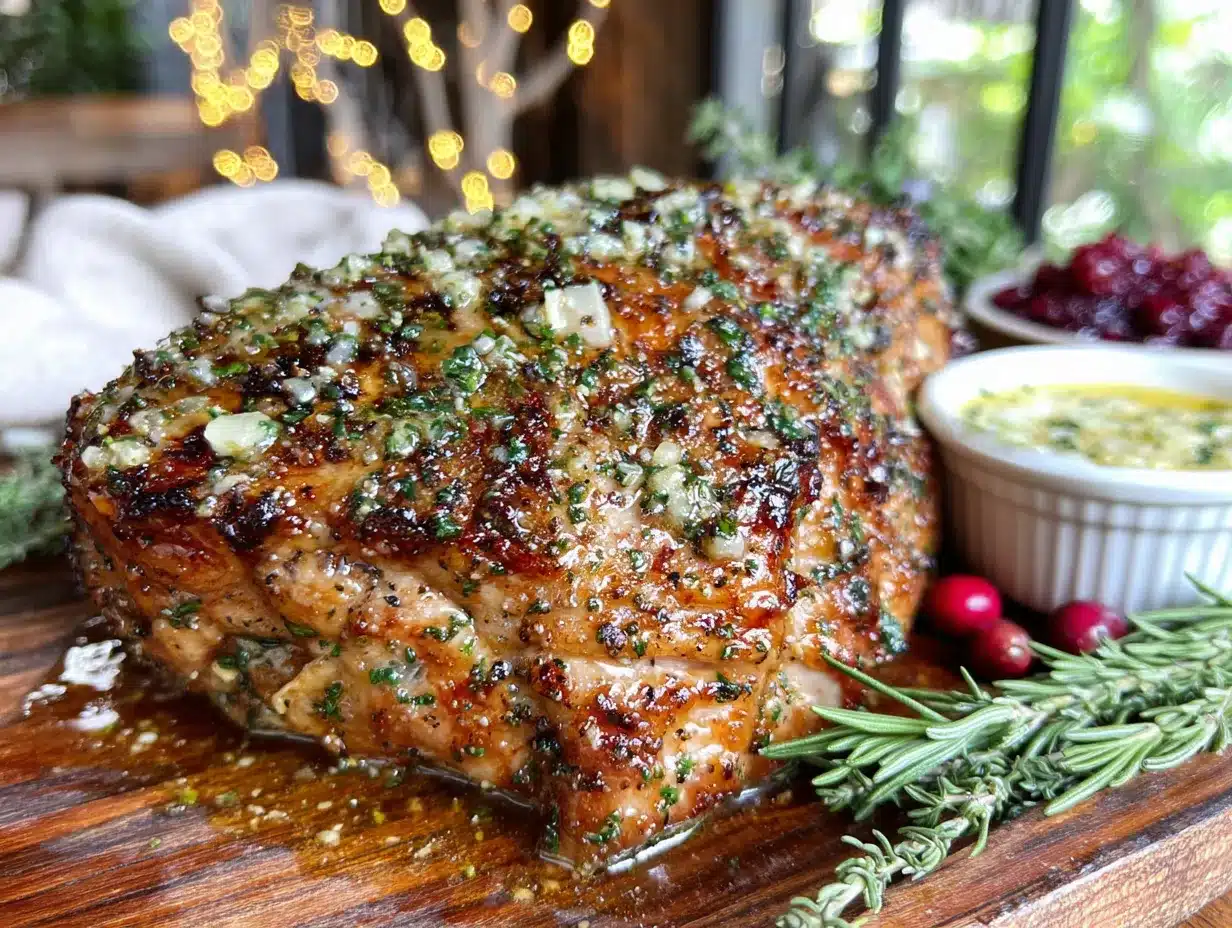
Take your time with this one. The actual hands-on work is maybe 15 minutes, but the resting and roasting require patience. Trust the process—it’s worth it.
- Prep the turkey — About an hour before cooking, take the turkey breast out of the fridge and let it sit on the counter. Pat it completely dry with paper towels—this is crucial for crispy skin. If the skin is damp, the butter won’t adhere properly and you’ll end up with soggy skin. Season the breast all over with salt and pepper, including under the skin if you can get your fingers in there. Let it rest at room temperature while you make the herb butter.
- Make the herb butter — In a small bowl, combine the softened butter, chopped rosemary, thyme, sage, and minced garlic. Mash everything together with a fork until the herbs and garlic are evenly distributed. The butter should be soft enough to spread easily but not melted. If your kitchen is cold and the butter firms up, microwave it for 5 seconds at a time until it’s spreadable. Taste a tiny bit—it should be savory and aromatic, not overwhelmingly garlicky.
- Apply the herb butter — Using your fingers, gently loosen the skin of the turkey breast from the meat, working your way from the edge toward the center. Be careful not to tear the skin—go slowly and use your fingertips. Once you have a pocket, spoon about two-thirds of the herb butter under the skin and spread it evenly over the meat. Rub the remaining butter all over the outside of the skin, covering every nook and cranny. This double application ensures flavor inside and out.
- Prep for roasting — Preheat your oven to 375°F (190°C). Place the turkey breast in your roasting pan, skin side up. Squeeze the lemon halves over the top, then tuck the squeezed lemon halves into the pan alongside the turkey. Pour the broth into the bottom of the pan—don’t pour it over the turkey, or you’ll wash off the butter. If you’re using optional aromatics like onion or extra garlic, scatter them around the turkey now.
- Roast the turkey — Place the pan in the center of the oven and roast for about 1 hour to 1 hour 15 minutes, or until the internal temperature reaches 155°F (68°C) when measured in the thickest part of the breast. Start checking at the 50-minute mark. The skin should be deep golden brown and crispy. If the skin is browning too quickly, tent loosely with foil for the last 15 minutes of cooking.
- Baste halfway through — About 30 minutes into roasting, spoon some of the pan juices over the turkey. This keeps the surface moist and helps the skin crisp evenly. Don’t baste more than once or twice—opening the oven too often lets heat escape and extends cooking time.
- Rest before carving — Once the turkey hits 155°F, remove it from the oven and transfer to a cutting board. Tent loosely with foil and let it rest for 15 to 20 minutes. The temperature will continue to rise to 160-165°F during resting. This step is non-negotiable—resting allows the juices to redistribute throughout the meat. If you cut into it immediately, all those precious juices will run out onto the board instead of staying in the meat.
- Carve and serve — After resting, carve the turkey breast against the grain into slices about ½-inch thick. The skin should be crispy and the meat should be juicy and tender. Spoon any remaining pan juices over the slices before serving. If you want extra gravy, you can make a quick pan sauce by whisking a tablespoon of flour into the drippings over medium heat and simmering until thickened.
Cooking Tips & Techniques
I’ve learned these lessons the hard way so you don’t have to. The first time I made this, I skipped the resting step because I was hungry and impatient. The result? A beautiful-looking turkey that released a puddle of juice the second I cut into it, leaving the meat dry and disappointing. I sat there eating my sad, dry turkey and promised myself I’d never skip resting again. And I haven’t.
Don’t skip the thermometer. I know it’s tempting to rely on time estimates, but oven temperatures vary wildly. A thermometer takes the guesswork out completely. Insert it into the thickest part of the breast, avoiding the bone. The bone conducts heat differently and will give you a false reading.
Patience with the skin. If your skin isn’t crispy at the end of roasting, you can pop the turkey under the broiler for 2 to 3 minutes. Watch it carefully—it can go from golden to burnt in seconds. I’ve done this several times when I wanted extra crunch, and it works beautifully.
Room temperature matters. Letting the turkey sit out for an hour before roasting helps it cook more evenly. A cold turkey breast straight from the fridge will cook unevenly, with the outside drying out before the center is done. I learned this after pulling a cold turkey from the fridge once and ending up with a dry outer layer and a slightly undercooked center.
Multitasking strategy. While the turkey roasts, use that time to prep your sides. This recipe pairs wonderfully with roasted vegetables or a simple salad. I often make creamy roasted garlic tomato soup as a starter when I’m serving this for a small gathering. The soup can simmer on the stove while the turkey finishes resting.
Variations & Adaptations
One of the best things about this recipe is how adaptable it is. I’ve made it more times than I can count, and I’m always finding new ways to tweak it based on what I have or who I’m feeding.
Herb variations. Don’t have rosemary or sage? No problem. Try tarragon and parsley for a lighter, slightly licorice-like flavor. Or go with oregano and marjoram for a more Mediterranean vibe. The ratio stays the same—just swap the herbs in equal amounts. I once made this with only thyme and lemon zest because that’s all I had, and it was still fantastic.
Spice it up. Add ½ teaspoon of smoked paprika or cayenne pepper to the herb butter for a subtle warmth. I did this for a Friendsgiving gathering and everyone kept asking what the secret ingredient was. The smoky heat doesn’t overpower the turkey—it just adds a layer of complexity that makes people take a second look.
Citrus twist. Swap the lemon for orange or grapefruit. The sweetness of orange pairs beautifully with sage and thyme. I tried this during a winter gathering and it felt so festive. The citrus cuts through the richness of the butter in the most satisfying way.
Dietary adaptations. For a dairy-free version, substitute the butter with a high-quality olive oil or vegan butter. The texture will be slightly different—olive oil doesn’t create the same crispy skin—but the flavor will still be delicious. I’ve made this for a friend with a dairy allergy and she couldn’t stop raving about it.
Different cooking methods. This recipe also works in an air fryer if you have a large enough model. Cook at 350°F for about 40-50 minutes, checking the temperature frequently. The skin gets incredibly crispy in the air fryer. For a smoky flavor, you can grill the turkey breast over indirect heat at around 375°F for about an hour.
Make it a full meal. For a complete small gathering dinner, serve this alongside cozy slow cooker butternut squash soup with brown butter sage as a starter. The flavors complement each other perfectly, and having one dish in the slow cooker frees up oven space for the turkey.
Serving & Storage Suggestions
This turkey breast is best served warm, right after resting, when the skin is still crispy and the meat is at its juiciest. I like to arrange the slices on a platter and spoon a little of the pan juices over the top just before bringing it to the table. It makes a beautiful presentation without any fussy plating.
What to serve with it. The classic pairings work beautifully here—mashed potatoes, roasted Brussels sprouts, green beans, or a simple salad. The pan juices alone are delicious enough to serve as a light gravy, but you can also make a quick gravy by whisking a tablespoon of flour into the drippings over medium heat. For a lighter option, I love serving this with a bright, acidic salad to cut through the richness.
Beverage pairings. A crisp white wine like Sauvignon Blanc or a dry Riesling complements the herb butter beautifully. For non-alcoholic options, sparkling water with a squeeze of lemon or a crisp apple cider works wonderfully.
Storage. Leftover turkey will keep in the refrigerator for up to 4 days in an airtight container. The skin will lose its crispness, but the meat stays moist. I like to slice the leftover turkey and use it for sandwiches, salads, or even on top of a creamy tomato basil soup with easy grilled cheese croutons for a next-day lunch that feels completely different.
Reheating. The best way to reheat turkey without drying it out is in a low oven. Place slices in a baking dish, add a splash of broth or water, cover with foil, and warm at 300°F for about 10 minutes. You can also reheat in the microwave, but the texture won’t be as good. For crispy skin, reheat in an air fryer at 350°F for 3 to 4 minutes.
Freezing. Cooked turkey freezes beautifully for up to 3 months. Slice it first, then wrap tightly in plastic wrap and foil, or store in a freezer-safe bag. Thaw overnight in the refrigerator before reheating. The texture will be slightly softer after freezing, but it’s still perfect for soups, casseroles, or sandwiches.
Nutritional Information & Benefits
Turkey breast is one of the leanest cuts of poultry, making it a great choice for anyone watching their protein intake without excess fat. A 4-ounce serving of roasted turkey breast (without skin) provides about 35 grams of protein, which is excellent for muscle repair and satiety. The skin does add some fat and calories, but it also contains much of the flavor—I say enjoy it in moderation.
The herbs in this recipe aren’t just for flavor; they also offer health benefits. Rosemary contains compounds that have anti-inflammatory properties, and thyme is rich in vitamin C and antioxidants. Garlic has been studied for its immune-boosting effects, which makes this a particularly good meal during cold and flu season.
Estimated nutritional values per serving (based on 6 servings, with skin):
- Calories: 320
- Protein: 38g
- Fat: 18g
- Saturated Fat: 10g
- Carbohydrates: 1g
- Fiber: 0g
- Sugar: 0g
- Sodium: 520mg
Dietary considerations: This recipe is naturally gluten-free, low-carb, and keto-friendly. It contains dairy from the butter, but can be made dairy-free with olive oil or vegan butter as noted in the variations section. If you’re watching your sodium, reduce the salt to 1 teaspoon and use low-sodium broth.
I personally love that this recipe fits into a balanced lifestyle. It’s indulgent enough to feel like a treat, but wholesome enough that I don’t feel guilty about seconds. And honestly, the protein keeps me full for hours, which means I’m less likely to raid the pantry for snacks later.
Conclusion
This juicy herb-butter roasted turkey breast has become my signature dish for small gatherings, and I think it deserves a spot in your regular rotation too. It’s proof that you don’t need a holiday or a huge bird to enjoy the comfort of perfectly roasted turkey. Whether you’re hosting a Friendsgiving for four, making a Sunday dinner for your family, or just treating yourself to something special, this recipe delivers every single time.
I love how forgiving this recipe is—even when I’ve made mistakes, like forgetting to baste or overcooking it by a few minutes, it still comes out better than most turkey I’ve had at restaurants. The herb butter does the heavy lifting, and the simple technique lets the natural flavor of the turkey shine through. It’s the kind of recipe that makes you look like a hero in the kitchen without actually having to do much.
Now I want to hear from you. Have you tried this recipe? Did you make any fun variations? Drop a comment below and let me know how it turned out. And if you’re looking for more cozy gathering ideas, check out our creamy white chicken chili with crispy tortilla strips for another crowd-pleasing dish that works for small groups. Happy roasting, friends!
Frequently Asked Questions
Can I use a boneless turkey breast instead of bone-in?
Yes, you can absolutely use a boneless turkey breast. The cooking time will be shorter—usually about 45 minutes to 1 hour at 375°F. The bone helps conduct heat and adds flavor, so the boneless version will be slightly less flavorful, but still delicious. Make sure to check the internal temperature early and often, since boneless breasts cook faster and can dry out more easily.
How do I know when the turkey breast is fully cooked?
The most reliable way is to use an instant-read thermometer. Insert it into the thickest part of the breast, avoiding the bone. The turkey is safe to eat at 165°F, but I recommend pulling it out at 155°F and letting it rest. The temperature will continue to rise during resting, and the meat will be juicier than if you cooked it all the way to 165°F in the oven.
Can I prepare the herb butter in advance?
Absolutely. You can make the herb butter up to 3 days ahead and store it in the refrigerator. Let it come to room temperature for about 30 minutes before using so it’s soft enough to spread. You can also freeze the herb butter for up to 3 months—just wrap it tightly in plastic wrap and thaw overnight in the fridge before using.
What if my turkey breast is larger or smaller than 3-4 pounds?
Cooking times will vary based on the size of your turkey breast. As a general rule, plan for about 15 to 20 minutes per pound at 375°F. A 2-pound breast might take 35 to 40 minutes, while a 5-pound breast could take 1 hour 15 minutes to 1 hour 30 minutes. Always rely on your thermometer rather than the clock for the most accurate results.
Can I use dried herbs instead of fresh?
Yes, dried herbs work in a pinch. Use about one-third of the amount called for fresh—so 2 teaspoons dried rosemary instead of 2 tablespoons fresh, 1 teaspoon dried thyme instead of 1 tablespoon fresh, and 1 teaspoon dried sage instead of 1 tablespoon fresh. The flavor won’t be as bright and aromatic, but it will still be tasty. I’ve made this with dried herbs when I couldn’t get to the store, and it was still a hit.
Pin This Recipe!
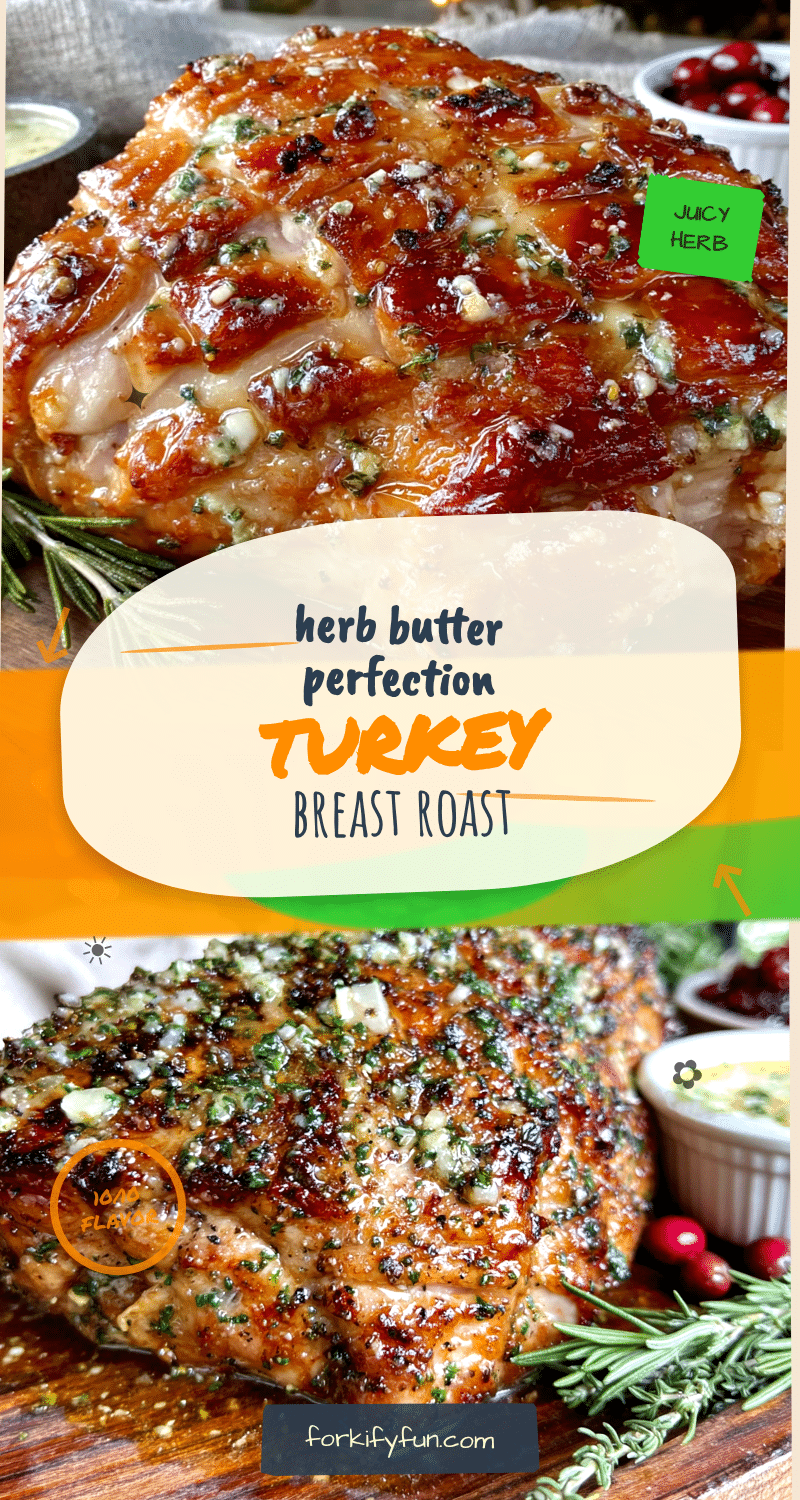
Best Juicy Herb-Butter Roasted Turkey Breast Recipe for Small Gatherings
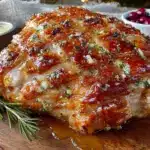
This juicy herb-butter roasted turkey breast is perfect for small gatherings, lazy Sunday dinners, or any time you want something special without committing to a full bird. It’s incredibly juicy, simple to make, and delivers a golden, crispy skin with rich, herb-infused flavor.
- Prep Time: 15 minutes
- Cook Time: 1 hour 15 minutes
- Total Time: 1 hour 30 minutes
- Yield: 6 servings
- Category: Main Course
- Cuisine: American
Ingredients
- Bone-in, skin-on turkey breast (3 to 4 pounds)
- Unsalted butter (6 tablespoons, softened)
- Fresh rosemary (2 tablespoons, finely chopped)
- Fresh thyme leaves (1 tablespoon)
- Fresh sage (1 tablespoon, finely chopped)
- Garlic (4 cloves, minced)
- Salt (1½ teaspoons, preferably kosher)
- Black pepper (1 teaspoon, freshly ground)
- Lemon (1, halved)
- Chicken or turkey broth (½ cup)
- Optional aromatics: halved onion, a few garlic cloves, a sprig of rosemary
Instructions
- Prep the turkey: About an hour before cooking, take the turkey breast out of the fridge and let it sit on the counter. Pat it completely dry with paper towels. Season the breast all over with salt and pepper, including under the skin if possible. Let it rest at room temperature while you make the herb butter.
- Make the herb butter: In a small bowl, combine the softened butter, chopped rosemary, thyme, sage, and minced garlic. Mash everything together with a fork until the herbs and garlic are evenly distributed.
- Apply the herb butter: Using your fingers, gently loosen the skin of the turkey breast from the meat, working your way from the edge toward the center. Spoon about two-thirds of the herb butter under the skin and spread it evenly over the meat. Rub the remaining butter all over the outside of the skin.
- Prep for roasting: Preheat your oven to 375°F (190°C). Place the turkey breast in your roasting pan, skin side up. Squeeze the lemon halves over the top, then tuck the squeezed lemon halves into the pan alongside the turkey. Pour the broth into the bottom of the pan. If using optional aromatics, scatter them around the turkey now.
- Roast the turkey: Place the pan in the center of the oven and roast for about 1 hour to 1 hour 15 minutes, or until the internal temperature reaches 155°F (68°C) when measured in the thickest part of the breast. Start checking at the 50-minute mark. If the skin is browning too quickly, tent loosely with foil for the last 15 minutes.
- Baste halfway through: About 30 minutes into roasting, spoon some of the pan juices over the turkey. Don’t baste more than once or twice.
- Rest before carving: Once the turkey hits 155°F, remove it from the oven and transfer to a cutting board. Tent loosely with foil and let it rest for 15 to 20 minutes. The temperature will continue to rise to 160-165°F during resting.
- Carve and serve: After resting, carve the turkey breast against the grain into slices about ½-inch thick. Spoon any remaining pan juices over the slices before serving.
Notes
Don’t skip the resting step—it allows juices to redistribute. Use an instant-read thermometer for best results. Let turkey sit at room temperature for an hour before roasting for even cooking. If skin isn’t crispy, broil for 2-3 minutes. For a dairy-free version, substitute butter with olive oil or vegan butter.
Nutrition
- Serving Size: 1 serving (about 4 o
- Calories: 320
- Sodium: 520
- Fat: 18
- Saturated Fat: 10
- Carbohydrates: 1
- Protein: 38
Keywords: turkey breast, herb butter, roasted turkey, small gathering, Thanksgiving, juicy turkey, easy turkey recipe