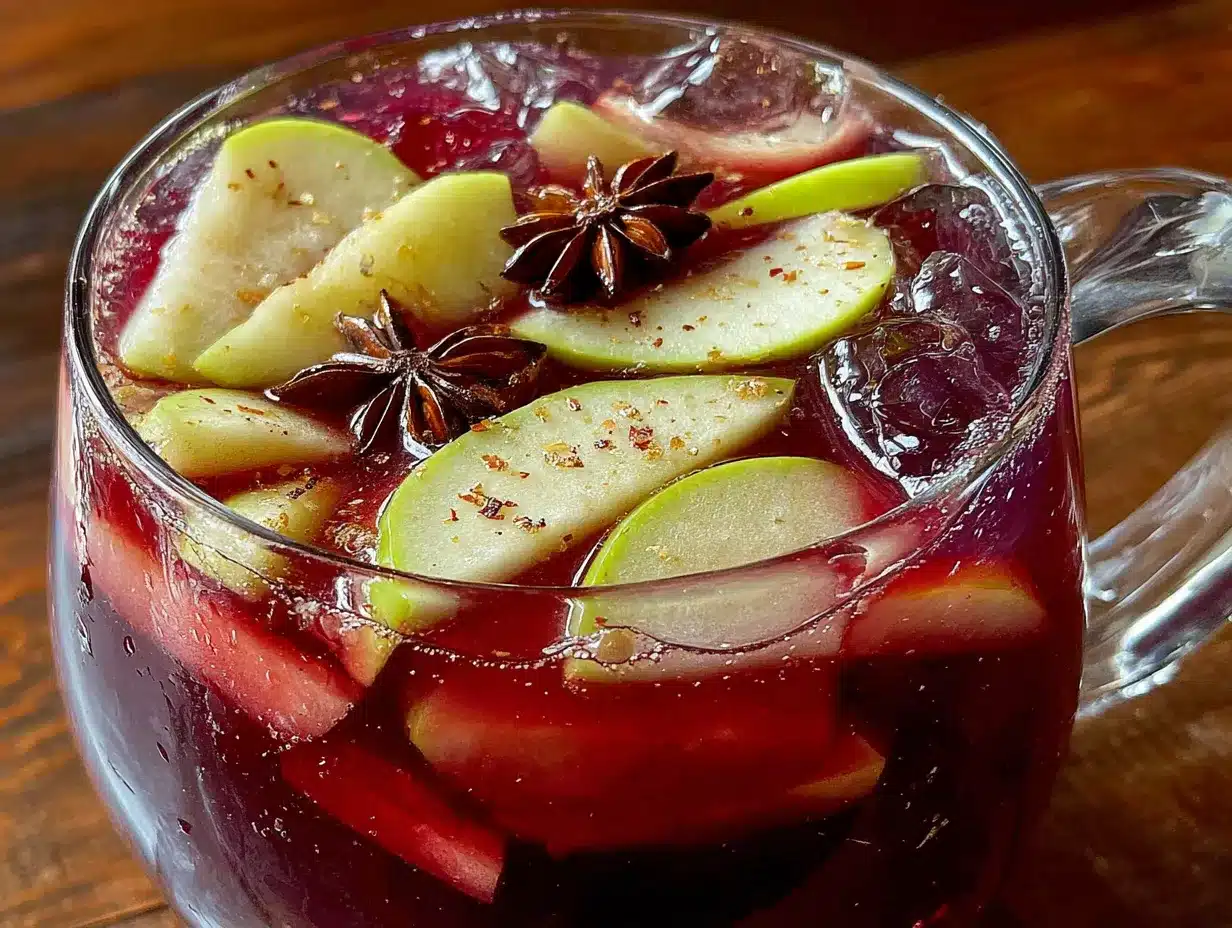
Third batch in two weeks, and this time I finally stopped measuring the brandy. The first pitcher was too timid, the second too syrupy. But this one, with the Bosc pear sliced just a little thinner than the Honeycrisp apple, and the cinnamon stick cracked instead of left whole—this one tasted like the exact moment the leaves finally turn. I stood there in the kitchen, glass in hand, watching the pomegranate seeds drift slowly through the wine like tiny red lanterns, and I knew I had it. Not because the recipe was complicated, but because I finally stopped overthinking it. Fall sangria isn’t about precision. It’s about letting the fruit do what it does best: soak up the wine and give back all that slow, sweet flavor.
The funny thing is, I almost didn’t make it. I had this idea that sangria was a summer thing, you know? Something you serve with watermelon and a blistering hot afternoon. But then I found myself at the farmers’ market with a bag of apples that smelled like cold mornings, and a pear that was just starting to soften at the stem. I grabbed a bottle of Tempranillo without a plan, and by the time I got home, the idea had already taken shape. This Perfect Fall Sangria with Apples, Pears, and Cinnamon is what happens when you let the season tell you what to cook. Or drink, in this case. Honestly, it’s the kind of drink that makes you want to invite people over just so you have an excuse to pour it into a nice glass.
Why You’ll Love This Recipe
Let’s be real for a second. There are a lot of sangria recipes out there, and most of them are either too sweet or too complicated. This one hits the sweet spot—literally. I’ve tested this batch more times than I care to admit, tweaking the ratios until the wine still tastes like wine but the fruit gets all the attention it deserves. Here’s what makes it worth your time:
- Quick & Easy: You need about 10 minutes of active prep. The rest is just letting it sit in the fridge and do its thing. Perfect for when you’re hosting and don’t want to be stuck in the kitchen.
- Simple Ingredients: No fancy liqueurs or obscure syrups. Apples, pears, cinnamon, wine, and a couple of pantry staples. That’s it.
- Perfect for Fall Gatherings: Thanksgiving, Friendsgiving, a cozy book club night, or just a Tuesday that feels like it needs a little sparkle. This sangria fits right in.
- Crowd-Pleaser: I’ve served this to wine snobs and casual drinkers alike, and everyone goes back for seconds. The fruit gets better as it sits, so it’s always a hit.
- Unbelievably Delicious: The combination of crisp apple, soft pear, warm cinnamon, and a hint of citrus is basically fall in a glass. It’s not too boozy, not too sweet—just right.
What makes this recipe different from the rest? It’s the technique of macerating the fruit with a little sugar and cinnamon before adding the wine. That extra step draws out the juices and creates a natural syrup that flavors the sangria from the inside out. No need for added sugar or artificial sweeteners. The fruit does all the work. And honestly, there’s something deeply satisfying about watching those apple slices soften and turn a little rosy from the wine. It’s like the sangria is telling you it’s ready.
This isn’t just a drink. It’s the kind of thing you make when you want to slow down and actually taste the season. It’s comfort in a glass, but with a little elegance that makes you feel like you’ve got your act together. And let’s face it, we could all use a little of that.
What Ingredients You Will Need
This recipe relies on simple, seasonal ingredients that come together to create something surprisingly complex. The key is using good-quality fruit and a wine you actually enjoy drinking. Here’s what you’ll need:
- 1 bottle (750 ml) dry red wine (I recommend Tempranillo, Garnacha, or a medium-bodied Merlot—something fruity but not jammy)
- 1 large Honeycrisp apple, cored and thinly sliced (Fuji or Gala work great too)
- 1 large Bosc pear, cored and thinly sliced (Anjou or Bartlett are fine substitutes)
- 1/2 cup pomegranate seeds (fresh or frozen—both work, adds little jewel-like bursts of tartness)
- 1/4 cup brandy (optional but recommended for a little warmth)
- 2 tablespoons maple syrup (or honey, if that’s what you have)
- 2 cinnamon sticks, cracked slightly to release flavor
- 1 orange, sliced into thin rounds
- 1 lemon, sliced into thin rounds
- 1 cup apple cider (unsweetened, for a deeper fall flavor)
- Ice, for serving
- Optional garnish: fresh rosemary sprigs or additional cinnamon sticks
A quick note on the wine: don’t use anything you wouldn’t drink on its own. The wine is the backbone of this sangria, and a cheap, overly tannic bottle will leave a bitter aftertaste. I usually grab a bottle of Garnacha from Spain—it’s affordable, fruity, and plays nicely with the apples and pears. If you prefer a sweeter sangria, you can use a red blend with a little residual sugar, but I find the maple syrup and apple cider add enough sweetness on their own.
For the pomegranate seeds, I highly recommend buying them pre-seeded if you can find them. Deseeding a pomegranate is one of those kitchen tasks that seems meditative until you’re covered in red juice and your cutting board looks like a crime scene. No judgment if you’ve been there. Frozen pomegranate seeds work perfectly too—just thaw them slightly before adding.
Equipment Needed
You don’t need much for this recipe, which is part of its charm. Here’s what you’ll want on hand:
- Large pitcher (at least 2-quart capacity—glass is ideal so you can see all that beautiful fruit)
- Cutting board and a sharp knife (a good chef’s knife makes slicing apples and pears a breeze)
- Measuring cups and spoons
- Wooden spoon or long-handled stirrer for mixing
- Citrus juicer (optional, if you want to squeeze a little extra orange juice in)
- Small bowl for macerating the fruit
- Refrigerator space (the sangria needs at least 4 hours to chill and meld)
If you don’t have a nice pitcher, a large mason jar or even a clean juice container works in a pinch. I’ve made this in a repurposed pickle jar before (washed thoroughly, I promise) and it tasted just as good. The key is having something with a lid or cover so the sangria can rest in the fridge without absorbing other smells.
Preparation Method
This is where the magic happens. Follow these steps, and you’ll have a pitcher of fall sangria that’ll make your kitchen smell incredible.
- Macerate the fruit (10 minutes): In a small bowl, combine the sliced apple, sliced pear, and pomegranate seeds. Drizzle with the maple syrup and add the cracked cinnamon sticks. Toss gently to coat. Let this sit for 10 minutes while you prepare the rest. You’ll notice the fruit starts to release its juices almost immediately—that’s exactly what you want.
- Layer the citrus (2 minutes): In your large pitcher, arrange the orange and lemon slices along the bottom and sides. Don’t just dump them in—take a second to press them against the glass a little. It looks pretty and helps release the oils from the peel.
- Add the macerated fruit (1 minute): Spoon the apple, pear, pomegranate, and cinnamon mixture into the pitcher, right over the citrus slices. Try to get all those syrupy juices in there too—don’t leave them behind in the bowl.
- Pour in the liquids (2 minutes): Add the brandy (if using), then the apple cider. Give it a gentle stir with your wooden spoon. Now pour in the entire bottle of red wine. Stir again, but gently—you don’t want to break up the fruit slices too much.
- Chill and meld (4–24 hours): Cover the pitcher with plastic wrap or a lid and place it in the refrigerator. This is the hardest part—waiting. The sangria needs at least 4 hours for the flavors to come together, but 8–12 hours is ideal. Overnight is even better. The fruit will soften and absorb the wine, and the wine will take on all those warm, spicy notes from the cinnamon and maple.
- Serve (5 minutes): When you’re ready to serve, fill glasses with ice. Give the sangria one last gentle stir, then pour it over the ice, making sure each glass gets a good mix of fruit and liquid. If you want to get fancy, garnish with a fresh rosemary sprig or an extra cinnamon stick.
A few things to watch for: If you’re using a very tannic wine, the sangria might taste a little sharp right after mixing. Don’t panic. Give it time in the fridge, and the fruit will mellow it out. Also, if you’re serving this at a party, I recommend making it the night before. The flavor is noticeably deeper, and you’ll thank yourself when all you have to do is pour and smile.
Cooking Tips & Techniques
I’ve made this sangria enough times to know where things can go sideways. Here are the lessons I learned the hard way, so you don’t have to.
Don’t skip the maceration step. I know it seems like an extra thing to do, but that 10-minute rest with the maple syrup and cinnamon is what transforms the fruit from “just floating in wine” to “infusing the wine with flavor.” The sugar draws out the natural juices, creating a syrup that blends into the sangria seamlessly. Without it, the fruit stays bland and the sangria lacks depth.
Watch your cinnamon. Whole cinnamon sticks are non-negotiable here. Ground cinnamon will turn your sangria into a murky, gritty mess. I learned this the first time I made it and thought I could cheat. I couldn’t. Crack the sticks slightly with the back of a knife to release more flavor, but keep them intact so you can fish them out later if you want.
Timing is everything. The sweet spot for this sangria is between 8 and 12 hours of chilling. Less than 4 hours, and the flavors haven’t had time to get to know each other. More than 24 hours, and the fruit starts to break down too much, turning the sangria a little pulpy. If you’re making it for a specific event, start it the morning before or the night before. Your future self will thank you.
Taste as you go. Before you cover the pitcher and put it in the fridge, taste a tiny bit. Is it sweet enough? Add a little more maple syrup. Too sweet? A squeeze of lemon will balance it out. This is your sangria—adjust it to your palate. I’ve had batches where I added an extra splash of brandy because I wanted a little more warmth, and others where I dialed back the maple syrup because the apples were already incredibly sweet.
Multitask like a pro. While the fruit is macerating, slice your citrus and set up your pitcher. That way, by the time the 10 minutes are up, you’re ready to layer everything in. It’s a small efficiency, but it makes the whole process feel effortless.
Variations & Adaptations
One of the best things about sangria is how flexible it is. Here are some ways to make this recipe your own.
White Sangria Variation: Swap the red wine for a dry white like Sauvignon Blanc or Pinot Grigio. Use white peaches or nectarines instead of apples, and add a handful of green grapes. The cinnamon still works, but you can also add a sprig of fresh thyme for an herbal note. It’s lighter, brighter, and perfect for early fall when the weather can’t decide what season it is.
Spiced Sangria Variation: Add a star anise pod and a few cloves to the maceration step. It gives the sangria a warm, almost chai-like undertone that pairs beautifully with the apples and pears. I made this version for a Friendsgiving dinner and someone asked if I had spiked the sangria with chai tea. I hadn’t, but honestly, that’s not a bad idea either.
Low-Sugar Version: Skip the maple syrup entirely and let the fruit and apple cider provide all the sweetness. Use a dry red wine like Cabernet Sauvignon or a Spanish Rioja. The sangria will be less sweet, but the fruit flavors will still shine. If you need a little sweetness, add a few drops of liquid stevia or monk fruit sweetener to taste.
Sparkling Sangria: After the sangria has chilled and melded, top each glass with a splash of sparkling water or ginger beer right before serving. It adds a fizzy, festive element that feels extra special. I did this for a birthday brunch and it was a hit—everyone thought I had done something complicated, but it was literally just a splash of bubbles.
Non-Alcoholic Version: Replace the red wine with a good-quality alcohol-free red wine or a blend of tart cherry juice and pomegranate juice. Skip the brandy. The rest of the recipe stays the same. It’s still incredibly flavorful and feels grown-up, which is hard to pull off with mocktails. I’ve served this to pregnant friends and designated drivers, and they always appreciate having something that doesn’t feel like an afterthought.
If you love this fall-inspired drink, you might also enjoy my Easy Caramel Apple Cider Sangria for another seasonal twist, or the Best Salted Caramel Apple Crisp for a dessert that pairs beautifully with a glass of this sangria. And if you’re in the mood for something warm and cozy, the Cozy Slow Cooker Butternut Squash Soup would make a perfect starter before the sangria flows.
Serving & Storage Suggestions
This sangria is best served cold, straight from the fridge, over a generous amount of ice. The ice dilutes the sangria slightly as it melts, which actually helps the flavors open up. I like to use large ice cubes or ice spheres because they melt slower and don’t water things down too quickly.
For presentation, I recommend using clear glasses so you can see all that beautiful fruit. Wine glasses work, but I actually prefer a short tumbler or a mason jar for a more casual, rustic feel. If you’re serving this at a party, set out a small bowl of extra pomegranate seeds and a few cinnamon sticks so guests can garnish their own glasses. It’s a small touch that makes people feel special.
Storage: Leftover sangria can be stored in the covered pitcher in the refrigerator for up to 3 days. The flavor will continue to develop, but the fruit will soften over time. If you’re making it ahead for a party, I recommend making it no more than 24 hours in advance for the best texture. After that, the fruit starts to lose its structure and the sangria can become a little mushy. It’s still delicious—just not as pretty.
Reheating: Don’t. This is a cold drink. If you want a warm fall beverage, try mulled wine or apple cider instead. That said, if you accidentally leave the pitcher out on the counter for a couple of hours, it’s still safe to drink as long as it hasn’t been sitting out for more than 4 hours. Just pop it back in the fridge to chill before serving.
A note on leftovers: The fruit at the bottom of the pitcher is a treat. It’s soaked up all that wine and spice, and it’s incredibly flavorful. I’ve been known to fish out the apple slices and eat them straight from the pitcher. No shame. You can also spoon the leftover fruit over vanilla ice cream or yogurt for a boozy dessert that feels very adult.
Nutritional Information & Benefits
Let’s be honest: sangria is a treat, not a health food. But there are some redeeming qualities worth mentioning. Here’s a rough estimate per 8-ounce serving (assuming 6 servings per pitcher):
- Calories: Approximately 180-220
- Carbohydrates: 22-28g (mostly from fruit and maple syrup)
- Sugar: 16-20g (naturally occurring from fruit, plus a little added)
- Alcohol: About 12-15g (roughly 1 standard drink)
- Vitamin C: 15% of daily value (from apples, pears, and citrus)
- Antioxidants: High (from red wine, pomegranate seeds, and apples)
The pomegranate seeds are the real star here nutritionally. They’re packed with antioxidants called punicalagins, which have been linked to heart health and reduced inflammation. Red wine, in moderation, also contains resveratrol, another antioxidant that supports cardiovascular health. The apples and pears add fiber, especially if you leave the skins on (which I recommend for texture and color).
If you’re watching your sugar intake, this sangria is on the lower end compared to many cocktail recipes. The maple syrup adds about 2 teaspoons per serving, which is modest. You can easily reduce or omit it if you prefer a drier drink. For a lower-calorie option, use a lighter red wine and skip the brandy—that cuts about 50 calories per serving.
As always, please drink responsibly. This sangria is meant to be enjoyed slowly, with good company and good food. It’s not a chugging drink. Sip it, savor it, and let the flavors linger.
Conclusion
This Perfect Fall Sangria with Apples, Pears, and Cinnamon is the kind of recipe that makes you feel like you’ve got a secret weapon in your hosting arsenal. It’s simple enough to throw together on a weekday, but impressive enough to serve at a holiday dinner. The fruit does the heavy lifting, the cinnamon adds that unmistakable fall warmth, and the wine brings it all together in a way that feels effortless.
I love this recipe because it reminds me to slow down. There’s something meditative about slicing apples and pears, watching the pomegranate seeds scatter like little jewels, and knowing that in a few hours, all those flavors will meld into something beautiful. It’s a drink that rewards patience, and in a world that’s always rushing, that feels like a gift.
I’d love to hear how this sangria turns out for you. Did you try a variation? Add something unexpected? Serve it at a gathering where everyone asked for the recipe? Drop a comment below and let me know. And if you’re looking for more cozy fall recipes, check out my Best Easy Baked Apple Cider Donuts or the Cozy Pumpkin Gnocchi in Brown Butter Sage Sauce for a full seasonal menu.
Now go grab a bottle of wine and some apples. Your fall sangria is waiting.
Frequently Asked Questions
Can I make this sangria ahead of time?
Absolutely. In fact, I recommend it. The sangria needs at least 4 hours to chill and meld, but 8–12 hours is ideal. Make it the night before your event for the best flavor. Just keep it covered in the refrigerator and give it a gentle stir before serving.
What’s the best wine for fall sangria?
A dry red wine with fruity notes works best. I love Tempranillo or Garnacha from Spain, but a medium-bodied Merlot or Zinfandel also works well. Avoid anything too tannic or oaky, as those flavors can overwhelm the fruit. And please, use a wine you actually enjoy drinking—it makes a difference.
Can I use frozen fruit instead of fresh?
You can, but the texture will be different. Frozen fruit releases more water as it thaws, which can dilute the sangria slightly. If you’re using frozen pomegranate seeds, thaw them first and drain any excess liquid. For the apples and pears, fresh is definitely better—they hold their shape and texture much longer.
How long does the sangria last in the fridge?
Up to 3 days, but it’s best within the first 24 hours. After that, the fruit starts to break down and the sangria can become a little pulpy. It’s still safe to drink and the flavor will be deep, but the texture won’t be as nice. If you’re making it for a party, aim to serve it within a day of making it.
Can I make this non-alcoholic?
Yes! Replace the red wine with a good alcohol-free red wine or a blend of tart cherry juice and pomegranate juice. Skip the brandy. The rest of the recipe stays the same. It’s still incredibly flavorful and feels special enough for a celebration. I’ve served it at baby showers and brunches with great success.
Pin This Recipe!
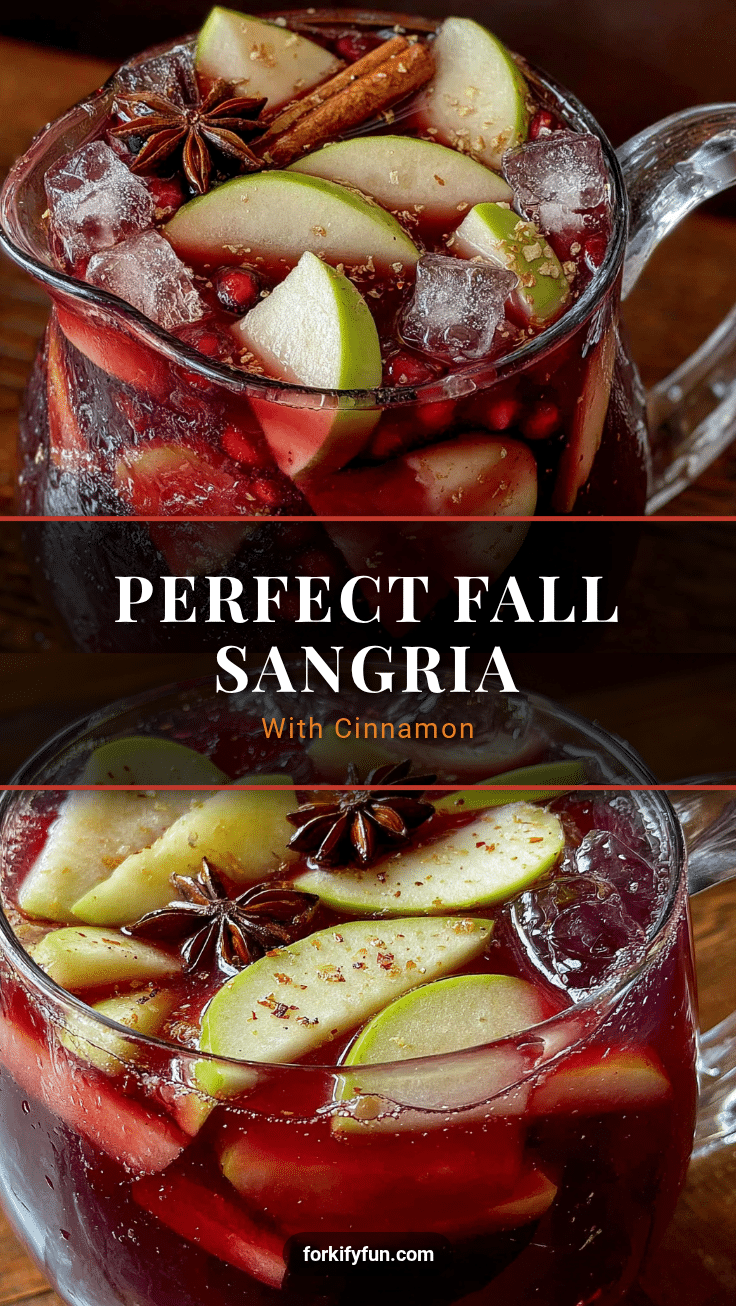
Perfect Fall Sangria Recipe: Easy Apple Pear Cinnamon
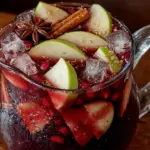
This Perfect Fall Sangria with Apples, Pears, and Cinnamon is the kind of recipe that makes you feel like you’ve got a secret weapon in your hosting arsenal. It’s simple enough to throw together on a weekday, but impressive enough to serve at a holiday dinner.
- Prep Time: 15 minutes
- Cook Time: 0 minutes
- Total Time: 4 hours 15 minutes (minimum chilling time)
- Yield: 6 servings 1x
- Category: Beverage
- Cuisine: Spanish-inspired
Ingredients
- 1 bottle (750 ml) dry red wine (Tempranillo, Garnacha, or medium-bodied Merlot)
- 1 large Honeycrisp apple, cored and thinly sliced
- 1 large Bosc pear, cored and thinly sliced
- 1/2 cup pomegranate seeds (fresh or frozen)
- 1/4 cup brandy (optional)
- 2 tablespoons maple syrup (or honey)
- 2 cinnamon sticks, cracked slightly
- 1 orange, sliced into thin rounds
- 1 lemon, sliced into thin rounds
- 1 cup apple cider (unsweetened)
- Ice, for serving
- Optional garnish: fresh rosemary sprigs or additional cinnamon sticks
Instructions
- Macerate the fruit (10 minutes): In a small bowl, combine the sliced apple, sliced pear, and pomegranate seeds. Drizzle with the maple syrup and add the cracked cinnamon sticks. Toss gently to coat. Let this sit for 10 minutes while you prepare the rest.
- Layer the citrus (2 minutes): In your large pitcher, arrange the orange and lemon slices along the bottom and sides. Press them against the glass to release oils.
- Add the macerated fruit (1 minute): Spoon the apple, pear, pomegranate, and cinnamon mixture into the pitcher, over the citrus slices. Include all the syrupy juices.
- Pour in the liquids (2 minutes): Add the brandy (if using), then the apple cider. Stir gently. Pour in the entire bottle of red wine. Stir again gently.
- Chill and meld (4–24 hours): Cover the pitcher and refrigerate for at least 4 hours, ideally 8–12 hours or overnight.
- Serve (5 minutes): Fill glasses with ice. Stir the sangria gently, then pour over ice, ensuring each glass gets fruit and liquid. Garnish with rosemary or cinnamon sticks if desired.
Notes
Don’t skip the maceration step—it draws out fruit juices and creates a natural syrup. Use whole cinnamon sticks, not ground. The sangria is best after 8–12 hours of chilling; do not exceed 24 hours to avoid mushy fruit. Taste before chilling and adjust sweetness or acidity as needed.
Nutrition
- Serving Size: 8 ounces
- Calories: 200
- Sugar: 18
- Sodium: 10
- Carbohydrates: 25
- Fiber: 2
- Protein: 1
Keywords: fall sangria, apple sangria, pear sangria, cinnamon sangria, easy sangria recipe, red wine sangria, holiday drink, party drink