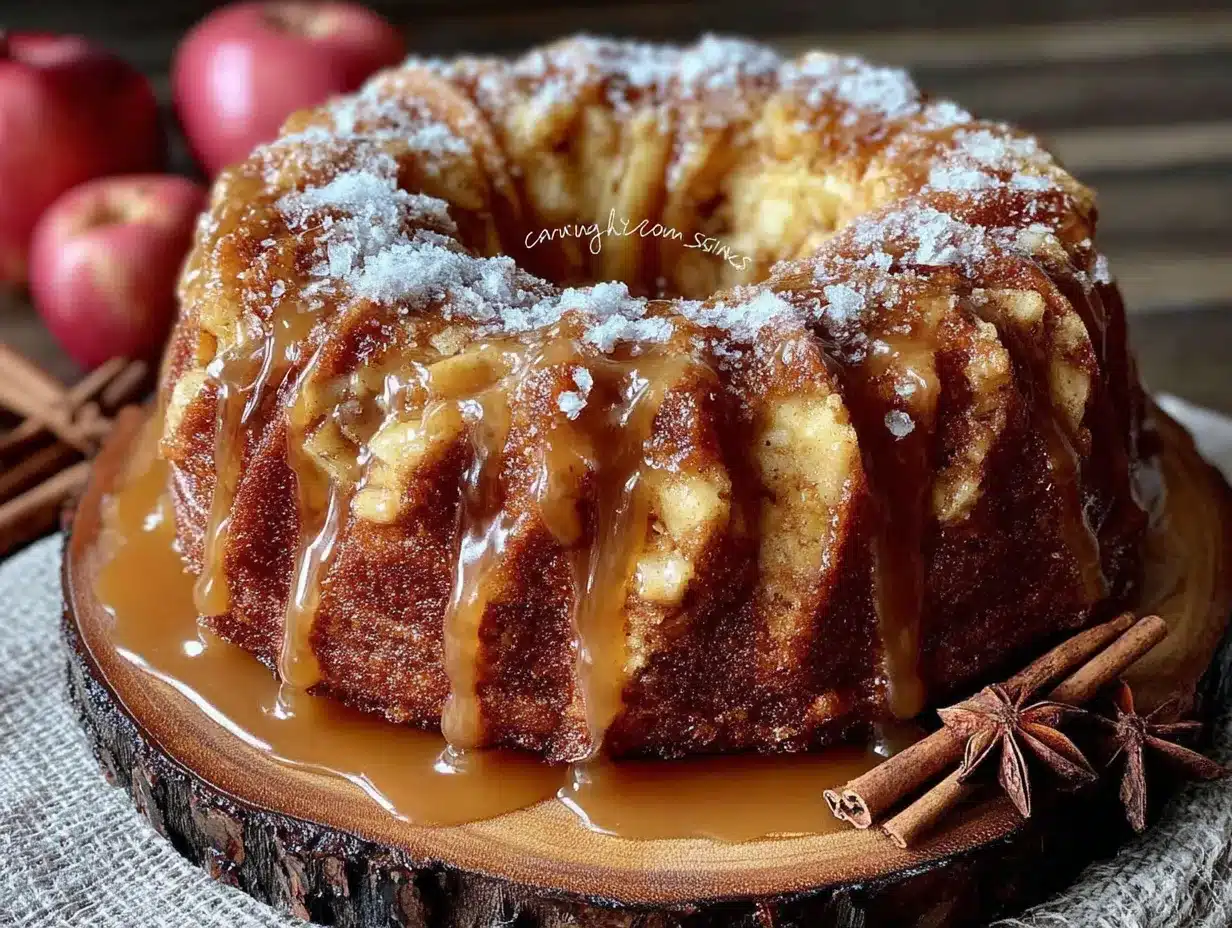
I did not trust apple cider in a cake. It sounded thin, watery, like something that would steam the crumb instead of letting it rise tall and tender. For years, I stuck to apple butter or grated fresh apples—things with structure. But a friend kept insisting her grandmother made a cider cake every November, and the way she described it—”like drinking fall through a fork”—finally broke me. I asked for the recipe, tweaked it twice, and now I make this cozy apple cider bundt cake with maple glaze more than any other fall dessert.
The first time I baked it, I almost poured the cider down the sink. It felt wrong—adding a full cup of liquid to a batter that looked perfectly thick already. But I trusted the process (and my friend’s grandmother, who I’d never met but already respected). The cake came out of the oven with a deep amber crust, the kind that cracks just slightly around the edges. The kitchen smelled like a caramel apple stand at a county fair, and when I flipped the bundt pan over, it released without a single stuck spot. That never happens to me.
Now it’s the cake I bring to Friendsgiving, the one I slice while still slightly warm, the one that gets eaten before the pie even makes it to the table. It’s not fancy. It’s not fussy. It’s just cozy apple cider bundt cake with maple glaze, and it tastes like the best part of sweater weather.
Why You’ll Love This Recipe
This isn’t just another bundt cake. I tested this recipe four times before I got the crumb exactly right—tender but sturdy enough to hold the glaze without turning to mush. Here’s what makes it worth your time:
- Rich, concentrated apple flavor – Boiling down the cider intensifies the taste so you get real apple depth, not just vague sweetness.
- Simple pantry ingredients – Nothing weird here. Butter, sugar, eggs, flour, spices, and cider. You probably have everything except maybe the cider itself.
- Make-ahead friendly – This cake actually tastes better the next day. The maple glaze soaks in just enough to keep the crumb moist without getting soggy.
- No mixer required – Just a whisk and a bowl. I mean it. I’ve made this by hand every single time.
- Perfect for fall gatherings – It travels well, slices cleanly, and looks beautiful on a cake stand with a simple dusting of cinnamon on top.
What really sets this apart is the boiled cider trick. Most apple cider cakes taste faintly of apples, like the cider got lost somewhere in the oven heat. By reducing the cider first, you concentrate the flavor and remove excess liquid, which means you get a cake that actually tastes like you pressed a dozen apples into every bite. Plus the maple glaze—it’s not cloying, it’s not thin, it’s just the right amount of sweet with a tiny bit of salt to balance everything out.
Honestly, this is the kind of cake that makes you close your eyes after the first bite. It’s comfort food in bundt form, and it’s way easier than it looks.
What Ingredients You Will Need
This recipe uses simple, wholesome ingredients to deliver deep apple flavor and a tender crumb without any fuss. Most of these are pantry staples, and the ones that aren’t are easy to find at any grocery store this time of year.
For the Cake
- 1 ½ cups apple cider – Use fresh, unfiltered cider if you can find it. The cloudy kind gives the best flavor. (I like the local orchard stuff, but store-bought works fine too.)
- 2 ¾ cups all-purpose flour – Spoon and level it. Don’t scoop straight from the bag or you’ll end up with a dry cake.
- 1 teaspoon baking powder
- ½ teaspoon baking soda
- ½ teaspoon salt – Fine sea salt or table salt. Kosher salt works too, but use a full teaspoon if you go that route.
- 2 teaspoons ground cinnamon – I use Vietnamese cinnamon for the extra warmth, but regular is fine.
- ½ teaspoon ground nutmeg – Freshly grated if you have it. It makes a real difference.
- ¼ teaspoon ground cloves – Go easy here. Cloves are strong.
- ½ cup unsalted butter – Softened to room temperature. Don’t melt it.
- 1 cup granulated sugar
- ½ cup light brown sugar – Packed firmly. Dark brown sugar works too if you want a deeper molasses note.
- 3 large eggs – Room temperature. Cold eggs can seize the batter.
- 1 teaspoon vanilla extract – Pure vanilla, not imitation. It matters here.
- ⅓ cup vegetable oil – Or canola oil. Something neutral. This keeps the cake extra moist.
For the Maple Glaze
- ½ cup pure maple syrup – Not pancake syrup. Real maple syrup. Grade A dark amber is my go-to.
- 2 tablespoons unsalted butter
- 1 cup powdered sugar – Sifted if it’s lumpy.
- ¼ teaspoon salt – This balances the sweetness.
- 1-2 tablespoons milk or heavy cream – To thin the glaze to the right consistency.
Equipment Needed
You don’t need much for this cake, which is part of why I love it. Here’s what you’ll want to have on hand:
- 10-12 cup bundt pan – The standard size for this recipe. If your pan is smaller, you’ll have overflow issues. I use a classic Nordic Ware pan and it releases beautifully every time.
- Small saucepan – For boiling down the cider. A 1-quart size works perfectly.
- Large mixing bowl – Big enough to whisk everything without flinging flour everywhere.
- Whisk and rubber spatula – The spatula is crucial for scraping the bottom of the bowl and getting every bit of batter into the pan.
- Cooling rack – You need air circulation under the cake or the bottom will get soggy.
- Parchment paper or butter wrapper – For greasing the pan. I use the paper from the butter stick—works like a charm and saves waste.
If you don’t have a bundt pan, you can use two 9-inch loaf pans instead. Just reduce the baking time to about 40-45 minutes and check for doneness with a toothpick. The shape won’t be as dramatic, but the taste is exactly the same.
Preparation Method
Take your time with this one. The steps are simple, but rushing through them will cost you texture. Here’s how I do it every time:
- Reduce the apple cider. Pour the 1 ½ cups of cider into a small saucepan and bring it to a boil over medium-high heat. Once it’s bubbling, reduce the heat to medium and let it simmer, stirring occasionally, until it reduces to about ⅓ cup. This takes around 12-15 minutes. You’re looking for a syrupy consistency—it should coat the back of a spoon. Set it aside to cool while you prep everything else. (Don’t skip this step. I tried it once with unreduced cider and the cake was gummy and flat.)
- Preheat the oven to 350°F. Position the rack in the center. Grease your bundt pan thoroughly—every nook and cranny. I use butter and then a light dusting of flour. If you have a nonstick pan, you can use baking spray with flour in it. Don’t skimp here. A stuck bundt cake is a tragedy.
- Whisk the dry ingredients. In a large bowl, combine the flour, baking powder, baking soda, salt, cinnamon, nutmeg, and cloves. Whisk them together until evenly distributed. This aerates the flour and makes the cake lighter.
- Cream the butter and sugars. In a separate large bowl, beat the softened butter, granulated sugar, and brown sugar together until light and fluffy. You can do this with a hand mixer or just a wooden spoon—I’ve done both. It takes about 3 minutes by hand. The mixture should look pale and slightly grainy.
- Add the eggs and vanilla. Beat in the eggs one at a time, making sure each is fully incorporated before adding the next. Stir in the vanilla extract. The batter might look a little curdled at this point—that’s normal, especially if your eggs were cold.
- Add the oil and reduced cider. Pour in the vegetable oil and the cooled reduced cider. Stir until combined. The batter will thin out a bit, which is exactly what you want.
- Fold in the dry ingredients. Add the flour mixture in three additions, folding gently with a rubber spatula after each. Mix just until you can’t see any more flour streaks. Overmixing will make the cake tough. A few small lumps are fine.
- Pour the batter into the prepared pan. Use the spatula to spread it evenly. Tap the pan on the counter a few times to release any air bubbles. The batter should fill the pan about ¾ of the way full.
- Bake for 45-50 minutes. Start checking at 45 minutes. The cake is done when a toothpick inserted into the center comes out clean or with just a few moist crumbs. The top should be deep golden brown and the edges should be pulling away from the pan slightly.
- Cool in the pan for 15 minutes. This is important. If you try to flip it too soon, the cake will fall apart. After 15 minutes, run a thin knife around the edges and the center tube to loosen it. Place a cooling rack on top of the pan and invert it. Lift the pan off gently. If it sticks, give the pan a few firm taps on the counter.
- Cool completely before glazing. Let the cake cool on the rack for at least 30 minutes. The glaze needs a firm surface or it’ll just soak right in and disappear.
Cooking Tips & Techniques
I’ve made this cake enough times to know exactly where things can go wrong. Here’s what I’ve learned the hard way:
- Don’t skip the cider reduction. I know it’s an extra step, but it’s the difference between a cake that tastes like apple cider and a cake that tastes like vaguely fruity sugar. Reducing concentrates the flavor and removes excess water that would ruin the crumb structure.
- Room temperature ingredients matter. Cold butter won’t cream properly. Cold eggs will seize the batter. Take everything out of the fridge an hour before you start baking. Set a timer if you have to—I forget all the time and then curse myself while waiting for butter to soften.
- Grease the pan like you mean it. Use a pastry brush or a paper towel to get butter into every ridge and swirl of your bundt pan. Then dust it with flour and tap out the excess. I lost my first bundt cake to a pan I thought was greased enough. It was not.
- Check for doneness early. Ovens vary wildly. My friend’s oven bakes this cake in 42 minutes. Mine takes 48. Start checking at 40 minutes and go from there. A toothpick test is more reliable than the clock.
- Let the cake cool in the pan. That 15-minute rest is non-negotiable. The cake needs time to set and firm up. If you flip it too soon, you’ll be eating bundt cake crumbs off a plate with a fork. (Which, honestly, isn’t the worst thing in the world, but it’s not the look you’re going for.)
Variations & Adaptations
One of the best things about this recipe is how flexible it is. Here are some ways I’ve adapted it over the years:
- Gluten-free version – Swap the all-purpose flour for a 1:1 gluten-free baking blend. I’ve used King Arthur’s measure-for-measure blend with great results. Add an extra tablespoon of flour to compensate for the lack of gluten structure.
- Dairy-free option – Use vegan butter or coconut oil in place of the butter, and substitute the milk in the glaze with oat milk or almond milk. The texture is slightly denser but still delicious.
- Spice it up – Add a pinch of cardamom or a teaspoon of ginger for a different warm spice profile. I made a version with cardamom and orange zest last December and it was incredible.
- Apple cider donut vibe – After glazing, toss the cake in a mixture of cinnamon and sugar while the glaze is still tacky. It gives you that classic donut shop coating. This is my favorite variation, honestly.
- Add mix-ins – Fold in ½ cup of chopped pecans or walnuts, or even some dried cranberries. Just toss them in a little flour first so they don’t sink to the bottom of the pan.
If you’re in the mood for another apple-forward dessert, I highly recommend trying my salted caramel apple crisp—it’s the perfect companion to this bundt cake for a fall baking marathon.
Serving & Storage Suggestions
This cake is best served slightly warm or at room temperature. If you want to reheat individual slices, pop them in the microwave for 10-15 seconds. The glaze will soften just enough to get that melty, gooey texture without losing its shape.
For serving, I like to put the cake on a simple white cake stand and dust it with a little extra cinnamon. It looks rustic and inviting without needing any fancy decorations. A dollop of whipped cream on the side is nice, but honestly, this cake doesn’t need anything else.
Pair it with a hot cup of coffee or a mug of spiced tea. If you’re feeling festive, try it alongside my caramel apple cider sangria for the ultimate fall drink and dessert combo.
Storage: Keep the cake in an airtight container at room temperature for up to 3 days. The glaze will stay shiny and the crumb will stay moist. After day 3, the texture starts to dry out a bit, so eat it up fast.
Freezing: You can freeze the unglazed cake for up to 3 months. Wrap it tightly in plastic wrap, then in foil. When you’re ready to serve, thaw it overnight in the fridge, bring it to room temperature, and then glaze it fresh. The glaze does not freeze well—it gets grainy and weird.
Reheating: For the best texture, reheat slices in a 300°F oven for 5-7 minutes. The microwave is faster but can make the cake rubbery. If you’re in a hurry, the microwave works—just don’t go over 15 seconds per slice.
Nutritional Information & Benefits
Here’s the honest truth: this is a butter-and-sugar cake. It’s a treat, not a health food. But that doesn’t mean it’s empty calories. Here’s what you’re working with per slice (based on 12 servings):
- Calories: Approximately 410
- Fat: 18g
- Carbohydrates: 60g
- Protein: 5g
- Fiber: 1g
- Sugar: 38g
The apple cider brings a small amount of vitamin C and antioxidants, and the cinnamon is known for its anti-inflammatory properties. The maple syrup contains some minerals like zinc and manganese. But let’s be real—you’re eating this cake because it tastes amazing, not because it’s a superfood. And that’s okay. Dessert is supposed to be joyful.
If you’re watching your sugar intake, you can reduce the granulated sugar by ¼ cup and use a sugar-free maple syrup substitute in the glaze. The texture will be slightly less tender, but it still works.
Conclusion
This cozy apple cider bundt cake with maple glaze has become my fall baking staple for a reason. It’s forgiving enough for beginners, impressive enough for company, and simple enough to make on a random Tuesday when you just need something warm and sweet in your kitchen. The boiled cider trick gives it a depth of flavor that most apple cakes don’t have, and the maple glaze is the perfect finishing touch—not too sweet, not too thin, just right.
I’d love to hear how yours turns out. Did you add any mix-ins? Did you try the gluten-free version? Leave a comment below and let me know. And if you’re looking for more cozy fall baking ideas, don’t miss my pumpkin gnocchi in brown butter sage sauce for a savory option, or these cinnamon sugar pretzel bites for a quick sweet snack.
Happy baking, friends. Go make something that smells like fall.
Frequently Asked Questions
Can I use store-bought apple cider for this recipe?
Yes, absolutely. Store-bought cider works perfectly. Just make sure it’s not apple juice—cider has more body and a deeper flavor. If all you have is apple juice, add a tablespoon of apple cider vinegar to give it some tang.
Why did my bundt cake stick to the pan?
This usually happens when the pan isn’t greased thoroughly enough. Use butter or baking spray with flour, and get into every crevice with a pastry brush. Also, make sure you let the cake cool for the full 15 minutes before flipping it. If it still sticks, run a thin knife around the edges and the center tube before inverting.
Can I make this cake ahead of time?
Yes! This cake actually tastes better the next day. Bake it, cool it completely, and store it wrapped tightly at room temperature. Glaze it just before serving for the best presentation. You can also freeze the unglazed cake for up to 3 months.
Can I use apple cider vinegar instead of apple cider?
No, that would be a completely different recipe. Apple cider vinegar is too acidic and would ruin the flavor. Stick with actual apple cider. If you’re in a pinch, you can use apple juice with a teaspoon of lemon juice mixed in, but the flavor won’t be as rich.
How do I know when the cake is done baking?
Insert a toothpick or a thin knife into the center of the cake. If it comes out clean or with just a few moist crumbs attached, it’s done. The top should be deep golden brown and the edges should be pulling away from the pan slightly. Start checking at 40 minutes to be safe.
Pin This Recipe!
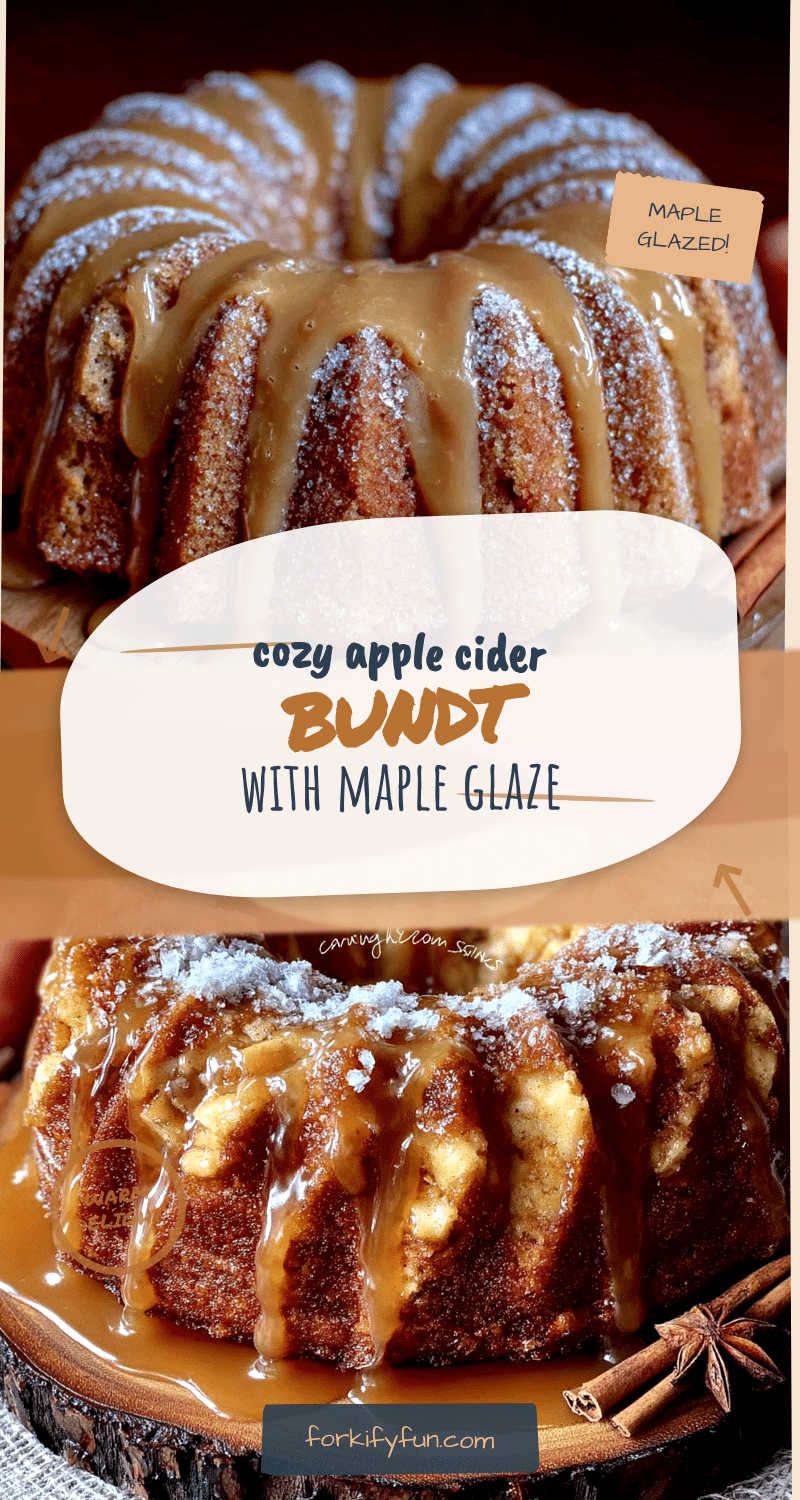
Cozy Apple Cider Bundt Cake with Easy Maple Glaze
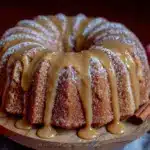
A tender, flavorful bundt cake made with reduced apple cider for concentrated apple taste, topped with a simple maple glaze. Perfect for fall gatherings and cozy sweater-weather baking.
- Prep Time: 20 minutes
- Cook Time: 50 minutes
- Total Time: 1 hour 10 minutes
- Yield: 12 servings 1x
- Category: Dessert
- Cuisine: American
Ingredients
- 1 ½ cups apple cider
- 2 ¾ cups all-purpose flour
- 1 teaspoon baking powder
- ½ teaspoon baking soda
- ½ teaspoon salt
- 2 teaspoons ground cinnamon
- ½ teaspoon ground nutmeg
- ¼ teaspoon ground cloves
- ½ cup unsalted butter, softened
- 1 cup granulated sugar
- ½ cup light brown sugar, packed
- 3 large eggs, room temperature
- 1 teaspoon vanilla extract
- ⅓ cup vegetable oil
- ½ cup pure maple syrup
- 2 tablespoons unsalted butter
- 1 cup powdered sugar, sifted
- ¼ teaspoon salt
- 1–2 tablespoons milk or heavy cream
Instructions
- Reduce the apple cider: Pour 1 ½ cups cider into a small saucepan and bring to a boil over medium-high heat. Reduce heat to medium and simmer, stirring occasionally, until reduced to about ⅓ cup (12-15 minutes). Set aside to cool.
- Preheat oven to 350°F. Grease a 10-12 cup bundt pan thoroughly with butter and dust with flour.
- In a large bowl, whisk together flour, baking powder, baking soda, salt, cinnamon, nutmeg, and cloves.
- In another large bowl, cream together softened butter, granulated sugar, and brown sugar until light and fluffy (about 3 minutes by hand).
- Beat in eggs one at a time, fully incorporating each before adding the next. Stir in vanilla extract.
- Add vegetable oil and cooled reduced cider; stir until combined.
- Fold dry ingredients into wet mixture in three additions, mixing just until no flour streaks remain. Do not overmix.
- Pour batter into prepared bundt pan and spread evenly. Tap pan on counter to release air bubbles.
- Bake for 45-50 minutes, until a toothpick inserted in center comes out clean or with a few moist crumbs.
- Cool in pan for 15 minutes. Run a thin knife around edges and center tube, then invert onto a cooling rack. Cool completely before glazing.
- For the glaze: In a small saucepan, heat maple syrup and 2 tablespoons butter over medium heat until butter melts. Remove from heat and whisk in powdered sugar and salt. Add milk or cream 1 tablespoon at a time until desired consistency is reached.
- Drizzle glaze over cooled cake. Let set before serving.
Notes
Don’t skip reducing the cider—it concentrates flavor and removes excess liquid. Room temperature ingredients are crucial for proper texture. Grease the pan thoroughly to prevent sticking. The cake tastes even better the next day. For gluten-free, use a 1:1 gluten-free flour blend. For dairy-free, use vegan butter and oat milk.
Nutrition
- Serving Size: 1 slice
- Calories: 410
- Sugar: 38
- Sodium: 280
- Fat: 18
- Saturated Fat: 8
- Carbohydrates: 60
- Fiber: 1
- Protein: 5
Keywords: apple cider bundt cake, maple glaze, fall dessert, bundt cake, apple cake, easy cake recipe