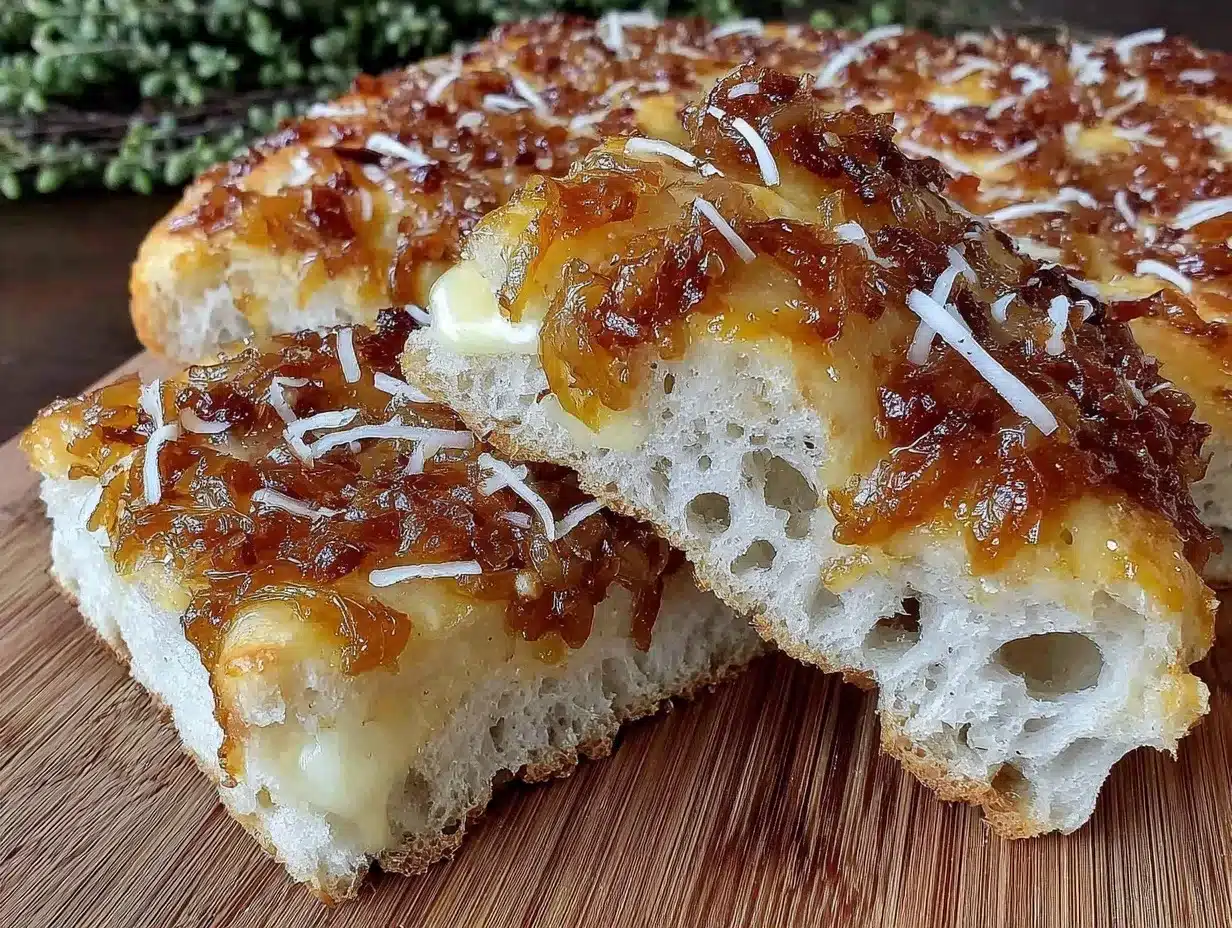
It’s late September, and the kitchen windows are slightly fogged from the cool night air settling in. The faint scent of damp leaves outside mingles with the soft hum of the oven warming up. This moment—the quiet before the house wakes—calls for something slow, something worth the wait. Perfect Overnight Sourdough Focaccia with Caramelized Onions and Gruyère is exactly that kind of recipe. It’s not about rushing or flashy tricks. It’s about patience, the kind of patience that turns simple ingredients into a loaf that feels almost like a warm hug.
The dough rests silently in the fridge, folding itself into layers of light tang and tender crumb. Meanwhile, the onions bubble away, sweet and golden, coaxing out their deepest flavor. The Gruyère waits nearby, ready to melt in those crevices just before baking. This isn’t a recipe you toss together on a whim—it’s a quiet ritual I return to whenever the days grow shorter and the evenings demand something comforting. Honestly, it’s become my way to slow down, to create something honest and satisfying without the noise.
What stayed with me the first time I made this focaccia was how the flavors unfolded overnight—the sourdough tang mellowed perfectly, and the caramelized onions were like little pockets of sweetness hidden beneath that nutty cheese crust. It’s food that doesn’t shout but whispers, inviting you back for one more bite. This recipe stuck because it’s reliable, soulful, and just a little bit indulgent in the best way. It feels like the kind of bread that makes you pause and savor the moment, which is exactly what this season deserves.
Why You’ll Love This Recipe
Making the Perfect Overnight Sourdough Focaccia with Caramelized Onions and Gruyère is a bit like crafting a slow melody in your kitchen. Here’s why it’s worth every minute:
- Slow & Simple: It takes time, but most of it is hands-off. The overnight ferment means the dough develops flavor naturally, with minimal active work.
- Accessible Ingredients: No need for fancy or obscure items—just staple pantry ingredients and a bit of patience. The caramelized onions add that sweet depth without fuss.
- Perfect for Cozy Evenings: Whether you’re unwinding after a long day or prepping for a casual weekend gathering, this focaccia fits right in with its rustic charm.
- Crowd-Pleasing Comfort: The combination of tangy sourdough, sweet onions, and nutty Gruyère cheese always earns compliments. It’s an easy way to impress without stress.
- Unique Texture & Flavor: The overnight sourdough starter yields a tender crumb with a delicate chew, while the caramelized onions and cheese create flavor pockets that keep you coming back.
This focaccia isn’t just another bread recipe floating around—it’s a personal favorite, one that’s been tweaked through many batches to get that balance just right. The key trick I’ve come to love is letting the dough rest low and slow overnight, which gives it a depth that store-bought breads just don’t have. Plus, the caramelized onions soften perfectly beneath that golden Gruyère crust, making every bite a little celebration.
For those who appreciate a slow cooking rhythm and a bread that tastes like it was made with care, this recipe delivers quietly but memorably. It’s the kind of thing that pairs beautifully with a simple salad or a hearty stew, and speaking of salads, the healthy chicken salad with Greek yogurt and grapes complements this focaccia beautifully for a balanced meal.
What Ingredients You Will Need
This recipe relies on straightforward, wholesome ingredients that come together to create a focaccia rich in flavor and texture. Here’s what you’ll need:
- Sourdough starter (active and bubbly, about 100g / ⅓ cup): The soul of the bread, giving it that classic tang and lift.
- All-purpose flour (400g / 3 ⅓ cups): Use a good-quality brand like King Arthur for consistent results.
- Water (320ml / 1 ⅓ cups, lukewarm): Hydrates the dough; lukewarm helps activate the starter.
- Extra virgin olive oil (60ml / 4 tbsp, plus more for drizzling): Adds richness and helps crisp the crust.
- Salt (10g / 2 tsp): Enhances flavor and controls fermentation.
- Yellow onions (2 medium, thinly sliced): Slowly caramelized to bring out natural sweetness.
- Gruyère cheese (150g / 1 ½ cups grated): Adds that nutty, melty layer on top. Emmental works well as a substitute.
- Fresh rosemary (1 tbsp, chopped, optional): For a fragrant herbal note that cuts through the richness.
All these ingredients are pantry staples or easy to find at your local market. The onions and rosemary are seasonal touches that make the focaccia feel especially suited to autumn evenings. If you’re avoiding dairy, you can swap Gruyère for a vegan cheese alternative, though the flavor profile will shift slightly.
One tip I’ve learned is to choose firm onions without blemishes for the best caramelization. Also, if your sourdough starter is particularly sour, cutting back a bit on the fermentation time can keep the bread balanced. This recipe pairs wonderfully with the creamy, lemony notes in the creamy lemon ricotta pasta, making for a cozy dinner spread.
Equipment Needed
For this recipe, you don’t need a fancy setup—just some reliable basics that make the process smooth:
- Large mixing bowl: For combining the dough ingredients. A glass or stainless steel bowl works best.
- Dough scraper or spatula: Helpful for folding and handling sticky dough.
- Baking sheet or pan: A rimmed baking sheet (about 9×13 inches / 23×33 cm) works perfectly for shaping the focaccia.
- Kitchen scale: For precise measurements—especially important with sourdough baking.
- Plastic wrap or kitchen towel: To cover the dough during fermentation.
- Skillet or frying pan: For caramelizing the onions slowly.
- Grater: For shredding the Gruyère cheese.
If you don’t have a kitchen scale, measuring cups can work, but the texture might vary a bit since flour weights can differ. I’ve also found that a silicone baking mat on the sheet pan helps prevent sticking and makes cleanup easier. For caramelizing onions, a heavy-bottomed skillet prevents burning and promotes even cooking. If you don’t have one, just keep a close eye and stir often.
Preparation Method
- Activate your starter: Make sure your sourdough starter is bubbly and active, ideally fed 4-6 hours before you begin. This ensures good rise and flavor.
Time: 10 minutes prep + starter readiness - Mix the dough: In a large bowl, combine 400g (3 ⅓ cups) all-purpose flour, 100g (⅓ cup) active sourdough starter, 320ml (1 ⅓ cups) lukewarm water, and 10g (2 tsp) salt. Stir with a spatula until all the flour is hydrated and a shaggy dough forms.
Tip: The dough will be sticky; that’s perfect. - First rise (bulk fermentation): Cover the bowl loosely with plastic wrap or a damp kitchen towel. Let it rest at room temperature for 1 hour. Then, perform a series of stretch and folds: wet your hands, gently stretch one side of the dough and fold it over itself. Repeat on all four sides.
Time: 1 hour + 5 minutes for folds - Overnight cold ferment: After the stretch and folds, cover the dough tightly and place it in the refrigerator overnight (8-12 hours). This slow ferment develops flavor and improves texture.
Tip: The dough will rise slowly and become bubbly. - Caramelize the onions: While the dough ferments, heat 2 tbsp olive oil in a skillet over medium-low heat. Add sliced onions and a pinch of salt. Cook slowly, stirring occasionally, until onions turn deep golden and sweet—about 30-40 minutes. Set aside to cool.
Tip: Patience is key here; rushing will burn the onions. - Shape the dough: The next day, remove the dough from the fridge. Generously oil your baking sheet with 1 tbsp olive oil. Transfer the dough onto the sheet and gently stretch it with oiled fingers to fit the pan, being careful not to deflate the air bubbles.
Time: 10 minutes - Final proof: Cover the dough loosely and let it rest at room temperature for 1-2 hours until it puffs up noticeably.
Tip: If your kitchen is cold, this might take longer. - Add toppings: Preheat the oven to 220°C (425°F). Drizzle the dough with 2 tbsp olive oil. Using your fingers, create dimples all over the surface. Scatter the caramelized onions evenly, then sprinkle the grated Gruyère (150g / 1 ½ cups) on top. Optionally, sprinkle fresh rosemary.
Tip: Don’t overload the toppings; you want the dough to bake through. - Bake: Place the focaccia in the oven and bake for 20-25 minutes until golden brown and cheese is bubbly and melted.
Tip: Rotate the pan halfway for even browning. - Cool and serve: Let the focaccia cool slightly on a wire rack before slicing. This helps the crumb set and makes cutting easier.
Time: 10 minutes resting
One thing I’ve learned is that the dough’s hydration level and temperature can change how fast it rises, so keep an eye on it during the final proof. If it’s too slow, a warm spot helps, but don’t rush it—good things take time. This focaccia pairs beautifully with a fresh salad or a simple dip, like a garlicky olive oil mix or even alongside the fresh no-mayo avocado chicken salad sandwich for a laid-back lunch.
Cooking Tips & Techniques
Working with sourdough can feel intimidating at first, but a few tricks make it manageable and rewarding:
- Hydration matters: This focaccia dough is fairly wet, which gives it that lovely open crumb and tender texture. Don’t be tempted to add more flour; instead, use well-oiled hands and tools to handle the sticky dough.
- Slow fermentation is your friend: The overnight cold ferment is what builds the flavor complexity. Even if you’re excited, resist the urge to speed this up.
- Caramelizing onions slowly: Low and slow is the only way to coax true sweetness out. Stir often to avoid burning, and if they start sticking, a splash of water helps loosen them.
- Don’t skip the dimples: Those finger dimples aren’t just decorative—they trap olive oil and toppings, creating pockets of flavor and texture.
- Watch your oven temperature: Too hot, and the focaccia burns before it cooks through; too cool, and it won’t crisp properly. Most home ovens vary, so use an oven thermometer if you have one.
- Rest before slicing: I’ve learned the hard way that cutting too soon makes the crumb gummy. A brief rest lets the interior finish setting.
These tips come from a few early batches where I got impatient and ended up with dense bread or burnt edges. Now, I try to enjoy the process as much as the result—it’s a quiet way to slow down the day. And if you enjoy experimenting with bread, you might appreciate the balance of flavors in the creamy lemon ricotta pasta as a next cooking project.
Variations & Adaptations
This focaccia recipe is flexible and lends itself nicely to a few tasty tweaks:
- Herb variations: Swap out rosemary for thyme, sage, or even a sprinkle of za’atar for a Middle Eastern twist.
- Dairy-free option: Replace Gruyère with a plant-based cheese or omit cheese and add olives or sun-dried tomatoes for extra umami.
- Additional toppings: Try roasted garlic cloves, thinly sliced fennel, or even a scattering of toasted pine nuts for texture.
- Gluten-free adaptation: Use a gluten-free flour blend designed for bread baking and reduce hydration slightly. Keep in mind the texture will differ but still delicious.
One variation I love is adding caramelized shallots alongside the onions for a slightly sweeter, more complex flavor. I once paired this focaccia with a batch of creamy sun-dried tomato penne, and the combination was just the right mix of richness and freshness.
Serving & Storage Suggestions
Serve your focaccia warm or at room temperature. The crust is crispest fresh from the oven, but the flavors deepen if you let it sit for a few hours. Slice it thick for dipping in olive oil or alongside hearty soups and salads.
For storage, wrap cooled focaccia tightly in plastic wrap. It keeps well at room temperature for 2 days or in the fridge for up to 4 days. To refresh, warm slices in a 180°C (350°F) oven for 5-7 minutes. If you want to freeze, wrap tightly and freeze for up to 2 months; thaw overnight in the fridge before reheating.
Pairing this focaccia with a light, crisp salad or a savory spread makes for a balanced meal. I often serve it with a simple green salad tossed with lemon vinaigrette or alongside dishes like the healthy chicken salad with Greek yogurt and grapes for a refreshing contrast.
Nutritional Information & Benefits
This focaccia offers more than just comfort—it brings nutritional value from its wholesome ingredients. A slice (about 100g) provides approximately:
| Calories | 280 kcal |
|---|---|
| Carbohydrates | 35g |
| Protein | 8g |
| Fat | 12g (mainly from olive oil and cheese) |
| Fiber | 2g |
The sourdough fermentation helps break down gluten, making the bread easier to digest for many people. Olive oil contributes heart-healthy monounsaturated fats, while the onions add antioxidants and vitamins. Gruyère brings a good source of calcium and protein, though it’s best enjoyed in moderation if you’re watching saturated fat intake.
For those mindful of allergens, this recipe contains gluten and dairy. However, the sourdough process can be gentler on the stomach compared to other breads. Personally, I appreciate the balance between indulgence and nutrition here—comfort food that doesn’t feel heavy or overly processed.
Conclusion
Perfect Overnight Sourdough Focaccia with Caramelized Onions and Gruyère is more than just bread—it’s a slow, quiet ritual that brings a little peace to busy days. Its rich, layered flavors and tender crumb reward the patience it asks for in return. I love how this recipe balances simplicity with sophistication, making it approachable yet special.
Feel free to make it your own—add your favorite herbs, swap cheeses, or try new toppings. It’s a recipe that adapts well, just like the moods of the seasons it fits so naturally into. If you give it a try, I’d love to hear how it turns out or what variations you explore. Baking this focaccia feels like a small act of care that fills the home with warmth and good smells.
Wishing you many cozy moments with this recipe, and remember, sometimes the best meals come from slowing down and savoring the process.
FAQs
Can I make this focaccia without a sourdough starter?
Yes, you can substitute with commercial yeast, but the flavor and texture will be different. Use about 2 tsp of instant yeast and reduce the fermentation time accordingly.
How long can I store leftover focaccia?
Store at room temperature for 2 days or refrigerate for up to 4 days. For longer storage, freeze wrapped focaccia for up to 2 months.
What if my dough is too sticky to handle?
Use lightly oiled hands and tools to handle the dough instead of adding more flour. Sticky dough is normal and helps create an open crumb.
Can I use other cheeses instead of Gruyère?
Absolutely! Emmental, mozzarella, or fontina are good substitutes that melt well and complement the onions.
Is it possible to make this focaccia gluten-free?
Yes, using a gluten-free bread flour blend can work, but expect a different texture. Adjust hydration slightly and add xanthan gum if your blend doesn’t include it.
Pin This Recipe!
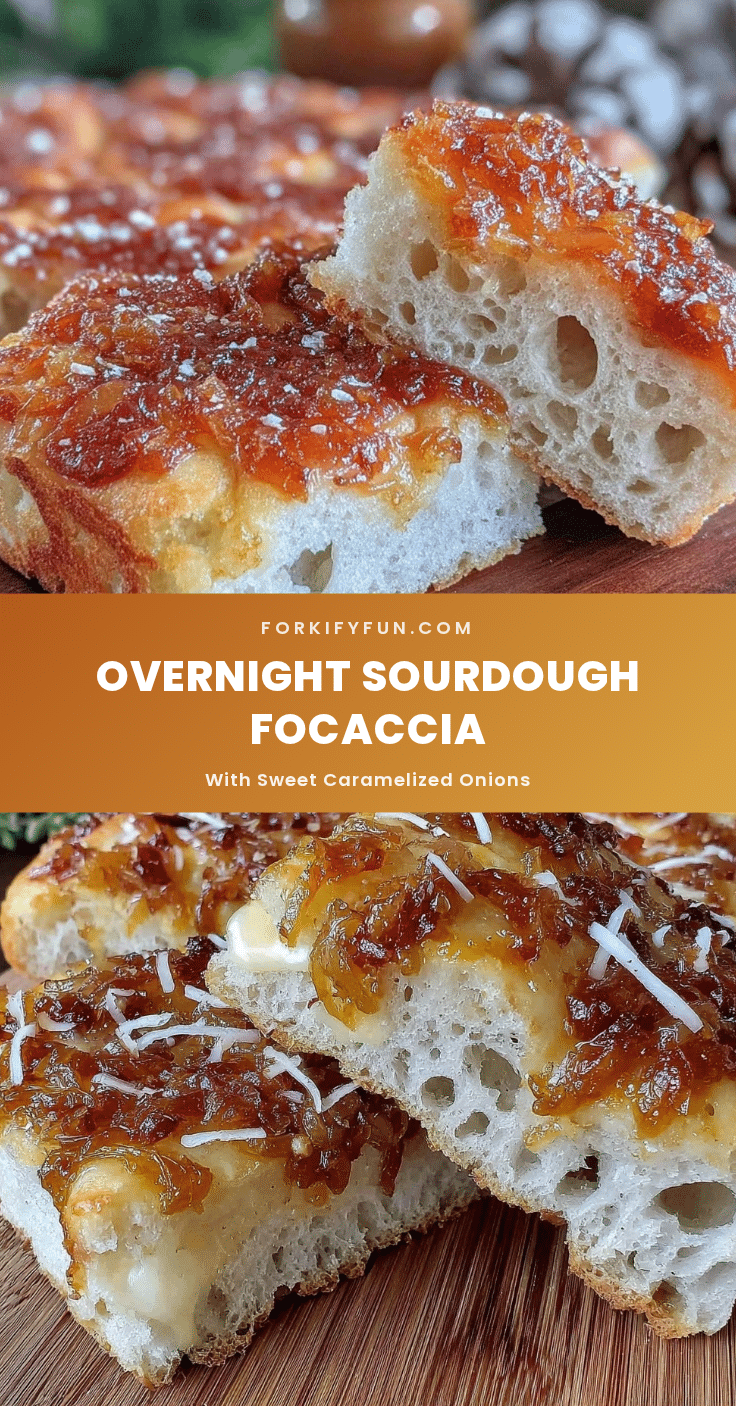
Perfect Overnight Sourdough Focaccia Recipe with Caramelized Onions and Gruyère Made Easy

A slow-fermented sourdough focaccia topped with sweet caramelized onions and nutty Gruyère cheese, perfect for cozy evenings and comforting meals.
- Prep Time: 1 hour 15 minutes (including starter activation and initial mixing)
- Cook Time: 20-25 minutes
- Total Time: Overnight (8-12 hours) plus about 2.5 hours active and proofing time
- Yield: 1 focaccia (about 8 servings) 1x
- Category: Bread
- Cuisine: Italian
Ingredients
- 100g (⅓ cup) active sourdough starter
- 400g (3 ⅓ cups) all-purpose flour
- 320ml (1 ⅓ cups) lukewarm water
- 60ml (4 tbsp) extra virgin olive oil, plus more for drizzling
- 10g (2 tsp) salt
- 2 medium yellow onions, thinly sliced
- 150g (1 ½ cups) grated Gruyère cheese
- 1 tbsp fresh rosemary, chopped (optional)
Instructions
- Activate your starter: Ensure your sourdough starter is bubbly and active, ideally fed 4-6 hours before beginning. (Prep time: 10 minutes plus starter readiness)
- Mix the dough: In a large bowl, combine flour, sourdough starter, lukewarm water, and salt. Stir until a shaggy, sticky dough forms.
- First rise (bulk fermentation): Cover loosely and let rest at room temperature for 1 hour. Perform stretch and folds on all four sides (about 5 minutes).
- Overnight cold ferment: Cover dough tightly and refrigerate for 8-12 hours to develop flavor and texture.
- Caramelize the onions: Heat 2 tbsp olive oil in a skillet over medium-low heat. Add sliced onions and a pinch of salt. Cook slowly, stirring occasionally, for 30-40 minutes until deep golden and sweet. Set aside to cool.
- Shape the dough: Remove dough from fridge. Oil a 9×13 inch baking sheet with 1 tbsp olive oil. Transfer dough and gently stretch to fit the pan without deflating air bubbles. (Time: 10 minutes)
- Final proof: Cover loosely and let rest at room temperature for 1-2 hours until noticeably puffed.
- Add toppings: Preheat oven to 425°F (220°C). Drizzle dough with 2 tbsp olive oil, create dimples with fingers, scatter caramelized onions evenly, then sprinkle grated Gruyère cheese and optional rosemary.
- Bake: Bake for 20-25 minutes until golden brown and cheese is bubbly. Rotate pan halfway through baking for even browning.
- Cool and serve: Let focaccia cool on a wire rack for 10 minutes before slicing to set the crumb.
Notes
Use well-oiled hands to handle sticky dough instead of adding flour. Slow, overnight fermentation develops flavor and texture. Caramelize onions low and slow to avoid burning. Let focaccia rest before slicing to avoid gummy crumb. Oven temperature can vary; use an oven thermometer if possible. Variations include swapping herbs, using dairy-free cheese, or gluten-free flour blends.
Nutrition
- Serving Size: 1 slice (about 100g)
- Calories: 280
- Fat: 12
- Carbohydrates: 35
- Fiber: 2
- Protein: 8
Keywords: sourdough focaccia, caramelized onions, Gruyère, overnight bread, slow fermentation, homemade focaccia, easy bread recipe, rustic bread