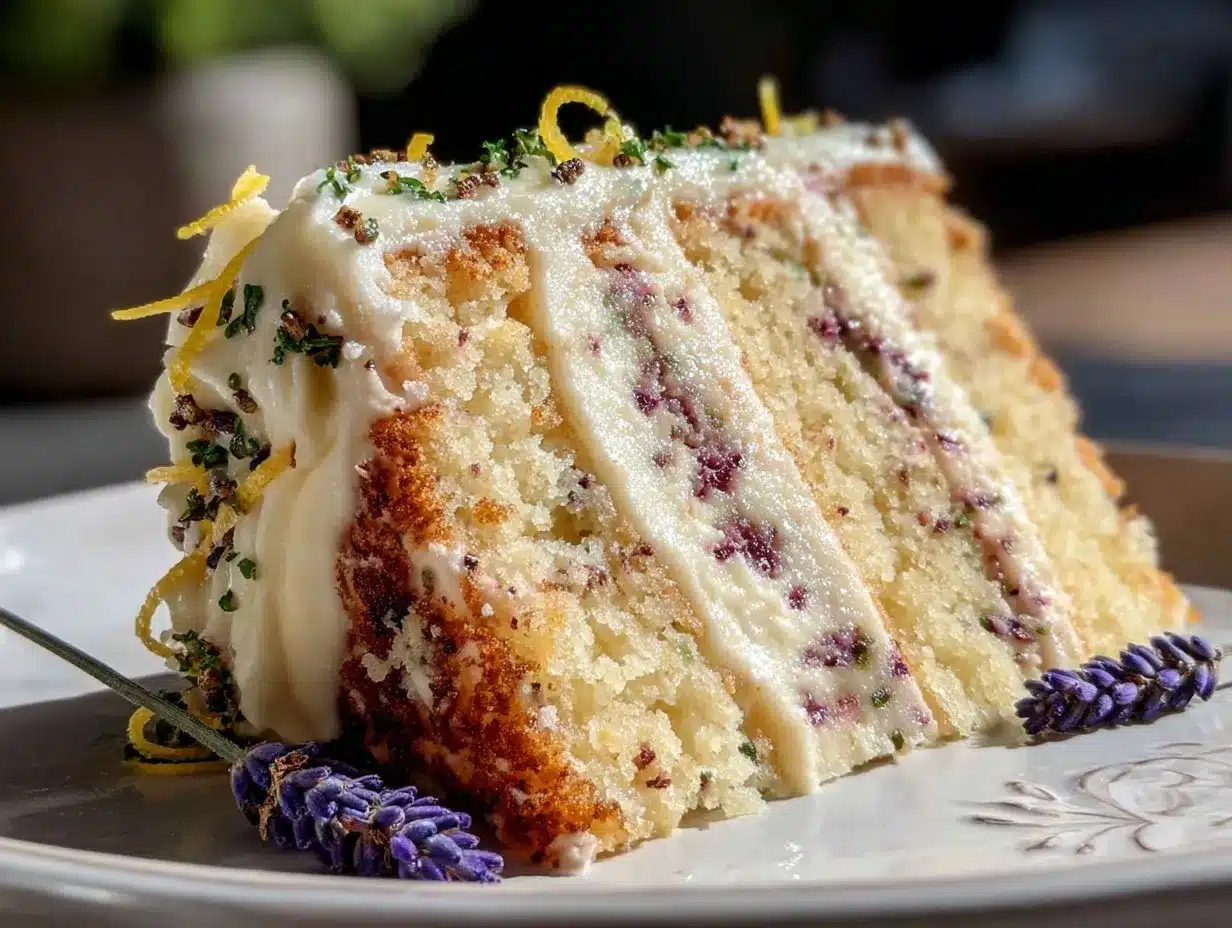
“You’ve got lavender in a cake?” my friend asked skeptically as I pulled the fluffy lemon lavender layer cake out of the oven one quiet Sunday afternoon. Honestly, I wasn’t sure myself at first. Lavender in baking always felt like one of those fancy, intimidating ingredients reserved for tea parties or boutique bakeries. But after a handful of trial runs — including one slightly overbaked disaster and a few flavor tweaks — this cake became a staple in my kitchen. There’s something about the way the lemon’s bright zestiness plays off the delicate floral notes of lavender that just works. It’s subtle, not perfumey, and the buttercream frosting? Oh man, that’s where the magic really settles in.
I remember the moment most vividly: it was late afternoon, the last rays of sunlight slipping through the kitchen window, and the house smelled like fresh lemons and a hint of lavender. The cake was softer than I expected, almost cloud-like, and the frosting was silky smooth. Sitting down with a slice, I realized this wasn’t just another lemon cake — it felt like a quiet celebration in every bite. I’ve made it so many times now that it’s become my go-to when I want something impressive but not complicated. Plus, it’s perfect for those moments when you just want to slow down and savor something homemade.
That’s why this fluffy lemon lavender layer cake with buttercream frosting stuck around in my recipe box. It’s approachable, elegant, and honestly, a little addictive. If you’re the type who loves baking but doesn’t want to wrestle with complicated steps or obscure ingredients, this one’s for you — a gentle nudge to try something new that’s comforting and bright all at once.
Why You’ll Love This Recipe
From my kitchen experiments and feedback from friends who’ve tasted this cake, I can say this recipe is truly a keeper. It’s the kind of cake that surprises people — not too sweet, and with just the right balance of lemon tang and floral lavender. Here’s why it might become your favorite too:
- Quick & Easy: The batter comes together in about 20 minutes, and baking takes just under 30. Perfect for busy weekends or a last-minute treat.
- Simple Ingredients: You don’t need to hunt down anything exotic. Most of these are pantry staples, and the lavender can be found in most grocery stores or online.
- Perfect for Special Occasions: Whether it’s a birthday, bridal shower, or just a sweet Sunday afternoon, this cake adds a touch of elegance without fuss.
- Crowd-Pleaser: Kids and adults alike have given rave reviews — the floral notes are subtle enough not to overwhelm.
- Unbelievably Delicious Texture: The crumb is soft and airy, the layers light but sturdy, and the buttercream frosting is smooth, creamy, and not overly sweet.
What sets this apart from your average lemon cake is the careful infusion of lavender — I use culinary-grade dried lavender buds, which bring out a delicate aroma without bitterness. Plus, the buttercream frosting is whipped just right to balance richness with that fresh lemon zing. It’s not just a cake; it’s a little experience on a plate.
Honestly, after making this cake multiple times, I can say it’s the kind of recipe that makes you pause and appreciate simple ingredients done right. If you’re into homemade buttercream frosting, this recipe will feel like a breath of fresh air — light, bright, and perfectly suited to those moments when you want dessert to feel special but not stressful.
What Ingredients You Will Need
This fluffy lemon lavender layer cake uses straightforward, wholesome ingredients to create layers of bright flavor and tender texture without fuss. Most are pantry staples, with a few special touches that bring it all together beautifully.
- For the Cake Batter:
- All-purpose flour (2 ½ cups / 310g) – I prefer King Arthur for consistent results
- Baking powder (2 ½ teaspoons) – helps the cake rise beautifully
- Salt (½ teaspoon) – balances sweetness
- Granulated sugar (1 ¾ cups / 350g) – regular white sugar works best for texture
- Unsalted butter (¾ cup / 170g), softened – room temperature for easy creaming
- Large eggs (4), room temperature – adding richness and structure
- Whole milk (1 cup / 240ml), room temperature – keeps the cake moist
- Pure vanilla extract (1 teaspoon) – complements the lemon and lavender
- Fresh lemon zest (from 2 medium lemons) – the star citrus flavor
- Fresh lemon juice (¼ cup / 60ml) – adds brightness
- Culinary-grade dried lavender buds (1 tablespoon) – finely crushed for gentle floral notes
- For the Buttercream Frosting:
- Unsalted butter (1 cup / 227g), softened – the base for a creamy texture
- Powdered sugar (4 cups / 480g), sifted – for smooth sweetness
- Fresh lemon juice (2 tablespoons) – adds a refreshing zing
- Heavy cream or whole milk (2-4 tablespoons) – adjust for spreadability
- Vanilla extract (1 teaspoon) – enhances the flavor
- A pinch of salt – balances the sweetness
If you can’t find culinary lavender, you can omit it or add a teaspoon of lavender extract, but be cautious — it’s strong! For a dairy-free twist, swap the butter and milk with coconut oil and almond milk, respectively. And for a gluten-free option, almond or a gluten-free flour blend works well, but the texture will be a bit denser.
Equipment Needed
- Two 8-inch (20 cm) round cake pans – I use non-stick pans for easy release, but greasing and parchment paper work just fine.
- Electric mixer (stand or hand-held) – makes creaming butter and beating the frosting a breeze.
- Mixing bowls – a couple of medium to large sizes for batter and frosting prep.
- Microplane or fine grater – perfect for zesting lemons evenly.
- Measuring cups and spoons – accuracy here makes a big difference in baking.
- Cooling racks – essential for letting the cake layers cool without sogginess.
- Offset spatula or butter knife – for spreading frosting smoothly.
I’ve found that investing in a good electric mixer really pays off with buttercream recipes. It cuts down the whipping time and gives a fluffier texture. If you’re on a budget, a sturdy whisk and a bit of elbow grease can work, but it’ll take longer. Also, I recommend keeping your lemon zest and lavender finely ground to avoid any gritty texture in the cake.
Preparation Method
- Prep your pans and ingredients (10 minutes): Preheat your oven to 350°F (175°C). Grease the two 8-inch cake pans thoroughly and line the bottoms with parchment paper for easy removal. Let your butter, eggs, and milk come to room temperature while you prep.
- Mix dry ingredients (5 minutes): In a large bowl, whisk together the all-purpose flour, baking powder, salt, and crushed dried lavender buds. Setting this aside helps keep the lavender evenly distributed.
- Cream butter and sugar (5 minutes): Using your mixer, beat the softened butter and granulated sugar on medium-high speed until pale and fluffy — about 3-4 minutes. This step is crucial for a light cake crumb.
- Add eggs and zest (3 minutes): Beat in the eggs one at a time, making sure each is fully incorporated before adding the next. Stir in the lemon zest and vanilla extract for that fresh burst of flavor.
- Combine wet and dry (3 minutes): Alternate adding the dry ingredient mixture and milk to the butter mixture, starting and ending with the dry. Mix on low speed until just combined. Overmixing can toughen the cake, so stop when you no longer see flour.
- Add lemon juice (1 minute): Fold in the fresh lemon juice gently with a spatula. The acidity brightens the batter and helps tenderize the crumb.
- Bake (25-30 minutes): Divide the batter evenly between the two pans and smooth the tops. Bake for 25 to 30 minutes, or until a toothpick inserted in the center comes out clean and the edges start pulling away slightly.
- Cool completely (30-45 minutes): Let the cakes cool in the pans for 15 minutes, then turn them out onto wire racks to cool fully. This prevents soggy bottoms and helps the frosting adhere better.
- Make the buttercream frosting (10-15 minutes): Beat the softened butter on medium speed until creamy. Gradually add the powdered sugar, alternating with lemon juice and heavy cream, until smooth and spreadable. Add vanilla and a pinch of salt, then whip on high for a couple of minutes to get a fluffy texture.
- Assemble the cake (10 minutes): Place one cake layer on your serving plate. Spread a generous layer of buttercream on top, then gently place the second layer over it. Use the remaining frosting to cover the top and sides evenly. For a finishing touch, sprinkle a few lavender buds or lemon zest on top.
If you notice the frosting is too stiff, add a splash more cream to loosen it. If it’s too runny, sprinkle in a bit more powdered sugar and whip again. The key is to keep the frosting silky but stable enough to hold its shape.
Cooking Tips & Techniques
Getting a perfect fluffy lemon lavender layer cake is about a few key tricks I’ve picked up over many bakes. First, don’t rush the creaming step — beating butter and sugar well traps air, which is what makes the crumb light. Second, room temperature eggs and milk mix more evenly, preventing curdling or clumping in the batter.
When adding the lavender, crushing it gently before mixing helps avoid any coarse bites. Also, don’t overdo it — too much lavender can turn bitter. Start with a tablespoon, and you can always sprinkle a little extra on the finished frosting if you want.
One mistake I made early on was not lining the pans with parchment paper — the cake stuck and crumbled apart. So, I highly recommend that extra step for neat layers. Another lesson: let the cakes cool completely before frosting. Warm cake melts buttercream, and you’ll lose that beautiful smooth finish.
While the cake bakes, it’s a great moment to whip up the buttercream. Keep the butter soft but not melted for smooth whipping. If you want to multitask, prepping a quick fresh pesto pasta or a light shrimp stir fry for dinner can pair nicely after dessert — check out my fresh pesto pasta with juicy cherry tomatoes or quick shrimp stir fry recipe for inspiration.
Variations & Adaptations
Fluffy lemon lavender layer cake is versatile and welcomes some fun tweaks:
- Berry twist: Fold fresh or frozen blueberries into the batter for a seasonal burst. You can also swap lemon zest for orange zest to change the citrus profile.
- Herb swap: Replace lavender with fresh rosemary or thyme for a more savory floral note. It’s unexpected but delicious.
- Gluten-free version: Use a gluten-free all-purpose blend, but add an extra egg or two to keep the cake moist and tender.
- Vegan adaptation: Substitute eggs with flax eggs (1 tablespoon ground flaxseed + 3 tablespoons water per egg), use plant-based butter, and a non-dairy milk like almond or oat. The texture will be a bit denser but still tasty.
- Frosting alternatives: Try cream cheese frosting instead of buttercream for a tangier finish. Or dust the cake with powdered sugar and a lavender sprig for a lighter option.
I once experimented with adding a thin layer of lemon curd between the cake layers for an extra zing. That was a hit at a summer brunch! Feel free to play around with what you have on hand or what suits your taste best.
Serving & Storage Suggestions
This lemon lavender cake is best served at room temperature, allowing the flavors to mingle and the buttercream to be soft but stable. Slice it up for an afternoon tea or as a delicate dessert after a meal. It pairs beautifully with a cup of Earl Grey or a light sparkling wine.
To store, wrap the cake tightly with plastic wrap or keep it in an airtight container in the refrigerator for up to 4 days. The flavors actually deepen overnight, so it’s worth making a day ahead if you can. For longer storage, freeze individual slices wrapped well, then thaw in the fridge overnight before serving.
When reheating, let refrigerated slices sit out for 20-30 minutes before serving to soften the buttercream. Avoid microwaving as it can melt the frosting unevenly.
Nutritional Information & Benefits
Each slice of this fluffy lemon lavender layer cake (assuming 12 servings) roughly contains:
| Calories | 320 kcal |
|---|---|
| Fat | 18 g |
| Carbohydrates | 38 g |
| Protein | 4 g |
| Sugar | 28 g |
Lemon is packed with vitamin C and antioxidants, which support immunity and skin health. Lavender, aside from its lovely aroma, has been traditionally used for its calming effects. While the cake is a treat, using real butter and fresh ingredients means you get quality fats and a more wholesome bite than store-bought options. This recipe is naturally gluten-containing, but swapping flours can accommodate gluten-free diets. It contains eggs and dairy, which are common allergens to consider.
Conclusion
Fluffy lemon lavender layer cake with buttercream frosting is one of those recipes that feels fancy but is totally doable for home bakers. It’s bright, floral, and comforting all at once — a perfect way to bring a little sunshine into your kitchen and onto your table. The balance of lemon and lavender is delicate yet distinct, and the buttercream frosting ties it all together with richness and smoothness.
Feel free to tweak the recipe based on what you love — whether it’s adding berries, switching up the herbs, or trying a different frosting style. That’s the beauty of baking at home: making it your own. Personally, this cake reminds me of slow, cozy afternoons and the joy of sharing something homemade and special.
If you give this recipe a try, I’d love to hear how it turns out. Maybe you’ll find it as addictive as I do — a little slice of calm and sweetness in your week. Happy baking!
FAQs
- Can I use fresh lavender instead of dried?
Fresh lavender is more potent and can be bitter if overused. If using fresh, reduce the amount to about 1 teaspoon finely chopped and taste the batter before baking. - How do I store leftover cake?
Keep it in an airtight container in the fridge for up to 4 days. You can also freeze slices wrapped well for up to 3 months. - Can I make this cake gluten-free?
Yes, substitute the all-purpose flour with a gluten-free blend and add an extra egg or flax egg for moisture. The texture will be slightly different but still delicious. - What’s the best way to crush lavender buds?
Use a mortar and pestle or pulse briefly in a spice grinder to avoid large, gritty pieces. - Can I prepare the cake layers ahead of time?
Absolutely! Bake the layers a day in advance, wrap them tightly, and refrigerate. Bring to room temperature before assembling and frosting.
Pin This Recipe!
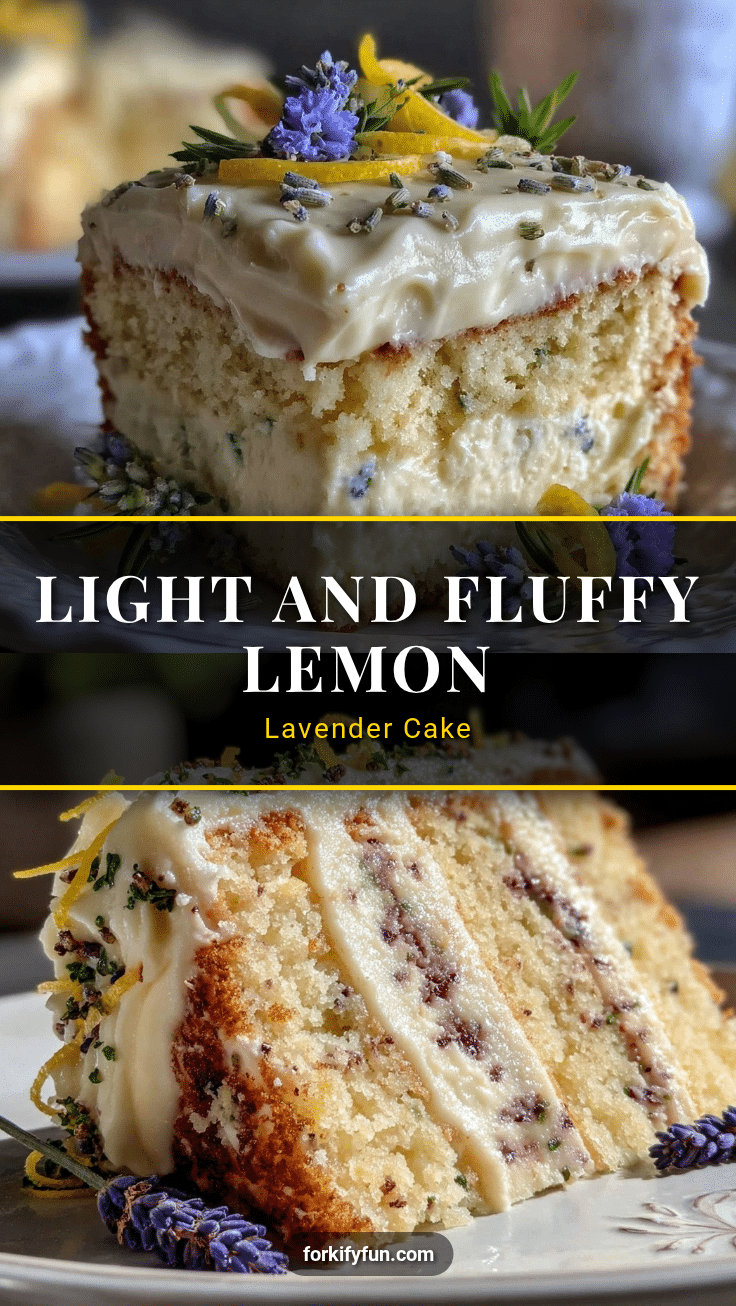
Fluffy Lemon Lavender Layer Cake
A light and airy lemon cake infused with delicate lavender notes, layered with silky smooth homemade buttercream frosting. Perfect for special occasions or a comforting homemade treat.
- Prep Time: 20 minutes
- Cook Time: 30 minutes
- Total Time: 1 hour 15 minutes
- Yield: 12 servings 1x
- Category: Dessert
- Cuisine: American
Ingredients
- 2 ½ cups (310g) all-purpose flour
- 2 ½ teaspoons baking powder
- ½ teaspoon salt
- 1 ¾ cups (350g) granulated sugar
- ¾ cup (170g) unsalted butter, softened
- 4 large eggs, room temperature
- 1 cup (240ml) whole milk, room temperature
- 1 teaspoon pure vanilla extract
- Zest of 2 medium lemons
- ¼ cup (60ml) fresh lemon juice
- 1 tablespoon culinary-grade dried lavender buds, finely crushed
- For the Buttercream Frosting:
- 1 cup (227g) unsalted butter, softened
- 4 cups (480g) powdered sugar, sifted
- 2 tablespoons fresh lemon juice
- 2–4 tablespoons heavy cream or whole milk
- 1 teaspoon vanilla extract
- A pinch of salt
Instructions
- Preheat oven to 350°F (175°C). Grease two 8-inch round cake pans and line bottoms with parchment paper. Let butter, eggs, and milk come to room temperature.
- In a large bowl, whisk together flour, baking powder, salt, and crushed dried lavender buds. Set aside.
- Using an electric mixer, beat softened butter and granulated sugar on medium-high speed until pale and fluffy, about 3-4 minutes.
- Beat in eggs one at a time, fully incorporating each before adding the next. Stir in lemon zest and vanilla extract.
- Alternate adding dry ingredients and milk to the butter mixture, starting and ending with dry ingredients. Mix on low speed until just combined.
- Fold in fresh lemon juice gently with a spatula.
- Divide batter evenly between prepared pans and smooth tops. Bake for 25-30 minutes or until a toothpick inserted in the center comes out clean.
- Cool cakes in pans for 15 minutes, then turn out onto wire racks to cool completely.
- For the buttercream, beat softened butter on medium speed until creamy. Gradually add powdered sugar, alternating with lemon juice and heavy cream, until smooth and spreadable.
- Add vanilla extract and a pinch of salt, then whip on high for 2 minutes to achieve a fluffy texture.
- Place one cake layer on a serving plate. Spread a generous layer of buttercream on top, then place the second layer over it.
- Use remaining frosting to cover the top and sides evenly. Optionally, sprinkle lavender buds or lemon zest on top.
Notes
Use culinary-grade dried lavender buds finely crushed to avoid gritty texture. Do not overmix batter to keep cake tender. Let cakes cool completely before frosting to prevent melting buttercream. Adjust frosting consistency with cream or powdered sugar as needed. For gluten-free, use a gluten-free flour blend and add extra eggs or flax eggs. For vegan, substitute eggs with flax eggs and use plant-based butter and non-dairy milk.
Nutrition
- Serving Size: 1 slice (1/12th of c
- Calories: 320
- Sugar: 28
- Fat: 18
- Carbohydrates: 38
- Protein: 4
Keywords: lemon cake, lavender cake, buttercream frosting, layer cake, homemade cake, floral cake, lemon dessert, easy cake recipe