Let me tell you, the scent of caramelizing sugar and warm vanilla wafting from the oven is enough to make anyone’s mouth water. The first time I baked these crispy Portuguese custard tarts, I was instantly hooked. It was one of those rare moments where you pause, take a deep breath, and just smile because you know you’re onto something truly special. I still remember when I was knee-high to a grasshopper, my grandma would bring home these golden beauties from a little bakery down the street, and I’d savor every single bite. Years ago, I tried recreating them myself, and honestly, nothing quite hit the mark until I perfected this easy homemade flaky puff pastry paired with that luscious custard filling.
My family couldn’t stop sneaking them off the cooling rack (and I can’t really blame them). These tarts have become a staple at our family gatherings, holiday mornings, and even casual weekend treats. Let’s face it, Portuguese custard tarts are dangerously easy to eat and provide pure, nostalgic comfort. They’re perfect for impressing guests at brunch, brightening up your Pinterest cookie board, or just a sweet treat for your kids after school. In the name of research, of course, I’ve tested this recipe multiple times to get it just right — and trust me, you’re going to want to bookmark this one.
Why You’ll Love This Recipe
Honestly, Portuguese custard tarts are one of those timeless treats that bring smiles all around, and this recipe nails it every time. As someone who loves baking and sharing, I’ve tested this recipe over and over, tweaking it until it’s foolproof and delicious. Here’s why you’ll love making these at home:
- Quick & Easy: Comes together in under an hour, perfect for busy weeknights or last-minute dessert cravings.
- Simple Ingredients: No fancy grocery trips needed; you likely already have everything in your kitchen pantry.
- Perfect for Any Occasion: Great for brunch, potlucks, cozy dinners, or even a sweet breakfast treat.
- Crowd-Pleaser: Always gets rave reviews from kids and adults alike – no leftovers here!
- Unbelievably Delicious: The combo of flaky puff pastry and creamy custard is pure magic.
What makes this recipe stand out is the homemade flaky puff pastry. Instead of the usual store-bought option, the puff pastry here is buttery, crisp, and melts in your mouth. The custard filling is perfectly balanced with vanilla and just the right hint of caramelized sweetness on top. This isn’t just another version — it’s your best version, offering that lovely contrast of textures and flavors that will make you close your eyes after the first bite. It’s comfort food reimagined, yet still soul-soothing.
What Ingredients You Will Need
This recipe uses simple, wholesome ingredients to deliver bold flavor and satisfying texture without the fuss. Most of these are pantry staples, and a few fresh items make all the difference to get that classic Portuguese tart perfection.
- For the Puff Pastry:
- All-purpose flour (2 ½ cups / 315g) – for that delicate structure
- Unsalted butter (1 cup / 225g), cold and cubed (I recommend Kerrygold for best flavor)
- Ice-cold water (about ¾ cup / 180ml)
- Salt (½ tsp) – to balance the sweetness
- For the Custard Filling:
- Whole milk (1 ½ cups / 360ml) – the creaminess backbone
- Heavy cream (½ cup / 120ml) – makes it rich and silky
- Granulated sugar (¾ cup / 150g) – sweet, but not overpowering
- Egg yolks (6 large) – for that luscious custard texture
- Cornstarch (3 tbsp) – thickens the custard just right
- Vanilla bean paste (1 tsp) or pure vanilla extract – gives it that irresistible aroma
- Fresh lemon zest (1 tsp) – optional, but adds a subtle zing
- For Finishing:
- Ground cinnamon (for dusting) – classic touch
- Powdered sugar (optional) – for a pretty finish
For substitutions, you can use almond flour for a gluten-free puff pastry version, although the texture will differ slightly. If dairy is a concern, swap the milk and cream for coconut milk and coconut cream, though the flavor will be a little more tropical. I always suggest using fresh eggs and quality vanilla extract — it makes a noticeable difference in taste.
Equipment Needed
- Rolling pin – essential for getting that perfect flaky puff pastry thickness (a silicone one works wonders)
- Mixing bowls – preferably glass or stainless steel
- Whisk – to smooth out the custard without lumps
- Fine mesh sieve – for straining the custard, helps achieve that silky finish
- Tartlet pans or a muffin tin – standard size, non-stick preferred; if you don’t have tartlet pans, muffin tins do the trick
- Pastry brush – for brushing water or egg wash if desired
- Oven thermometer (optional) – helps keep the baking temperature spot on
I’ve tried making puff pastry with a food processor, but honestly, the hands-on rolling technique gives better control and flakier results. For budget-friendly options, a good rolling pin and muffin tin can be found at reasonable prices, and they last forever if you take care of them. Keep your rolling pin dry and store your tart pans in a dry place to avoid rust.
Preparation Method

- Make the Puff Pastry Dough: In a large mixing bowl, combine 2 ½ cups (315g) all-purpose flour and ½ tsp salt. Add the cold, cubed unsalted butter (1 cup / 225g) and use your fingers or a pastry cutter to work the butter into the flour until pea-sized bits remain. Pour in about ¾ cup (180ml) ice-cold water, a little at a time, stirring gently with a fork until the dough just comes together. Avoid overmixing.
- Chill and Roll: Shape the dough into a rough rectangle, wrap in plastic, and chill for at least 1 hour. On a floured surface, roll the dough into a large rectangle about ¼ inch (6mm) thick. Fold the dough into thirds, like a business letter, then roll out again. Repeat this folding and rolling process 3-4 times to create layers. Chill the dough again for 30 minutes before using.
- Prepare the Custard: In a saucepan, heat 1 ½ cups (360ml) whole milk and ½ cup (120ml) heavy cream over medium heat just until simmering—don’t let it boil. In a separate bowl, whisk together ¾ cup (150g) granulated sugar, 6 large egg yolks, and 3 tbsp cornstarch until smooth and pale. Slowly pour the hot milk mixture into the egg mixture, whisking constantly to temper the eggs.
- Cook the Custard: Return the combined mixture to the saucepan and cook over low heat, stirring constantly with a wooden spoon or heatproof spatula. The custard will thicken after about 5-7 minutes. Remove from heat and stir in 1 tsp vanilla bean paste and 1 tsp fresh lemon zest (if using). Strain through a fine mesh sieve to remove any lumps. Let it cool slightly.
- Assemble the Tarts: Preheat your oven to 475°F (245°C). Roll out the puff pastry dough to about ⅛ inch (3mm) thick. Cut circles slightly larger than your tartlet or muffin tin cups. Gently press the dough into the pans, making sure to come up the sides. Pour the custard filling into each tart shell, filling about ¾ full.
- Bake: Bake the tarts for 15-18 minutes, until the pastry is golden and crisp and the custard has developed characteristic brown spots on top. Keep an eye on them – ovens vary! If the tops brown too fast, reduce the temperature slightly.
- Cool and Serve: Let the tarts cool in the pans for 5 minutes, then transfer to a wire rack. Dust with ground cinnamon and a little powdered sugar if you like. Serve warm or at room temperature for the perfect balance of crisp and creamy.
Pro tip: If your custard isn’t thickening as expected, just keep stirring over low heat a bit longer—patience pays off here. Also, resting the dough in the fridge between rolling steps helps keep the butter cold and creates those flaky layers we all crave.
Cooking Tips & Techniques
Getting that perfect Portuguese custard tart is all about a few little tricks I’ve learned the hard way. First, don’t rush the puff pastry dough. The key to flakiness is cold butter and folding the dough multiple times. I once skipped chilling the dough only to end up with a tough crust—lesson learned!
When making the custard, tempering the eggs is crucial. Pouring the hot milk slowly into the eggs while whisking prevents scrambling. Also, stirring constantly while cooking keeps the custard silky and lump-free.
Baking at a high temperature gives the tarts that signature crispy, caramelized top. If your oven runs hot, keep an eye so you don’t burn the tops prematurely. Using an oven thermometer can really help with accuracy.
For multitasking, prepare the puff pastry dough the day before and keep it chilled until ready to roll. You can make the custard filling while the dough chills, which saves loads of time when assembling.
Variations & Adaptations
Portuguese custard tarts are wonderfully versatile, and I love playing around with different spins on the classic.
- Dairy-Free Version: Swap whole milk and heavy cream with coconut milk and coconut cream. The flavor will be subtly tropical but still creamy and delicious.
- Spiced Up: Add a pinch of ground nutmeg or cardamom to the custard for a warm, spicy note that’s perfect for fall and winter.
- Mini Tartlets: Use mini muffin tins for bite-sized versions. Perfect for parties or kids’ lunchboxes.
- Seasonal Fruit Twist: Top the custard with fresh berries or thinly sliced peaches before baking for a fresh, fruity surprise.
- Gluten-Free Puff Pastry: Use a gluten-free flour blend and xanthan gum to replace all-purpose flour in the dough. The texture won’t be exactly the same, but it still tastes great.
I once tried adding a splash of orange blossom water to the custard for a floral hint, and it was a hit at a summer brunch. Feel free to experiment with your favorite flavors!
Serving & Storage Suggestions
These tarts are best served warm or at room temperature to enjoy that perfect contrast of crispy pastry and creamy custard. Dust a little cinnamon right before serving for an inviting aroma and classic look.
Pair them with a strong cup of espresso or a light dessert wine for a delightful treat. They also make a lovely addition to brunch spreads alongside fresh fruit and pastries.
Store leftover tarts in an airtight container in the refrigerator for up to 3 days. To reheat, pop them in a 350°F (175°C) oven for 5-7 minutes to revive the crispiness. Avoid microwaving, or you’ll lose that flaky crunch.
Flavors deepen after a day, so if you can wait, they taste even better the next day. Just bring them back to room temp before serving.
Nutritional Information & Benefits
Each crispy Portuguese custard tart contains approximately 220 calories, with about 12g of fat, 25g of carbohydrates, and 4g of protein. The eggs provide a good source of protein and essential vitamins, while the milk and cream add calcium and healthy fats.
Using homemade puff pastry lets you control the quality of ingredients and avoid preservatives found in store-bought versions. The lemon zest adds a small boost of vitamin C, and the cinnamon dusting offers antioxidants.
This recipe can be adapted to gluten-free or dairy-free diets with simple swaps, making it accessible for various dietary needs. Just watch for allergens like eggs and dairy if you’re serving guests with sensitivities.
Conclusion
To sum it up, this crispy Portuguese custard tarts recipe with flaky puff pastry is one you’ll want in your baking arsenal. It’s straightforward, reliably delicious, and hits that perfect balance of textures and flavors that makes you smile with every bite. Customize it to your liking with spices or fruit, and you’ll have a crowd-pleaser ready for any occasion.
I love this recipe because it brings a little piece of my childhood and family history to the table, wrapped in buttery, creamy goodness. Now it’s your turn—try it, tweak it, and make it your own. And hey, don’t forget to share your results or any fun twists you come up with in the comments below. Happy baking!
Frequently Asked Questions
How do I store leftover Portuguese custard tarts?
Store them in an airtight container in the refrigerator for up to 3 days. Reheat in the oven at 350°F (175°C) for 5-7 minutes to restore crispiness.
Can I use store-bought puff pastry instead of making it from scratch?
Absolutely! Store-bought puff pastry works fine if you’re short on time, but homemade puff pastry offers a flakier, richer texture.
What causes the custard to curdle or become lumpy?
This usually happens if the eggs are added too quickly to hot milk or if the custard is cooked on too high heat. Slowly temper the eggs and cook on low, stirring constantly.
Can I make these tarts ahead of time?
You can prepare the dough and custard a day ahead. Assemble and bake the tarts fresh for best texture, or bake and reheat before serving.
What’s the secret to getting the perfect caramelized spots on top?
Baking at a high temperature (around 475°F/245°C) helps create those signature dark spots. Keep an eye on them to avoid burning.
Pin This Recipe!
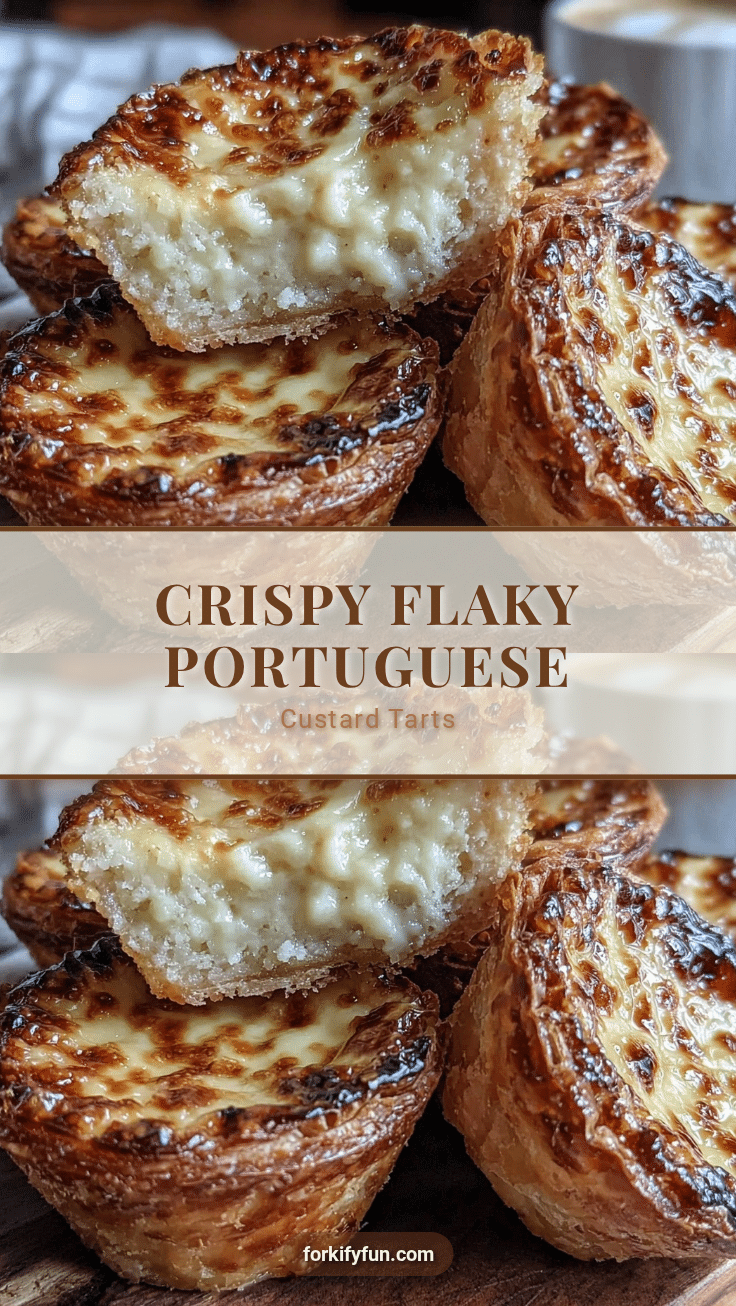
Crispy Portuguese Custard Tarts Recipe Easy Homemade Flaky Puff Pastry

This recipe features homemade flaky puff pastry paired with luscious custard filling, delivering crispy Portuguese custard tarts with caramelized tops and creamy interiors. Perfect for brunch, dessert, or a nostalgic treat.
- Prep Time: 1 hour 15 minutes
- Cook Time: 15-18 minutes
- Total Time: 1 hour 30 minutes
- Yield: 12 servings 1x
- Category: Dessert
- Cuisine: Portuguese
Ingredients
- 2 ½ cups (315g) all-purpose flour
- 1 cup (225g) unsalted butter, cold and cubed
- ¾ cup (180ml) ice-cold water
- ½ tsp salt
- 1 ½ cups (360ml) whole milk
- ½ cup (120ml) heavy cream
- ¾ cup (150g) granulated sugar
- 6 large egg yolks
- 3 tbsp cornstarch
- 1 tsp vanilla bean paste or pure vanilla extract
- 1 tsp fresh lemon zest (optional)
- Ground cinnamon (for dusting)
- Powdered sugar (optional)
Instructions
- Make the Puff Pastry Dough: In a large mixing bowl, combine 2 ½ cups (315g) all-purpose flour and ½ tsp salt. Add the cold, cubed unsalted butter (1 cup / 225g) and use your fingers or a pastry cutter to work the butter into the flour until pea-sized bits remain. Pour in about ¾ cup (180ml) ice-cold water, a little at a time, stirring gently with a fork until the dough just comes together. Avoid overmixing.
- Chill and Roll: Shape the dough into a rough rectangle, wrap in plastic, and chill for at least 1 hour. On a floured surface, roll the dough into a large rectangle about ¼ inch (6mm) thick. Fold the dough into thirds, like a business letter, then roll out again. Repeat this folding and rolling process 3-4 times to create layers. Chill the dough again for 30 minutes before using.
- Prepare the Custard: In a saucepan, heat 1 ½ cups (360ml) whole milk and ½ cup (120ml) heavy cream over medium heat just until simmering—don’t let it boil. In a separate bowl, whisk together ¾ cup (150g) granulated sugar, 6 large egg yolks, and 3 tbsp cornstarch until smooth and pale. Slowly pour the hot milk mixture into the egg mixture, whisking constantly to temper the eggs.
- Cook the Custard: Return the combined mixture to the saucepan and cook over low heat, stirring constantly with a wooden spoon or heatproof spatula. The custard will thicken after about 5-7 minutes. Remove from heat and stir in 1 tsp vanilla bean paste and 1 tsp fresh lemon zest (if using). Strain through a fine mesh sieve to remove any lumps. Let it cool slightly.
- Assemble the Tarts: Preheat your oven to 475°F (245°C). Roll out the puff pastry dough to about ⅛ inch (3mm) thick. Cut circles slightly larger than your tartlet or muffin tin cups. Gently press the dough into the pans, making sure to come up the sides. Pour the custard filling into each tart shell, filling about ¾ full.
- Bake: Bake the tarts for 15-18 minutes, until the pastry is golden and crisp and the custard has developed characteristic brown spots on top. Keep an eye on them – ovens vary! If the tops brown too fast, reduce the temperature slightly.
- Cool and Serve: Let the tarts cool in the pans for 5 minutes, then transfer to a wire rack. Dust with ground cinnamon and a little powdered sugar if you like. Serve warm or at room temperature for the perfect balance of crisp and creamy.
Notes
Use cold butter and chill dough between folds for flakiness. Temper eggs slowly to avoid curdling. Bake at high temperature for caramelized tops. Store leftovers in airtight container refrigerated up to 3 days; reheat in oven to restore crispiness. Can substitute almond flour for gluten-free or coconut milk/cream for dairy-free versions.
Nutrition
- Serving Size: 1 tart
- Calories: 220
- Fat: 12
- Carbohydrates: 25
- Protein: 4
Keywords: Portuguese custard tarts, pastel de nata, puff pastry, homemade custard, flaky pastry, dessert, brunch, easy recipe