“You’re not really going to make moussaka tonight, are you?” my friend asked with a raised eyebrow over the phone, as I rattled off my plan to tackle what I’d always thought was a complicated, time-consuming dish. Honestly, I wasn’t sure either—I’d always admired this classic Greek moussaka with creamy béchamel from afar but never dared make it myself. It felt like one of those recipes reserved for special occasions, or maybe a Mediterranean restaurant with a chef’s touch.
But that evening, worn out from a hectic day and with the fridge only half-stocked, I decided to give it a shot anyway. The smell of roasting eggplant filled the kitchen, mingling with the earthy scent of browned ground beef, garlic, and cinnamon. The creamy béchamel topping—the part I feared the most—turned out to be simpler than I imagined, and it added that silky richness that convinced me I’d stumbled on something special. By the time it came out of the oven, golden and bubbling, the skepticism had melted away. My dinner guests asked for seconds, and someone even asked me to write down the recipe.
That quiet moment, watching friends savor a dish I’d made from scratch, was when this classic Greek moussaka with creamy béchamel became more than just a recipe. It’s comfort and care layered in every bite—a dish that’s surprisingly approachable once you break it down. Over time, I’ve made small tweaks, but the heart of it remains the same: simple ingredients, bold flavors, and that luscious béchamel that ties it all together.
So here’s the recipe that’s stuck with me—not just for its taste, but for the way it turns an ordinary evening into something quietly memorable. I hope it becomes one of those dishes in your rotation, too.
Why You’ll Love This Classic Greek Moussaka Recipe
This recipe has been tested multiple times in my kitchen, each time coming closer to capturing the authentic flavors I remember from my travels in Greece. It’s been tweaked to balance tradition with ease, making it surprisingly doable on a weeknight.
- Quick & Easy: While it may look fancy, this moussaka comes together in about 1 hour and 15 minutes—perfect for those evenings when you want something special without fussing for hours.
- Simple Ingredients: You’ll find everything in your pantry or local grocery store—no exotic or hard-to-find items required.
- Perfect for Cozy Dinners: Whether you’re feeding family or impressing friends, this dish is hearty and satisfying.
- Crowd-Pleaser: The layers of tender eggplant, savory meat sauce, and creamy béchamel always get rave reviews from kids and adults alike.
- Unbelievably Delicious: The béchamel sauce is the star here, crafted for that perfect silky texture that melts in your mouth.
This isn’t just another casserole. The secret lies in the cinnamon and nutmeg in the meat sauce, balanced with a béchamel that’s whipped just right—no lumps, just creamy comfort. The dish feels like a warm Mediterranean hug, and honestly, it’s the kind of meal that makes you close your eyes with the first bite.
It’s also a dish that pairs beautifully with lighter sides, like a crisp Greek salad, or even alongside something like the creamy Cajun shrimp pasta if you’re feeling adventurous and want to mix cuisines at a dinner party.
What Ingredients You Will Need
This classic Greek moussaka with creamy béchamel relies on straightforward, wholesome ingredients that come together to build layers of flavor and texture. Most are pantry staples or easy to find fresh items.
- For the Eggplant Layer:
- 2 large eggplants (about 1.5 lbs / 700 g), sliced into 1/2-inch thick rounds
- Olive oil, for brushing and frying
- Salt, to draw out moisture
- For the Meat Sauce:
- 1 lb (450 g) ground beef or lamb (lamb for authenticity, beef for mildness)
- 1 medium onion, finely chopped
- 3 cloves garlic, minced
- 1 can (14 oz / 400 g) crushed tomatoes
- 2 tablespoons tomato paste
- 1/2 cup (120 ml) red wine (optional but adds depth)
- 1 teaspoon ground cinnamon (key flavor note)
- 1/4 teaspoon ground nutmeg
- Salt and freshly ground black pepper, to taste
- 2 tablespoons olive oil
- Fresh parsley, chopped (for garnish and freshness)
- For the Creamy Béchamel Sauce:
- 4 tablespoons unsalted butter
- 4 tablespoons all-purpose flour
- 3 cups (720 ml) whole milk, warmed
- 1/4 teaspoon ground nutmeg
- 2 large eggs, lightly beaten
- 1/2 cup (50 g) grated Parmesan cheese
- Salt and white pepper, to taste
- For Finishing:
- Extra grated Parmesan or Kefalotyri cheese for topping
For best results, I like to use a quality olive oil like Colavita or California Olive Ranch, which gives a fruity depth to the eggplant and sauce. When selecting eggplants, look for firm, glossy skins without blemishes, so they hold their shape during cooking.
For a gluten-free twist, you can swap the all-purpose flour with a gluten-free blend or cornstarch in the béchamel sauce. If you want to keep it dairy-free, almond or oat milk with a dairy-free butter substitute work, though the sauce won’t be quite as silky.
Equipment Needed
- Large baking sheet or roasting pan (for eggplant slices)
- Large skillet or sauté pan (for meat sauce and frying eggplant)
- Medium saucepan (for béchamel sauce)
- Mixing bowls (for eggs and béchamel prep)
- Whisk (essential for smooth béchamel, I prefer a balloon whisk)
- Sharp knife and cutting board
- 9×13 inch (23×33 cm) baking dish
- Oven mitts and spatula
If you don’t have a whisk, a fork can work in a pinch for the béchamel, but the sauce might be a bit lumpier. For frying eggplant, a nonstick skillet helps reduce oil use but a cast iron pan adds great flavor and even browning. I keep a silicone brush on hand for oiling the eggplant slices evenly without waste.
Preparation Method
- Prepare the Eggplant: Slice the eggplants into 1/2-inch (1.3 cm) rounds. Lay them out on a baking sheet and sprinkle generously with salt. Let them sit for 30 minutes to draw out bitterness and moisture. Afterward, rinse under cold water and pat dry with paper towels. This step ensures the eggplant won’t be soggy.
- Cook the Eggplant: Preheat your oven to 400°F (200°C). Lightly brush both sides of the eggplant slices with olive oil and arrange them on a baking sheet. Roast for about 20 minutes, flipping halfway, until golden and tender. Alternatively, pan-fry in olive oil over medium heat until browned, then drain on paper towels.
- Make the Meat Sauce: Heat 2 tablespoons olive oil in a large skillet over medium heat. Add chopped onion and garlic; sauté until translucent, about 5 minutes. Add ground meat, breaking it up with a spoon, and cook until browned and cooked through—about 8 minutes. Stir in tomato paste, crushed tomatoes, red wine (if using), cinnamon, nutmeg, salt, and pepper. Simmer gently for 20 minutes, until thickened and fragrant.
- Prepare the Béchamel Sauce: In a medium saucepan, melt butter over medium heat. Whisk in flour and cook, whisking constantly, for about 2 minutes until it forms a smooth roux (no browning). Slowly pour in warm milk, whisking continuously to avoid lumps. Bring to a simmer and cook until thickened, about 5-7 minutes. Remove from heat and whisk in nutmeg, salt, and white pepper. Allow to cool slightly then whisk in beaten eggs and Parmesan cheese quickly so the eggs don’t scramble.
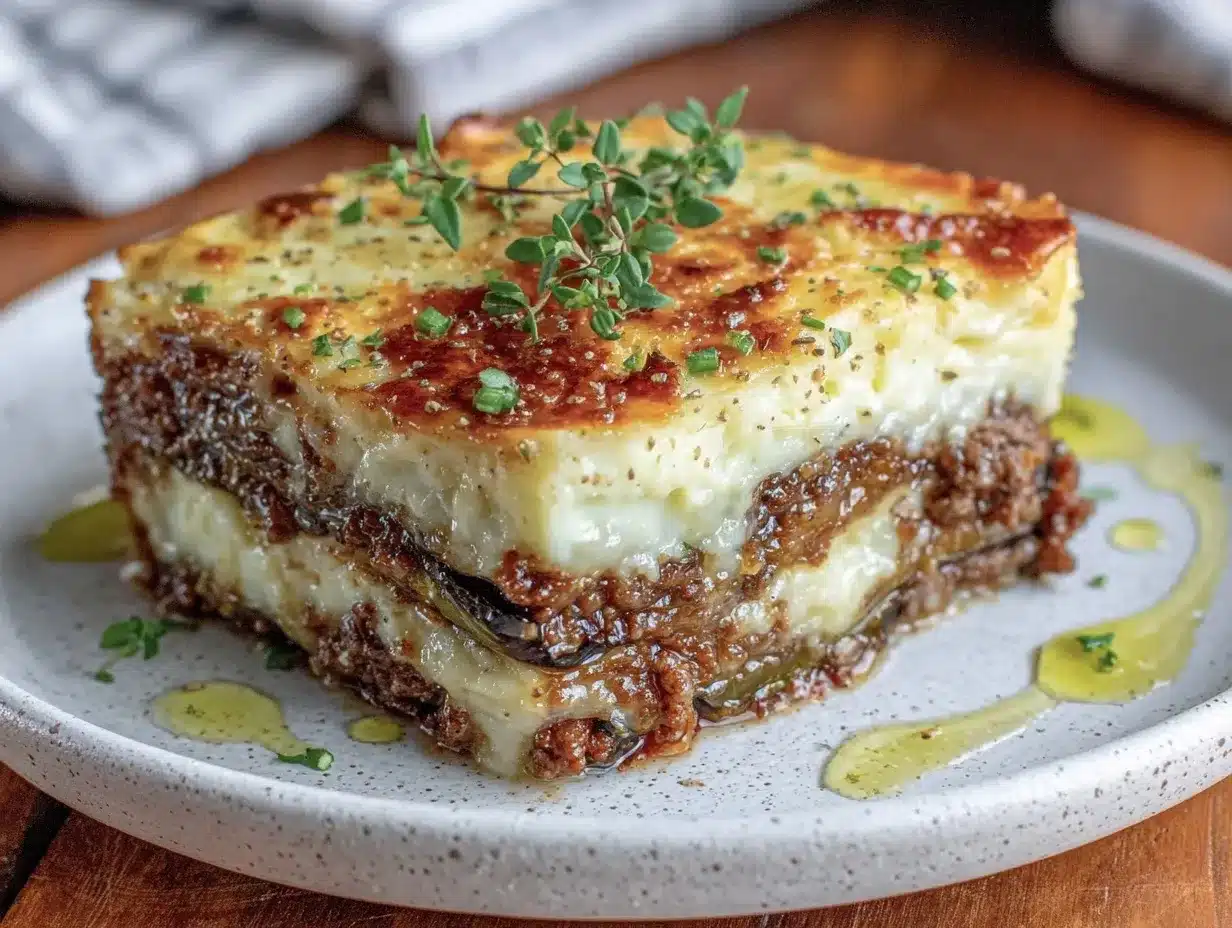
- Assemble the Moussaka: Lower oven temperature to 350°F (175°C). In a greased 9×13 inch (23×33 cm) baking dish, layer half of the roasted eggplant slices evenly. Spread the meat sauce over the eggplant, then layer the remaining eggplant on top. Pour the béchamel sauce evenly over everything. Sprinkle extra Parmesan or Kefalotyri cheese on top.
- Bake: Place the dish in the oven and bake for 45-50 minutes, until the top is golden brown and bubbling. Let it rest for at least 15 minutes before serving so the layers set nicely.
Quick tip: If your béchamel starts to thicken too much before you add eggs, just whisk in a splash of warm milk to loosen it. Also, resting time is key—cutting in too soon will make the layers slide apart.
Cooking Tips & Techniques for Success
Making classic Greek moussaka with creamy béchamel can feel intimidating, but a few tricks make all the difference:
- Salt the eggplant well: This old-school trick pulls out bitterness and excess water, preventing a soggy dish. I often skip this and regret it!
- Use warm milk for béchamel: Cold milk can cause lumps when added to the roux. Warm it gently on the stove or microwave before whisking in.
- Whisk constantly: Patience with the béchamel results in that signature silky smoothness. No whisk? Stir vigorously with a spoon but expect a few lumps.
- Don’t skip the cinnamon: It adds a subtle warmth and complexity to the meat sauce that sets this apart from other casseroles.
- Layer with care: Even layering helps the dish hold together and ensures balanced bites.
- Rest before serving: This is crucial to let the béchamel firm up and prevent a runny mess.
Once, I tried rushing the béchamel and ended up with scrambled eggs floating in sauce—lesson learned! Also, multitasking by roasting eggplant while simmering sauce saves time without stress. If you enjoy hearty dishes like this, you might appreciate the savory spicy Italian sausage and white bean soup I shared recently—comfort food that’s just as satisfying but easier on prep.
Variations & Adaptations
This classic Greek moussaka recipe is flexible, so feel free to customize it to your taste or dietary needs:
- Vegetarian Version: Replace the meat with hearty mushrooms, lentils, or cooked chickpeas for a satisfying plant-based option. Use vegetable broth in the béchamel to keep it flavorful.
- Seasonal Veggies: Add layers of zucchini or thinly sliced potatoes along with or instead of eggplant for variety and texture.
- Dairy-Free: Swap the milk and butter in the béchamel for coconut milk and vegan butter. Nutritional yeast can replace Parmesan for cheesy notes.
- Spicy Kick: Toss a pinch of crushed red pepper flakes into the meat sauce for a subtle heat that pairs well with the creamy topping.
I once tried a version swapping the ground lamb for ground turkey to lighten it up, and it was surprisingly good—still rich but a little less heavy. For a quicker weeknight option, you might enjoy the easy Korean beef bulgogi rice bowls, which deliver bold flavors with minimal fuss.
Serving & Storage Suggestions
Serve your classic Greek moussaka warm or at room temperature with a fresh side salad—think crisp cucumber, tomato, and red onion tossed in lemon juice and olive oil. A chilled glass of white wine or a light red, like a Greek Agiorgitiko, complements the rich flavors beautifully.
Leftovers keep well in the refrigerator for up to 3 days, covered tightly with foil or plastic wrap. Reheat gently in a 350°F (175°C) oven for 15-20 minutes to maintain that creamy texture—microwaving tends to make the béchamel separate.
If you want to freeze, cut into portions and wrap tightly in plastic wrap and foil to avoid freezer burn. Thaw overnight in the fridge and reheat as above.
Interestingly, the flavors deepen after resting overnight, making it an ideal dish to prepare ahead for gatherings. Pairing it with a light soup like the creamy Thai red curry chicken soup can start your meal on a flavorful note.
Nutritional Information & Benefits
Each serving of this classic Greek moussaka offers a balanced mix of protein, fat, and carbohydrates, thanks to the meat, béchamel, and vegetables. Eggplants are a good source of fiber and antioxidants, while the tomatoes provide vitamin C and lycopene.
The béchamel sauce, made with whole milk and butter, adds calcium and vitamin D, though it also increases the calorie count—so portion control is key if you’re watching intake. Using leaner ground meat or plant-based alternatives can lighten the dish.
This recipe is naturally gluten-rich because of the flour in the béchamel, but swapping with gluten-free flour blends makes it accessible for gluten-sensitive diets. It contains dairy and eggs, so it’s not suitable for those with allergies or intolerances to these ingredients.
From a wellness perspective, this moussaka feels indulgent yet home-cooked, reminding me that nourishing the soul is just as important as fueling the body.
Conclusion
This classic Greek moussaka with creamy béchamel has earned a permanent spot in my kitchen repertoire because it’s both comforting and approachable. It’s a dish you can make from simple ingredients yet feel like something truly special. I encourage you to experiment with the spices and layers to find your perfect version.
For me, it’s about the moment shared over that first steaming bite, when all the layers come together like a warm story told in flavors. If you give it a try, I’d love to hear how you made it your own—drop a comment or share your variations!
Here’s to many more cozy meals and kitchen wins, one delicious layer at a time.
Frequently Asked Questions About Classic Greek Moussaka
- Can I make moussaka ahead of time?
Yes! It actually tastes better the next day after the flavors meld. Just refrigerate and reheat gently in the oven. - What’s the difference between Greek moussaka and other casseroles?
Greek moussaka features layers of eggplant, a cinnamon-spiced meat sauce, and a creamy béchamel topping, giving it a distinct Mediterranean flavor and texture. - Can I use other vegetables besides eggplant?
Absolutely! Zucchini, potatoes, or mushrooms can be layered in for variation or to stretch the dish. - How do I prevent the béchamel from curdling when adding eggs?
Temper the eggs by slowly whisking in a small amount of the warm béchamel before combining fully, and remove the sauce from heat before adding eggs. - Is there a vegan version of moussaka?
Yes, you can replace meat with lentils or mushrooms, and use plant-based milk and butter substitutes for the béchamel sauce.
Pin This Recipe!
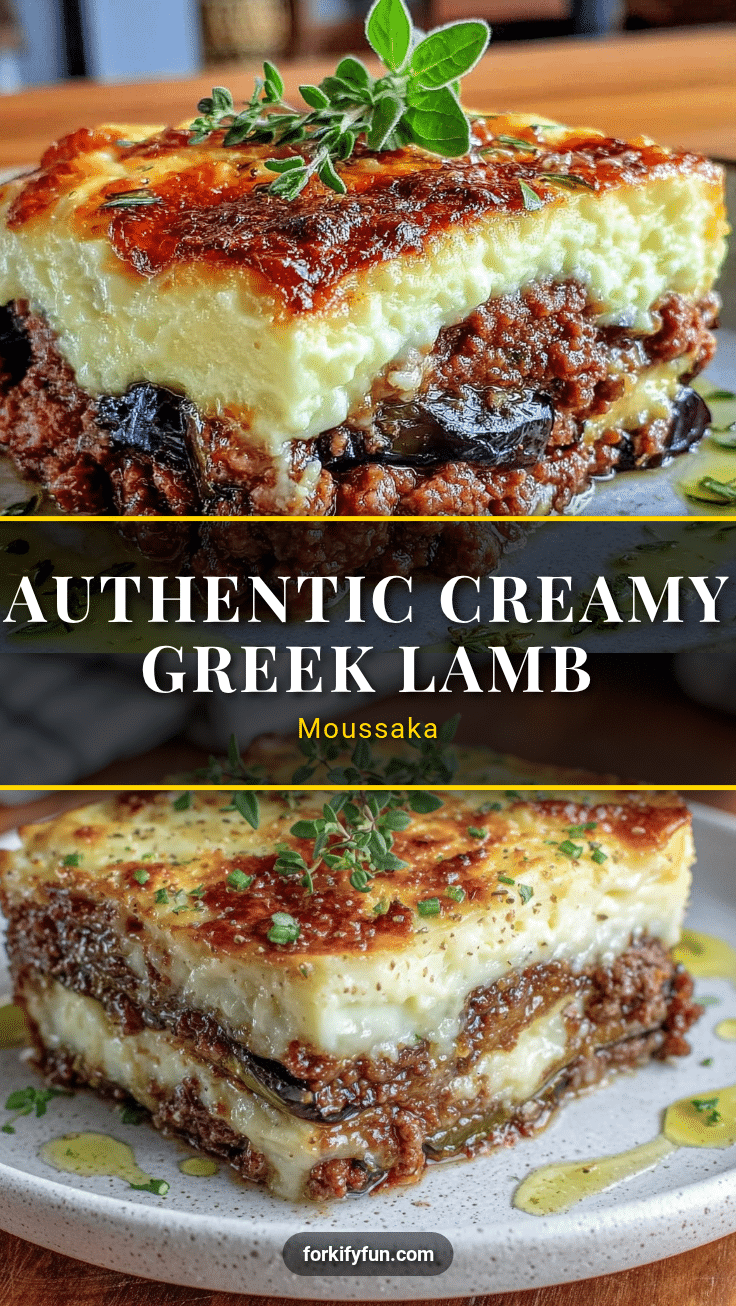
Classic Greek Moussaka Recipe Easy Authentic Creamy Béchamel Guide
A comforting and authentic Greek moussaka featuring layers of roasted eggplant, cinnamon-spiced meat sauce, and a silky creamy béchamel topping. This recipe balances tradition with ease, perfect for cozy dinners and special occasions.
- Prep Time: 45 minutes
- Cook Time: 30 minutes
- Total Time: 1 hour 15 minutes
- Yield: 6 servings 1x
- Category: Main Course
- Cuisine: Greek
Ingredients
- 2 large eggplants (about 1.5 lbs / 700 g), sliced into 1/2-inch thick rounds
- Olive oil, for brushing and frying
- Salt, to draw out moisture
- 1 lb (450 g) ground beef or lamb
- 1 medium onion, finely chopped
- 3 cloves garlic, minced
- 1 can (14 oz / 400 g) crushed tomatoes
- 2 tablespoons tomato paste
- 1/2 cup (120 ml) red wine (optional)
- 1 teaspoon ground cinnamon
- 1/4 teaspoon ground nutmeg
- Salt and freshly ground black pepper, to taste
- 2 tablespoons olive oil
- Fresh parsley, chopped (for garnish)
- 4 tablespoons unsalted butter
- 4 tablespoons all-purpose flour
- 3 cups (720 ml) whole milk, warmed
- 1/4 teaspoon ground nutmeg
- 2 large eggs, lightly beaten
- 1/2 cup (50 g) grated Parmesan cheese
- Salt and white pepper, to taste
- Extra grated Parmesan or Kefalotyri cheese for topping
Instructions
- Slice the eggplants into 1/2-inch (1.3 cm) rounds. Lay them out on a baking sheet and sprinkle generously with salt. Let them sit for 30 minutes to draw out bitterness and moisture. Rinse under cold water and pat dry with paper towels.
- Preheat oven to 400°F (200°C). Lightly brush both sides of eggplant slices with olive oil and arrange on a baking sheet. Roast for about 20 minutes, flipping halfway, until golden and tender. Alternatively, pan-fry in olive oil over medium heat until browned, then drain on paper towels.
- Heat 2 tablespoons olive oil in a large skillet over medium heat. Add chopped onion and garlic; sauté until translucent, about 5 minutes. Add ground meat, breaking it up, and cook until browned, about 8 minutes. Stir in tomato paste, crushed tomatoes, red wine (if using), cinnamon, nutmeg, salt, and pepper. Simmer gently for 20 minutes until thickened.
- In a medium saucepan, melt butter over medium heat. Whisk in flour and cook for about 2 minutes until smooth roux forms. Slowly pour in warm milk, whisking continuously to avoid lumps. Bring to simmer and cook until thickened, about 5-7 minutes. Remove from heat and whisk in nutmeg, salt, and white pepper. Cool slightly then whisk in beaten eggs and Parmesan quickly to avoid scrambling.
- Lower oven temperature to 350°F (175°C). In a greased 9×13 inch (23×33 cm) baking dish, layer half of the roasted eggplant slices evenly. Spread meat sauce over eggplant, then layer remaining eggplant on top. Pour béchamel sauce evenly over everything. Sprinkle extra Parmesan or Kefalotyri cheese on top.
- Bake for 45-50 minutes until top is golden brown and bubbling. Let rest at least 15 minutes before serving to allow layers to set.
Notes
Salt eggplant well to remove bitterness and moisture to prevent sogginess. Use warm milk for béchamel to avoid lumps. Whisk béchamel constantly for silky smooth texture. Rest moussaka before serving to let layers set. For gluten-free, substitute flour with gluten-free blend or cornstarch. For dairy-free, use plant-based milk and butter substitutes but sauce will be less silky.
Nutrition
- Serving Size: 1 slice (approximate
- Calories: 480
- Sugar: 9
- Sodium: 520
- Fat: 28
- Saturated Fat: 14
- Carbohydrates: 28
- Fiber: 6
- Protein: 26
Keywords: Greek moussaka, classic moussaka, creamy béchamel, eggplant casserole, Mediterranean recipe, comfort food, authentic Greek dish