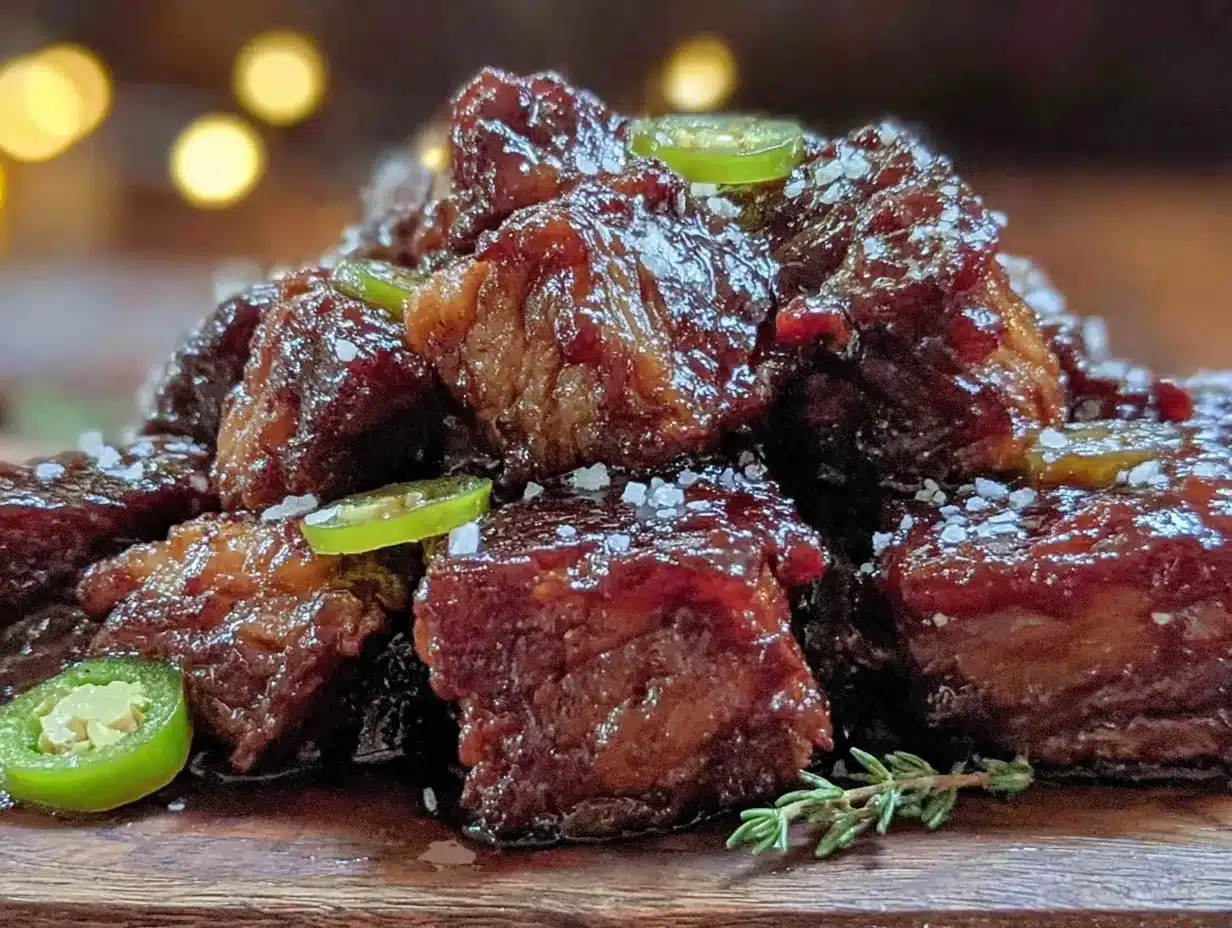
“You seriously don’t need to eat the whole brisket to get that smoky, melt-in-your-mouth experience,” my buddy Mark said, tossing me a foil-wrapped parcel with a mischievous grin. That was the moment I first tasted the magic of flavorful smoked brisket burnt ends with sticky Kansas City glaze. Honestly, I was skeptical at first—burnt ends? Were they just scraps or something special? Turns out, these little smoky cubes were the real stars. The way the bark caramelizes in that thick, sticky glaze, it’s like a smoky-sweet party in your mouth that you didn’t know you needed.
It wasn’t a planned BBQ event or some fancy gathering either. Just a lazy Sunday hanging out, when Mark decided to toss those neglected brisket edges on the smoker. The smell itself was hypnotic—rich, smoky, with hints of molasses and spice. I remember the first bite—crisp on the outside, tender inside, with that unmistakable Kansas City-style glaze that clings to every nook and cranny. It was comfort food that felt indulgent but honest, with no pretense. Ever since then, I’ve been hooked, making these burnt ends more times than I can count.
It’s funny how a simple idea from a friend’s offhand comment turned into a recipe I keep coming back to, especially when craving something smoky, sticky, and utterly satisfying. This recipe stuck not because it’s fancy, but because it gets the job done with flavor, heart, and a little messy joy. If you’ve ever wondered how to capture that perfect balance of smoky, sweet, and tender in bite-sized pieces, well, this is it.
Why You’ll Love This Recipe
After countless attempts and tweaks, this flavorful smoked brisket burnt ends recipe with sticky Kansas City glaze has become my go-to for all things smoky and sweet. Here’s why it’s worth your time:
- Quick & Easy: While smoking takes patience, the actual prep is straightforward, and the glaze comes together in minutes, perfect for those weekend BBQ sessions.
- Simple Ingredients: You don’t need a pantry full of rare spices—just classic BBQ staples and a few trusty brands I’ve come to rely on for consistent results.
- Perfect for Gatherings: Whether it’s a game day party or casual cookout, these burnt ends are the ultimate crowd-pleaser that vanish fast.
- Crowd-Pleaser: Kids and grown-ups alike can’t get enough. The combination of smoky bark and sticky glaze keeps everyone coming back for more.
- Unbelievably Delicious: The magic is in the caramelized glaze that perfectly balances sweet, tangy, and smoky flavors—trust me, it’s addictive.
Unlike other recipes that can be dry or too sweet, this one nails the texture and flavor balance by focusing on slow-smoking the brisket chunks to tender perfection and finishing them with a Kansas City-inspired glaze that’s sticky but never cloying. Honestly, I’ve tried versions using different sauces, but this classic sticky glaze with molasses and spices always wins out.
This recipe isn’t just another BBQ dish. It’s the one that makes you pause, savor, and maybe even close your eyes after that first bite. If you love smoky meats with a touch of sticky-sweet goodness, this will be your new favorite indulgence.
What Ingredients You Will Need
This recipe uses simple, wholesome ingredients to deliver bold flavor and satisfying texture without the fuss. Most of these are pantry staples or easy to find at your local grocery store.
- Brisket Point Cut (about 4-5 pounds / 1.8-2.3 kg) – The star of the show, with enough fat marbling to keep the burnt ends juicy.
- Yellow Mustard (2 tablespoons) – Acts as a binder for the rub, adding a subtle tang.
- BBQ Rub (1/4 cup) – I like a blend with paprika, brown sugar, salt, pepper, garlic powder, and onion powder; Stubb’s brand works well.
- Wood Chips or Chunks (hickory or oak, about 2 cups) – For that authentic smoky flavor.
- Kansas City Style BBQ Sauce (1 cup) – Thick, sweet, and tangy with molasses; I often use Sweet Baby Ray’s or make my own blend.
- Brown Sugar (1/4 cup) – Adds extra caramelization in the glaze.
- Unsalted Butter (2 tablespoons) – Helps the glaze get that luscious, sticky texture.
- Apple Cider Vinegar (1 tablespoon) – Balances the sweetness with a hint of acidity.
- Black Pepper (freshly ground, to taste) – For a touch of heat.
- Optional: Cayenne Pepper (1/4 teaspoon) – If you like a little kick.
For substitutions, if you’re aiming for a gluten-free version, just double-check your BBQ sauce label or opt for a certified GF brand. Also, you can swap the wood chips with fruit woods like apple or cherry for a milder smoke. When it comes to the rub, feel free to experiment with your favorite blends or even add coffee grounds for a rich twist.
Equipment Needed
- Smoker or Charcoal Grill with Lid – Essential for slow-smoking the brisket to achieve that deep smoky flavor. If you don’t have a dedicated smoker, a charcoal grill with a lid and wood chips works just fine.
- Meat Thermometer – A reliable instant-read thermometer is a must to monitor internal temperature and avoid overcooking.
- Sharp Knife – For trimming the brisket and cutting the burnt ends into cubes.
- Aluminum Foil or Disposable Pans – To wrap and hold the burnt ends during the glaze phase.
- Basting Brush – For evenly applying the sticky Kansas City glaze.
- Mixing Bowl – To prepare the glaze and rub.
If you’re on a budget, a basic charcoal grill with a thermometer can substitute for an expensive smoker, and I’ve found that using a one-pan setup can help keep things tidy during prep. For cleanup, disposable pans are a lifesaver, especially when dealing with sticky sauces.
Preparation Method
- Trim the Brisket: Trim excess fat from the brisket point, leaving about 1/4 inch for flavor and moisture. This should take about 10 minutes. The goal is to avoid greasy bites but keep enough fat to render slowly.
- Apply Mustard and Rub: Coat the brisket evenly with yellow mustard, then generously apply the BBQ rub all over, pressing it in. This step takes about 5 minutes and sets the flavor foundation.
- Preheat Your Smoker: Bring your smoker or grill to a steady 225°F (107°C). Add your wood chips (hickory or oak) to generate smoke. This usually takes 15-20 minutes to stabilize.
- Smoke the Brisket: Place the brisket fat side up on the smoker grates. Close the lid and smoke until the internal temperature reaches about 190°F (88°C), which can take roughly 6-8 hours depending on your setup. Resist the urge to open the lid too often—let the smoke do its magic.
- Cut into Burnt Ends: Remove the brisket from the smoker, let it rest for 15 minutes, then cut into 1-inch (2.5 cm) cubes. Focus on the edges and barky parts for that authentic burnt end experience.
- Prepare the Kansas City Glaze: In a bowl, mix the BBQ sauce, brown sugar, melted butter, apple cider vinegar, black pepper, and cayenne if using. Stir until smooth and glossy.
- Toss and Wrap: Toss the burnt end cubes in the glaze until thoroughly coated. Transfer to a foil pan and cover tightly with foil. Return to the smoker at 250°F (121°C) for an additional 1.5-2 hours. This step caramelizes the glaze and makes the burnt ends sticky and tender.
- Final Touch: After smoking, check for tenderness and glaze thickness. If you want extra stickiness, uncover and smoke for another 30 minutes, but watch closely to avoid burning.
- Serve: Let the burnt ends rest for a few minutes before serving. They’re best enjoyed warm, fresh off the smoker with a napkin nearby!
Pro tip: Use a meat thermometer to track progress and avoid drying out the burnt ends. Also, the resting phases are key — skipping them can lead to a less juicy bite. If your glaze thickens too much during cooking, stir in a splash of apple cider vinegar to loosen it up.
Cooking Tips & Techniques
Smoking brisket burnt ends can feel intimidating, but a few tricks will have you feeling like a pitmaster in no time.
- Consistent Temperature: Keeping your smoker steady at 225-250°F (107-121°C) is critical. Fluctuations dry out the meat and toughen the bark.
- Don’t Skip the Resting: Let the brisket rest after the initial smoke to redistribute juices; it’s the difference between dry and juicy burnt ends.
- Use the Right Wood: Hickory or oak gives a classic smoky flavor, but fruit woods like apple add a subtle sweetness if you prefer a milder profile.
- Glaze Timing: Adding the glaze too early can burn the sugars. Wait until the burnt ends are mostly cooked before tossing in the sauce.
- Watch for Bark Formation: The bark is your flavor jackpot. Resist trimming it away and embrace those crispy edges.
Once, I over-smoked the burnt ends and ended up with dry chunks that tasted more like jerky than tender bites—lesson learned! Another tip: multitask by prepping your glaze while the brisket smokes, so you’re ready for the finishing step without delay.
Variations & Adaptations
There’s room to make this recipe truly yours, whether you’re catering to dietary needs or flavor preferences.
- Spicy Kick: Add chipotle powder or smoked paprika to the rub for smoky heat, or increase cayenne in the glaze for fire lovers.
- Low-Sugar Option: Swap brown sugar in the glaze for a natural sweetener like maple syrup or honey, adjusting quantity to taste.
- Different Smoke Profiles: Try mesquite wood for a bolder smoke or cherry wood for fruity notes.
- Oven Method: If you don’t have a smoker, sear the brisket cubes in a cast-iron skillet to build a crust, then finish in the oven with the glaze on low heat for 2 hours.
- Gluten-Free: Use gluten-free BBQ sauce brands and rubs, ensuring all spices are free from additives.
Personally, I once experimented with a bourbon-infused glaze, adding a splash of whiskey to the Kansas City sauce. The result was a smoky, slightly boozy burnt end that got rave reviews at a backyard party. It’s a fun twist if you want to impress guests without much extra effort.
Serving & Storage Suggestions
Serve these burnt ends warm straight from the smoker for best flavor and texture. They pair wonderfully with classic BBQ sides like baked beans, creamy coleslaw, and cornbread. For a hearty meal, add some creamy Cajun chicken pasta or crispy baked parmesan chicken cutlets on the side to round out the feast.
Leftovers keep well in the fridge for up to 3 days—store in an airtight container. To reheat, place them in a covered dish at 300°F (150°C) until warmed through, or gently microwave covered to retain moisture. The glaze tends to thicken in the fridge, so a splash of apple cider vinegar or a few drops of water helps loosen it when reheating.
Flavors tend to deepen overnight, so if you can wait, burnt ends often taste even better the next day. Just don’t wait too long—they’re best enjoyed fresh and sticky!
Nutritional Information & Benefits
Each serving of these smoked brisket burnt ends (about 4 ounces / 113 grams) contains approximately 350-400 calories, depending on the amount of glaze used. They’re rich in protein and iron, thanks to the beef, making them a satisfying meal option.
The Kansas City glaze adds sweetness but also delivers antioxidants from molasses and spices like paprika and garlic powder. While this isn’t a low-calorie dish, it fits well into a balanced diet, especially when paired with fresh veggies or lighter sides.
For those with dietary restrictions, it’s naturally gluten-free if you select appropriate sauces and rubs. It’s also a good option for low-carb eaters who want indulgence without breading or fillers.
From a wellness perspective, the slow smoking process means no added fats beyond what’s rendered naturally, and the spices contribute flavor without extra sodium or additives.
Conclusion
Flavorful smoked brisket burnt ends with sticky Kansas City glaze aren’t just a recipe—they’re a smoky, sweet experience that brings friends and family together around the grill. The perfect balance of tender brisket, crispy bark, and that luscious glaze makes every bite a little celebration.
Feel free to tweak the spices, wood, or glaze to suit your taste, but don’t skip the slow smoke and resting steps—they’re the heart of this dish. I love this recipe because it’s approachable, rewarding, and honestly, a bit addictive in the best way.
Give it a try, and when you do, I’d love to hear your twist or how it turns out. Sharing good food stories is as much fun as eating the burnt ends themselves, right? So pull up a chair, grab a napkin, and enjoy every sticky, smoky bite.
FAQs
- What cut of brisket is best for burnt ends? The point cut of the brisket is ideal because of its fat marbling, which keeps the burnt ends juicy and flavorful.
- Can I make burnt ends without a smoker? Yes! You can sear the brisket cubes in a hot skillet and finish them in the oven with the glaze, though the smoky flavor will be milder.
- How long does it take to smoke brisket burnt ends? Typically, 6-8 hours for the initial smoke to get the brisket tender, plus 1.5-2 hours after glazing for caramelization.
- What wood is best for smoking burnt ends? Hickory and oak are classic choices, but fruit woods like apple or cherry add a sweeter, milder smoke.
- Can I prepare the burnt ends ahead of time? Yes, you can smoke the brisket and cut into cubes a day ahead. Keep them refrigerated and glaze and finish smoking on the day you plan to serve.
Pin This Recipe!
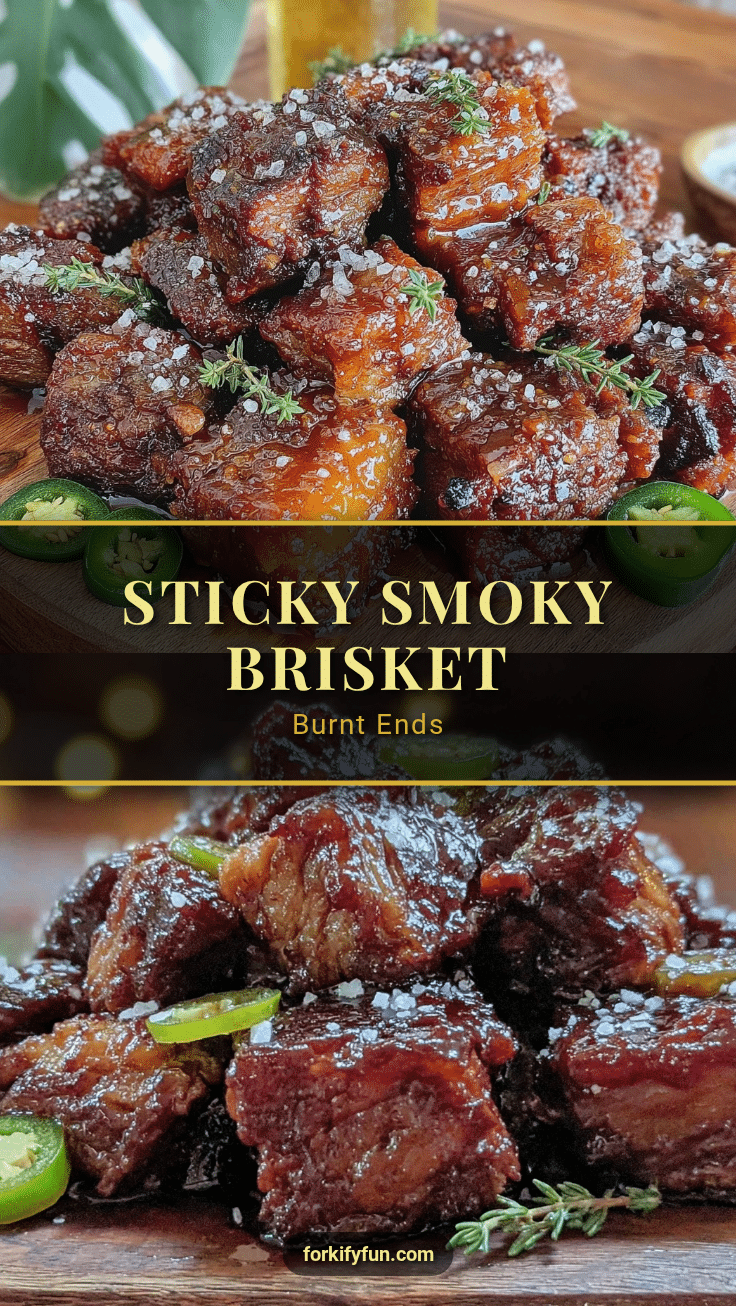
Flavorful Smoked Brisket Burnt Ends Recipe with Sticky Kansas City Glaze
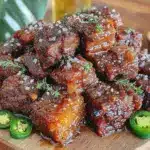
This recipe delivers smoky, tender burnt ends with a sticky, sweet, and tangy Kansas City-style glaze. Perfect for BBQ gatherings, these bite-sized brisket cubes offer a melt-in-your-mouth experience with a caramelized bark.
- Prep Time: 15 minutes
- Cook Time: 8-10 hours
- Total Time: 8 hours 15 minutes to 10 hours 15 minutes
- Yield: 6-8 servings 1x
- Category: Main Course
- Cuisine: American BBQ
Ingredients
- 4–5 pounds brisket point cut
- 2 tablespoons yellow mustard
- 1/4 cup BBQ rub (paprika, brown sugar, salt, pepper, garlic powder, onion powder)
- 2 cups wood chips or chunks (hickory or oak)
- 1 cup Kansas City style BBQ sauce
- 1/4 cup brown sugar
- 2 tablespoons unsalted butter
- 1 tablespoon apple cider vinegar
- Black pepper, freshly ground, to taste
- 1/4 teaspoon cayenne pepper (optional)
Instructions
- Trim excess fat from the brisket point, leaving about 1/4 inch for flavor and moisture (about 10 minutes).
- Coat the brisket evenly with yellow mustard, then generously apply the BBQ rub all over, pressing it in (about 5 minutes).
- Preheat your smoker or grill to a steady 225°F (107°C). Add wood chips (hickory or oak) to generate smoke (15-20 minutes to stabilize).
- Place the brisket fat side up on the smoker grates. Close the lid and smoke until the internal temperature reaches about 190°F (88°C), approximately 6-8 hours.
- Remove the brisket from the smoker, let it rest for 15 minutes, then cut into 1-inch cubes focusing on edges and barky parts.
- In a bowl, mix BBQ sauce, brown sugar, melted butter, apple cider vinegar, black pepper, and cayenne pepper if using until smooth and glossy.
- Toss the burnt end cubes in the glaze until thoroughly coated. Transfer to a foil pan and cover tightly with foil.
- Return to the smoker at 250°F (121°C) for an additional 1.5-2 hours to caramelize the glaze and make the burnt ends sticky and tender.
- If desired, uncover and smoke for another 30 minutes for extra stickiness, watching closely to avoid burning.
- Let the burnt ends rest a few minutes before serving. Serve warm.
Notes
Use a meat thermometer to avoid overcooking and ensure tenderness. Let the brisket rest after smoking to redistribute juices. If glaze thickens too much during cooking, stir in a splash of apple cider vinegar to loosen it. For milder smoke, use fruit woods like apple or cherry. Can be made in oven by searing brisket cubes then finishing with glaze on low heat for 2 hours.
Nutrition
- Serving Size: 4 ounces (113 grams)
- Calories: 375
- Sugar: 12
- Sodium: 600
- Fat: 25
- Saturated Fat: 9
- Carbohydrates: 15
- Fiber: 1
- Protein: 28
Keywords: smoked brisket, burnt ends, Kansas City glaze, BBQ, smoked meat, brisket recipe, sticky glaze, smoky burnt ends