“You’re telling me dinner’s in 20 minutes and all we have are random veggies?” my partner asked, eyeing the fridge with mild skepticism. Honestly, I was thinking the same thing when I first threw together this Fresh Spring Vegetable Primavera with Herbs. It wasn’t planned, and it certainly wasn’t fancy, but that night, amidst the chaos of a hectic weekday, something clicked.
The scent of garlic sizzling in olive oil, the bright pop of asparagus and peas, the fresh zing of herbs—it all came together faster than I expected. I remember standing there, stirring the pasta and tasting the sauce, thinking, “This might actually be something.” And it was. What started as a last-minute scramble turned into a dish that became a staple in my weekly rotation.
It’s funny how simple ingredients, when treated right, can surprise you. This primavera isn’t trying to impress with complexity; it’s honest, fresh, and light. The herbs add that little spark that somehow makes you close your eyes after the first bite. I know I’m not alone here because since that night, every time I bring out this plate, people ask for the recipe — just like with my penne alla Norma that’s been a family favorite.
What stuck with me is how this primavera became that quiet comfort after a busy day—something fresh, nourishing, and totally doable. It’s not just pasta with veggies; it’s a little ritual that reminds me good food doesn’t have to be complicated to feel special.
Why You’ll Love This Fresh Spring Vegetable Primavera Recipe
This recipe has been through countless trials in my kitchen, and here’s why it’s earned a permanent spot on my menu:
- Quick & Easy: You can have this on the table in under 30 minutes, even on your busiest nights.
- Simple Ingredients: Most are pantry staples or fresh market finds, no need for fancy or hard-to-find items.
- Perfect for Spring and Early Summer: The fresh vegetables and herbs celebrate the season’s best flavors.
- Crowd-Pleaser: Veggies shine without being overwhelming, making it a hit with both kids and adults.
- Unbelievably Delicious: The combination of garlic, lemon, and fresh herbs brings out the natural sweetness of the vegetables.
This isn’t just another pasta primavera. I blend the herbs right into the sauce to create a bright, aromatic experience. Plus, the slight crunch of lightly cooked spring vegetables adds a fresh texture that makes every bite exciting. It’s the kind of dish that feels like a celebration of spring’s bounty but without any fuss.
Whether you’re looking for a light dinner or a vibrant side, this recipe brings a fresh twist that’s healthier and more flavorful than most. It’s the kind of meal that pairs beautifully with something like easy teriyaki salmon with broccoli for a balanced weeknight feast.
What Ingredients You Will Need
This primavera features straightforward, wholesome ingredients that combine to create bold flavor and satisfying texture without fuss. Most are easy to source and can be swapped depending on what’s fresh or what you have on hand.
- Pasta: 12 oz (340 g) of your favorite pasta—penne, linguine, or farfalle work great. I prefer a sturdy shape that holds the sauce well.
- Olive oil: 3 tablespoons – go for a good quality extra virgin olive oil for the best flavor.
- Garlic: 3 cloves, minced – the base of the aromatic sauce.
- Shallots: 1 medium, finely chopped – adds mild sweetness (can substitute with a small yellow onion).
- Asparagus: 1 bunch (about 1 pound / 450 g), trimmed and cut into 1-inch (2.5 cm) pieces – tender and fresh.
- Sugar snap peas or green peas: 1 cup (150 g) – crisp and sweet, frozen peas work fine if fresh aren’t available.
- Baby zucchini: 2 medium, sliced into thin half-moons – adds subtle earthiness.
- Cherry tomatoes: 1 cup (150 g), halved – for bursts of juicy acidity.
- Fresh herbs: 2 tablespoons each of chopped basil and parsley – brightens the whole dish. Feel free to toss in tarragon or chives for variety.
- Lemon: Zest and juice of 1 lemon – balances the richness and adds freshness.
- Grated Parmesan cheese: ½ cup (50 g), plus extra for serving – I like using Parmigiano-Reggiano for its nutty depth.
- Salt and freshly ground black pepper: To taste – seasoning is key here.
- Red pepper flakes: Optional, a pinch for gentle heat.
If you want to keep it vegan, swap the Parmesan for nutritional yeast or a vegan cheese alternative. Also, feel free to add other spring veggies like peas from my quick shrimp stir fry recipe for a protein boost.
Equipment Needed
- Large pot: For boiling pasta – a wide one helps your pasta cook evenly.
- Large sauté pan or skillet: To cook the vegetables and toss everything together.
- Colander: To drain pasta without losing any precious starchy water.
- Microplane or fine grater: For lemon zest and Parmesan cheese.
- Wooden spoon or silicone spatula: For gentle stirring without scratching your pan.
You don’t need fancy gear for this recipe. I’ve made it dozens of times on my trusty non-stick skillet, but a cast-iron skillet works well if you want a bit of char on the veggies. Keep a ladle handy for saving some pasta water—that little trick makes the sauce silky.
Preparation Method
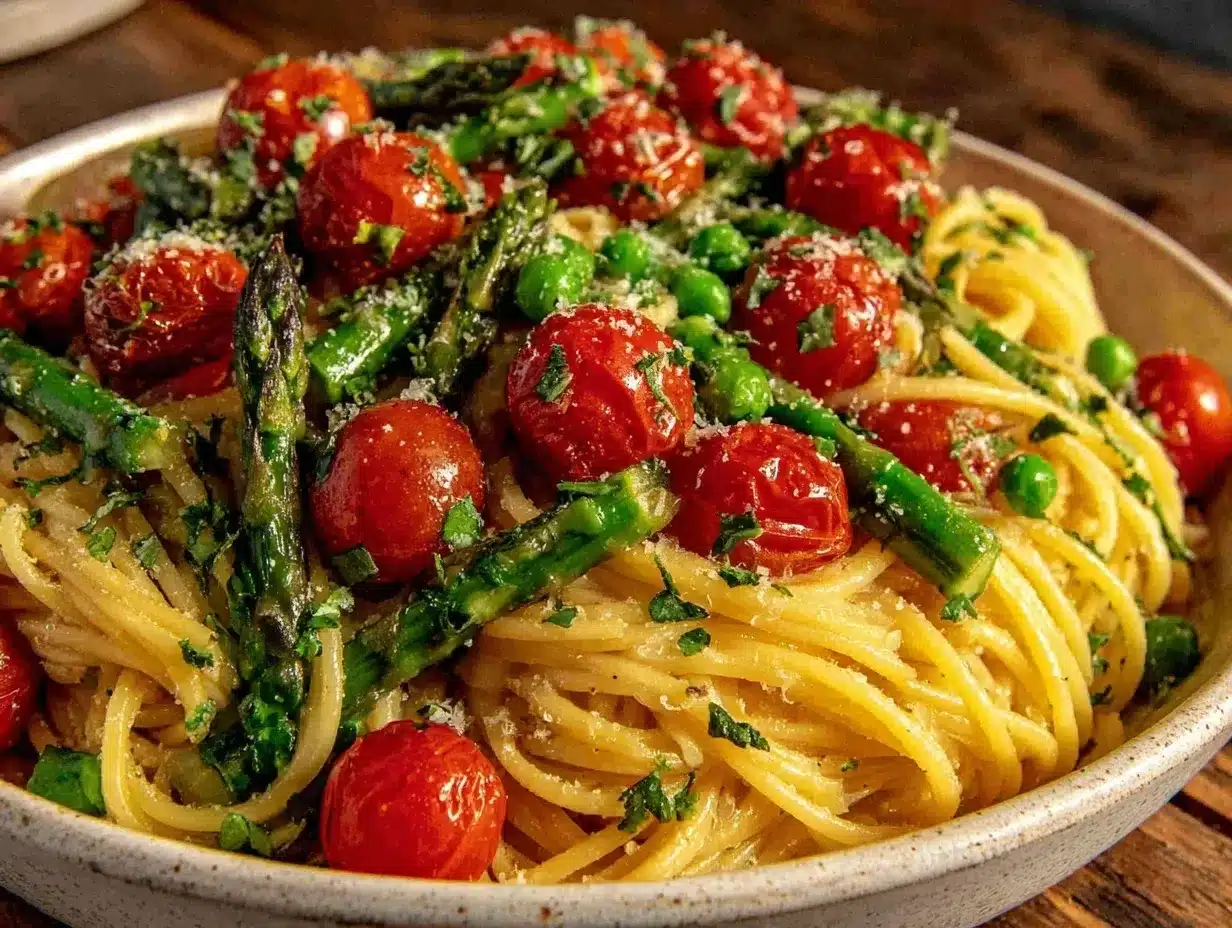
- Cook the pasta: Bring a large pot of salted water to a boil. Add 12 oz (340 g) pasta and cook until al dente, about 8-10 minutes depending on the shape. Reserve 1 cup (240 ml) of pasta water before draining and set aside.
- Sauté aromatics: While pasta cooks, heat 3 tablespoons of olive oil over medium heat in a large skillet. Add minced garlic and 1 finely chopped shallot. Cook for 2-3 minutes until fragrant and translucent, stirring frequently to avoid burning.
- Cook vegetables: Add 1 bunch of trimmed asparagus (cut into 1-inch pieces), 1 cup sugar snap peas, and 2 sliced baby zucchini. Sauté for 4-5 minutes until tender-crisp. Toss in 1 cup halved cherry tomatoes and cook an additional 2 minutes until they soften slightly but still hold shape.
- Combine pasta and veggies: Add drained pasta to the skillet with vegetables. Pour in reserved pasta water, starting with ½ cup (120 ml), and toss to coat. The starch in the water helps create a light sauce that clings beautifully.
- Add herbs and seasoning: Stir in chopped basil and parsley (about 2 tablespoons each), lemon zest, and juice from 1 lemon. Season generously with salt, freshly ground black pepper, and red pepper flakes if using. Toss everything to combine.
- Finish with cheese: Remove from heat and stir in ½ cup (50 g) grated Parmesan cheese until melted and creamy. Taste and adjust seasoning as needed.
- Serve: Plate immediately, topping with extra Parmesan and a drizzle of olive oil for shine.
Note: If the sauce feels too thick, add a splash more pasta water to loosen. The key is to keep everything lively and bright, not heavy.
I learned that the hard way when I overdid the cheese once—lesson learned! Now I keep it balanced, just enough to bring creaminess without hiding the fresh vegetable flavors.
Cooking Tips & Techniques
Cooking a primavera that shines means paying attention to timing and texture. Here are some tips I’ve picked up over the years:
- Don’t overcook the veggies: Spring vegetables are best when tender but still crisp. They should have a fresh snap, so keep your sauté time short.
- Use reserved pasta water wisely: This starchy water is magic for tying together pasta and sauce. Add little by little to avoid a watery sauce.
- Fresh herbs last-minute: Add herbs off the heat to preserve their bright flavor and color.
- Season gradually: Salt the pasta water, then taste and season again after combining everything. It helps avoid an overly salty dish.
- Multitask: Start sautéing vegetables while pasta cooks to save time.
Once, I tried blending cottage cheese into the sauce for creaminess but found it changed the texture more than I liked—so I stick to Parmesan for that perfect melt. When I’m pressed for time, I grab frozen peas from my creamy rigatoni alla vodka days, and it works like a charm.
Variations & Adaptations
This recipe is flexible, and you can easily swap or add ingredients to suit your taste or dietary needs:
- Protein boost: Add grilled chicken, shrimp, or chickpeas for a heartier meal.
- Seasonal swaps: Use fresh peas or fava beans in spring, summer squash in warmer months, or roasted root vegetables in fall.
- Gluten-free: Substitute regular pasta with gluten-free pasta or spiralized zucchini noodles for a low-carb option.
- Vegan version: Replace Parmesan with nutritional yeast or vegan cheese, and use olive oil or vegan butter.
- Spice it up: Add a pinch of smoked paprika or a dash of chili oil for a flavor twist.
Personally, I’ve tried tossing in some toasted pine nuts for crunch or swapping basil with fresh mint for a refreshing summer vibe. It’s all about what feels right in the moment.
Serving & Storage Suggestions
Serve this primavera warm, right off the stove, to best enjoy the bright herb flavors and crisp-tender vegetables. A drizzle of extra virgin olive oil and a sprinkle of fresh Parmesan really bring it home.
Pair it with a light salad or a crusty loaf of bread. It also complements dishes like my creamy spaghetti carbonara for a cozy Italian-inspired meal.
Leftovers keep well in the refrigerator for 2-3 days. Reheat gently in a skillet with a splash of water or olive oil to prevent drying out. The flavors actually deepen overnight, making it a great make-ahead option. Avoid microwaving directly without adding moisture, or the pasta may get gummy.
Nutritional Information & Benefits
This recipe is not only delicious but packed with nutrients. A typical serving provides approximately:
| Calories | 350-400 kcal |
|---|---|
| Protein | 12-15 g |
| Carbohydrates | 50-55 g |
| Fat | 10-12 g (mostly healthy fats from olive oil) |
| Fiber | 6-8 g |
The fresh spring vegetables contribute vitamins A and C, antioxidants, and fiber, supporting digestion and immunity. Olive oil adds heart-healthy monounsaturated fats. This pasta is naturally low in added sugars and can be adapted for gluten-free or vegan diets.
As someone mindful of wholesome eating, I appreciate how this dish balances nutrition with comfort—a meal that truly feels good inside and out.
Conclusion
Fresh Spring Vegetable Primavera with Herbs is the kind of recipe that surprises you by how good simple can taste. It’s quick enough for a weeknight but special enough to share with friends. The fresh veggies, bright herbs, and comforting pasta come together with minimal fuss but maximum flavor.
Feel free to tweak the herbs, veggies, or cheese to fit what you love most. That’s the beauty of this primavera—it’s a fresh canvas for your kitchen creativity.
Honestly, it’s a recipe I turn to whenever I want something light yet satisfying, and I’m confident it’ll become one of your favorites too. If you try it out, I’d love to hear how you make it yours!
FAQs about Fresh Spring Vegetable Primavera with Herbs
Can I use other types of pasta for this primavera?
Absolutely! Penne, farfalle, linguine, or even whole wheat pasta all work well. Just adjust the cooking time according to the package instructions.
How do I keep the vegetables crisp and not soggy?
Cook the veggies over medium heat for a short time—about 4-5 minutes—to keep them tender but still crisp. Avoid overcrowding the pan to ensure even cooking.
Can I prepare this dish ahead of time?
You can prep the vegetables and herbs in advance, but it’s best to cook and combine everything just before serving for optimal freshness and texture.
What can I substitute for Parmesan cheese?
For a dairy-free option, nutritional yeast works well for a cheesy flavor. Vegan Parmesan alternatives are also great.
Is this recipe suitable for meal prepping?
Yes, it reheats nicely and flavors develop over time. Store in an airtight container in the fridge for up to 3 days and reheat gently with a splash of water or olive oil.
Pin This Recipe!
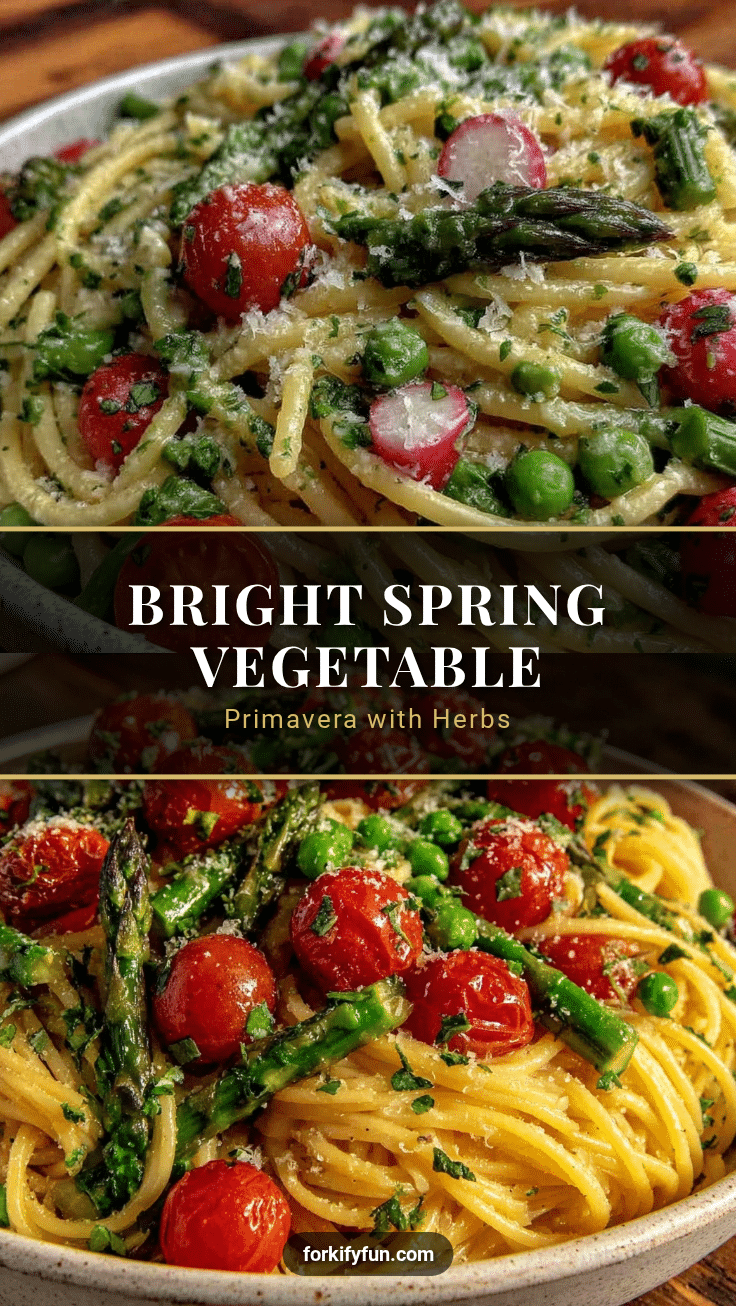
Fresh Spring Vegetable Primavera with Herbs
A quick, easy, and healthy pasta primavera featuring fresh spring vegetables and herbs, perfect for a light and flavorful weeknight meal.
- Prep Time: 10 minutes
- Cook Time: 15 minutes
- Total Time: 25 minutes
- Yield: 4 servings 1x
- Category: Main Course
- Cuisine: Italian
Ingredients
- 12 oz (340 g) pasta (penne, linguine, or farfalle)
- 3 tablespoons extra virgin olive oil
- 3 cloves garlic, minced
- 1 medium shallot, finely chopped (or small yellow onion)
- 1 bunch asparagus (about 1 lb / 450 g), trimmed and cut into 1-inch pieces
- 1 cup (150 g) sugar snap peas or green peas
- 2 medium baby zucchini, sliced into thin half-moons
- 1 cup (150 g) cherry tomatoes, halved
- 2 tablespoons chopped fresh basil
- 2 tablespoons chopped fresh parsley
- Zest and juice of 1 lemon
- ½ cup (50 g) grated Parmesan cheese, plus extra for serving
- Salt and freshly ground black pepper, to taste
- Red pepper flakes, optional pinch
Instructions
- Bring a large pot of salted water to a boil. Add 12 oz (340 g) pasta and cook until al dente, about 8-10 minutes depending on the shape. Reserve 1 cup (240 ml) of pasta water before draining and set aside.
- While pasta cooks, heat 3 tablespoons of olive oil over medium heat in a large skillet. Add minced garlic and finely chopped shallot. Cook for 2-3 minutes until fragrant and translucent, stirring frequently to avoid burning.
- Add trimmed asparagus pieces, sugar snap peas, and sliced baby zucchini. Sauté for 4-5 minutes until tender-crisp. Toss in halved cherry tomatoes and cook an additional 2 minutes until they soften slightly but still hold shape.
- Add drained pasta to the skillet with vegetables. Pour in reserved pasta water, starting with ½ cup (120 ml), and toss to coat, creating a light sauce.
- Stir in chopped basil and parsley, lemon zest, and lemon juice. Season generously with salt, freshly ground black pepper, and red pepper flakes if using. Toss everything to combine.
- Remove from heat and stir in ½ cup (50 g) grated Parmesan cheese until melted and creamy. Taste and adjust seasoning as needed.
- Plate immediately, topping with extra Parmesan and a drizzle of olive oil for shine.
Notes
Do not overcook the vegetables; keep them tender but crisp. Use reserved pasta water gradually to create a silky sauce. Add herbs off the heat to preserve flavor and color. Adjust cheese amount to keep balance and avoid overpowering fresh vegetable flavors. For vegan version, substitute Parmesan with nutritional yeast or vegan cheese.
Nutrition
- Serving Size: 1 serving (about 1/4
- Calories: 375
- Sugar: 6
- Sodium: 350
- Fat: 11
- Saturated Fat: 2
- Carbohydrates: 53
- Fiber: 7
- Protein: 14
Keywords: spring vegetable primavera, herb pasta, healthy pasta recipe, easy pasta primavera, vegetarian pasta, quick dinner, fresh herbs, spring vegetables