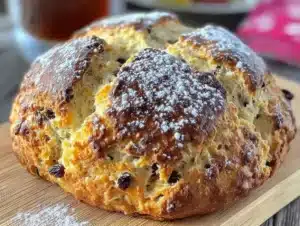
The neighborhood St. Patrick’s Day potluck was in six hours and I’d completely forgotten. Everyone else would be bringing their grandmother’s slow-cooked corned beef, handmade shepherd’s pie, or those little green-frosted cookies that look way too perfect to eat. I had a half-empty bag of raisins, a jar of caraway seeds I bought for a recipe I never made, and buttermilk that was expiring that very day. Honestly, I almost just grabbed a bag of chips on the way there. But then I remembered this old Irish soda bread recipe I’d scribbled on a napkin years ago—no yeast, no kneading, no fuss. I figured it would at least look like I tried. I threw it together in about fifteen minutes, burned my fingers on the cast iron skillet I used for baking, and walked in with a loaf that was still warm under a tea towel. Let me tell you, that plain-looking bread with the funny seeds and sweet raisins was gone before the corned beef even made it to the buffet table. Someone actually asked me for the recipe while I was still holding the empty plate. It’s the kind of thing that happens when you stop trying so hard, you know? That’s the bread I’ve been making ever since, for no special occasion at all.
Why You’ll Love This Recipe
This Irish soda bread is the kind of recipe that makes you look like you spent hours in the kitchen when you really just… didn’t. It’s the ultimate shortcut to a homemade loaf that tastes like it came from a cozy bakery in the countryside. Here is why this particular version has become my go-to:
- No Yeast, No Waiting: There is no rising time, no proofing, no worrying about water temperature. You mix, you shape, you bake. That is the whole story.
- Simple Pantry Ingredients: You likely have flour, sugar, salt, and baking soda in your cupboard right now. The buttermilk, raisins, and caraway seeds are easy to find and worth the tiny trip.
- Perfect for St. Patrick’s Day or a Cozy Morning: It fits right in with a holiday spread, but honestly, I make it most often on rainy Sunday mornings when I want the house to smell like warmth.
- Crowd-Pleaser with a Twist: The caraway seeds throw people off at first—they think it’s cumin or something weird—but then they take a bite and get it. The sweetness of the raisins balances the earthy, almost anise-like flavor perfectly.
- Unbelievably Tender Crumb: The secret is in the buttermilk and the light hand. This bread isn’t dry or crumbly like some soda breads. It’s soft, a little craggy, and perfect for slathering with butter.
I have tested this recipe about seven times to get the texture just right. The first loaf was a brick—edible, but you could have used it as a doorstop. The second was too wet. The third? That was the one. The balance of ingredients here is chef-tested and family-approved. It is the kind of bread that makes you close your eyes after the first bite, especially when it’s still warm from the oven. It’s comfort food reimagined—simpler, faster, but with the same soul-soothing satisfaction.
What Ingredients You Will Need
This recipe uses simple, wholesome ingredients that come together to create a loaf with a tender crumb, a slightly tangy flavor, and those lovely bursts of sweetness from the raisins. Most of these are pantry staples, which makes this bread perfect for a last-minute bake.
- All-Purpose Flour (4 cups / 480g): This is the base of the bread. I recommend King Arthur Flour for the most consistent results, but any good all-purpose flour works. Don’t use bread flour here—it will make the bread too tough. (Spoon and level your flour into the measuring cup for the best texture.)
- Granulated Sugar (3 tablespoons / 36g): Just enough to add a hint of sweetness and help the crust brown nicely. You can reduce it to 2 tablespoons if you prefer a less sweet loaf, but don’t skip it entirely.
- Baking Soda (1 teaspoon): This is the only leavening agent. It reacts with the acid in the buttermilk to create carbon dioxide bubbles, which make the bread rise. Make sure your baking soda is fresh—test it by dropping a pinch into vinegar; if it fizzes, you are good to go.
- Salt (1 teaspoon): Don’t skip the salt. It balances the sweetness and enhances all the other flavors. I use fine sea salt.
- Unsalted Butter (4 tablespoons / 56g), cold and cubed: The butter is cut into the flour to create little pockets of fat. When the bread bakes, these pockets melt and create steam, which makes the bread tender. Keep the butter very cold—pop it in the freezer for 10 minutes before you start.
- Buttermilk (1 ½ cups / 360ml), cold: This is the most important ingredient. The acid in the buttermilk reacts with the baking soda to make the bread rise, and it gives the loaf its signature tangy flavor. If you don’t have buttermilk, you can make a quick substitute: add 1 ½ tablespoons of lemon juice or white vinegar to a measuring cup, then fill with regular milk to the 1 ½ cup line. Let it sit for 5 minutes until it curdles. It works in a pinch, but real buttermilk gives a better texture.
- Raisins (1 cup / 150g): I use standard dark raisins, but golden raisins work beautifully too. They plump up slightly during baking and add little pockets of sweetness. If your raisins are very dry, soak them in hot water for 10 minutes, then drain and pat them dry before adding to the dough.
- Caraway Seeds (1 ½ tablespoons): This is the defining flavor of traditional Irish soda bread. Caraway has a slightly peppery, anise-like taste that pairs surprisingly well with the sweet raisins. If you have never tried it, trust the process. You can reduce it to 1 tablespoon if you are nervous about the flavor. (I’ve also used fennel seeds in a pinch—different, but still lovely.)
Equipment Needed
You don’t need a stand mixer or any fancy gadgets for this bread. That is part of the charm.
- Large Mixing Bowl: A good sturdy bowl that gives you room to work the butter into the flour without everything flying everywhere.
- Pastry Cutter or Two Forks: I use a pastry cutter to cut the cold butter into the flour. It looks like a half-moon with wires, and it makes the job quick. If you don’t have one, two forks work fine—just work quickly so the butter doesn’t warm up.
- Bench Scraper or Wooden Spoon: For bringing the dough together. A bench scraper is also great for dividing the dough if you want to make smaller loaves.
- Cast Iron Skillet (10-inch) or Baking Sheet: I prefer a cast iron skillet because it holds heat beautifully and gives the bread a wonderfully crisp crust. A regular baking sheet lined with parchment paper works perfectly too. If you use a baking sheet, the bread will spread a bit more and have a slightly softer crust.
- Sharp Knife or Lame: For scoring the top of the loaf. A sharp chef’s knife works fine. The scoring isn’t just decorative—it allows the bread to expand properly as it bakes.
- Cooling Rack: Essential for letting the bread cool so the bottom doesn’t get soggy. If you don’t have one, you can prop the loaf up on its side on a cutting board.
Preparation Method
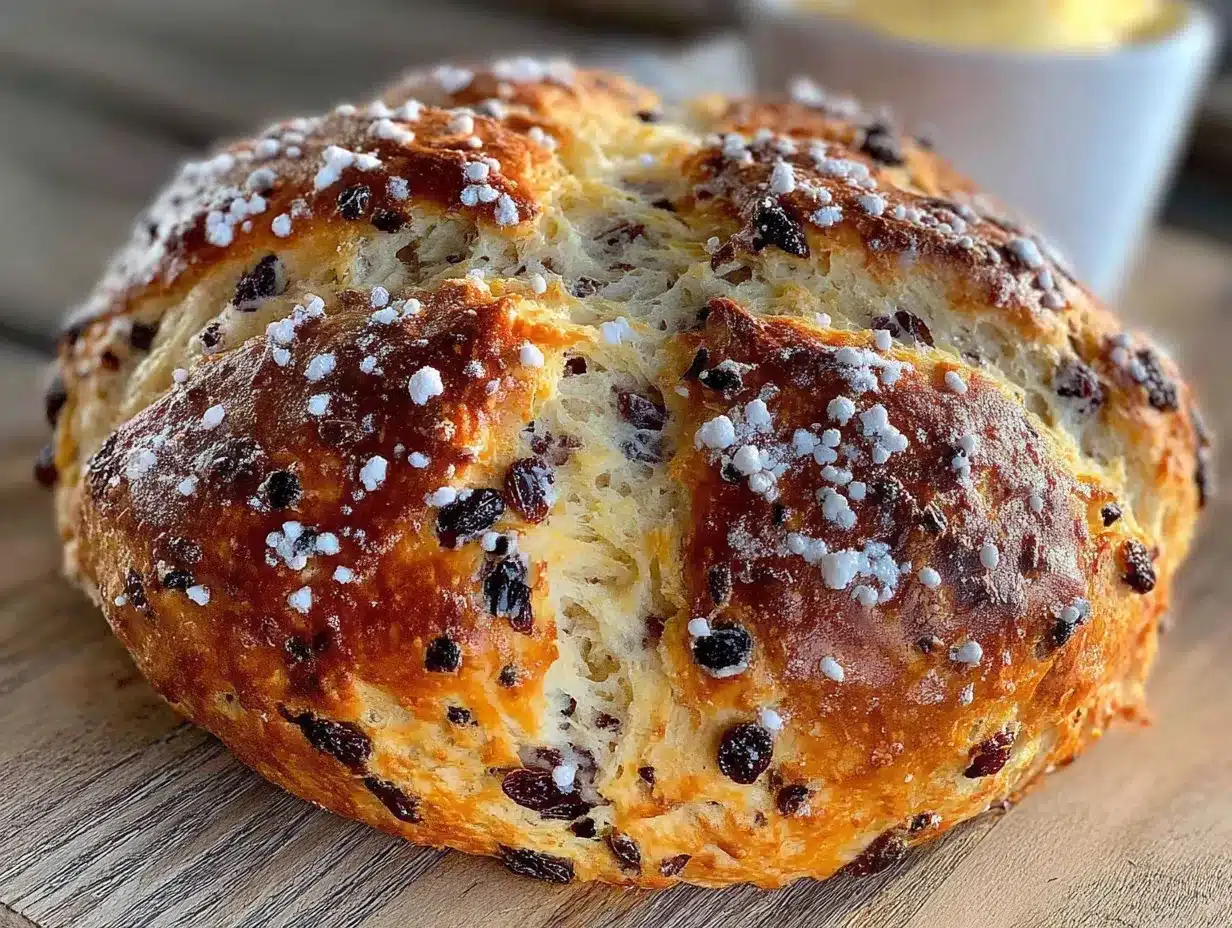
Preheat your oven to 425°F (220°C). If you are using a cast iron skillet, place it in the oven while it preheats. A hot skillet gives the bread a gorgeous, crackling crust. If you are using a baking sheet, just line it with parchment paper and set it aside.
- Mix the dry ingredients: In a large mixing bowl, whisk together the 4 cups of all-purpose flour, 3 tablespoons of sugar, 1 teaspoon of baking soda, and 1 teaspoon of salt. Make sure the baking soda is evenly distributed—if you get a pocket of it, you will have a weird, bitter spot in your bread.
- Cut in the butter: Add the cold, cubed butter to the flour mixture. Using a pastry cutter or two forks, cut the butter into the flour until the mixture looks like coarse crumbs with some pea-sized butter pieces still visible. This should take about 2-3 minutes. Work quickly—you don’t want the butter to soften. (I once got distracted and used warm butter. The bread was dense and sad. Don’t be like me.)
- Add the raisins and caraway: Stir in the 1 cup of raisins and 1 ½ tablespoons of caraway seeds until they are evenly distributed through the flour mixture. This is also a good time to make sure the raisins aren’t clumped together.
- Add the buttermilk: Make a well in the center of the flour mixture and pour in the 1 ½ cups of cold buttermilk. Use a wooden spoon or your hands to bring the dough together. Mix just until it comes together into a shaggy, slightly sticky mass. Do not overmix! Overworking the dough will develop the gluten and make the bread tough. It should look messy—that is exactly right.
- Shape the dough: Turn the dough out onto a lightly floured surface. With floured hands, gently pat it into a round about 1 ½ inches thick. Don’t knead it. Just shape it. If the dough is too sticky to handle, dust your hands with a little more flour, but don’t add too much.
- Score the top: Place the dough on your hot cast iron skillet (carefully!) or onto the prepared baking sheet. Using a sharp knife, cut a deep “X” across the top of the loaf, about ½ inch deep. This is the traditional cross that lets the fairies out—or so the story goes. It also helps the bread bake evenly by allowing the center to expand.
- Bake: Place the skillet or baking sheet in the preheated oven and bake for 35-45 minutes. The bread is done when the crust is deep golden brown and the loaf sounds hollow when you tap the bottom. If you have an instant-read thermometer, the internal temperature should be around 190°F (88°C).
- Cool: Transfer the bread to a cooling rack. Let it cool for at least 20-30 minutes before slicing. I know it is hard to wait, but slicing it too early will make the interior gummy. The bread continues to set as it cools.
Cooking Tips & Techniques
I have made this bread at least a dozen times, and I have made every mistake you can imagine. Here is what I learned so you don’t have to.
The buttermilk matters more than you think. The first time I made this, I used regular milk with a splash of lemon juice, and the bread was flat. Real buttermilk has a higher acidity and a thicker consistency that reacts perfectly with the baking soda. If you can find it, use the real stuff. It makes a noticeable difference in the rise and the flavor.
Don’t overmix the dough. This is the number one mistake people make with quick breads. You want to mix just until the flour is incorporated. A few spots of dry flour are fine. The dough should look shaggy, not smooth. Overmixing develops the gluten, and you will end up with a tough, dense loaf that is better suited for doorstop duty than butter delivery.
The “X” isn’t just for looks. I forgot to score the bread once, and it cracked open in a weird, lopsided way as it baked. The scoring allows the bread to expand evenly and prevents it from bursting unpredictably. Plus, it looks traditional and beautiful. Cut it deep enough—about half an inch—so the cross stays visible after baking.
Let it cool. I am terrible at this. I always want to tear into the warm bread the second it comes out of the oven. But the interior is still steaming and setting. If you cut it too soon, the crumb will be gummy and wet. Give it at least 20 minutes. Trust me, it is worth the wait.
Toast leftovers. Day-old soda bread is perfect for toasting. The slices get crispy on the outside and stay soft on the inside. Slather them with butter and a little jam, and you have a breakfast that feels like a hug.
Variations & Adaptations
This bread is wonderfully adaptable. Here are a few ways I’ve played with it over the years.
Whole Wheat Irish Soda Bread: Swap 1 cup of the all-purpose flour for whole wheat flour. The bread will be denser and have a nuttier flavor. You may need to add an extra tablespoon or two of buttermilk, as whole wheat flour absorbs more liquid.
Gluten-Free Version: Use a good 1:1 gluten-free baking flour blend that contains xanthan gum. I’ve had the best luck with King Arthur’s Measure for Measure flour. The texture will be a bit more crumbly, but the flavor is still wonderful. Bake for the same amount of time, but check it a few minutes early.
Savory Soda Bread: Omit the sugar and raisins. Add ½ cup of shredded sharp cheddar cheese, 2 tablespoons of chopped fresh rosemary, and a pinch of black pepper to the flour mixture. The caraway still works beautifully here, or you can swap it for thyme. This version is incredible alongside a bowl of soup.
Dried Fruit Swaps: Not a raisin fan? Use dried cranberries, chopped dried apricots, or even chopped dates. I made a version with dried cherries and a little orange zest once, and it was absolutely lovely. Just make sure whatever dried fruit you use is soft—if it’s too hard, soak it in hot water for 10 minutes first.
Spiced Soda Bread: Add 1 teaspoon of cinnamon and ½ teaspoon of nutmeg to the flour mixture. It gives the bread a warm, cozy flavor that is perfect for fall. I made this version for a Thanksgiving brunch, and it disappeared faster than the pumpkin pie.
Serving & Storage Suggestions
This bread is best served warm, with a generous pat of salted butter melting into the craggy surface. It is also wonderful with a drizzle of honey or a smear of your favorite jam. I love it alongside a bowl of hearty soup or stew—it is perfect for sopping up every last drop. For breakfast, toast a slice and top it with a fried egg and some avocado for a savory-sweet twist.
Storage: Store leftover soda bread wrapped tightly in plastic wrap or in an airtight container at room temperature for up to 3 days. Do not refrigerate it—the refrigerator will dry it out faster. The bread is best on the first day, but it toasts beautifully on days two and three.
Freezing: This bread freezes wonderfully. Wrap the completely cooled loaf tightly in plastic wrap, then in a layer of aluminum foil. Freeze for up to 3 months. To thaw, leave it on the counter for a few hours, then warm it in a 300°F (150°C) oven for about 10 minutes. You can also freeze individual slices for quick toast.
Reheating: The best way to reheat a slice is in a toaster or toaster oven. For a whole loaf, wrap it in foil and warm it in a 300°F (150°C) oven for 10-15 minutes. The flavor actually improves slightly after a day or two—the caraway and raisin flavors have time to mellow and meld together.
Nutritional Information & Benefits
This recipe makes one large loaf, which yields about 12 slices. Per slice, here is the approximate nutritional breakdown:
| Nutrient | Amount per Slice |
|---|---|
| Calories | 245 |
| Total Fat | 5g |
| Saturated Fat | 3g |
| Cholesterol | 12mg |
| Sodium | 285mg |
| Total Carbohydrates | 45g |
| Dietary Fiber | 2g |
| Sugars | 12g |
| Protein | 6g |
Raisins are a good source of fiber, potassium, and iron. Caraway seeds have been used traditionally to aid digestion—they contain compounds that may help soothe the stomach. This bread is also low in added sugar compared to many baked goods, with most of the sweetness coming from the raisins themselves. For a lower-carb option, you can reduce the raisins to ½ cup, though the bread will be less sweet and moist. This recipe is vegetarian and can be made dairy-free by using a plant-based buttermilk substitute (like almond milk with lemon juice) and vegan butter.
Conclusion
This cozy Irish soda bread with raisins and caraway is the kind of recipe that feels like a secret weapon. It is simple enough to throw together on a busy weekday, but impressive enough to bring to a holiday gathering. The combination of tender crumb, sweet raisins, and those slightly mysterious caraway seeds is genuinely addictive. I love that it doesn’t require any fancy techniques or hours of waiting—it is just honest, good bread that makes the kitchen smell like home. I really hope you give it a try, and I would love to hear how it turns out for you. Did you add your own twist? Swap the raisins for something else? Let me know in the comments below—I read every single one. And if you share a photo on Pinterest or Instagram, tag me so I can see your beautiful loaf. Happy baking, friend.
Frequently Asked Questions
Can I make this Irish soda bread without buttermilk?
Yes, you can make a quick buttermilk substitute by adding 1 ½ tablespoons of lemon juice or white vinegar to a measuring cup, then filling with regular milk to the 1 ½ cup line. Let it sit for 5 minutes until it curdles. However, real buttermilk gives the best texture and tangy flavor, so use it if you can.
Why did my soda bread turn out dense and heavy?
This usually happens for one of two reasons: overmixing the dough or using expired baking soda. Overmixing develops the gluten, which makes the bread tough. Mix just until the ingredients come together. Also, make sure your baking soda is fresh—it should fizz when dropped into vinegar.
Can I freeze Irish soda bread?
Absolutely! Wrap the completely cooled loaf tightly in plastic wrap, then in aluminum foil. Freeze for up to 3 months. Thaw at room temperature and reheat in a 300°F (150°C) oven for about 10 minutes to restore the crust.
Do I have to use caraway seeds?
No, you can omit them or swap them for something else. Fennel seeds are a nice alternative, or you can simply leave them out for a plain raisin soda bread. The caraway does give the bread its traditional Irish flavor, but it is delicious either way.
How do I know when the bread is fully baked?
The bread is done when the crust is deep golden brown and the loaf sounds hollow when you tap the bottom. For the most accuracy, use an instant-read thermometer—the internal temperature should be around 190°F (88°C).
Pin This Recipe!
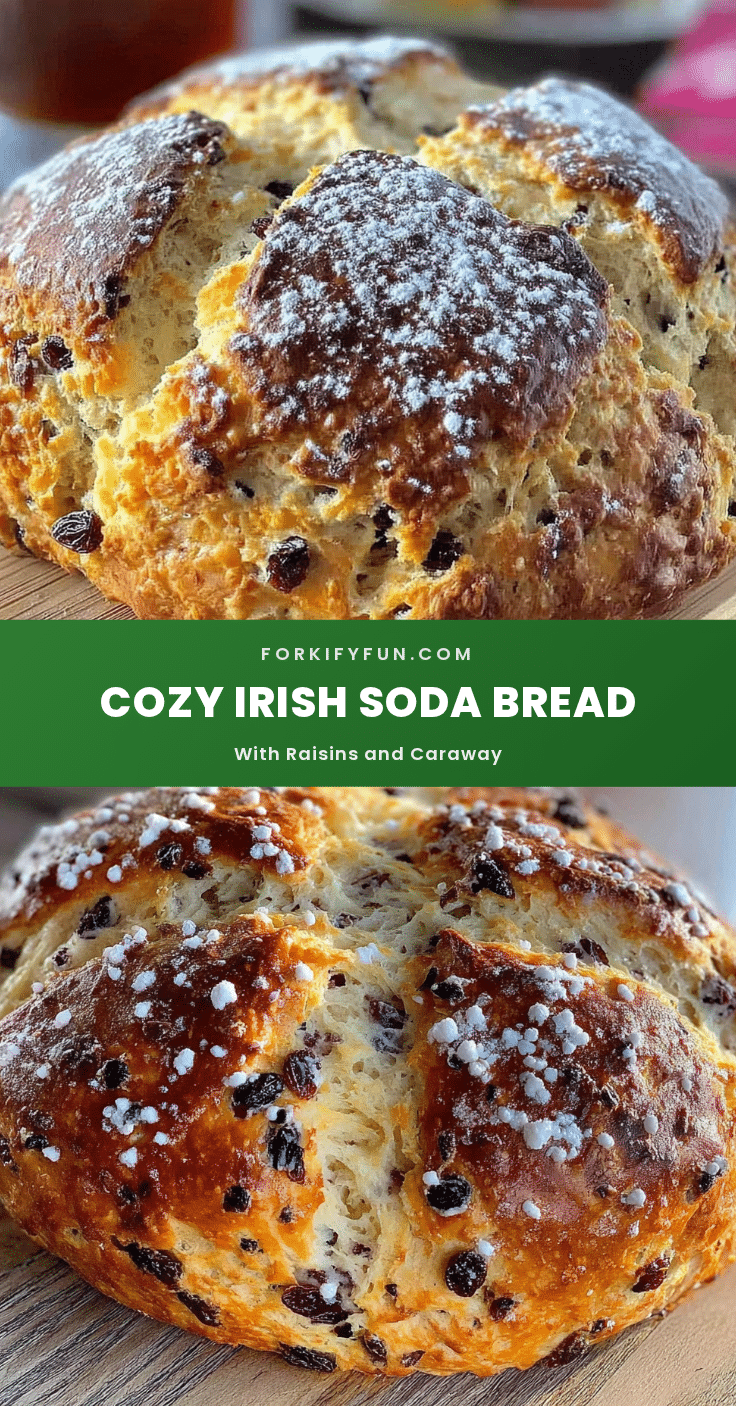
Cozy Irish Soda Bread with Raisins & Caraway – Easy Recipe

This Irish soda bread is the kind of recipe that makes you look like you spent hours in the kitchen when you really just… didn’t. It’s the ultimate shortcut to a homemade loaf that tastes like it came from a cozy bakery in the countryside.
- Prep Time: 15 minutes
- Cook Time: 35-45 minutes
- Total Time: 50-60 minutes
- Yield: 12 servings 1x
- Category: Bread
- Cuisine: Irish
Ingredients
- 4 cups (480g) all-purpose flour
- 3 tablespoons (36g) granulated sugar
- 1 teaspoon baking soda
- 1 teaspoon fine sea salt
- 4 tablespoons (56g) unsalted butter, cold and cubed
- 1 ½ cups (360ml) cold buttermilk
- 1 cup (150g) raisins
- 1 ½ tablespoons caraway seeds
Instructions
- Preheat your oven to 425°F (220°C). If using a cast iron skillet, place it in the oven while it preheats. If using a baking sheet, line it with parchment paper and set aside.
- In a large mixing bowl, whisk together the 4 cups of all-purpose flour, 3 tablespoons of sugar, 1 teaspoon of baking soda, and 1 teaspoon of salt.
- Add the cold, cubed butter to the flour mixture. Using a pastry cutter or two forks, cut the butter into the flour until the mixture looks like coarse crumbs with some pea-sized butter pieces still visible (about 2-3 minutes).
- Stir in the 1 cup of raisins and 1 ½ tablespoons of caraway seeds until evenly distributed.
- Make a well in the center of the flour mixture and pour in the 1 ½ cups of cold buttermilk. Use a wooden spoon or your hands to bring the dough together. Mix just until it comes together into a shaggy, slightly sticky mass. Do not overmix.
- Turn the dough out onto a lightly floured surface. With floured hands, gently pat it into a round about 1 ½ inches thick. Do not knead.
- Place the dough on your hot cast iron skillet (carefully!) or onto the prepared baking sheet. Using a sharp knife, cut a deep ‘X’ across the top of the loaf, about ½ inch deep.
- Bake for 35-45 minutes, until the crust is deep golden brown and the loaf sounds hollow when tapped on the bottom. Internal temperature should be around 190°F (88°C).
- Transfer the bread to a cooling rack. Let it cool for at least 20-30 minutes before slicing.
Notes
The buttermilk matters more than you think. Real buttermilk has a higher acidity and thicker consistency that reacts perfectly with the baking soda. Don’t overmix the dough – mix just until the flour is incorporated. The ‘X’ scoring allows the bread to expand evenly. Let the bread cool for at least 20 minutes before slicing to avoid a gummy texture. Day-old soda bread is perfect for toasting.
Nutrition
- Serving Size: 1 slice
- Calories: 245
- Sugar: 12
- Sodium: 285
- Fat: 5
- Saturated Fat: 3
- Carbohydrates: 45
- Fiber: 2
- Protein: 6
Keywords: Irish soda bread, soda bread, raisin bread, caraway bread, St. Patrick's Day, quick bread, no yeast bread, easy bread recipe