I had refused eggnog for years. I’m talking a solid decade of wrinkling my nose at the stuff every holiday season, insisting it was too thick, too sweet, too… something. My husband would buy a carton every December, drink exactly one glass, and then the rest would sit in the fridge until I finally poured it down the drain in mid-January with a smug little “I told you so” feeling. Then last Christmas Eve, I found him standing at the open refrigerator door at 11 PM, spoon in hand, eating something directly out of a baking dish. He didn’t even look guilty. He just pointed his spoon at me and said, “Don’t judge it until you try it.” It was this casserole. And honestly? I ate three bites standing right there in my pajamas.
The whole thing started because my neighbor, Carol, had dropped off a pan of this casserole earlier that day as a holiday surprise. She’s one of those cooks who never uses a recipe—she just knows. I was skeptical because, well, eggnog. But by the time I found my husband hunched over the dish like it held the secrets to the universe, my curiosity got the better of me. That first bite was warm and custardy with this perfectly soft-yet-crisp top that had me questioning every single thing I thought I knew about holiday breakfasts. The eggnog wasn’t overpowering at all—it just added this rich, cozy depth that regular milk or cream could never pull off. I mean, I had spent years avoiding something this good. Let me tell you, that realization hits different when you’re standing in a dark kitchen at midnight on Christmas Eve.
This recipe stayed with me because it solved a problem I didn’t know I had. You know that feeling when you want a holiday breakfast that feels special but you also want to sleep in and not spend the morning slaving over a hot stove? This is that recipe. It comes together in about 15 minutes the night before, then you just pop it in the oven the next morning and let it do its thing. The house fills with this incredible aroma of nutmeg and vanilla and warm bread, and everyone wanders into the kitchen in their slippers asking what’s for breakfast. It’s become our new Christmas morning tradition, and honestly, I’m a little embarrassed it took me so long to come around.
Why You’ll Love This Recipe
Let me just say this upfront—I’ve tested this casserole six times in the last year to get it exactly right. Six times. My family has been very willing participants, and I can tell you with absolute confidence that this version is the one. It’s the kind of breakfast that makes people close their eyes after the first bite, and I’m not exaggerating. Here’s why this recipe stands out from every other French toast casserole you’ve seen:
- Quick & Easy : The prep takes about 15 minutes the night before. That’s it. You throw everything together, cover it, and go to bed. The next morning, you bake it and breakfast is ready with zero fuss.
- Simple Ingredients : You probably already have most of these in your kitchen. Bread, eggs, eggnog, butter, sugar, and spices. No weird specialty items or expensive ingredients.
- Perfect for Holiday Mornings : Christmas morning, New Year’s brunch, or even a cozy weekend when you want something special without waking up at dawn to cook.
- Crowd-Pleaser : I’ve served this to kids, adults, eggnog lovers, and eggnog skeptics (like my former self). It disappears every single time without fail.
- Unbelievably Delicious : The texture is what gets everyone. The top gets this beautiful golden crispness while the inside stays soft, custardy, and almost pudding-like. It’s comfort food at its finest.
What makes this version different from the rest is the technique. Instead of just pouring eggnog over bread and hoping for the best, I found that whisking the eggnog with a couple of extra egg yolks creates a richer, creamier custard that sets up perfectly. The bread soaks up every drop without getting mushy, and the topping—a simple mix of butter, brown sugar, and a touch of cinnamon—creates that irresistible crunchy crust. It’s comfort food reimagined: faster, easier, but with the same soul-soothing satisfaction that makes you want to curl up on the couch with a warm blanket and a second helping.
What Ingredients You Will Need
This recipe uses simple, wholesome ingredients that come together to create something truly special. Most of these are pantry staples, especially during the holiday season, which makes this casserole an easy last-minute breakfast or brunch option. Let me walk you through each ingredient and why it matters.
- 1 loaf (about 14-16 ounces) of sturdy bread : I prefer a French baguette or brioche for this recipe. The key is using bread that’s a day or two old—fresh bread gets too soggy. If your bread is fresh, just cube it and let it sit out on a baking sheet for an hour or two to dry out slightly. Challah works beautifully too.
- 2 cups eggnog : This is the star of the show, so use a good quality eggnog. I recommend Hood or Southern Comfort brand for consistent results. Don’t use light or low-fat eggnog—the full-fat version gives you that rich, creamy custard texture. (Trust me on this one, I learned the hard way.)
- 4 large eggs : These provide structure and help the custard set properly. Make sure they’re at room temperature so they blend smoothly into the eggnog.
- 2 large egg yolks : This is my secret trick. The extra yolks add richness and create that almost-pudding-like texture that makes this casserole so special. Save the whites for an omelet or scramble the next morning.
- 1/2 cup granulated sugar : Just enough sweetness to balance the richness of the eggnog. You can reduce this to 1/3 cup if you prefer a less sweet casserole.
- 1 teaspoon vanilla extract : Use pure vanilla extract if you have it. It enhances all the warm flavors without being overpowering.
- 1/2 teaspoon ground nutmeg : Freshly grated nutmeg is amazing here if you have it, but pre-ground works perfectly fine. Eggnog already has nutmeg in it, so this just reinforces that cozy flavor.
- 1/2 teaspoon ground cinnamon : Adds warmth and depth. I like to use Ceylon cinnamon for a milder, sweeter flavor, but regular cinnamon works great.
- 1/4 teaspoon salt : Don’t skip this. A little salt balances the sweetness and makes all the flavors pop.
For the topping:
- 1/2 cup (1 stick) unsalted butter, melted : This creates that gorgeous golden crust on top. Use unsalted so you can control the salt level.
- 1/2 cup packed light brown sugar : The molasses in brown sugar adds a deeper, more caramel-like sweetness than white sugar. It also helps create that crunchy top.
- 1 teaspoon ground cinnamon : For that final layer of warmth and spice.
- Pinch of nutmeg : Because you can never have too much nutmeg in an eggnog recipe.
A quick note on substitutions: If you’re dairy-free, you can use a good quality dairy-free eggnog (Califia Farms makes a decent one) and substitute the butter with melted coconut oil or a plant-based butter. The texture will be slightly different, but it still works. For a gluten-free version, use a sturdy gluten-free bread like Udi’s or Canyon Bakehouse—just make sure it’s a day or two old so it holds up to the custard.
Equipment Needed
The beauty of this recipe is that you don’t need any fancy equipment. Here’s what you’ll need:
- A 9×13-inch baking dish : This is the perfect size for this recipe. Glass or ceramic works best because they distribute heat evenly. I use a Pyrex dish and it’s never let me down.
- A large mixing bowl : For whisking together the custard mixture. Any large bowl will do.
- A whisk : A standard wire whisk is perfect for getting the eggs and eggnog smooth and well-combined.
- A sharp knife and cutting board : For cubing the bread. A serrated bread knife works best for crusty loaves.
- Plastic wrap or aluminum foil : For covering the casserole overnight. Plastic wrap creates a tighter seal, but foil works fine too.
- A small bowl : For mixing the topping ingredients.
If you don’t have a 9×13 dish, you can use two smaller dishes (like 8×8 or 9×9) and adjust the baking time slightly—start checking at 35 minutes. I’ve also made this in a 10-inch cast iron skillet, which gives the edges an extra-crispy crust that’s absolutely fantastic. Just keep an eye on it because cast iron holds heat differently.
Preparation Method
This recipe is all about that overnight soak, so the actual hands-on time is minimal. Here’s exactly how to do it:
- Cube the bread (5 minutes) : Cut your loaf of bread into 1-inch cubes. Don’t stress about making them perfect—rustic, uneven pieces are fine and actually create more interesting texture. Spread the cubes evenly in your greased 9×13 baking dish. If your bread is fresh, let the cubes sit out for an hour or so to dry slightly. I’ve forgotten this step before and it still turned out fine, just a little softer.
- Make the custard (5 minutes) : In your large mixing bowl, whisk together the 2 cups of eggnog, 4 large eggs, 2 egg yolks, 1/2 cup granulated sugar, 1 teaspoon vanilla extract, 1/2 teaspoon nutmeg, 1/2 teaspoon cinnamon, and 1/4 teaspoon salt. Whisk until everything is smooth and well-combined. The mixture should look pale and creamy. Don’t over-whisk—you don’t want to incorporate too much air.
- Pour and soak (2 minutes) : Pour the custard mixture evenly over the bread cubes. Gently press down on the bread with a spatula or your hands to make sure every piece gets soaked. Some bread cubes will poke up above the custard—that’s fine, they’ll get crispy on top. Cover the dish tightly with plastic wrap and refrigerate for at least 4 hours, but overnight is best (8-12 hours).
- Make the topping (3 minutes) : In a small bowl, mix together the 1/2 cup melted butter, 1/2 cup packed brown sugar, 1 teaspoon cinnamon, and a pinch of nutmeg. Stir until it forms a thick, paste-like mixture. Set this aside at room temperature. Don’t refrigerate it or it will harden.
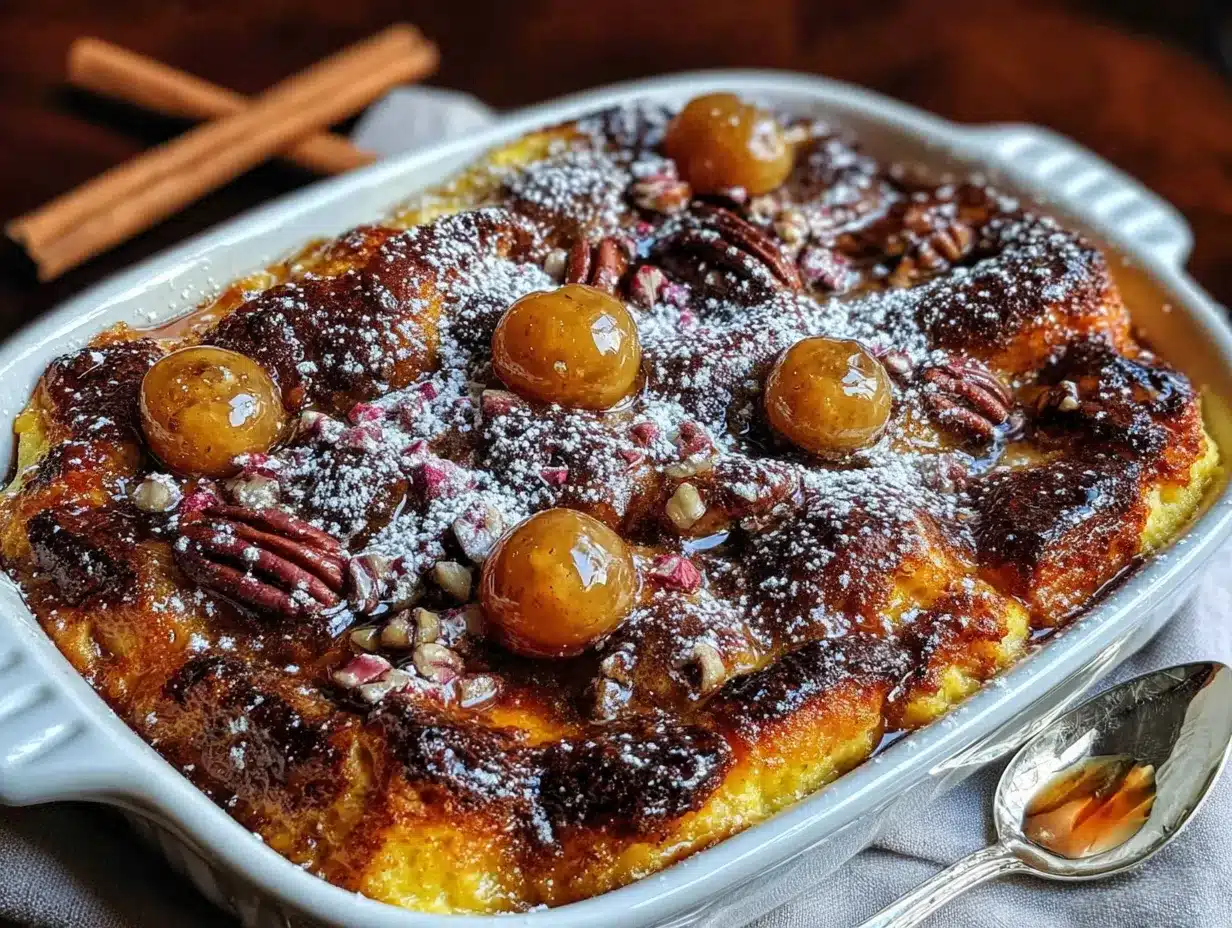
- Bake the casserole (40-45 minutes) : The next morning, preheat your oven to 350°F (175°C). Take the casserole out of the fridge and let it sit on the counter while the oven heats up—about 15 minutes. Remove the plastic wrap and spoon the topping mixture evenly over the top of the casserole. It will look like clumps of buttery brown sugar, and that’s exactly what you want. Bake for 40-45 minutes, until the top is golden brown and the center is set but still slightly jiggly. A knife inserted in the center should come out mostly clean. The smell at this point is absolutely intoxicating.
- Rest and serve (10 minutes) : Let the casserole rest for 10 minutes before cutting into it. This allows the custard to finish setting up. Serve warm, with a drizzle of maple syrup if you like, or just as is. I personally think it’s sweet enough without syrup, but my husband adds it every time.
A few notes from my testing: If the top is getting too dark before the center is set, loosely tent the dish with foil for the last 10-15 minutes of baking. Every oven runs a little different, so start checking at 35 minutes. The casserole is done when the edges are golden and the center is just barely set—it will continue to cook as it rests.
Cooking Tips & Techniques
I’ve made every mistake you can imagine with this recipe so you don’t have to. Here’s what I’ve learned:
Use day-old bread. This is probably the most important tip. Fresh bread soaks up the custard too quickly and turns into mush. Day-old bread has a slightly drier texture that absorbs the custard gradually and holds its shape better. If you only have fresh bread, cube it and spread it on a baking sheet in a 300°F oven for 5-7 minutes to dry it out slightly. I learned this the hard way when my first attempt came out more like bread pudding soup than French toast casserole.
Don’t skip the overnight soak. I know it’s tempting to cut corners and just let it sit for an hour, but trust me on this one. The overnight soak allows the custard to penetrate every nook and cranny of the bread, creating that perfectly uniform, creamy texture throughout. Four hours is the absolute minimum, but overnight is where the magic happens.
Let it rest before baking. Taking the casserole out of the fridge 15 minutes before baking helps it cook more evenly. If you put a cold glass dish into a hot oven, you risk thermal shock (and possibly cracking your dish). Plus, the custard will cook more evenly if it’s not ice cold.
Watch the topping. The butter-brown sugar topping can burn if you’re not careful. If you notice it getting too dark around the edges before the center is set, tent the dish with foil. I’ve had a few batches where the edges got a little too toasty while the middle was still jiggly, and foil saved the day.
Use a serrated knife to cut. When you’re ready to serve, use a serrated knife to cut clean squares. A straight-edged knife will squish the soft interior. This is one of those small details that makes a big difference in presentation.
Variations & Adaptations
This recipe is wonderfully adaptable. Here are some variations I’ve tried and loved:
Bourbon Eggnog French Toast Casserole : Add 2 tablespoons of bourbon or dark rum to the custard mixture. The alcohol cooks off during baking, leaving behind a warm, complex flavor that pairs beautifully with the eggnog. I made this for a New Year’s brunch and it was a huge hit.
Cranberry Orange Version : Add 1/2 cup dried cranberries and the zest of one orange to the bread cubes before pouring the custard. The tartness of the cranberries cuts through the richness of the eggnog perfectly. This has become my go-to for Christmas morning.
Pecan Praline Topping : Add 1/2 cup chopped pecans to the brown sugar topping mixture. The nuts toast as the casserole bakes, adding a wonderful crunch and nutty flavor. My sister-in-law requests this version every year.
Dairy-Free Adaptation : Use a high-quality dairy-free eggnog (I’ve had good luck with Califia Farms) and substitute the butter with melted coconut oil. The texture will be slightly less rich, but it’s still delicious. I tested this for a friend with dairy sensitivities and she gave it two thumbs up.
Gluten-Free Version : Use a sturdy gluten-free bread. I recommend Udi’s or Canyon Bakehouse, and make sure it’s a day or two old. The gluten-free bread absorbs liquid differently, so you might need to add an extra 10 minutes to the baking time. Check for doneness with a knife test.
Serving & Storage Suggestions
This casserole is best served warm, fresh from the oven. The contrast between the crispy, buttery top and the soft, custardy interior is at its peak within the first 15 minutes out of the oven. Here’s how I like to serve it:
Cut into squares and serve on warm plates. A drizzle of pure maple syrup is lovely, but honestly, this casserole is sweet enough on its own. A dollop of whipped cream or a dusting of powdered sugar makes it extra special for holiday brunch. For a savory contrast, serve it alongside crispy bacon or breakfast sausage—the salty-sweet combination is irresistible.
For beverages: A hot cup of coffee or spiced tea is perfect. For a holiday brunch, mimosas or a sparkling cider cocktail pair beautifully with the warm, spiced flavors of the casserole.
Storage: Leftovers can be stored in an airtight container in the refrigerator for up to 3 days. The texture will soften slightly, but it’s still delicious. To reheat, place individual portions in the microwave for 30-45 seconds, or reheat the entire dish in a 300°F oven for 10-15 minutes. I actually love the leftovers cold, straight from the fridge—it’s like a weirdly delicious bread pudding situation.
Freezing: This casserole freezes beautifully. Bake it completely, let it cool, then wrap it tightly in plastic wrap and foil. Freeze for up to 3 months. To serve, thaw overnight in the refrigerator and reheat in a 300°F oven until warmed through. I’ve done this for holiday prep and it works like a charm.
Nutritional Information & Benefits
Let’s be real—this is a holiday indulgence, and I’m not here to pretend otherwise. But here’s the breakdown if you’re curious:
Per serving (based on 12 servings):
- Calories: approximately 380-420
- Protein: 10-12g
- Carbohydrates: 45-50g
- Fat: 18-22g
- Fiber: 2-3g
- Sugar: 25-30g
On the plus side, eggs provide high-quality protein and essential nutrients like choline and vitamin D. Eggnog contains calcium and vitamin A from the dairy. And if you use whole grain bread, you’ll get a bit more fiber and complex carbohydrates. I like to think of this as a breakfast that fills you up and keeps you satisfied through a long morning of opening presents or visiting with family.
Dietary considerations: This recipe contains gluten, dairy, and eggs. For gluten-free and dairy-free adaptations, see the variations section above. If you’re watching your sugar intake, you can reduce the sugar in the custard to 1/3 cup and skip the maple syrup at serving time.
Conclusion
Look, I spent years being wrong about eggnog. I judged it without really giving it a chance, and I almost missed out on one of my favorite holiday breakfasts because of it. This casserole changed my mind, and I think it might change yours too—whether you’re an eggnog lover or a skeptic like I was. It’s warm, cozy, and feels like a hug in food form, which is exactly what you want on a cold winter morning.
I’d love to hear how this turns out for you. Did you try any of the variations? Did you add your own twist? Drop a comment below and let me know—I read every single one and I’m always looking for new ideas to test out in my kitchen. And if you make this for a holiday brunch, tag me in your photos. There’s nothing that makes me happier than seeing this recipe bring a little warmth to someone else’s table. Now go make some memories, and don’t forget to save a piece for yourself before it disappears!
Frequently Asked Questions
Can I use store-bought eggnog or should I make my own?
Store-bought eggnog works perfectly for this recipe. I actually prefer it because the consistency is consistent (pun intended) and it saves time. Just use a good quality brand—avoid the light or low-fat versions as they don’t provide the same rich texture.
Can I assemble this casserole the same day I want to serve it?
Yes, but you’ll need at least 4 hours for the bread to properly soak up the custard. The longer it sits, the better the texture will be. If you’re in a rush, use slightly stale bread and press the cubes down gently to help them absorb the custard faster.
Can I use a different type of bread?
Absolutely. Brioche, challah, French bread, or even a sturdy sourdough all work well. The key is using a bread that’s dense enough to hold up to the custard without falling apart. Avoid soft sandwich bread—it will turn into mush.
How do I prevent the topping from burning?
Keep an eye on the casserole during the last 10-15 minutes of baking. If the topping is getting too dark, loosely tent the dish with aluminum foil. Every oven runs differently, so check at 35 minutes and adjust from there.
Can I make this casserole dairy-free?
Yes! Use a dairy-free eggnog (Califia Farms makes a good one) and substitute the butter with melted coconut oil or a plant-based butter. The texture will be slightly less rich, but it’s still delicious. Just note that dairy-free eggnog may have a thinner consistency, so the custard might be a bit looser.
Pin This Recipe!
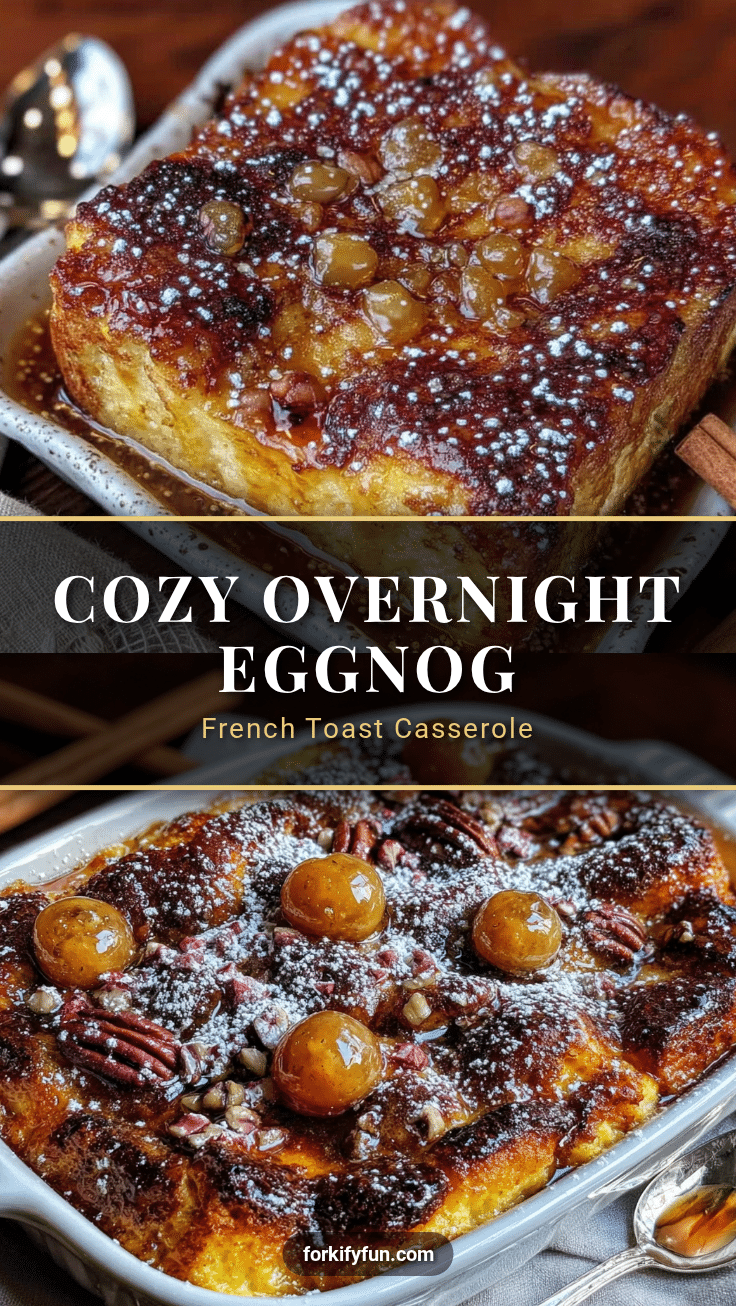
Cozy Overnight Eggnog French Toast Casserole
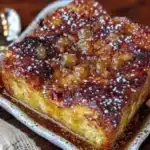
A rich, custardy French toast casserole made with eggnog, perfect for holiday mornings. Prep it the night before and bake it in the morning for a warm, cozy breakfast that will convert even the biggest eggnog skeptics.
- Prep Time: 15 minutes
- Cook Time: 45 minutes
- Total Time: 8 hours 15 minutes (including overnight soak)
- Yield: 12 servings 1x
- Category: Breakfast / Brunch
- Cuisine: American
Ingredients
- 1 loaf (14-16 ounces) sturdy bread (French baguette, brioche, or challah), cut into 1-inch cubes
- 2 cups eggnog (full-fat, not light or low-fat)
- 4 large eggs, at room temperature
- 2 large egg yolks
- 1/2 cup granulated sugar
- 1 teaspoon vanilla extract
- 1/2 teaspoon ground nutmeg
- 1/2 teaspoon ground cinnamon
- 1/4 teaspoon salt
- 1/2 cup (1 stick) unsalted butter, melted
- 1/2 cup packed light brown sugar
- 1 teaspoon ground cinnamon (for topping)
- Pinch of nutmeg (for topping)
Instructions
- Cube the bread into 1-inch pieces and spread evenly in a greased 9×13-inch baking dish. If bread is fresh, let cubes sit out for an hour to dry slightly.
- In a large mixing bowl, whisk together eggnog, eggs, egg yolks, granulated sugar, vanilla extract, nutmeg, cinnamon, and salt until smooth and creamy.
- Pour the custard mixture evenly over the bread cubes. Gently press down on the bread to ensure all pieces are soaked. Cover tightly with plastic wrap and refrigerate for at least 4 hours, preferably overnight (8-12 hours).
- In a small bowl, mix together melted butter, brown sugar, cinnamon, and a pinch of nutmeg until it forms a thick paste. Set aside at room temperature.
- The next morning, preheat oven to 350°F (175°C). Remove casserole from fridge and let sit on counter for 15 minutes. Remove plastic wrap and spoon the topping mixture evenly over the casserole.
- Bake for 40-45 minutes, until the top is golden brown and the center is set but still slightly jiggly. A knife inserted in the center should come out mostly clean. If topping browns too quickly, tent with foil for the last 10-15 minutes.
- Let the casserole rest for 10 minutes before serving. Serve warm, optionally with maple syrup, whipped cream, or a dusting of powdered sugar.
Notes
Use day-old bread for best texture. The overnight soak is essential for the custard to fully penetrate the bread. If the topping browns too quickly, tent with foil. Let the casserole rest before serving to allow the custard to set. For a dairy-free version, use dairy-free eggnog and substitute butter with melted coconut oil. For a gluten-free version, use sturdy gluten-free bread and add 10 minutes to baking time.
Nutrition
- Serving Size: 1 square (1/12 of ca
- Calories: 400
- Sugar: 28
- Sodium: 320
- Fat: 20
- Saturated Fat: 11
- Carbohydrates: 47
- Fiber: 2
- Protein: 11
Keywords: eggnog french toast casserole, overnight french toast, holiday breakfast, christmas breakfast, eggnog casserole, french toast bake