My brother-in-law, Mark, swore he hated turkey. For years. Every Thanksgiving, he’d load his plate with mashed potatoes, stuffing, and exactly one sliver of white meat, drowned in gravy, just to be polite. He’d make a show of chewing it, then push the rest around his plate. “Dry,” he’d mutter. “Always dry.” I believed him, honestly. I thought maybe turkey just wasn’t his thing.
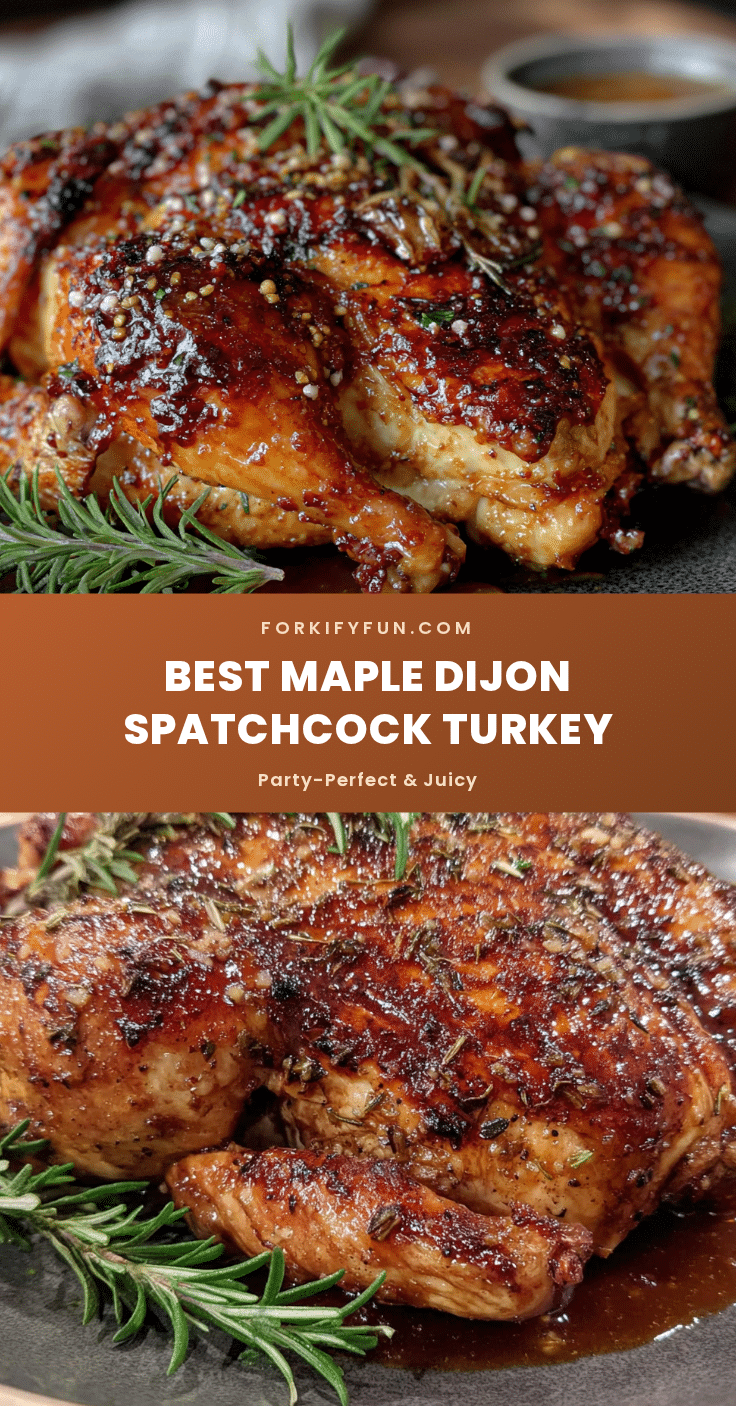
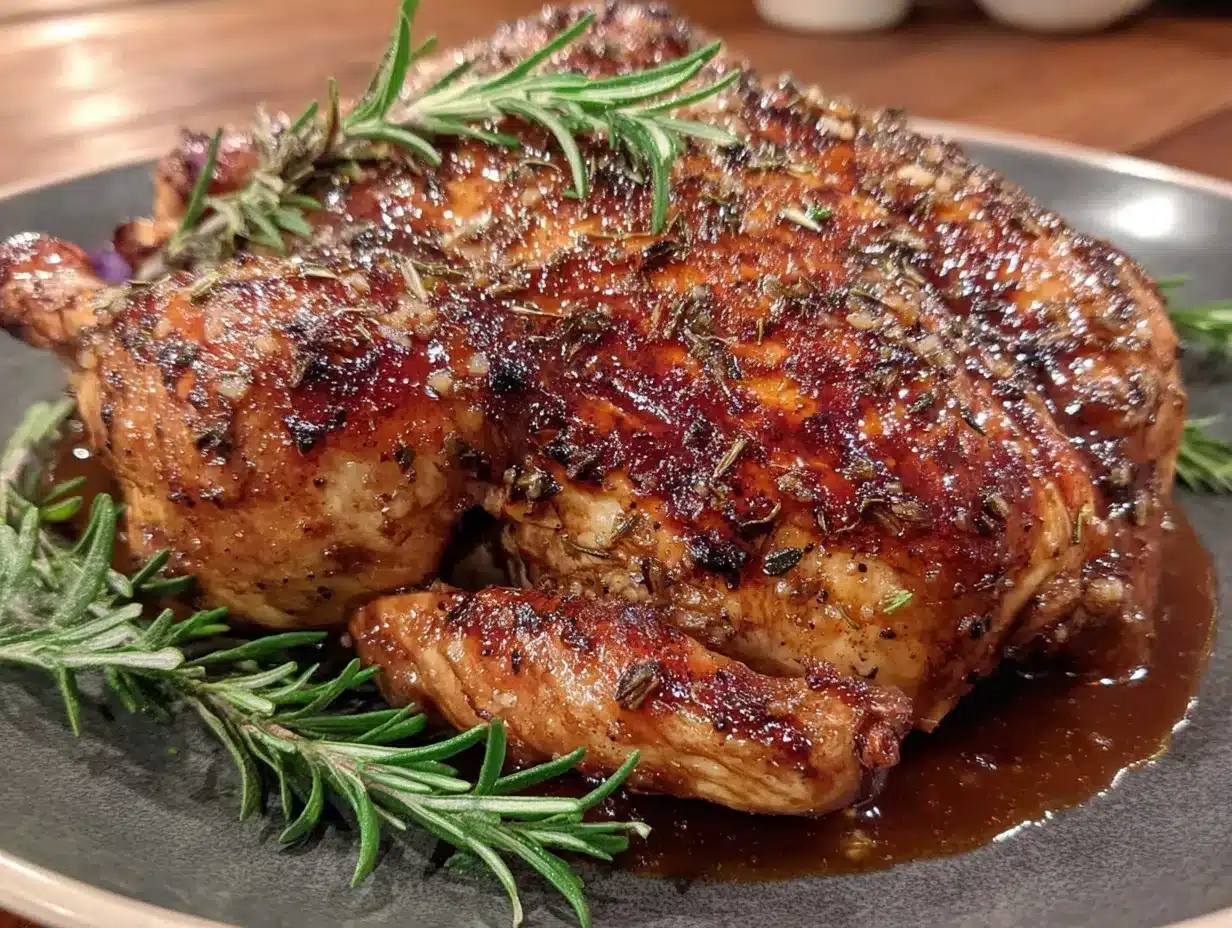
Then last Christmas, I made this maple dijon spatchcock turkey for a small gathering. I didn’t even tell him what it was. I just put the platter on the table—golden, glistening, the skin lacquered like stained glass. He took a slice. Then another. I caught him sneaking a third piece straight from the carving board when he thought nobody was looking. “Okay,” he said, with a mouthful, “this is different.” Different is an understatement. It was a conversion.
That moment—catching someone in the act of proving themselves wrong—stuck with me. It’s not about changing minds on purpose. It’s about making something so good it does the convincing for you. And that’s exactly what this recipe does. It’s the kind of dish that quiets the table, not with awkwardness, but with the sound of forks hitting plates a little too fast. You know that feeling when you’re hosting and you just know the main course is going to steal the show? This is it. This is the bird that makes you look like a culinary genius without breaking a sweat. Let me tell you, it’s a game-changer for any host who wants to impress without the stress.
Why You’ll Love This Recipe
Let’s be real—cooking a whole turkey can be intimidating. It’s big, it’s expensive, and the stakes are high when you’ve got a table full of hungry guests. But this maple dijon spatchcock turkey is different. It’s built for the host who wants to shine. Here’s why this is the only turkey recipe you’ll ever need for a crowd:
- Incredibly Juicy, Every Time: Spatchcocking (removing the backbone and flattening the bird) ensures even, fast cooking. No more dry breast meat while you wait for the thighs to catch up. The maple dijon glaze locks in moisture and adds a tangy-sweet crust that’s pure magic.
- Party-Ready in Half the Time: A traditional turkey can take 4+ hours. This one roasts in about 75-90 minutes for a 12-14 pound bird. That’s a game-changer when you’re juggling side dishes and appetizers.
- Simple, Show-Stopping Ingredients: Maple syrup, Dijon mustard, a few pantry spices. That’s it. No weird ingredients, no complicated rubs. You probably have everything in your fridge right now.
- Built to Impress a Crowd: The presentation is stunning. The flattened bird roasts up with crispy, bronzed skin that looks like it belongs on a magazine cover. It’s the centerpiece that makes your guests ask for the recipe before they even finish their first bite.
- Foolproof for Hosts: I’ve tested this recipe a dozen times—for Thanksgiving, Christmas, and casual Sunday dinners with friends. It works every single time. The glaze caramelizes beautifully, the meat stays tender, and you get to enjoy the party instead of hiding in the kitchen.
This isn’t just another turkey recipe. It’s the one that makes you close your eyes after the first bite and forget every dry, disappointing bird you’ve ever had. It’s comfort food, reimagined for the modern host—faster, easier, and more impressive than anything you’ve tried before.
What Ingredients You Will Need
This recipe uses simple, high-impact ingredients to deliver bold flavor and that signature sticky-sweet glaze. Most of these are pantry staples, which makes it perfect for last-minute hosting. Here’s what you’ll need:
For the Turkey
- 1 whole turkey (12-14 pounds), thawed if frozen – Look for a fresh, air-chilled turkey if you can find one. It roasts up with crispier skin. I personally prefer Bell & Evans or Butterball for consistent quality.
- 2 tablespoons olive oil or melted butter – Butter adds richness; olive oil keeps it lighter. Both work beautifully.
- 1 teaspoon kosher salt, plus more for seasoning – Don’t skimp here. Salt is what makes the skin crispy and the meat flavorful.
- 1 teaspoon black pepper, freshly ground
- 1 teaspoon garlic powder
- 1 teaspoon smoked paprika – Adds a subtle smoky depth that pairs perfectly with the maple.
For the Maple Dijon Glaze
- 1/2 cup pure maple syrup – Not pancake syrup. Real maple syrup makes a difference in flavor and caramelization. Grade A dark amber is my go-to.
- 1/4 cup Dijon mustard – I recommend Grey Poupon or Maille for that sharp, tangy kick. Avoid yellow mustard here—it’s too mild.
- 2 tablespoons whole-grain mustard – Adds texture and little pops of mustard seed. Optional but highly recommended.
- 2 tablespoons apple cider vinegar – Balances the sweetness and helps the glaze stick.
- 2 cloves garlic, minced
- 1 tablespoon fresh rosemary, finely chopped – Or 1 teaspoon dried rosemary.
- 1 tablespoon fresh thyme leaves – Or 1 teaspoon dried thyme.
- 1/4 teaspoon cayenne pepper (optional) – For a tiny kick of heat that cuts through the sweetness.
For the Aromatics (Optional, but Worth It)
- 1 lemon, halved – Adds brightness to the pan drippings.
- 4-5 sprigs fresh rosemary and thyme – For the roasting pan, not the bird.
- 1 onion, quartered – Adds flavor to the pan juices for gravy.
- 1 cup chicken or turkey broth – Pour into the pan to keep drippings from burning.
Substitution Notes: If you’re out of Dijon, you can use spicy brown mustard—it’ll be a little less smooth but still delicious. For a gluten-free option, double-check your mustard and broth labels. Want it less sweet? Reduce maple syrup to 1/3 cup and add an extra tablespoon of mustard.
Equipment Needed
You don’t need a professional kitchen to pull this off, but a few key tools make the job much easier. Here’s what I use every time:
- Sharp kitchen shears – This is the most important tool for spatchcocking. A good pair of shears (like OXO or Wusthof) makes cutting through the backbone a breeze. Dull shears will just frustrate you.
- Large rimmed baking sheet – A half-sheet pan (18×13 inches) is perfect. It catches all the drippings and gives you room to roast the bird flat. I use Nordic Ware—they don’t warp.
- Wire rack – Placing the turkey on a rack inside the pan allows air to circulate underneath, ensuring crispy skin all over. If you don’t have one, you can skip it, but the skin won’t be as crisp.
- Meat thermometer – Instant-read or probe-style. This is non-negotiable for perfectly cooked turkey. I love my Thermapen, but a simple digital thermometer works fine.
- Basting brush or silicone brush – For applying the glaze. A brush gives you even coverage without tearing the skin.
- Cutting board (large) – You’ll need a sturdy board for carving. Wood or plastic both work.
- Chef’s knife – A sharp 8-inch knife makes carving clean and easy.
Budget-Friendly Tip: Don’t have kitchen shears? Use a sharp chef’s knife to cut along both sides of the backbone. It takes a little more effort, but it works. And if you don’t have a wire rack, just roast the turkey directly on the baking sheet—just flip it halfway through for even browning.
Preparation Method
This method breaks down the entire process from start to finish. Follow these steps, and you’ll have a juicy, golden turkey that’s the star of any gathering.
Step 1: Thaw and Prep the Turkey
If your turkey is frozen, thaw it in the refrigerator. Allow 24 hours for every 4-5 pounds. A 12-14 pound bird needs about 3 days. Once thawed, remove the giblets and neck from the cavity (save them for gravy if you like). Pat the turkey completely dry with paper towels—inside and out. Moisture is the enemy of crispy skin.
Step 2: Spatchcock the Turkey
Place the turkey breast-side down on your cutting board. Using sharp kitchen shears, cut along one side of the backbone, from the tail to the neck. Repeat on the other side to remove the backbone entirely. Save the backbone for stock or discard it. Flip the turkey over and press down firmly on the breastbone with the heels of your hands until you hear a crack. The bird should lie flat. Don’t worry if it’s not perfectly symmetrical—it just needs to be relatively flat for even cooking.
Step 3: Season and Rest
Place the spatchcocked turkey on the wire rack set inside your baking sheet. Rub the olive oil (or melted butter) all over the skin, making sure to get under the legs and wings. In a small bowl, mix the salt, pepper, garlic powder, and smoked paprika. Sprinkle this seasoning evenly over both sides of the turkey. Let it rest uncovered in the refrigerator for at least 1 hour, or up to 24 hours. This dry brine helps the skin dry out further, leading to maximum crispiness.
Step 4: Make the Maple Dijon Glaze
While the turkey rests, make the glaze. In a small bowl, whisk together the maple syrup, Dijon mustard, whole-grain mustard, apple cider vinegar, minced garlic, rosemary, thyme, and cayenne (if using). Set aside at room temperature. The glaze will thicken slightly as it sits.
Step 5: Preheat and Prepare the Pan
About 30 minutes before roasting, preheat your oven to 425°F (220°C). Remove the turkey from the fridge and let it come to room temperature. Add the lemon halves, herb sprigs, and quartered onion to the baking sheet around the turkey. Pour the chicken broth into the pan, being careful not to pour it over the bird. The broth will keep the drippings from burning and create a base for gravy.
Step 6: Roast the Turkey
Place the turkey in the oven and roast for 30 minutes. After 30 minutes, reduce the oven temperature to 375°F (190°C). Using a basting brush, apply a generous layer of the maple dijon glaze over the entire surface of the turkey. Return to the oven and continue roasting, basting with the glaze every 20 minutes. Total roasting time is about 75-90 minutes for a 12-14 pound bird, but always rely on temperature, not time.
Sensory Cue: Around the 45-minute mark, you should smell the maple caramelizing—it’s a sweet, savory aroma that fills the kitchen. The skin will start turning a deep amber color. If it’s browning too quickly, tent the turkey loosely with foil.
Step 7: Check for Doneness
Insert a meat thermometer into the thickest part of the thigh, avoiding the bone. The turkey is done when it reaches 165°F (74°C) in the breast and 175-180°F (80-82°C) in the thigh. If you don’t have a probe thermometer, start checking at 70 minutes. The juices should run clear when you pierce the thigh with a knife.
Step 8: Rest and Carve
Once the turkey reaches the correct temperature, remove it from the oven. Transfer it to a cutting board and let it rest, uncovered, for 15-20 minutes. This allows the juices to redistribute. Do not skip this step—carving too early will result in dry meat. While it rests, strain the pan drippings into a fat separator or a bowl for gravy.
Personal Tip: I once forgot to rest the turkey because guests were hungry. It was a disaster. The juices ran all over the cutting board, and the meat was dry. Learn from my mistake. Set a timer and walk away.
Step 9: Carve and Serve
To carve, remove the legs and thighs first, then slice the breast meat against the grain. Arrange on a platter and drizzle with any remaining pan juices or a little extra glaze. Serve immediately.
Cooking Tips & Techniques
After making this turkey more times than I can count, I’ve picked up a few tricks that make a real difference. Here’s what I wish someone had told me:
- Don’t skip the dry brine. Letting the seasoned turkey sit uncovered in the fridge is the secret to crispy skin. Even an hour helps. Overnight is better. The salt draws out moisture, then reabsorbs into the meat, seasoning it from the inside out while the skin dries.
- Use a thermometer, not a timer. I’ve had turkeys that looked done at 60 minutes and others that took 90. Ovens vary. Trust the thermometer. It’s the only way to guarantee juicy meat.
- Glaze in layers, not all at once. If you dump all the glaze on at the beginning, it will burn. Applying it in thin layers every 20 minutes builds that gorgeous, sticky crust without scorching.
- Keep the pan juices for gravy. After roasting, pour the pan drippings into a saucepan. Whisk in a tablespoon of flour or cornstarch slurry, simmer until thickened, and season with salt and pepper. It’s the best gravy you’ll ever make—sweet, tangy, and savory all at once.
- Multitask like a pro. While the turkey rests, pop your side dishes in the oven to reheat or finish. The turkey holds its temperature well for up to 30 minutes if loosely tented with foil.
- My biggest failure: I once forgot to pat the turkey dry. The skin came out soggy and pale. It still tasted good, but it looked sad. Don’t skip the drying step—it’s the difference between “okay” and “wow.”
Variations & Adaptations
This recipe is flexible. Here are a few ways to make it your own, depending on your crowd or dietary needs:
- Spicy Maple Dijon: Add 1-2 tablespoons of sriracha or chipotle paste to the glaze for a smoky, spicy kick. It’s incredible with the sweet maple.
- Herb-Infused Version: Swap the rosemary and thyme for sage and marjoram. It gives the turkey a more traditional, Thanksgiving-style flavor profile.
- Honey Mustard Alternative: Replace maple syrup with honey for a different kind of sweetness. The glaze will be a little thicker and less smoky, but still delicious.
- Smoked Turkey Variation: If you have a smoker, spatchcock the turkey and smoke it at 275°F (135°C) for 3-4 hours, basting with the glaze every hour. The smoky flavor with the maple dijon is next-level.
- Dietary Adaptations: For a paleo or Whole30 version, use ghee or avocado oil instead of butter, and ensure your mustard and broth are compliant. The recipe is naturally gluten-free as written.
- Personal Variation: I once added a splash of bourbon to the glaze for a party. It added a warm, oaky depth that paired beautifully with the maple. Just be careful—it can burn if you add too much. Start with 1 tablespoon.
Serving & Storage Suggestions
This turkey is designed to be the centerpiece of a festive table. Here’s how to serve and store it like a pro:
Serving
Serve the turkey warm, straight from the oven, on a large wooden or ceramic platter. Garnish with fresh rosemary sprigs, thyme, and a few lemon slices for color. The glaze gives the skin a beautiful mahogany sheen, so don’t hide it under gravy—let it shine. Pair it with classic sides like mashed potatoes, roasted Brussels sprouts, green bean casserole, or a simple arugula salad with vinaigrette. For drinks, a crisp Sauvignon Blanc or a dry Riesling cuts through the richness beautifully.
Storage
Leftover turkey should be cooled completely, then stored in an airtight container in the refrigerator. It will keep for up to 4 days. The flavor actually deepens as it sits—the maple and mustard mellow into something even more delicious. For longer storage, slice the turkey and freeze it in a freezer-safe bag or container for up to 3 months. Thaw overnight in the fridge before reheating.
Reheating
The best way to reheat turkey without drying it out is in a low oven. Place slices in a baking dish, add a splash of chicken broth or leftover pan juices, cover with foil, and warm at 300°F (150°C) for 10-15 minutes. You can also reheat individual portions in the microwave, but add a damp paper towel over the plate to keep the meat moist. Avoid high heat—it will turn the meat tough.
Nutritional Information & Benefits
Here’s an approximate nutritional breakdown per serving (based on a 4-ounce portion of breast meat with glaze):
- Calories: 280
- Protein: 32g
- Fat: 12g
- Carbohydrates: 10g
- Sugar: 8g
- Sodium: 480mg
Turkey is a lean, high-protein meat that’s rich in B vitamins, selenium, and phosphorus. It supports muscle health and immune function. Maple syrup, while still sugar, contains antioxidants and minerals like zinc and manganese. Dijon mustard is low-calorie and adds flavor without extra fat. This recipe is naturally gluten-free and can be made dairy-free with a simple swap. If you’re watching sodium, reduce the salt in the dry brine or use a low-sodium broth.
From a wellness perspective, this dish fits into a balanced diet when paired with vegetables and whole grains. It’s indulgent enough for a celebration but not so heavy that you’ll regret that second helping. I love that I can serve this to guests with different dietary needs and everyone leaves happy.
Conclusion
This maple dijon spatchcock turkey is more than just a recipe—it’s a hosting secret weapon. It delivers juicy, flavorful meat with a stunning caramelized crust, all in half the time of a traditional roast. Whether you’re hosting Thanksgiving, Christmas, or a casual dinner party, this bird will make you look like a pro. And the best part? It’s forgiving. Even if you’re nervous about spatchcocking, the results are worth the effort.
I love this recipe because it changed how I think about turkey. It’s no longer a stressful centerpiece I dread cooking. It’s the dish I look forward to making, the one that gets rave reviews before anyone even reaches for the gravy boat. I hope it does the same for you. Try it once, and you’ll never go back to a whole roasted bird again.
If you make this recipe, I’d love to hear about it! Leave a comment below, tag me in your photos, or share your own twist on the glaze. Happy hosting—you’ve got this!
Frequently Asked Questions
Can I spatchcock a frozen turkey?
No, the turkey must be fully thawed before spatchcocking. Trying to cut through a frozen or partially frozen bird is dangerous and nearly impossible. Thaw it completely in the refrigerator first.
Do I have to use a wire rack?
No, but it helps. A wire rack lifts the turkey off the pan, allowing hot air to circulate underneath for crisper skin. Without it, the bottom of the turkey can steam and become soggy. If you don’t have one, flip the turkey halfway through roasting for even browning.
Can I make the glaze ahead of time?
Absolutely. The glaze can be made up to 3 days in advance and stored in an airtight container in the refrigerator. Bring it to room temperature before using, as cold glaze won’t spread as easily.
What if my turkey is larger than 14 pounds?
Spatchcocking works best for turkeys up to 16 pounds. For larger birds, the legs may cook faster than the breast. If your turkey is over 16 pounds, consider roasting two smaller birds instead, or spatchcock and cook at a lower temperature (375°F) for a longer time, checking the thermometer frequently.
How do I make gravy from the pan drippings?
After roasting, pour the pan drippings through a fine-mesh strainer into a fat separator or a bowl. Skim off the fat. In a saucepan, whisk 2 tablespoons of flour into 2 cups of the defatted drippings (add chicken broth if needed). Simmer over medium heat, whisking constantly, until thickened. Season with salt and pepper to taste. The maple and mustard flavors will come through beautifully.
Pin This Recipe!