Introduction
My accountant, Mr. Henderson, is the last person you’d expect to give a cooking lesson. The man wears clip-on ties and once told me his ideal dinner was a microwaved baked potato. So when I saw him at the hardware store last December, clutching a meat thermometer like it was a winning lottery ticket, I had to ask. “You’re making prime rib?” I blurted out, probably a little too loud. He just grinned, adjusted his glasses, and said, “The reverse sear. Changed my life.”
Honestly, I almost laughed. But I was also desperate. I had a Christmas dinner to host, a fridge full of expensive beef, and a knot of anxiety in my stomach. Every prime rib I’d ever made was either a gray, overcooked disaster or a raw, bloody mess. I was ready to just order a pizza. But Mr. Henderson, my quiet, tie-wearing accountant, insisted I try his method. He scribbled the steps on the back of a receipt from his pocket. The paper was crumpled and had a coffee stain on it. I mean, how could you trust that?
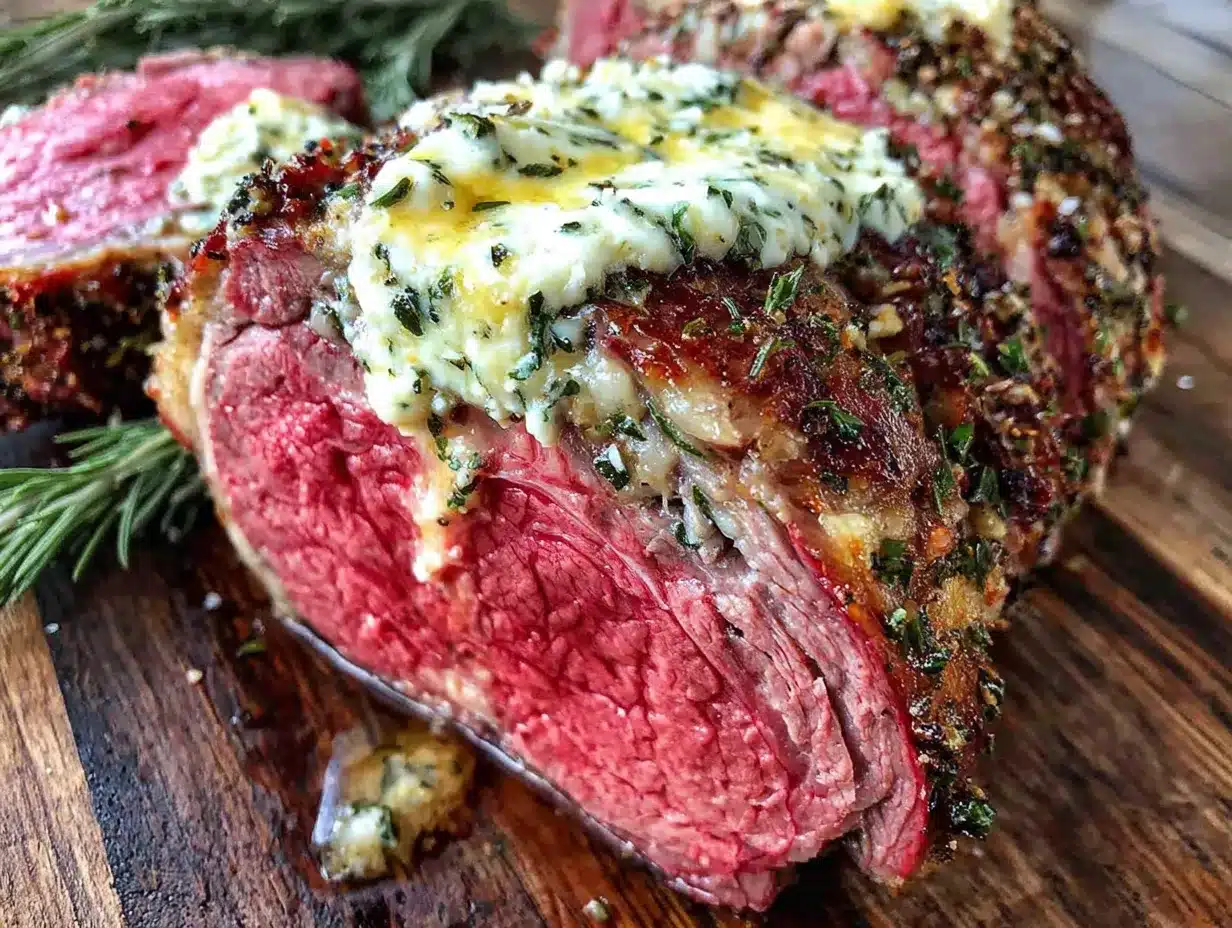
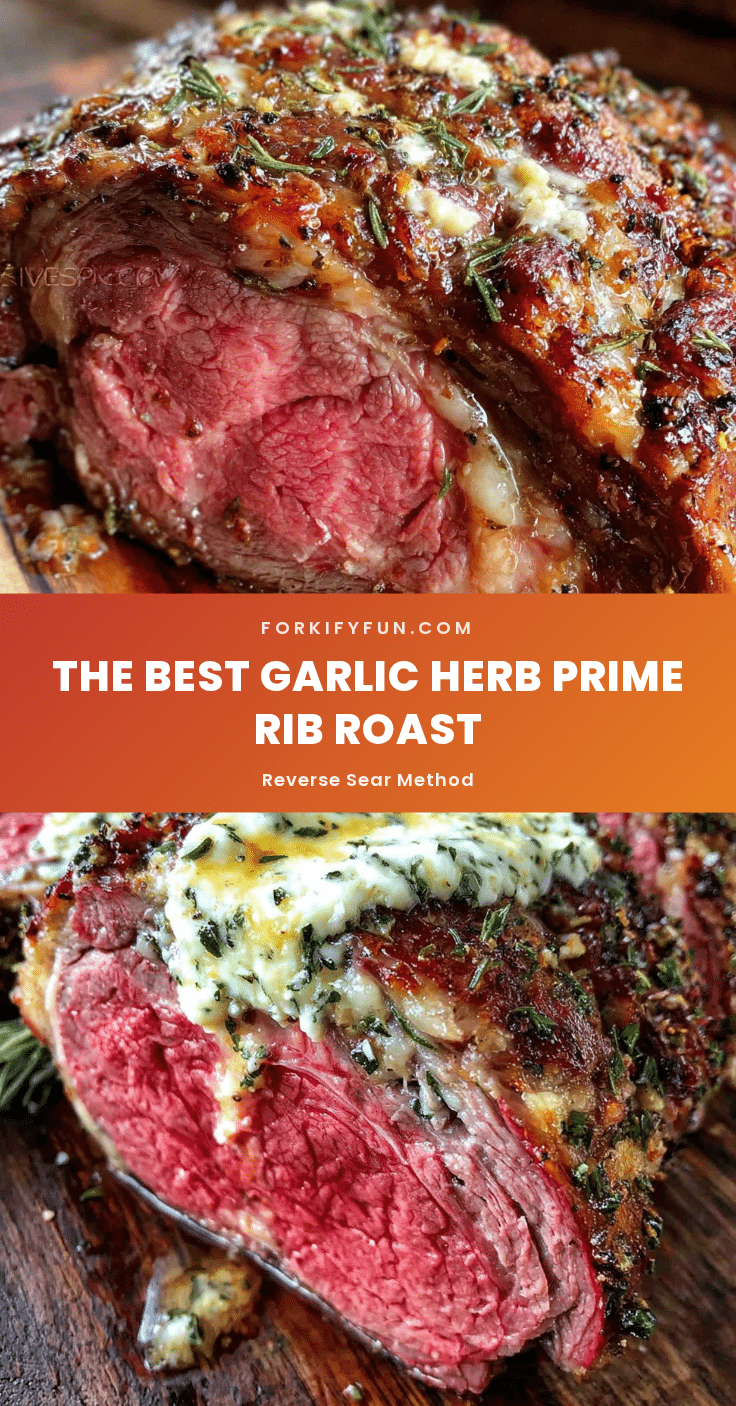
But I did. And let me tell you, that scribbled receipt turned out to be the best cooking advice I’ve ever gotten. The garlic herb prime rib roast that came out of my oven that night was a revelation. It was perfectly rosy from edge to center, with a crust so flavorful and crisp it sang. My guests, who were ready for a polite, mediocre dinner, actually stopped talking to take a bite. You know that feeling when everything just clicks? That was the moment. This recipe isn’t just good; it’s the one that makes you the hero of your own dinner party.
Why You’ll Love This Recipe
This isn’t just another prime rib recipe. This is the one you’ll come back to year after year, the one that makes you look like a professional chef without the stress. It’s built for hosting, and it’s practically foolproof.
- Perfect for a Crowd: This recipe is designed to impress. It’s the showstopper for Christmas dinner, New Year’s Eve, or a milestone birthday. You can easily scale it up for a big gathering.
- The Foolproof Reverse Sear: No more guessing. The reverse sear method ensures the entire roast cooks evenly. You get a perfect medium-rare from the center to the edges, every single time. It takes the anxiety out of cooking expensive meat.
- Simple, High-Impact Ingredients: You don’t need a pantry full of exotic spices. This is all about a few quality ingredients—garlic, fresh herbs, and a good cut of beef—that work together to create something truly special.
- Stress-Free Hosting: The best part? You can do most of the work before your guests arrive. The roast cooks low and slow, then rests while you finish the sides. You’re not stuck in the kitchen; you’re at the table, enjoying the party.
- Unbelievably Delicious: The combination of a garlic-herb crust and a tender, juicy interior is next-level comfort food. It’s the kind of meal that makes people close their eyes after the first bite. It’s rich, savory, and completely unforgettable.
What Ingredients You Will Need
This recipe relies on simple, high-quality ingredients to build layers of flavor. Don’t overthink it—let the beef be the star. Here’s what you’ll need to make this showstopping roast.
- For the Prime Rib:
- 1 (7-8 pound) bone-in prime rib roast: Look for a roast with good marbling. The fat is what makes it tender and flavorful. I usually ask my butcher for a “first cut” from the loin end for the most even cooking. Let it come to room temperature for about 2 hours before you start. This is a crucial step for even cooking.
- 2 tablespoons kosher salt: Don’t skimp on the salt. It’s not just for flavor; it helps draw out moisture and then reabsorbs it, seasoning the meat all the way through. Diamond Crystal is my go-to brand because it’s less salty by volume, but any kosher salt works.
- 1 tablespoon freshly ground black pepper: Freshly ground is non-negotiable here. It makes a huge difference in flavor and texture.
- For the Garlic Herb Paste:
- 6 cloves garlic, minced (or more, if you’re like me and love garlic). I use a microplane to grate it into a paste, which helps it meld with the butter.
- 1/4 cup fresh rosemary, finely chopped: Rosemary and beef are a classic pairing. The piney, aromatic flavor cuts through the richness of the meat perfectly.
- 1/4 cup fresh thyme leaves, chopped: Thyme adds a subtle, earthy note that rounds out the rosemary. Don’t use dried here; fresh is key for the paste.
- 2 tablespoons fresh parsley, chopped: For a touch of freshness and color.
- 4 tablespoons unsalted butter, softened: The butter acts as a carrier for all the flavor. It helps the herb paste stick to the meat and adds richness to the crust.
- 2 tablespoons olive oil: A good quality extra-virgin olive oil helps the paste come together and encourages browning during the sear.
- For the Au Jus (Optional but Recommended):
- 2 cups beef broth: Use a low-sodium broth so you can control the salt level. I prefer homemade beef broth, but a good store-bought brand like Kitchen Basics works in a pinch.
- 1/4 cup dry red wine (like Cabernet Sauvignon): This adds depth and complexity. If you don’t have wine, you can use a splash of balsamic vinegar.
- 2 tablespoons butter: This will be whisked in at the end to give the jus a beautiful, silky finish.
- Salt and pepper to taste.
Equipment Needed
Having the right tools makes this process smoother and more successful. Don’t worry, you don’t need a professional kitchen. Here’s what you’ll need.
- Digital Meat Thermometer: This is the most important tool. An instant-read thermometer is essential for the reverse sear method. It takes the guesswork out of cooking. I’ve had the same ThermoWorks Thermapen for years, and it’s never let me down. It’s an investment, but a cheap one will also work.
- Large Roasting Pan with a Rack: The rack lifts the roast off the bottom of the pan, allowing hot air to circulate evenly around the meat for consistent cooking. If you don’t have a rack, you can roll up a few aluminum foil coils to set the roast on.
- Cast Iron Skillet or Heavy-Bottomed Pan: For the final sear. A cast-iron skillet holds heat incredibly well, giving you a beautiful, even crust. A heavy stainless steel pan works great, too.
- Sharp Chef’s Knife: For slicing the herbs and, later, carving the roast. A dull knife is a dangerous knife.
- Cutting Board: A large, sturdy cutting board with a groove to catch juices is ideal.
- Aluminum Foil: For tenting the roast while it rests.
- Small Bowl: For mixing the garlic herb paste.
Preparation Method
This is where the magic happens. The reverse sear method is simple: low and slow, then hot and fast. Follow these steps, and you’ll have a perfect roast every time.
- Prepare the Roast: Pat the prime rib roast completely dry with paper towels. This is crucial for a good sear later. Place it on a wire rack set inside a baking sheet. Generously season all over with the kosher salt and black pepper. Don’t be shy! Let it sit uncovered in the refrigerator for at least 8 hours, or overnight. This dry-brining step is what gives you that perfectly seasoned, juicy interior. (If you’re short on time, let it sit at room temperature for 2 hours before cooking.)
- Make the Herb Paste: In a small bowl, combine the minced garlic, chopped rosemary, thyme, parsley, softened butter, and olive oil. Mash it together with a fork until it forms a cohesive paste. It should look like a vibrant, chunky green paste.
- Preheat the Oven: About 30 minutes before you plan to cook, preheat your oven to 250°F (120°C). Yes, that low. Patience is key.
- Apply the Paste: Remove the roast from the refrigerator. Using your hands, rub the garlic herb paste all over the roast, making sure to coat every surface. Don’t forget the ends and the bones.
- The Slow Roast: Place the roast on a rack in your roasting pan, fat-side up. Insert the probe of your digital thermometer into the thickest part of the meat, making sure it’s not touching any bone. Roast for about 3 to 4 hours, or until the internal temperature reaches 125°F (52°C) for medium-rare. The time will vary based on the size of your roast and your oven. Check the temperature after 2.5 hours and then every 30 minutes. The meat will look pale and unappetizing at this point—that’s normal!
- Rest and Prepare for the Sear: Once the roast hits 125°F, remove it from the oven. Tent it loosely with aluminum foil and let it rest for at least 30 minutes, and up to 1 hour. The internal temperature will continue to rise another 5-10 degrees during this time. This rest is non-negotiable; it allows the juices to redistribute.
- The Final Sear: While the roast rests, place a large cast-iron skillet over high heat on your stovetop. Let it get screaming hot—you should see a wisp of smoke. Carefully place the rested roast into the hot skillet. Sear for 1-2 minutes per side, using tongs to hold it, until a deep, golden-brown crust forms. Don’t overcrowd the pan; do this in batches if needed. You can also sear the ends and the fatty side. The sound of the sizzle is music to a host’s ears!
- Make the Au Jus (Optional): While the roast is searing, pour off the excess fat from the roasting pan (save it for roasting potatoes!). Place the pan over medium-high heat on the stovetop. Pour in the red wine and scrape up all the browned bits from the bottom of the pan with a wooden spoon. Let the wine reduce by half, about 2 minutes. Add the beef broth and bring to a simmer. Let it cook for 5 minutes, then whisk in the 2 tablespoons of butter. Season with salt and pepper to taste. Strain through a fine-mesh sieve if you want a clear jus.
- Carve and Serve: Transfer the seared roast to a clean cutting board. Slice against the grain into thick, beautiful slices. Arrange on a platter, spoon some of the au jus over the top, and serve the rest on the side. Watch your guests’ faces light up.
Cooking Tips & Techniques
I’ve made this recipe more times than I can count, and I’ve had my share of learning moments. Here are the tips I’ve picked up along the way to make sure your roast is perfect.
- Don’t Skip the Dry Brine: I know it seems like an extra step, but it’s the secret to the best prime rib. The salt penetrates the meat, seasoning it from the inside out. It also helps dry out the surface, which is essential for that incredible crust. I once skipped it because I was in a hurry, and the roast was noticeably less flavorful.
- Use a Reliable Thermometer: This is not the time to trust the little pop-up thermometer that comes with some roasts. Those are notoriously inaccurate. A good digital thermometer is your best friend. I’ve had a cheap one die on me mid-cook, and it was a disaster. Spend the extra money on a reliable one.
- Patience is a Virtue: The low-and-slow part of this method requires patience. Don’t be tempted to crank up the heat to speed things up. The whole point is to cook the meat gently so it’s tender from edge to center. Your oven might run hot, so check the temp early.
- The Rest is Crucial: I once thought I could skip the 30-minute rest and go straight to the sear. Big mistake. All the juices ran out onto the cutting board, leaving the meat dry. Letting it rest allows the muscle fibers to relax and reabsorb those flavorful juices. This is the most important step after the cooking itself.
- Get the Pan Screaming Hot: For the sear, you want the pan as hot as possible. If your pan isn’t hot enough, the meat will steam instead of sear, and you won’t get that beautiful crust. Open a window and turn on your exhaust fan—this step will create some smoke, but it’s totally worth it.
Variations & Adaptations
This recipe is a fantastic base, and it’s easy to tweak to your own taste or what you have on hand. Here are a few of my favorite variations.
- Herb Swap: Not a fan of rosemary? Try using 1/4 cup of fresh oregano or marjoram instead. You can also add a teaspoon of dried herbes de Provence for a different flavor profile. I once made it with only thyme and sage for a more earthy, wintery vibe, and it was a hit.
- Spicy Kick: Add 1-2 teaspoons of red pepper flakes or a finely chopped chipotle pepper in adobo sauce to the herb paste. The heat cuts through the richness of the beef beautifully. It’s a great option if you’re serving a crowd that likes a little spice.
- Garlic Lovers: If you’re like me and believe there’s no such thing as too much garlic, feel free to double the amount. You can also roast a whole head of garlic, squeeze out the soft cloves, and mash them into the butter for a sweeter, mellower garlic flavor.
- Dairy-Free Option: You can easily make this dairy-free by substituting the butter with a high-quality vegan butter or a good olive oil. The flavor will be slightly different, but it will still be delicious and create a fantastic crust.
- Different Cuts: While a bone-in rib roast is classic, you can use this same reverse sear method for a boneless ribeye roast or even a whole beef tenderloin. Just adjust the cooking time based on the size and shape of the roast. A tenderloin will cook much faster, so start checking the temperature early.
Serving & Storage Suggestions
This prime rib is the star of the show, so you want to pair it with sides that complement it without stealing the spotlight. Here’s how to serve and store it.
- Serving: Serve the prime rib hot, right after the final sear. Arrange the slices on a large, warm platter. I like to spoon a little of the au jus over the top just before serving to keep it moist and add a final hit of flavor. It’s beautiful on its own, but a sprinkle of flaky sea salt and some fresh thyme sprigs on the platter makes it look extra special.
- What to Serve Alongside: This roast pairs perfectly with rich, comforting sides. Think creamy horseradish sauce, a classic Yorkshire pudding, roasted root vegetables (carrots, parsnips), or a simple green salad with a sharp vinaigrette to cut through the richness. Creamy mashed potatoes are a no-brainer, or try some crispy roasted potatoes for texture.
- Storage: Leftover prime rib is a gift. Allow any leftover roast to cool completely, then wrap it tightly in plastic wrap or aluminum foil. Store it in the refrigerator for up to 4 days. The flavors will actually meld and deepen overnight.
- Reheating: The best way to reheat prime rib is low and slow to avoid drying it out. Place slices in a baking dish with a little beef broth or au jus, cover with foil, and warm in a 300°F (150°C) oven for about 10-15 minutes. You can also reheat slices gently in a skillet with a little butter over medium-low heat. Avoid the microwave at all costs—it will turn your beautiful prime rib into shoe leather.
- Leftover Ideas: Leftover prime rib is amazing in so many things. Slice it thin for the best French dip sandwiches, chop it up for a hearty beef stew, or dice it for a breakfast hash with potatoes and eggs. It’s almost better the next day!
Nutritional Information & Benefits
Prime rib is a rich, indulgent dish, but it also has some nutritional benefits when enjoyed as part of a balanced diet. Here’s a general overview.
- Estimated Nutritional Values (per 6-ounce serving, without au jus): Calories: 450-550, Fat: 35g, Saturated Fat: 14g, Protein: 40g, Carbohydrates: 1g.
- High-Quality Protein: Beef is an excellent source of complete protein, which is essential for building and repairing tissues, making enzymes, and supporting overall health.
- Rich in Vitamins and Minerals: Prime rib is a great source of iron, zinc, and B vitamins (especially B12), which are crucial for energy production, immune function, and red blood cell formation.
- Healthy Fats: While it’s high in saturated fat, it also contains monounsaturated and polyunsaturated fats. Grass-fed beef typically has a better ratio of omega-3 to omega-6 fatty acids.
- Dietary Considerations: This recipe is naturally gluten-free, low-carb, and keto-friendly. It is not suitable for a vegetarian or vegan diet. If you have concerns about sodium, you can reduce the amount of salt in the dry brine and the au jus.
Conclusion
This garlic herb prime rib roast, with its foolproof reverse sear method, isn’t just a recipe; it’s a confidence builder. It’s the dish that will make you the host everyone wants to invite. It takes the stress out of cooking an expensive cut of meat and replaces it with pure, delicious success. Honestly, if my accountant can pull it off, so can you.
I love this recipe because it’s a true showstopper that requires very little actual hands-on work. You get all the credit for being a culinary genius while the oven does the heavy lifting. It’s perfect for those special occasions when you want to impress without being a stressed-out mess in the kitchen.
So go ahead, give it a try for your next holiday dinner or celebration. Customize the herb paste to your liking, pair it with your favorite sides, and get ready to accept the compliments. I’d love to hear how it turns out for you! Leave a comment below and tell me about your prime rib triumph. Happy cooking!
Frequently Asked Questions
Can I use a boneless prime rib roast for this recipe?
Absolutely! The reverse sear method works perfectly for boneless roasts. The cooking time will be slightly shorter, so start checking the internal temperature about 30 minutes earlier than you would for a bone-in roast.
What if I don’t have a meat thermometer?
You really, really need one for this recipe. It’s the only way to guarantee a perfect result. If you absolutely don’t have one, you can use the “hand test” (comparing the feel of the meat to the fleshy part of your palm), but it’s very unreliable for a large roast. I strongly recommend buying a digital thermometer before attempting this.
Can I prepare the herb paste ahead of time?
Yes! You can make the garlic herb paste up to 3 days in advance. Just store it in an airtight container in the refrigerator. Let it come to room temperature for about 30 minutes before you plan to rub it on the roast so it’s spreadable.
My roast is cooked but not browned enough. What can I do?
If your roast has reached the perfect internal temperature but the crust isn’t as dark as you’d like, you have a few options. You can sear it for a longer time in the hot skillet, or you can place it under a hot broiler for 1-2 minutes, watching it very carefully to prevent burning. The broiler method is faster but riskier.
Can I freeze leftover prime rib?
Yes, you can freeze cooked prime rib. Let it cool completely, then wrap it tightly in plastic wrap, followed by a layer of aluminum foil. Place it in a freezer-safe bag or container. It will keep for up to 3 months. Thaw it overnight in the refrigerator before reheating.
Pin This Recipe!
Best Garlic Herb Prime Rib Roast (Reverse Sear)
This foolproof reverse sear method ensures a perfectly rosy, tender prime rib with a flavorful, crisp garlic herb crust. It’s the stress-free showstopper for your holiday dinner or special occasion.
- Prep Time: 20 minutes
- Cook Time: 3 hours 30 minutes
- Total Time: 4 hours 20 minutes (plus overnight dry brine)
- Yield: 8 servings 1x
- Category: Main Course
- Cuisine: American
Ingredients
- 1 (7-8 pound) bone-in prime rib roast
- 2 tablespoons kosher salt
- 1 tablespoon freshly ground black pepper
- 6 cloves garlic, minced
- 1/4 cup fresh rosemary, finely chopped
- 1/4 cup fresh thyme leaves, chopped
- 2 tablespoons fresh parsley, chopped
- 4 tablespoons unsalted butter, softened
- 2 tablespoons olive oil
- 2 cups beef broth (low-sodium)
- 1/4 cup dry red wine (like Cabernet Sauvignon)
- 2 tablespoons butter (for au jus)
- Salt and pepper to taste (for au jus)
Instructions
- Pat the prime rib roast completely dry with paper towels. Place on a wire rack set inside a baking sheet. Generously season all over with kosher salt and black pepper. Let sit uncovered in the refrigerator for at least 8 hours, or overnight (dry brine). If short on time, let sit at room temperature for 2 hours before cooking.
- In a small bowl, combine minced garlic, chopped rosemary, thyme, parsley, softened butter, and olive oil. Mash together with a fork until it forms a cohesive paste.
- About 30 minutes before cooking, preheat oven to 250°F (120°C).
- Remove roast from refrigerator. Using your hands, rub the garlic herb paste all over the roast, coating every surface including ends and bones.
- Place roast on a rack in a roasting pan, fat-side up. Insert probe of digital thermometer into the thickest part of the meat, not touching bone. Roast for 3 to 4 hours, until internal temperature reaches 125°F (52°C) for medium-rare. Check temperature after 2.5 hours and then every 30 minutes.
- Once roast hits 125°F, remove from oven. Tent loosely with aluminum foil and let rest for at least 30 minutes, up to 1 hour. Internal temperature will rise another 5-10 degrees.
- While roast rests, place a large cast-iron skillet over high heat until screaming hot. Carefully place rested roast into hot skillet. Sear for 1-2 minutes per side, using tongs to hold it, until a deep golden-brown crust forms. Sear ends and fatty side as needed.
- For au jus (optional): Pour off excess fat from roasting pan. Place pan over medium-high heat. Pour in red wine and scrape up browned bits. Let wine reduce by half, about 2 minutes. Add beef broth and bring to a simmer. Cook for 5 minutes, then whisk in 2 tablespoons butter. Season with salt and pepper to taste. Strain if desired.
- Transfer seared roast to a clean cutting board. Slice against the grain into thick slices. Arrange on a platter, spoon some au jus over the top, and serve remaining on the side.
Notes
Don’t skip the dry brine—it seasons the meat and helps create a better crust. Use a reliable digital thermometer for best results. Let the roast rest before searing to allow juices to redistribute. Get the pan screaming hot for a perfect sear.
Nutrition
- Serving Size: 6 ounces
- Calories: 500
- Sodium: 800
- Fat: 35
- Saturated Fat: 14
- Carbohydrates: 1
- Protein: 40
Keywords: prime rib, reverse sear, garlic herb, roast beef, holiday dinner, Christmas dinner, New Year's Eve, beef roast