I’d spent years avoiding stuffing. Not the eating of it, mind you — I’d happily inhale my weight in the soggy, bread-laden stuff every Thanksgiving. But making it? That felt like a chore reserved for someone with more patience and a bigger casserole dish than me. Honestly, I figured boxed mix was just fine. Then three winters ago, my neighbor Carol knocked on my door holding a cast iron skillet that smelled like maple syrup and sage had a beautiful, smoky baby. “I made too much,” she said, shoving the warm pan into my hands. I took one bite of that roasted butternut squash and sausage stuffing and felt genuinely betrayed — by every dry, flavorless stuffing I’d ever settled for.
That first forkful had this unexpected sweetness from the squash, balanced by the salty, savory crumble of sausage. The bread was somehow still tender but had these gloriously crispy edges. I stood there in my doorway, fork in hand, trying to figure out how she’d done it. Carol laughed and said the secret was roasting the squash first and not being afraid of a little extra butter. I scribbled notes on a napkin right there. Let me tell you, I made it for my own family that Christmas, and my uncle — who famously claims to “not care about side dishes” — asked for the recipe twice. Maybe you’ve been there, stuck in a stuffing rut, thinking it’s just a vehicle for gravy. This one changed everything for me, and I keep making it because it proves that even the most overlooked dish on the table can steal the whole show.
Why You’ll Love This Recipe
This cozy roasted butternut squash and sausage stuffing isn’t just another side dish — it’s the one that disappears first, the one people ask for by name. After testing it about seven times (my family was a very willing focus group), I can confidently say this version hits every single note you want from a holiday stuffing.
- Quick & Easy : Comes together in about an hour, with most of that time being hands-off roasting. Perfect for when you’re juggling a million other dishes.
- Simple Ingredients : No fancy grocery trips needed. Day-old bread, a good sausage, a butternut squash, and some pantry staples are all you need.
- Perfect for Cozy Gatherings : Great for Thanksgiving, Christmas, or even a chilly Sunday dinner when you want something that feels special.
- Crowd-Pleaser : Always gets rave reviews from both kids and adults. Even my picky nephew went back for seconds.
- Unbelievably Delicious : The combination of sweet roasted squash, savory sausage, and crispy bread edges is next-level comfort food.
What makes this recipe different from the rest? It’s the technique of roasting the squash until it’s caramelized and tender before mixing it in. That extra step adds a depth of flavor you just can’t get from boiling or steaming. Plus, using a mix of crusty bread and letting it get a little dry ensures the stuffing absorbs all the savory broth without turning into mush. This isn’t just another version — it’s my best version, perfected over multiple holidays and weeknight cravings. It’s the kind of dish that makes you close your eyes after the first bite, tastes like a warm hug, and proves that comfort food doesn’t need to be complicated to be unforgettable.
What Ingredients You Will Need
This recipe uses simple, wholesome ingredients to deliver bold flavor and satisfying texture without the fuss. Most of these are pantry staples or easy to find at any grocery store, making it a stress-free addition to your holiday menu.
For the Roasted Squash
- Butternut squash, peeled and cubed into 1/2-inch pieces (about 4 cups) — Look for one that feels heavy for its size; that means it’s ripe and juicy.
- Olive oil, 2 tablespoons — I use extra-virgin for roasting; it adds a subtle fruitiness.
- Maple syrup, 1 tablespoon (optional, but highly recommended for that caramelized edge)
- Salt and black pepper, to taste
For the Stuffing
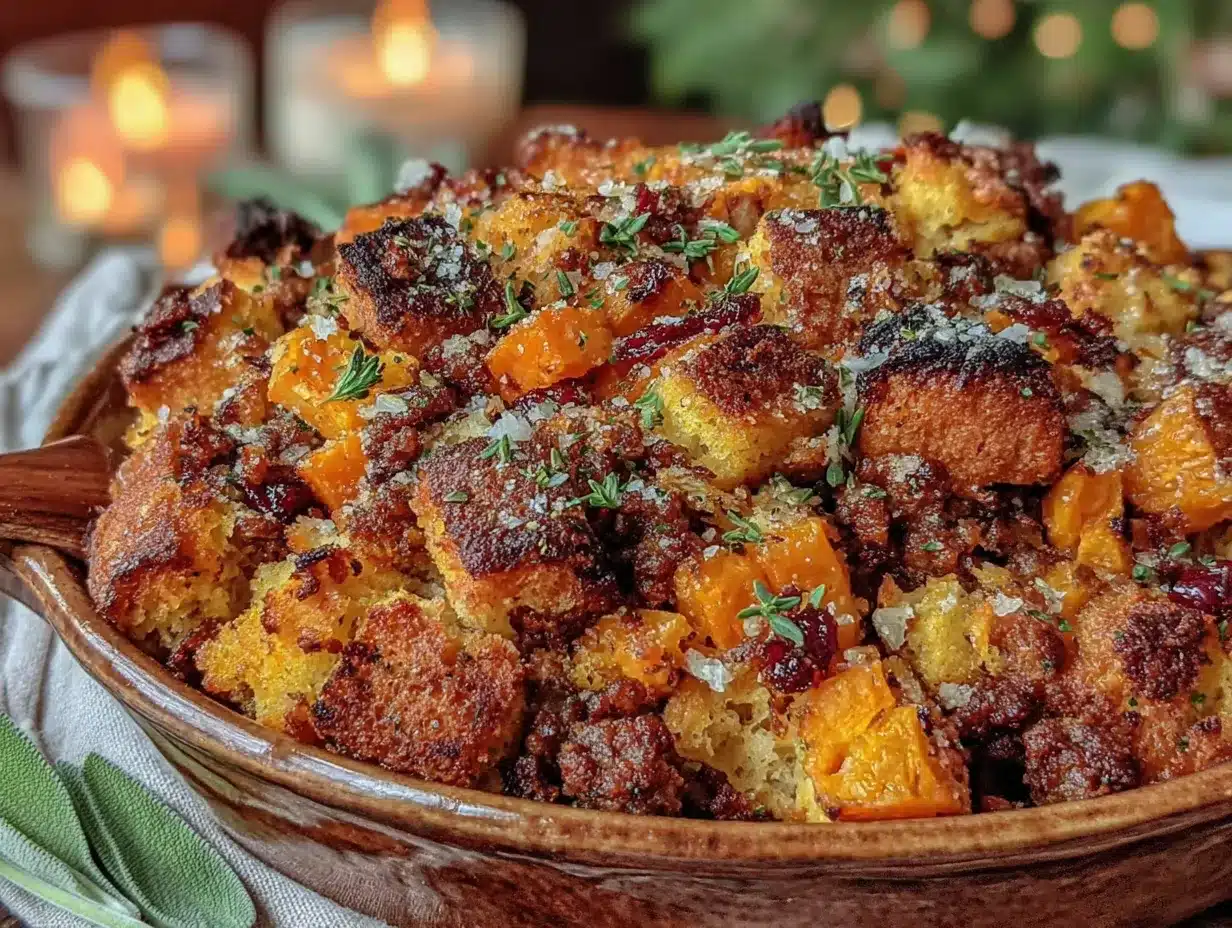
- Day-old crusty bread, cubed into 1-inch pieces (about 8 cups) — A French baguette or sourdough works beautifully. Stale bread absorbs the broth better without getting soggy.
- Italian sausage, casings removed (1 pound) — I prefer mild or sweet sausage, but hot sausage adds a nice kick if you like heat.
- Unsalted butter, 4 tablespoons — Adds richness and helps toast the bread.
- Yellow onion, diced (1 medium) — About 1 cup.
- Celery stalks, diced (3 stalks) — About 1 cup.
- Garlic cloves, minced (3 cloves)
- Fresh sage leaves, chopped (2 tablespoons) — Dried sage works in a pinch; use 2 teaspoons.
- Fresh thyme leaves, 1 tablespoon (or 1 teaspoon dried)
- Chicken broth, low-sodium (2 cups) — Vegetable broth works for a vegetarian version.
- Eggs, lightly beaten (2 large) — Helps bind the stuffing together.
- Salt and black pepper, to taste
- Fresh parsley, chopped (for garnish, optional)
I recommend using a good-quality sausage like Johnsonville or a local butcher’s blend for the best flavor. For the bread, a rustic loaf from the bakery section works perfectly — just leave it out overnight to dry out. If you’re in a pinch, you can cube the bread and toast it in a 300°F oven for 10 minutes.
Equipment Needed
You don’t need a ton of fancy gear for this one, which is part of its charm. Here’s what you’ll want on hand:
- Large baking sheet — For roasting the squash. A rimmed sheet works best to catch any juices.
- Large skillet or Dutch oven — For cooking the sausage and sautéing the veggies. I use my trusty cast iron skillet; it gives everything a nice crust.
- Large mixing bowl — For combining the bread, veggies, and broth.
- 9×13-inch baking dish — For baking the stuffing. A 3-quart casserole dish works too.
- Chef’s knife and cutting board — A sharp knife makes cubing squash much less of a workout.
- Wooden spoon or spatula — For stirring.
- Measuring cups and spoons — For accuracy.
If you don’t have a cast iron skillet, a regular non-stick pan works just fine. And if you’re short on time, you can skip the separate baking sheet and roast the squash directly in the skillet after cooking the sausage — just be careful not to overcrowd it.
Preparation Method
This cozy roasted butternut squash and sausage stuffing comes together in a few simple steps. Follow along, and you’ll have a dish that looks and tastes like you spent hours on it.
- Preheat your oven to 400°F (200°C). Line a large baking sheet with parchment paper for easy cleanup.
- Roast the butternut squash. Toss the cubed squash with olive oil, maple syrup (if using), salt, and pepper. Spread it in a single layer on the prepared baking sheet. Roast for 20-25 minutes, flipping halfway through, until the squash is tender and the edges are golden brown. The maple syrup will help create a beautiful caramelization — keep an eye on it so it doesn’t burn. Set aside to cool slightly.
- Prepare the bread. While the squash roasts, spread the cubed bread on another baking sheet. Toast in the oven for 5-7 minutes, just until lightly golden. This step is optional but helps the bread hold its texture better in the stuffing. Remove and let cool.
- Cook the sausage. In a large skillet or Dutch oven over medium-high heat, cook the Italian sausage, breaking it up with a wooden spoon, until browned and cooked through (about 6-8 minutes). Use a slotted spoon to transfer the sausage to a plate, leaving about 1 tablespoon of drippings in the pan.
- Sauté the aromatics. Reduce the heat to medium. Add the butter to the skillet with the sausage drippings. Once melted, add the diced onion and celery. Cook, stirring occasionally, for 5-6 minutes until softened and translucent. Add the minced garlic, chopped sage, and thyme, and cook for another minute until fragrant. The kitchen will smell incredible at this point — like a cozy autumn evening.
- Combine the ingredients. In a large mixing bowl, combine the toasted bread cubes, roasted squash, cooked sausage, and the sautéed onion mixture. Toss gently to distribute everything evenly.
- Add the liquid. In a separate small bowl or measuring cup, whisk together the chicken broth and beaten eggs. Pour this mixture over the bread mixture. Use a spatula to gently fold everything together until the bread is evenly moistened. Don’t overmix — you want some texture, not a paste.
- Transfer to baking dish. Grease a 9×13-inch baking dish with butter or non-stick spray. Spread the stuffing mixture evenly in the dish. If you like a crispy top, you can dot the surface with a few small pats of butter.
- Bake the stuffing. Place the dish in the oven and bake at 375°F (190°C) for 30-35 minutes, until the top is golden brown and crispy. The edges should be slightly crunchy while the inside stays tender and moist. If the top is browning too quickly, tent it loosely with foil for the last 10 minutes.
- Rest and serve. Let the stuffing sit for 5-10 minutes before serving. This allows the liquid to fully absorb and makes it easier to scoop. Garnish with fresh parsley if desired.
Pro tip: If you’re making this ahead of time, you can prepare the stuffing up to step 8, cover it, and refrigerate for up to 24 hours. Add about 10 minutes to the baking time if baking from cold.
Cooking Tips & Techniques
Over the years, I’ve learned a few things the hard way so you don’t have to. Here are my best tips for perfect stuffing every time.
Don’t skip drying the bread. Fresh bread turns to mush when you add broth. Day-old bread that’s slightly stale is ideal because it soaks up the liquid without falling apart. If your bread is fresh, cube it and toast it in a 300°F oven for 10 minutes. Trust me on this one — I learned this lesson after a particularly sad, gluey stuffing incident.
Roast the squash separately. I know it’s tempting to just toss everything in the dish and bake, but roasting the squash first brings out its natural sweetness and gives it a caramelized edge that’s irreplaceable. Plus, it prevents the squash from releasing too much water into the stuffing during baking, which can make it soggy.
Watch your liquid ratio. The amount of broth you need can vary depending on how dry your bread is. Start with 1 ½ cups, then add more if the mixture looks dry. It should look moist but not swimming in liquid. If you add too much, the stuffing will be dense and heavy instead of light and fluffy.
Use a meat thermometer for the sausage. If you’re unsure whether the sausage is fully cooked, it should reach an internal temperature of 160°F (71°C). Better safe than sorry, especially when serving a crowd.
Let it rest. I know you’ll be eager to dig in, but letting the stuffing sit for 5-10 minutes after baking allows the flavors to meld and the texture to set. It also makes serving much neater.
Variations & Adaptations
One of the best things about this recipe is how flexible it is. Here are a few ways to make it your own.
Vegetarian version: Swap the Italian sausage for a plant-based sausage or add an extra cup of roasted mushrooms (cremini or shiitake work great). Use vegetable broth instead of chicken broth. The mushrooms add that same umami depth that makes the dish so satisfying.
Gluten-free adaptation: Use a good quality gluten-free bread. I’ve had success with a crusty gluten-free sourdough. Just make sure to toast it well, as gluten-free bread can be more delicate and prone to getting soggy. You might also need to reduce the broth slightly since gluten-free bread absorbs liquid differently.
Add some crunch: For a texture contrast, stir in ½ cup of toasted pecans or walnuts along with the bread. The nuts add a lovely crunch and pair beautifully with the squash and sage. I tried this one Christmas on a whim, and it’s been a staple ever since.
Make it spicy: Use hot Italian sausage instead of mild, or add a pinch of red pepper flakes when sautéing the onions. The heat cuts through the richness of the dish nicely.
Seasonal swap: In the fall, butternut squash is perfect, but you can use cubed sweet potatoes or even apples (like Honeycrisp or Granny Smith) for a different flavor profile. If using apples, add them in the last 10 minutes of roasting so they don’t turn to mush.
Serving & Storage Suggestions
This cozy roasted butternut squash and sausage stuffing is best served warm, straight from the oven. The contrast between the crispy top and the tender, moist interior is pure magic. I like to serve it alongside a classic roasted turkey, but it’s equally at home next to a simple roast chicken or even a pork loin. For a vegetarian meal, pair it with a hearty lentil loaf or a big green salad with a tangy vinaigrette to cut through the richness.
Leftovers, if you have any, are a gift. Store the stuffing in an airtight container in the refrigerator for up to 4 days. The flavors actually get better as they meld overnight. To reheat, place it in a 350°F oven for 15-20 minutes, or until warmed through. You can also microwave individual portions, but the top won’t be as crispy. If the stuffing seems dry after refrigeration, add a splash of broth before reheating.
You can also freeze this stuffing for up to 3 months. Let it cool completely, then transfer to a freezer-safe container or zip-top bag. Thaw overnight in the refrigerator before reheating. I’ve made a double batch for Thanksgiving and frozen one for a random Tuesday in January — it’s a beautiful surprise on a cold night.
Nutritional Information & Benefits
While this is certainly a comfort food dish, it does offer some nutritional perks worth noting. Butternut squash is packed with vitamin A, vitamin C, and fiber, which supports eye health and immunity. The sausage provides protein and iron, while the celery and onion add antioxidants and a satisfying crunch. Using low-sodium broth helps control the salt content without sacrificing flavor.
Here are the estimated nutritional values per serving (based on 10 servings):
| Nutrient | Amount per Serving |
|---|---|
| Calories | 320 |
| Total Fat | 16g |
| Saturated Fat | 6g |
| Cholesterol | 55mg |
| Sodium | 580mg |
| Total Carbohydrates | 32g |
| Dietary Fiber | 4g |
| Sugars | 8g |
| Protein | 14g |
This recipe contains gluten (from the bread) and dairy (from the butter). For a dairy-free version, use a plant-based butter or olive oil. Always check your sausage and broth labels for any hidden allergens.
Conclusion
This cozy roasted butternut squash and sausage stuffing is more than just a side dish — it’s the kind of recipe that makes a meal feel like an occasion. Whether you’re serving it for a holiday feast or a quiet Sunday dinner, it brings warmth, flavor, and a little bit of magic to the table. I love how forgiving it is, how it welcomes substitutions, and how it always, always gets compliments. Honestly, it’s become my go-to for any gathering where I want to impress without stress.
I’d love to hear how it turns out for you! Did you try any variations? Did your family fight over the crispy edges? Drop a comment below and let me know — your stories and tweaks inspire me every time. And if you share a photo on Pinterest, tag me so I can see your beautiful creation. Until next time, happy cooking, and remember: the best meals are the ones shared with the people you love.
Frequently Asked Questions
Can I make this stuffing ahead of time?
Absolutely! You can assemble the stuffing up to 24 hours in advance. Just cover it and refrigerate. When you’re ready to bake, add about 10 minutes to the cooking time since you’ll be starting from cold.
Can I use a different type of squash?
Yes, you can substitute butternut squash with cubed sweet potatoes, acorn squash, or even pumpkin. Just keep an eye on the roasting time, as different squashes have different densities. You want them tender but not mushy.
How do I make this recipe dairy-free?
Simply swap the butter for a plant-based butter or use olive oil. Make sure to check your sausage for any dairy additives. The rest of the ingredients are naturally dairy-free.
Can I freeze the leftovers?
Yes! Let the stuffing cool completely, then transfer to a freezer-safe container. It will keep for up to 3 months. Thaw overnight in the refrigerator and reheat in a 350°F oven until warmed through.
What’s the best bread to use for stuffing?
A crusty bread like a French baguette or sourdough works best. The firm texture holds up well to the liquid and baking. Avoid soft sandwich bread, as it tends to turn mushy. Day-old bread is ideal, but you can also toast fresh bread cubes in the oven.
Pin This Recipe!
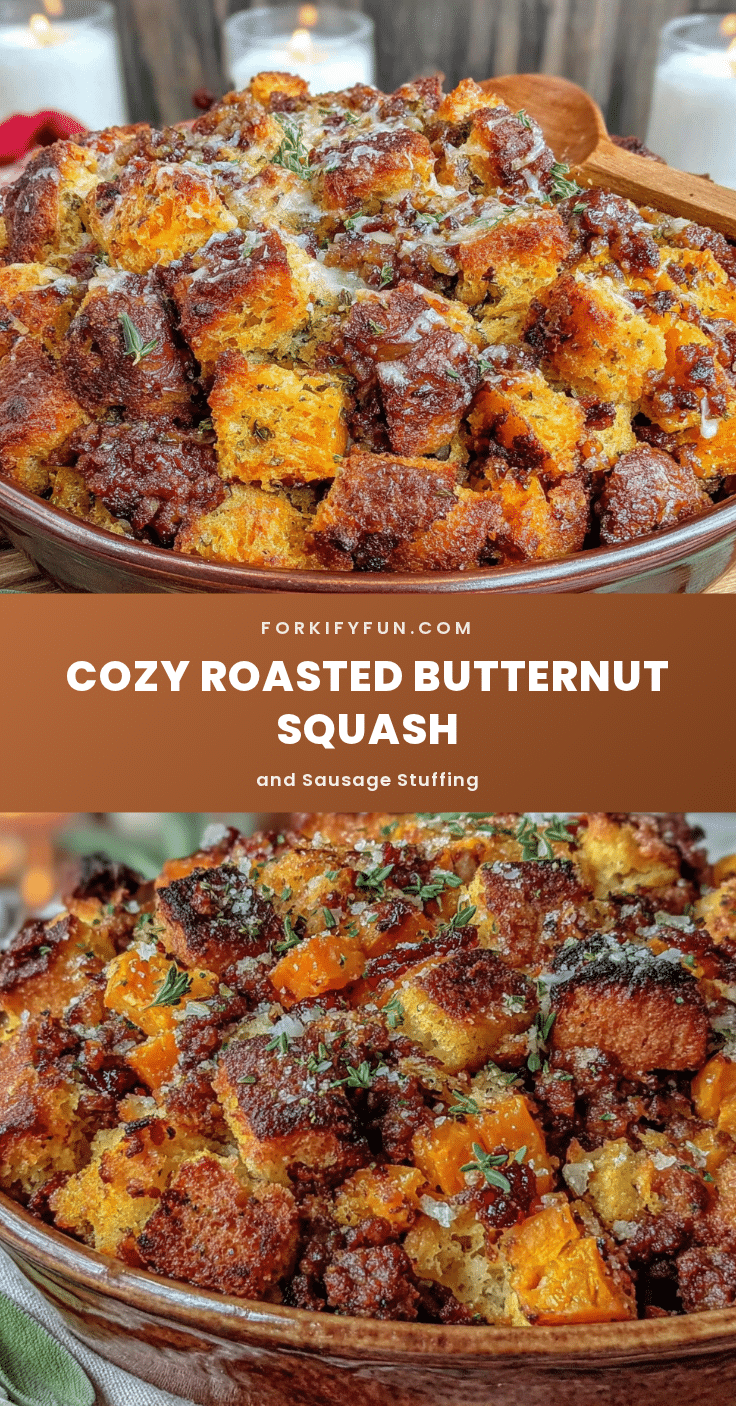
Cozy Roasted Butternut Squash and Sausage Stuffing: Easy Holiday Side

This cozy roasted butternut squash and sausage stuffing is the perfect holiday side dish, featuring sweet caramelized squash, savory sausage, and crispy bread edges. It’s easy to make, full of flavor, and always a crowd-pleaser.
- Prep Time: 20 minutes
- Cook Time: 40 minutes
- Total Time: 1 hour
- Yield: 10 servings
- Category: Side Dish
- Cuisine: American
Ingredients
- Butternut squash, peeled and cubed into 1/2-inch pieces (about 4 cups)
- Olive oil, 2 tablespoons
- Maple syrup, 1 tablespoon (optional)
- Salt and black pepper, to taste
- Day-old crusty bread, cubed into 1-inch pieces (about 8 cups)
- Italian sausage, casings removed (1 pound)
- Unsalted butter, 4 tablespoons
- Yellow onion, diced (1 medium, about 1 cup)
- Celery stalks, diced (3 stalks, about 1 cup)
- Garlic cloves, minced (3 cloves)
- Fresh sage leaves, chopped (2 tablespoons) or dried sage (2 teaspoons)
- Fresh thyme leaves, 1 tablespoon (or 1 teaspoon dried)
- Chicken broth, low-sodium (2 cups)
- Eggs, lightly beaten (2 large)
- Salt and black pepper, to taste
- Fresh parsley, chopped (for garnish, optional)
Instructions
- Preheat your oven to 400°F (200°C). Line a large baking sheet with parchment paper.
- Roast the butternut squash: Toss cubed squash with olive oil, maple syrup (if using), salt, and pepper. Spread in a single layer on the prepared baking sheet. Roast for 20-25 minutes, flipping halfway, until tender and golden brown. Set aside.
- Prepare the bread: While squash roasts, spread cubed bread on another baking sheet. Toast in the oven for 5-7 minutes until lightly golden. Remove and let cool.
- Cook the sausage: In a large skillet or Dutch oven over medium-high heat, cook Italian sausage, breaking it up, until browned and cooked through (6-8 minutes). Transfer to a plate, leaving about 1 tablespoon drippings in the pan.
- Sauté the aromatics: Reduce heat to medium. Add butter to the skillet with drippings. Once melted, add diced onion and celery. Cook 5-6 minutes until softened. Add minced garlic, chopped sage, and thyme; cook 1 minute until fragrant.
- Combine ingredients: In a large mixing bowl, combine toasted bread cubes, roasted squash, cooked sausage, and sautéed onion mixture. Toss gently.
- Add the liquid: In a small bowl, whisk together chicken broth and beaten eggs. Pour over bread mixture and fold gently until evenly moistened.
- Transfer to baking dish: Grease a 9×13-inch baking dish with butter or non-stick spray. Spread stuffing mixture evenly. Dot with butter for a crispy top if desired.
- Bake the stuffing: Bake at 375°F (190°C) for 30-35 minutes until top is golden brown and crispy. Tent with foil if browning too quickly.
- Rest and serve: Let stuffing sit for 5-10 minutes before serving. Garnish with fresh parsley if desired.
Notes
For make-ahead: prepare up to step 8, cover, and refrigerate for up to 24 hours. Add about 10 minutes to baking time if baking from cold. For a vegetarian version, use plant-based sausage or extra roasted mushrooms and vegetable broth. For gluten-free, use gluten-free bread and reduce broth slightly.
Nutrition
- Serving Size: 1 serving (about 1 c
- Calories: 320
- Sugar: 8
- Sodium: 580
- Fat: 16
- Saturated Fat: 6
- Carbohydrates: 32
- Fiber: 4
- Protein: 14
Keywords: butternut squash stuffing, sausage stuffing, holiday side dish, Thanksgiving stuffing, easy stuffing recipe