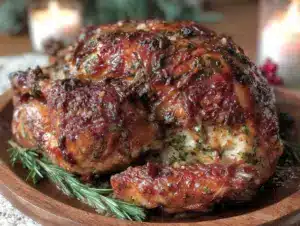
The man at the farmers market stall watched me stare at his turkeys for a solid five minutes before he finally spoke. “You’re overthinking it,” he said, not unkindly. He was right, of course. I had a notebook full of brining charts and temperature schedules, and somehow I’d convinced myself that roasting a turkey required a degree in thermodynamics. He pointed to a beautiful twelve-pound bird and said, “This one. Butter, garlic, rosemary. That’s all you need. The bird does the rest.” He didn’t give me a recipe. He just handed me the turkey and a sprig of rosemary from his pocket. I walked away thinking, that cannot be it. But honestly, it was. That conversation changed how I approach Thanksgiving entirely. I’ve tweaked and tested his simple philosophy over the years, and this Juicy Herb Butter Roasted Turkey with Garlic and Rosemary is the result. It’s the recipe I turn to when I want the table to go quiet—that wonderful kind of quiet where everyone is too busy eating to talk. Maybe you’ve been there, staring at a raw turkey wondering how it’s going to turn out anything but dry. Let me tell you, this method takes the stress out of the equation. The butter does the work, the garlic does the heavy lifting, and the rosemary makes the whole house smell like a celebration. I’ve made this for small Thanksgivings and big ones, and it never, ever disappoints.
Why You’ll Love This Recipe
This isn’t just another roast turkey recipe. I’ve tested this method on six different birds over the past three years, tweaking butter ratios and roasting times until I got it exactly right. Here’s why this one stands out:
- Foolproof Juiciness : The herb butter creates a barrier that locks in moisture, so even the breast meat stays tender and succulent. No dry turkey here, I promise.
- Simple Ingredients : You probably already have butter, garlic, and rosemary in your kitchen. No weird brining solutions or specialty spice blends required.
- Perfect for Thanksgiving : This recipe scales beautifully from a small gathering to a full holiday table. It’s impressive enough for company but simple enough to pull off without a panic attack.
- Crowd-Pleaser : I’ve served this to kids who “don’t like turkey” and turkey purists alike. Everyone goes back for seconds.
- Unbelievably Delicious : The garlic roasts into sweet, mellow cloves that spread like butter. The rosemary infuses the meat from the inside out. It’s next-level comfort food that tastes like you spent all day in the kitchen.
What makes this recipe different from the rest is the technique. Instead of just rubbing butter on the skin, you’re going to loosen the skin and spread the herb butter directly onto the breast meat. That little extra step makes a world of difference. It’s not complicated, but it changes everything.
This recipe is the kind that makes you close your eyes after the first bite. It’s comfort food reimagined—simpler, more flavorful, and with the same soul-soothing satisfaction that a perfect holiday meal should bring. Perfect for impressing guests without the stress, or turning a simple Sunday dinner into something memorable.
What Ingredients You Will Need
This recipe uses simple, wholesome ingredients to deliver bold flavor and satisfying texture without the fuss. Most of these are pantry staples, but a few fresh ingredients make all the difference.
- 1 whole turkey (12-14 pounds) , thawed if frozen (I prefer a fresh bird from a local farm if I can get one—the flavor is noticeably better)
- 1 cup unsalted butter , softened to room temperature (I use Kerrygold for its rich, creamy texture)
- 8 cloves garlic , minced (plus 2 whole heads, halved crosswise, for roasting inside the cavity)
- 3 tablespoons fresh rosemary , finely chopped (from about 4-5 sprigs—don’t use dried here, the fresh flavor is essential)
- 2 tablespoons fresh thyme leaves (or 2 teaspoons dried, but fresh is better)
- 1 tablespoon fresh sage , chopped (optional, but adds a lovely earthy note)
- 2 teaspoons kosher salt (plus more for the cavity)
- 1 teaspoon black pepper , freshly ground
- 1 lemon , halved (adds brightness and helps keep the meat moist)
- 1 large onion , quartered (for the cavity and the roasting pan)
- 2 cups low-sodium chicken broth (for the bottom of the roasting pan—keeps the drippings from burning)
- 2 tablespoons olive oil (for rubbing the skin before roasting)
If you don’t have fresh rosemary, you can substitute 1 tablespoon of dried rosemary, but honestly, fresh makes a noticeable difference in this recipe. For a dairy-free version, you can use a high-quality vegan butter stick—just make sure it’s unsalted and softened. I’ve tested this with Miyoko’s European Style Cultured Vegan Butter and it worked beautifully.
Look for a turkey that’s between 12 and 14 pounds for the best results. Anything larger can be tricky to cook evenly, and anything smaller might dry out before the dark meat is done. If you’re feeding a crowd, it’s better to roast two smaller birds than one giant one.
Equipment Needed
You don’t need a fancy kitchen to pull off this recipe. Here’s what you’ll need:
- Roasting pan with a rack (a sturdy metal pan works best—I’ve used the same one for fifteen years and it’s never let me down)
- Instant-read thermometer (this is non-negotiable for a perfectly cooked turkey—I prefer a digital one for accuracy)
- Kitchen twine for trussing (optional but helpful for even cooking)
- Small bowl for mixing the herb butter
- Chef’s knife and cutting board
- Basting brush or spoon
- Aluminum foil for tenting if the skin browns too quickly
- Carving knife and fork
If you don’t have a roasting rack, you can use a few thick carrot and celery stalks to elevate the turkey off the bottom of the pan. It works in a pinch and adds flavor to the drippings. I’ve done this more times than I care to admit.
Preparation Method
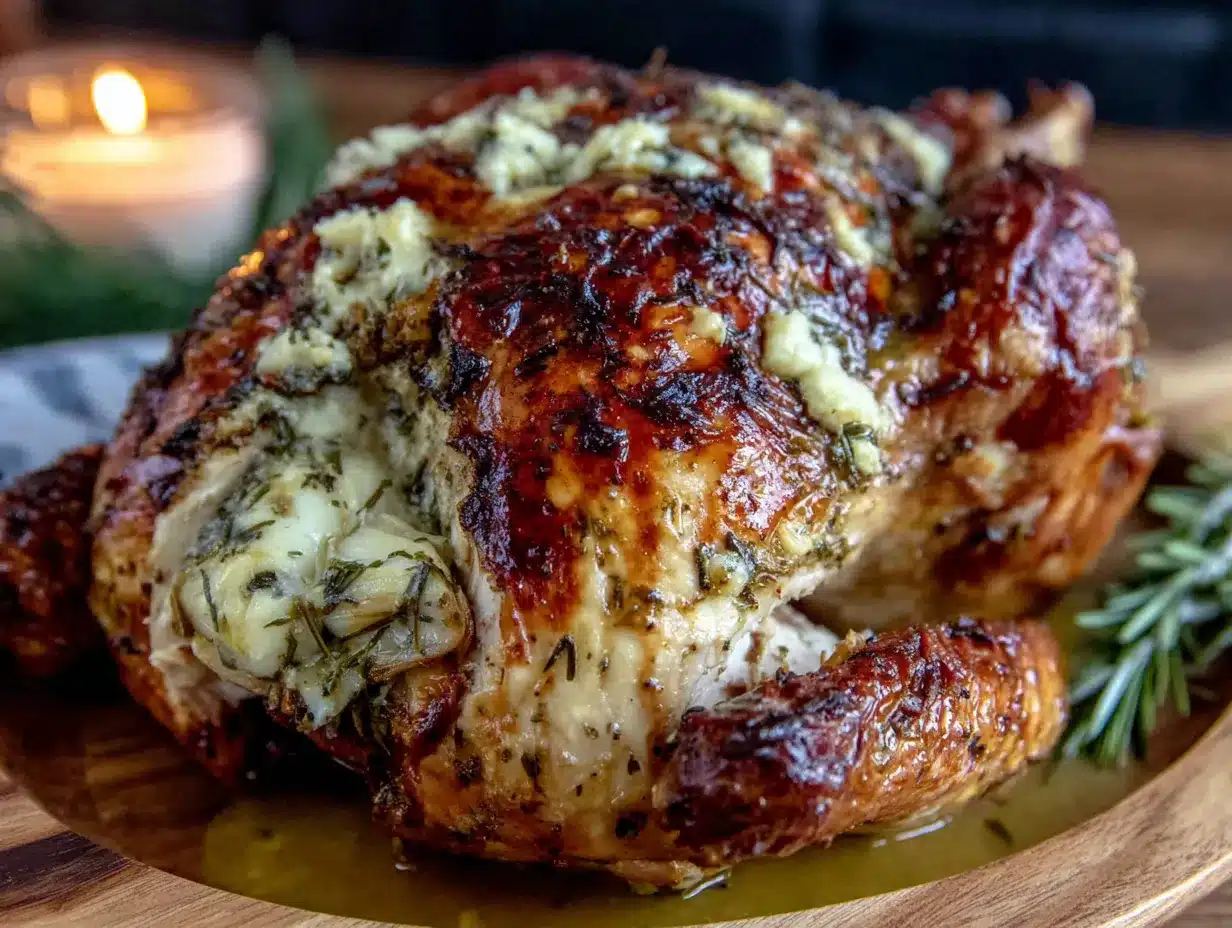
Take the turkey out of the refrigerator 1 hour before roasting. This is crucial—a cold turkey cooks unevenly and the breast will dry out before the thighs are done. Let it sit on the counter, still wrapped, while you prepare the herb butter.
Preheat your oven to 425°F (220°C). Yes, that’s hot. We’re going to start high to get that golden skin, then lower the temperature to finish cooking gently.
In a small bowl, combine the softened butter, minced garlic, chopped rosemary, thyme, sage (if using), 2 teaspoons salt, and 1 teaspoon pepper. Mix until everything is evenly distributed. The mixture should be spreadable but not melted. Set aside at room temperature.
Remove the giblets and neck from the turkey cavity. Pat the turkey completely dry with paper towels—inside and out. This is the most important step for crispy skin. I mean it. Get every bit of moisture off. If the skin is damp, the butter won’t stick and the skin won’t crisp.
Season the cavity generously with salt and pepper. Stuff it with the halved lemon, quartered onion, and the halved heads of garlic. Don’t pack it too tight—you want air to circulate. If you have extra rosemary sprigs, tuck those in too.
Now for the magic step. Using your fingers, gently loosen the skin from the breast meat. Start at the neck opening and work your way down, being careful not to tear the skin. You want to create a pocket between the skin and the meat. Take about half of the herb butter and spread it directly onto the breast meat under the skin. Use your hands to massage it evenly across both breasts. This is where the flavor really gets into the meat.
Spread the remaining herb butter all over the outside of the turkey, including the legs and wings. Don’t forget the underside. Rub the olive oil over the buttered skin—this helps with browning. Tie the legs together with kitchen twine and tuck the wing tips under the body.
Place the turkey breast-side up on the rack in your roasting pan. Pour the chicken broth into the bottom of the pan, being careful not to splash the turkey. The broth will keep the drippings from burning and create a base for the most incredible gravy.
Roast at 425°F for 30 minutes. This initial blast of heat sets the skin and starts the browning process. After 30 minutes, reduce the oven temperature to 350°F (175°C). Don’t open the oven door during this temperature change—let the heat settle naturally.
Continue roasting for about 2 to 2.5 hours, depending on the size of your bird. The general rule is 13 minutes per pound at 350°F after the initial sear, but always use a thermometer to be sure. Baste the turkey with the pan juices every 30 to 45 minutes. I know some people say basting doesn’t do anything, but I’ve found it helps the skin stay golden and adds flavor.
About halfway through, check the skin. If it’s browning too quickly, tent the turkey loosely with aluminum foil. You want a deep golden color, not burnt.
The turkey is done when the thickest part of the thigh reaches 165°F (74°C) and the breast reaches 160°F (71°C). The temperature will continue to rise as the turkey rests, so don’t let it go over 165°F in the breast or it will start to dry out. Insert the thermometer into the innermost part of the thigh without touching bone.
Once it’s done, remove the turkey from the oven and let it rest for at least 30 minutes before carving. I know it’s tempting to dig in right away, but this rest period is essential. The juices need time to redistribute throughout the meat. If you cut into it too soon, all that beautiful moisture will end up on the cutting board instead of on your plate.
While the turkey rests, you can make gravy from the pan drippings. Strain the drippings into a fat separator, then use the defatted liquid as the base for a simple roux-based gravy. It’s the perfect finishing touch.
Cooking Tips & Techniques
Let me share a few things I learned the hard way so you don’t have to. The first time I made this recipe, I forgot to take the turkey out of the refrigerator early. The breast was dry and the thighs were undercooked. I learned that lesson fast. That hour on the counter is not optional—it’s the difference between a good turkey and a great one.
Another mistake I made early on was using too much salt in the herb butter. Remember that the turkey itself isn’t brined, so you need salt for flavor, but you can always add more later. Start with 2 teaspoons and adjust from there. You can always season the gravy, but you can’t take salt out of the turkey.
If you’re worried about the turkey being too dry, here’s a trick I picked up from a restaurant chef: after the initial 30-minute sear, flip the turkey breast-side down for the first hour of roasting at 350°F. The dark meat cooks faster and the breast stays submerged in the juices. Then flip it back to breast-side up for the remaining time to crisp the skin. It’s a little fussy, but it works.
For the most even cooking, make sure your turkey is completely thawed if you’re using a frozen one. A partially frozen turkey will cook unevenly and could be dangerous. Plan for 24 hours of thawing in the refrigerator for every 4 to 5 pounds of turkey.
Timing is everything. I usually put the turkey in the oven about 4 hours before I want to serve it. That gives me 30 minutes for the initial sear, 2 to 2.5 hours of roasting, and 30 to 45 minutes of resting. Plus a little buffer time for the gravy and any last-minute sides. It takes the pressure off and lets you enjoy the meal with your guests.
Variations & Adaptations
This recipe is flexible, and I’ve tried several variations over the years. Here are a few of my favorites:
Citrus Herb Butter : Add the zest of one lemon and one orange to the herb butter mixture. It brightens up the flavor and pairs beautifully with the rosemary. I did this for a friend’s Easter dinner and it was a hit.
Spicy Chipotle Version : Mix 2 teaspoons of chipotle powder or adobo sauce into the butter along with the herbs. The smokiness complements the garlic and adds a subtle heat that doesn’t overwhelm the turkey. My brother-in-law requests this version every year.
Dairy-Free Adaptation : Use a high-quality vegan butter stick in place of the dairy butter. I’ve tested this with Miyoko’s and it works beautifully. The texture is slightly different, but the flavor is still incredible. Just make sure the vegan butter is unsalted and softened.
Herb Substitutions : If you don’t have rosemary, try using tarragon or marjoram instead. Both have an aromatic quality that works well with poultry. I once made this with fresh dill and lemon zest when I ran out of rosemary, and it was surprisingly delicious.
Smoked Turkey Version : If you have a smoker, you can adapt this recipe for smoking. Prepare the herb butter the same way, but smoke the turkey at 225°F (107°C) for about 30 minutes per pound, or until the internal temperature reaches 165°F. The herb butter keeps the meat moist during the long, slow cook.
Serving & Storage Suggestions
Serve the turkey on a large platter, garnished with fresh rosemary sprigs and lemon wedges. The roasted garlic cloves from the cavity are a treat—squeeze them out and spread them on bread or mashed potatoes. I like to let the turkey rest on the platter for a few minutes before carving to let the juices settle.
This turkey pairs beautifully with classic sides like creamy mashed potatoes, roasted vegetables, or a simple green salad. The pan drippings make an incredible gravy that ties everything together. For a complete holiday meal, consider serving it with homemade cranberry sauce for a bright, tangy contrast.
For leftovers, store the carved turkey in an airtight container in the refrigerator for up to 4 days. The meat stays moist and flavorful. I actually think the turkey tastes even better the next day, once the flavors have had time to meld. For longer storage, you can freeze the carved turkey in a freezer-safe bag for up to 3 months.
To reheat, place the turkey slices in a baking dish with a splash of chicken broth. Cover with foil and warm in a 300°F (150°C) oven for about 15 minutes, or until heated through. This method keeps the meat from drying out. You can also reheat individual portions in the microwave, but the oven method is better for maintaining texture.
The leftover turkey is fantastic in sandwiches, salads, or soups. I always make a big batch of turkey noodle soup the day after Thanksgiving with the carcass and leftover meat. It’s a tradition in my house.
Nutritional Information & Benefits
Per serving (based on 12 servings, including skin): approximately 450 calories, 35g protein, 28g fat, 2g carbohydrates, and 450mg sodium. These values are estimates and will vary based on the size of your turkey and the amount of skin consumed.
Turkey is an excellent source of lean protein, which supports muscle health and keeps you feeling full. It’s also rich in B vitamins, particularly B6 and B12, which are important for energy metabolism. The garlic in this recipe adds allicin, a compound known for its immune-boosting properties. Rosemary contains antioxidants that may help reduce inflammation.
This recipe is naturally gluten-free and low-carb, making it suitable for a variety of dietary needs. If you’re watching your sodium intake, you can reduce the salt in the herb butter and rely more on the herbs and garlic for flavor. For a lower-fat option, remove the skin before eating—the herb butter will have already infused the meat with flavor.
I love that this recipe feels indulgent but is actually quite wholesome. It’s the kind of meal that nourishes both body and soul, especially when shared with people you care about.
Conclusion
This Juicy Herb Butter Roasted Turkey with Garlic and Rosemary has become my go-to for every holiday gathering, and I think it will become yours too. It’s simple enough for a beginner but impressive enough for a seasoned cook. The combination of garlic, rosemary, and butter creates a flavor that’s both familiar and special—the kind of taste that makes people ask for the recipe.
I love that this recipe is forgiving. If you forget to take the turkey out early or if your oven runs a little hot, it still turns out beautifully. The herb butter does the heavy lifting, and the garlic and rosemary do the rest. It’s the kind of recipe that makes you look like a hero without actually having to do much.
I’d love to hear how this recipe works for you. Did you add your own twist? Did your family love it? Drop a comment below and let me know. And if you share a photo on Pinterest, tag me—I love seeing your beautiful tables. Happy roasting, friends. You’ve got this.
Frequently Asked Questions
Can I use dried herbs instead of fresh?
You can, but fresh herbs really make a difference in this recipe. Rosemary and thyme lose some of their aromatic oils when dried. If you must use dried, use about one-third of the amount called for fresh.
Do I need to brine the turkey first?
No, you don’t. The herb butter does the work of keeping the meat moist and flavorful. If you want to brine, you can, but it’s not necessary for this recipe.
How do I know when the turkey is done?
Use an instant-read thermometer. The thigh should reach 165°F (74°C) and the breast should reach 160°F (71°C). The temperature will rise another 5 degrees while the turkey rests.
Can I make the herb butter ahead of time?
Yes, absolutely. You can make the herb butter up to 3 days in advance. Keep it covered in the refrigerator and let it come to room temperature before using.
What if my turkey is larger than 14 pounds?
For larger turkeys, increase the roasting time by about 15 minutes per pound after the initial 30-minute sear. Always use a thermometer to check doneness rather than relying solely on time.
Pin This Recipe!
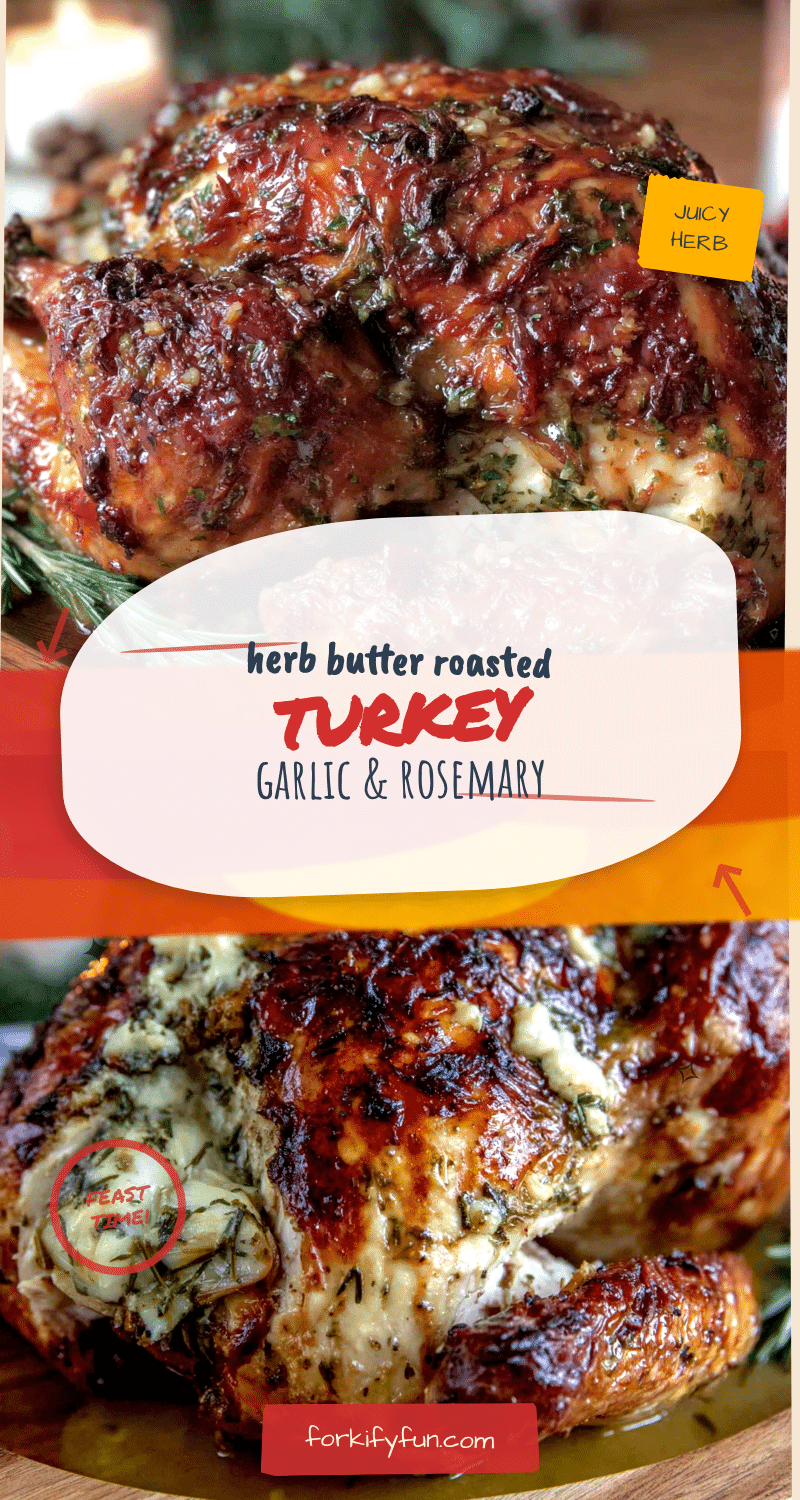
Perfect Juicy Herb Butter Roasted Turkey with Garlic
This foolproof herb butter roasted turkey with garlic and rosemary delivers incredibly juicy meat and crispy golden skin. A simple yet impressive centerpiece for Thanksgiving or any special gathering.
- Prep Time: 20 minutes
- Cook Time: 2 hours 30 minutes
- Total Time: 3 hours 20 minutes
- Yield: 12 servings 1x
- Category: Main Course
- Cuisine: American
Ingredients
- 1 whole turkey (12–14 pounds), thawed if frozen
- 1 cup unsalted butter, softened to room temperature
- 8 cloves garlic, minced (plus 2 whole heads, halved crosswise)
- 3 tablespoons fresh rosemary, finely chopped
- 2 tablespoons fresh thyme leaves
- 1 tablespoon fresh sage, chopped (optional)
- 2 teaspoons kosher salt (plus more for the cavity)
- 1 teaspoon black pepper, freshly ground
- 1 lemon, halved
- 1 large onion, quartered
- 2 cups low-sodium chicken broth
- 2 tablespoons olive oil
Instructions
- Take the turkey out of the refrigerator 1 hour before roasting. Let it sit on the counter, still wrapped.
- Preheat oven to 425°F (220°C).
- In a small bowl, combine softened butter, minced garlic, chopped rosemary, thyme, sage (if using), 2 teaspoons salt, and 1 teaspoon pepper. Mix until evenly distributed.
- Remove giblets and neck from turkey cavity. Pat turkey completely dry with paper towels, inside and out.
- Season the cavity generously with salt and pepper. Stuff with halved lemon, quartered onion, and halved heads of garlic.
- Using your fingers, gently loosen the skin from the breast meat, creating a pocket. Spread half of the herb butter directly onto the breast meat under the skin.
- Spread remaining herb butter all over the outside of the turkey, including legs and wings. Rub olive oil over the buttered skin.
- Tie legs together with kitchen twine and tuck wing tips under the body.
- Place turkey breast-side up on rack in roasting pan. Pour chicken broth into the bottom of the pan.
- Roast at 425°F for 30 minutes. Then reduce oven temperature to 350°F (175°C) without opening the door.
- Continue roasting for 2 to 2.5 hours (about 13 minutes per pound at 350°F after initial sear). Baste with pan juices every 30-45 minutes.
- If skin browns too quickly, tent loosely with aluminum foil.
- Turkey is done when thickest part of thigh reaches 165°F (74°C) and breast reaches 160°F (71°C).
- Remove from oven and let rest for at least 30 minutes before carving.
- While turkey rests, make gravy from pan drippings if desired.
Notes
Let turkey sit at room temperature for 1 hour before roasting for even cooking. Pat turkey completely dry for crispy skin. The herb butter under the skin is the key to juicy meat. Always use a thermometer for doneness. Let rest 30 minutes before carving to redistribute juices.
Nutrition
- Serving Size: 1 serving (about 6-8
- Calories: 450
- Sodium: 450
- Fat: 28
- Saturated Fat: 12
- Carbohydrates: 2
- Protein: 35
Keywords: roasted turkey, herb butter turkey, Thanksgiving turkey, garlic rosemary turkey, juicy turkey, holiday turkey