Maggie wasn’t trying to impress anyone. I’d stopped by her place on a blustery Tuesday afternoon to drop off a book I’d borrowed, and the smell hit me before I even got through the door. It was warm and sweet, with this savory undercurrent that made my stomach growl in a way that was honestly a little embarrassing. She was standing at the stove in her oldest sweater, stirring a pot like it was the most natural thing in the world, and she just shrugged when I asked what was for lunch. “Oh, just some soup I threw together,” she said. “You want a bowl?”
That bowl changed my whole understanding of what a squash soup could be. It wasn’t watery or bland, and it didn’t have that grainy texture that sometimes happens when you puree vegetables. It was velvety, rich, and had this subtle warmth from ginger and a whisper of cinnamon that made it taste like autumn in a cup. The toasted pepitas on top added this little crunch that kept every spoonful interesting. I stood in her tiny kitchen, leaning against the counter, and ate two bowls without even sitting down. Maggie just laughed and said it was no big deal.
But here’s the thing—it was a big deal. It was the kind of soup that makes you want to curl up on the couch with a good book and not move for hours. It’s the recipe I’ve been making ever since, tweaking it just a little, and I think you’re going to love it too. Maybe you’ve been looking for that one soup that feels like a hug in a bowl? This is it. Honestly, I haven’t found anything that comes close for those chilly evenings when all you want is something warm and comforting.
Why You’ll Love This Recipe
Let me tell you why this acorn squash soup has become my go-to for fall and winter. I’ve tested this recipe more times than I can count, adjusting the roasting time, playing with the spice ratios, and I can say with confidence that this version is the one. It’s not just good—it’s the kind of soup that makes you close your eyes after the first bite.
- Quick & Easy: This comes together in about 45 minutes, most of which is hands-off roasting time. Perfect for a weeknight when you want something homemade without spending hours in the kitchen.
- Simple Ingredients: No fancy grocery trips needed. Acorn squash, onion, garlic, ginger, and a few pantry spices are all you need to create something magical.
- Perfect for Cozy Season: This soup was made for those crisp fall days and cold winter nights. It’s the kind of meal that warms you from the inside out.
- Crowd-Pleaser: I’ve served this at dinner parties and family gatherings, and it always gets rave reviews. Even people who think they don’t like squash end up asking for the recipe.
- Unbelievably Delicious: The combination of roasted squash, aromatic ginger, and a hint of maple syrup creates a flavor profile that’s both comforting and sophisticated. The toasted pepitas add that perfect finishing touch.
What makes this recipe different from all the other squash soups out there? It’s the roasting technique. I roast the squash with a little olive oil and salt until it’s caramelized and deeply flavorful, and that extra step makes all the difference. It’s not just another soup recipe—it’s your new favorite way to enjoy acorn squash.
What Ingredients You Will Need
This recipe uses simple, wholesome ingredients that come together to create a soup that’s greater than the sum of its parts. Most of these are pantry staples, and the ones that aren’t are easy to find at any grocery store.
For the Soup
- 2 medium acorn squash (about 2 ½ to 3 pounds total) — Look for squash that feel heavy for their size and have a deep green color with some orange patches. That orange color means they’re ripe and sweet.
- 2 tablespoons olive oil, divided — I use extra-virgin for roasting because it adds a nice fruity note, but regular olive oil works fine too.
- 1 medium yellow onion, chopped — About 1 ½ cups. Sweet onions work well here too if you have them on hand.
- 3 cloves garlic, minced — Fresh garlic is non-negotiable here. The jarred stuff just doesn’t have the same punch.
- 1 tablespoon fresh ginger, grated — This is one of those ingredients that makes the soup sing. Don’t skip it, and definitely don’t use dried ginger if you can help it.
- 4 cups vegetable broth — I recommend Pacific Foods or Imagine brand for the best flavor. Low-sodium is ideal so you can control the salt level yourself.
- 1 tablespoon maple syrup — Pure maple syrup, not pancake syrup. It adds a subtle sweetness that balances the savory notes perfectly.
- ½ teaspoon ground cinnamon — Just a whisper, enough to add warmth without being obvious.
- ¼ teaspoon ground nutmeg — Freshly grated if you have it, but pre-ground works too.
- Salt and black pepper to taste — I start with ½ teaspoon of salt and adjust from there.
- ½ cup coconut milk (optional) — For an extra creamy version. I use full-fat for the richest texture.
For the Toasted Pepitas

- ⅓ cup pepitas (pumpkin seeds) — Raw, unsalted ones are best so you can control the seasoning.
- 1 teaspoon olive oil
- ¼ teaspoon smoked paprika — This gives them a lovely smoky flavor that pairs beautifully with the soup.
- Pinch of salt
Substitution Tips: If you can’t find acorn squash, butternut squash works beautifully here. For a dairy-free version, the coconut milk is optional and you can use any non-dairy milk you prefer. If you’re watching your sugar intake, you can skip the maple syrup, though I find it really rounds out the flavor. And if you don’t have pepitas, roasted sunflower seeds make a great alternative for that crunchy topping.
Equipment Needed
You don’t need a ton of fancy equipment for this recipe, which is part of why I love it so much. Here’s what you’ll need:
- Baking sheet — A rimmed baking sheet works best for roasting the squash. I use a half-sheet pan that’s about 18×13 inches.
- Large soup pot or Dutch oven — You’ll need something that holds at least 4 quarts. I love my Le Creuset Dutch oven for this, but any heavy-bottomed pot works great.
- Immersion blender — This is my preferred tool for pureeing soup because it’s less cleanup. If you don’t have one, a regular blender works too, just be careful with hot liquids.
- Sharp chef’s knife — Acorn squash can be tough to cut, so a sharp knife is essential. A 8-inch chef’s knife is perfect.
- Vegetable peeler — Optional, since you can scoop the squash out of the skin after roasting.
- Small skillet — For toasting the pepitas. Any non-stick or stainless steel pan will do.
- Measuring cups and spoons — For accurate measurements.
Budget-Friendly Tip: If you don’t have an immersion blender, let the soup cool for about 10 minutes before transferring it to a regular blender in batches. Fill the blender no more than halfway and hold the lid down with a kitchen towel to prevent any hot soup from splashing out.
Preparation Method
Alright, let’s get cooking! I’ve broken this down into clear steps so you can follow along easily. Trust me, the results are worth every minute.
- Preheat your oven to 400°F (200°C). This gives it time to come to temperature while you prep the squash.
- Prepare the acorn squash. Using a sharp chef’s knife, carefully cut each squash in half from stem to tip. Scoop out the seeds and stringy pulp with a spoon—I use a metal spoon with a sharp edge for this. Don’t throw those seeds away! You can roast them just like pumpkin seeds for a snack later.
- Roast the squash. Brush the cut sides of the squash with 1 tablespoon of olive oil and season with a pinch of salt. Place them cut-side down on a rimmed baking sheet. Roast for 35-40 minutes, until the flesh is tender and easily pierced with a fork. The edges should be slightly caramelized and golden. This is where the magic happens, folks.
- While the squash roasts, toast the pepitas. Heat a small skillet over medium heat. Add 1 teaspoon of olive oil, then the pepitas. Cook, stirring frequently, for 2-3 minutes until they start to pop and turn golden. Sprinkle with smoked paprika and salt, then stir for another 30 seconds. Transfer to a plate to cool. Warning: They’ll continue toasting on the hot pan, so don’t walk away!
- Sauté the aromatics. Once the squash is about 10 minutes from being done, heat the remaining 1 tablespoon of olive oil in your soup pot over medium heat. Add the chopped onion and cook for 5-6 minutes until soft and translucent. Add the minced garlic and grated ginger, and cook for another minute until fragrant. Your kitchen should smell amazing right about now.
- Scoop out the roasted squash. When the squash is cool enough to handle (about 5 minutes), use a spoon to scoop the flesh away from the skin. You should get about 3 cups of roasted squash. Don’t worry if some caramelized bits stick to the pan—just scrape them off and add them to the pot. That’s where the flavor is!
- Combine and simmer. Add the roasted squash to the pot with the onions, garlic, and ginger. Pour in the vegetable broth, maple syrup, cinnamon, nutmeg, and a pinch of salt. Bring to a gentle boil, then reduce the heat to low and let it simmer for 10 minutes. This allows all the flavors to meld together.
- Blend until smooth. Remove the pot from the heat. Use an immersion blender to puree the soup until it’s completely smooth and velvety. If you’re using a regular blender, work in batches and be careful with the hot liquid. Pro tip: Let the soup cool for 5 minutes before blending to prevent any accidents.
- Finish and adjust. If you’re using coconut milk, stir it in now. Taste the soup and adjust the seasoning—you might want more salt, a pinch more cinnamon, or an extra drizzle of maple syrup. I usually end up adding about ¼ teaspoon more salt and a good crack of black pepper.
- Serve and enjoy. Ladle the soup into bowls and top with a generous sprinkle of toasted pepitas. A drizzle of coconut milk or a swirl of cream makes it extra pretty, but it’s totally optional.
Cooking Tips & Techniques
I’ve made this soup more times than I can count, and I’ve learned a few things along the way. Let me share some tips that will help you get perfect results every time.
Roast the squash properly. This is the most important step. Don’t rush it—the squash needs that full 35-40 minutes to caramelize properly. The natural sugars in the squash need time to develop that deep, sweet flavor that makes this soup so special. I once tried to speed things up by cutting the squash into smaller pieces, and it just wasn’t the same. Trust the process.
Don’t skip the ginger. I know it might seem like a small amount, but fresh ginger adds a warmth and brightness that really lifts the soup. I learned this the hard way when I made a batch without it and the soup felt flat and one-dimensional. The ginger adds that little something that makes you go “hmm, what’s in this?”
Season in layers. Add salt at each stage—when roasting the squash, when sautéing the onions, and again after blending. This builds depth of flavor that you just can’t get from adding all the salt at the end. I used to be heavy-handed with salt at the end, and the soup always tasted salty without being flavorful. Layering changed everything.
Watch the pepitas carefully. They go from perfectly toasted to burnt in about 30 seconds. I’ve ruined more batches than I’d like to admit by getting distracted. Set a timer if you need to, and keep stirring. They’re done when they start to pop and smell nutty.
Make it ahead. This soup actually tastes better the next day. The flavors have time to meld and deepen overnight. I often make a double batch on Sunday and enjoy it for lunches all week. Just reheat gently on the stove or in the microwave.
Variations & Adaptations
One of the best things about this soup is how versatile it is. Here are some ways to make it your own:
Vegan & Dairy-Free
This recipe is naturally vegan and dairy-free as written, especially if you skip the optional coconut milk. The roasted squash creates such a creamy texture on its own that you won’t miss the dairy at all. For an extra creamy version, add a can of full-fat coconut milk instead of the half cup.
Spicy Kick
If you like a little heat, add ½ teaspoon of red pepper flakes along with the garlic and ginger. You can also stir in a pinch of cayenne pepper at the end. I made this version for a friend who loves spicy food, and she said it was the best soup she’d ever had.
Roasted Apple Variation
For a sweeter, fruitier version, roast a peeled and chopped apple alongside the squash. A Honeycrisp or Fuji apple works beautifully. Add it to the pot when you add the squash, and reduce the maple syrup to 1 teaspoon. The apple adds a lovely brightness that’s perfect for early fall.
Herb-Infused Version
Add a sprig of fresh rosemary or a couple of sage leaves to the pot while the soup simmers. Remove them before blending. The herbal notes pair beautifully with the sweetness of the squash. I tried this with sage last Thanksgiving, and it was a hit.
Curried Acorn Squash Soup
Swap the cinnamon and nutmeg for 1 tablespoon of curry powder. Add it to the onions after they’re soft and cook for a minute before adding the broth. This version is warming and aromatic, with a completely different flavor profile that’s equally delicious.
Serving & Storage Suggestions
This soup is wonderful on its own, but here are some ideas for making it a complete meal:
Serving Temperature: Serve the soup hot, but not boiling. I like to let it sit for 2-3 minutes after ladling it into bowls so it’s just the right temperature for eating. A swirl of coconut milk or a drizzle of olive oil on top adds a beautiful finish.
What to Serve With It: A crusty loaf of sourdough bread is my favorite accompaniment. The tangy bread pairs perfectly with the sweet, creamy soup. A simple green salad with a lemony vinaigrette also works beautifully. For a heartier meal, serve it alongside a roasted chicken thighs or a grilled cheese sandwich.
Storage: Let the soup cool completely before transferring it to an airtight container. It will keep in the refrigerator for up to 5 days. The flavors actually get better after a day or two, so don’t be afraid to make it ahead.
Freezing: This soup freezes beautifully. Pour it into freezer-safe containers or zip-top bags, leaving about an inch of headroom for expansion. It will keep for up to 3 months. Thaw overnight in the refrigerator before reheating.
Reheating: Reheat the soup gently on the stovetop over medium-low heat, stirring occasionally. If it’s too thick after being refrigerated, add a splash of broth or water to thin it out. You can also reheat individual portions in the microwave for 2-3 minutes, stirring halfway through.
Flavor Development: I’ve noticed that this soup is even better the next day. The spices have time to meld, and the squash flavor becomes more pronounced. Don’t be surprised if you find yourself looking forward to leftovers!
Nutritional Information & Benefits
This soup isn’t just delicious—it’s packed with nutrients that make it a healthy choice for any meal.
| Nutrient | Amount per Serving (1 cup) |
|---|---|
| Calories | 180 |
| Total Fat | 8g |
| Saturated Fat | 1g |
| Carbohydrates | 26g |
| Fiber | 5g |
| Sugar | 8g |
| Protein | 4g |
| Vitamin A | 180% DV |
| Vitamin C | 30% DV |
| Potassium | 15% DV |
Health Benefits: Acorn squash is a nutritional powerhouse. It’s loaded with vitamin A (in the form of beta-carotene), which is essential for eye health and immune function. The fiber content helps keep you full and supports digestive health. Ginger is known for its anti-inflammatory properties, and it adds a warming element that’s perfect for cold weather. The pepitas provide healthy fats, magnesium, and zinc, making this soup a well-rounded meal.
Dietary Considerations: This soup is naturally gluten-free, dairy-free, and vegan (if you skip the optional coconut milk or use a non-dairy alternative). It’s also relatively low in calories for such a satisfying dish, making it a great option for those watching their weight.
Conclusion
This acorn squash soup has become a staple in my kitchen, and I hope it becomes one in yours too. It’s the kind of recipe that feels special enough for a dinner party but simple enough for a quiet Tuesday night. The combination of sweet roasted squash, warm spices, and crunchy pepitas is just unbeatable.
I love how this soup makes me feel—like I’m taking care of myself and the people I’m feeding. There’s something deeply satisfying about a bowl of homemade soup, especially when it tastes this good. And honestly, the fact that it’s so easy to make is just a bonus.
I’d love to hear how this recipe turns out for you! Did you try any of the variations? Did you add your own twist? Drop a comment below and let me know. And if you share a photo of your soup on Pinterest or Instagram, tag me so I can see your beautiful creation. Happy cooking, friends!
Frequently Asked Questions
Can I use butternut squash instead of acorn squash?
Absolutely! Butternut squash is a great substitute. It’s slightly sweeter and has a similar texture when roasted. You’ll need about 2 pounds of butternut squash, peeled and cubed, and you can roast it the same way. The cooking time might be a few minutes less, so start checking at 30 minutes.
How can I make this soup thicker?
If you prefer a thicker soup, reduce the amount of broth to 3 cups instead of 4. You can also add a peeled and diced potato to the pot when you add the broth—it will break down and naturally thicken the soup. Another option is to let the soup simmer longer after blending to reduce and concentrate the flavors.
Can I make this in a slow cooker?
Yes! Roast the squash as directed, then add it to a slow cooker with the sautéed onions, garlic, ginger, broth, and spices. Cook on low for 4-6 hours or on high for 2-3 hours. Blend as directed before serving. The slow cooker version is perfect for busy days when you want dinner ready when you walk in the door.
How long do the toasted pepitas stay fresh?
Store them in an airtight container at room temperature for up to 2 weeks. They’ll lose some of their crunch over time, so I recommend making a fresh batch for each batch of soup. That said, they’re also delicious as a salad topping or just as a snack, so they never last long in my house!
Can I freeze the soup with the coconut milk already added?
Yes, you can freeze the soup with coconut milk. The texture might change slightly upon thawing—coconut milk can separate a bit—but a good whisk or blend after reheating will bring it back together. If you’re concerned about texture, you can add the coconut milk after thawing and reheating the soup.
Pin This Recipe!
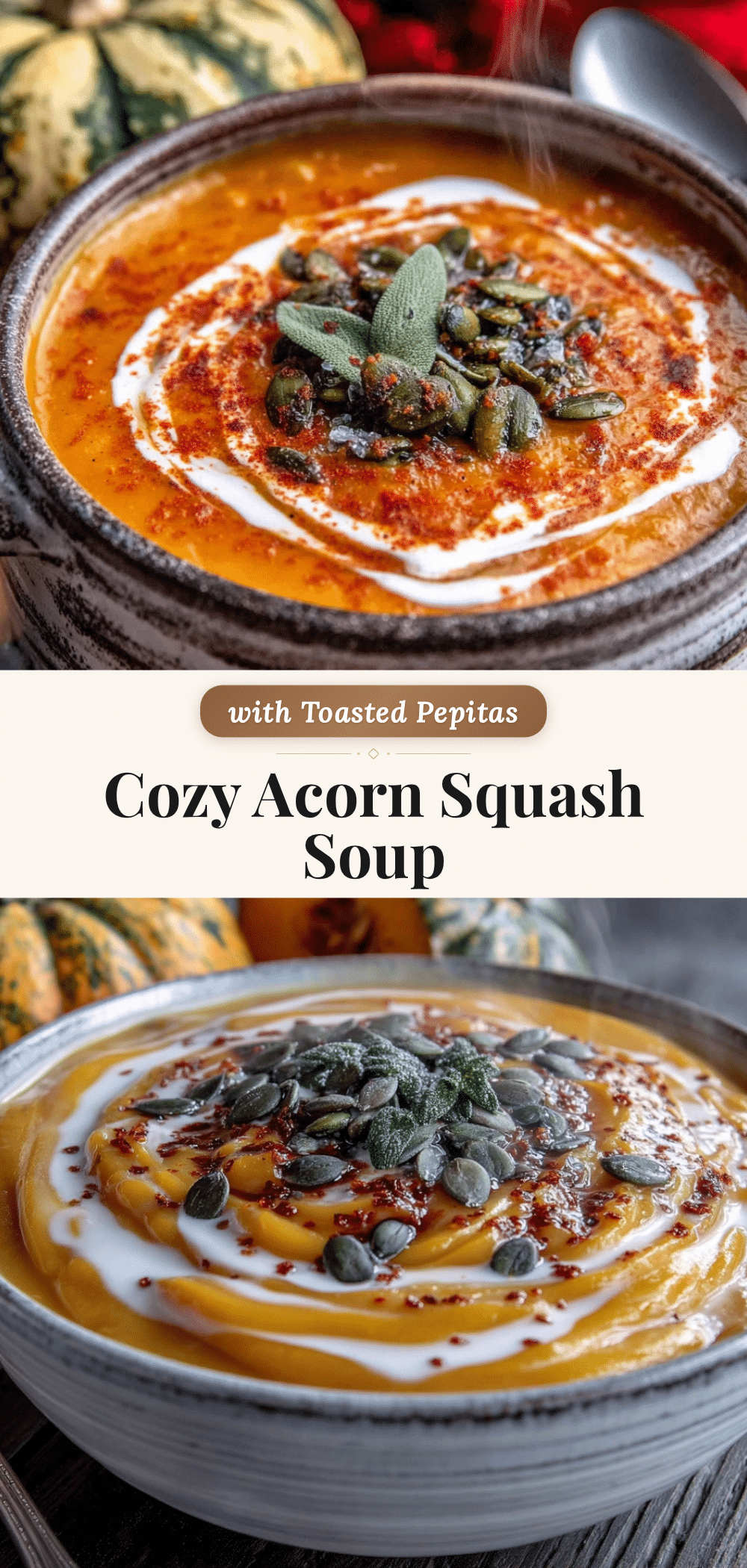
Cozy Acorn Squash Soup with Toasted Pepitas

A velvety, rich acorn squash soup with subtle warmth from ginger and a whisper of cinnamon, topped with crunchy toasted pepitas. Perfect for chilly evenings, this easy recipe comes together in about 45 minutes and is naturally vegan and gluten-free.
- Prep Time: 15 minutes
- Cook Time: 40 minutes
- Total Time: 55 minutes
- Yield: 4 servings 1x
- Category: Soup
- Cuisine: American
Ingredients
- 2 medium acorn squash (about 2 ½ to 3 pounds total)
- 2 tablespoons olive oil, divided
- 1 medium yellow onion, chopped (about 1 ½ cups)
- 3 cloves garlic, minced
- 1 tablespoon fresh ginger, grated
- 4 cups vegetable broth (low-sodium recommended)
- 1 tablespoon maple syrup (pure maple syrup)
- ½ teaspoon ground cinnamon
- ¼ teaspoon ground nutmeg
- Salt and black pepper to taste
- ½ cup coconut milk (optional, for extra creaminess)
- ⅓ cup pepitas (raw, unsalted pumpkin seeds)
- 1 teaspoon olive oil (for pepitas)
- ¼ teaspoon smoked paprika
- Pinch of salt (for pepitas)
Instructions
- Preheat your oven to 400°F (200°C).
- Prepare the acorn squash: Cut each squash in half from stem to tip. Scoop out the seeds and stringy pulp with a spoon.
- Roast the squash: Brush the cut sides with 1 tablespoon olive oil and season with a pinch of salt. Place cut-side down on a rimmed baking sheet. Roast for 35-40 minutes until tender and caramelized.
- While the squash roasts, toast the pepitas: Heat a small skillet over medium heat. Add 1 teaspoon olive oil and the pepitas. Cook, stirring frequently, for 2-3 minutes until they start to pop and turn golden. Sprinkle with smoked paprika and salt, stir for 30 seconds, then transfer to a plate to cool.
- Sauté the aromatics: When the squash is about 10 minutes from being done, heat the remaining 1 tablespoon olive oil in a large soup pot over medium heat. Add the chopped onion and cook for 5-6 minutes until soft. Add the minced garlic and grated ginger, and cook for 1 minute until fragrant.
- Scoop out the roasted squash: When cool enough to handle, scoop the flesh away from the skin (about 3 cups). Add to the pot with the onions, garlic, and ginger.
- Combine and simmer: Add the vegetable broth, maple syrup, cinnamon, nutmeg, and a pinch of salt. Bring to a gentle boil, then reduce heat to low and simmer for 10 minutes.
- Blend until smooth: Remove from heat. Use an immersion blender to puree the soup until smooth. If using a regular blender, work in batches and be careful with hot liquid.
- Finish and adjust: If using coconut milk, stir it in now. Taste and adjust seasoning with more salt, pepper, or maple syrup as needed.
- Serve: Ladle into bowls and top with toasted pepitas. Optionally, drizzle with coconut milk or cream.
Notes
Roast the squash properly for full caramelization. Don’t skip the fresh ginger. Season in layers for depth of flavor. Watch the pepitas carefully as they burn quickly. The soup tastes even better the next day. For a thicker soup, reduce broth to 3 cups or add a diced potato. To freeze, cool completely and store in airtight containers for up to 3 months.
Nutrition
- Serving Size: 1 cup
- Calories: 180
- Sugar: 8
- Fat: 8
- Saturated Fat: 1
- Carbohydrates: 26
- Fiber: 5
- Protein: 4
Keywords: acorn squash soup, vegan soup, gluten-free soup, fall soup, winter soup, roasted squash soup, pepitas