I was standing in the fish aisle, staring at the price tags and doing that mental math we all do when feeding a family on a budget. A woman next to me—maybe in her sixties, with the kind of calm confidence that comes from decades of feeding people—watched me pick up a package of salmon fillets, put them back, then pick them up again. She didn’t say anything at first. Then she reached over, grabbed the same pack I was holding, and said, “This one. But you’re going to cook it wrong if you do what they tell you on the box.”
I laughed, honestly, because she wasn’t wrong. I’d been burned by dry, sad salmon more times than I care to admit. She told me about a sheet pan method her daughter-in-law had shown her—a lemon garlic butter situation that took almost no effort and somehow made everyone at the table happy, even the kid who “didn’t like fish.” She scribbled the rough idea on a receipt she pulled from her purse. I mean, who does that anymore? It felt like a gift from another era.
That night, I tried it. The power didn’t go out, nothing caught on fire, and my six-year-old asked for seconds. I knew I’d stumbled onto something special—a dinner that felt fancy but cost less than takeout, with cleanup that took maybe three minutes. Maybe you’ve been there, standing in a grocery aisle hoping for a sign. Well, this is it. This Easy Sheet Pan Lemon Garlic Butter Salmon became our family’s go-to, and I think it’s about to become yours too.
Why You’ll Love This Recipe
Let me tell you why this sheet pan salmon has earned a permanent spot in our weekly rotation. I’ve tested this recipe at least a dozen times—sometimes with different veggies, once when I forgot the garlic (don’t do that), and even when I had to use frozen salmon because the store was out of fresh. It worked every single time. That’s the kind of reliability you need when you’re feeding a hungry family on a Tuesday night.
- Quick & Easy: From fridge to table in under 30 minutes. Seriously, the oven does most of the work while you unload the dishwasher or help with homework.
- Simple Ingredients: You probably already have garlic, lemons, butter, and salt in your kitchen. The only thing you might need to grab is the salmon itself.
- Perfect for Busy Weeknights: This isn’t a weekend project. It’s the dinner you make when everyone is hungry and you have exactly zero energy left.
- Crowd-Pleaser: My kids call it “the buttery fish” and ask for it by name. Even my husband, who claims he’s “not a big fish person,” clears his plate.
- Unbelievably Delicious: The lemon garlic butter creates this magical sauce that coats the salmon and roasts into the vegetables. It’s comfort food that somehow feels light and satisfying at the same time.
What makes this recipe different from every other salmon recipe out there? It’s the balance. The butter isn’t overwhelming, the garlic isn’t raw and harsh, and the lemon brightens everything without making it sour. Plus, cooking everything on one sheet pan means the flavors mingle while they roast—the salmon stays moist, the vegetables get caramelized edges, and you end up with a complete meal that tastes like you spent an hour in the kitchen when you really just tossed everything on a pan and walked away.
What Ingredients You Will Need
This recipe uses simple, wholesome ingredients that come together to create something genuinely special. You don’t need a fancy grocery store or specialty items—just good, honest food that works together.
- Salmon fillets (4 fillets, about 6 ounces each): Look for fillets that are similar in thickness so they cook evenly. I prefer wild-caught when it’s on sale, but honestly, farm-raised works beautifully here too. The butter keeps it from drying out either way.
- Unsalted butter (4 tablespoons, melted): I use salted butter in a pinch and just reduce the added salt slightly. Kerrygold is my favorite for flavor, but any good butter works.
- Fresh garlic (4 cloves, minced): Please don’t use the jarred stuff here. Fresh garlic makes a real difference—it roasts into something sweet and mellow instead of staying sharp and bitter.
- Fresh lemon juice (2 tablespoons, plus lemon slices for topping): Roll your lemons on the counter before juicing to get the most out of them. Meyer lemons are lovely if you find them, but regular lemons are perfect.
- Lemon zest (1 teaspoon): Don’t skip this! The zest adds brightness that juice alone can’t give you.
- Dijon mustard (1 teaspoon): This is my secret ingredient. It emulsifies the butter sauce and adds a tiny tang that makes everything more interesting. Grey Poupon is my go-to.
- Honey (1 tablespoon): Just a touch to balance the acidity. You can use maple syrup if that’s what you have.
- Olive oil (2 tablespoons): For tossing the vegetables. A good everyday olive oil is fine—save the fancy stuff for salads.
- Asparagus (1 bunch, trimmed): Or green beans, or broccoli—whatever green vegetable your family will actually eat. Asparagus is my favorite because it roasts in the same time as the salmon.
- Cherry tomatoes (1 cup, halved): They burst in the oven and create little pockets of sweetness. Grape tomatoes work too.
- Salt and black pepper (to taste): I use kosher salt for cooking and flaky sea salt for finishing.
- Fresh parsley or dill (for garnish, optional): A sprinkle of fresh herbs makes it look restaurant-worthy, but it’s totally optional.
- Red pepper flakes (optional, for heat): My husband adds these to his portion. I leave them out of the main dish so the kids don’t complain.
Equipment Needed
You don’t need a professional kitchen to make this recipe work. Here’s what you’ll actually use:
- Sheet pan (half-sheet size, 18×13 inches): A rimmed baking sheet is important—it catches the butter sauce and prevents spills. I’ve used the same Nordic Ware pan for years and it’s never let me down.
- Parchment paper or aluminum foil: For easy cleanup. Parchment is my preference because nothing sticks to it.
- Small bowl: For whisking together the butter sauce.
- Chef’s knife and cutting board: For mincing garlic and trimming vegetables. A sharp knife makes everything faster and safer.
- Microplane or zester: For zesting the lemon. A box grater works in a pinch, but a microplane is easier.
- Measuring spoons: For accuracy, though I often eyeball the garlic and lemon juice now.
- Tongs: For flipping the vegetables halfway through. A spatula works too.
If you don’t have a sheet pan, a large baking dish will work—just know that the vegetables might steam instead of roast, so they won’t get as caramelized. And if you don’t have parchment paper, foil is fine. Just spray it lightly with cooking spray so nothing sticks.
Preparation Method
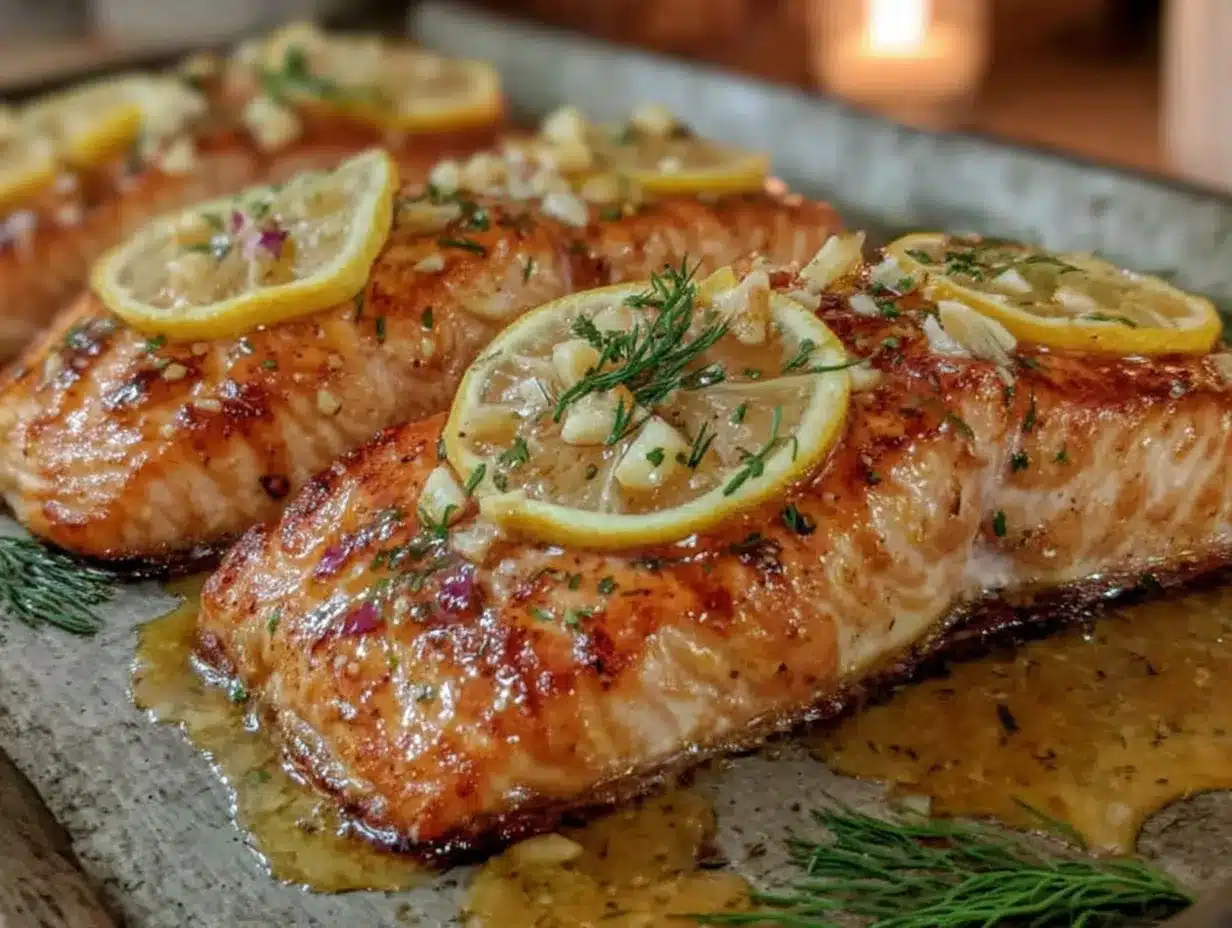
Let me walk you through this step by step. I’ve made this so many times I could do it in my sleep, but I’ll share every detail so yours turns out perfect on the first try.
- Preheat your oven to 400°F (200°C). Place the rack in the middle position. While it’s heating, line your sheet pan with parchment paper or foil. This isn’t just for easy cleanup—it also prevents the salmon from sticking and tearing apart when you serve it.
- Prepare the vegetables. Trim the woody ends off your asparagus (about an inch from the bottom—you’ll feel where they naturally snap). Halve the cherry tomatoes. Place the asparagus and tomatoes on one half of the sheet pan. Drizzle with 1 tablespoon of olive oil, season with salt and pepper, and toss gently with your hands. Spread them in a single layer.
- Make the lemon garlic butter sauce. In a small bowl, combine 4 tablespoons melted butter, 4 minced garlic cloves, 2 tablespoons lemon juice, 1 teaspoon lemon zest, 1 teaspoon Dijon mustard, and 1 tablespoon honey. Whisk until smooth. Taste it—it should be bright, buttery, and just a little sweet. If it tastes too tart, add another tiny drizzle of honey.
- Prep the salmon. Pat the salmon fillets dry with paper towels. This is crucial—dry salmon browns better and won’t steam. Place the fillets skin-side down on the empty half of the sheet pan, leaving a little space between each one. Season lightly with salt and pepper.
- Brush the salmon. Using a pastry brush or the back of a spoon, generously coat each fillet with the lemon garlic butter sauce. Don’t forget the sides! Reserve about 2 tablespoons of the sauce for later.
- Add lemon slices. Place 2-3 thin lemon slices on top of each fillet. They’ll caramelize slightly and infuse the fish with even more citrus flavor. Don’t skip this—it looks beautiful and adds another layer of flavor.
- Roast for 12-15 minutes. The exact time depends on the thickness of your fillets. For thin fillets (about 1 inch thick), start checking at 12 minutes. For thicker fillets, give it 15-16 minutes. The salmon is done when it flakes easily with a fork and the internal temperature reaches 145°F (63°C). The asparagus should be tender-crisp and the tomatoes should be starting to burst.
- Broil for 1-2 minutes (optional but recommended). If you want slightly caramelized edges on the salmon and extra color on the vegetables, switch your oven to broil for the last minute or two. Watch it carefully—broilers are aggressive and can burn things quickly.
- Finish and serve. Remove the sheet pan from the oven. Drizzle the reserved butter sauce over the salmon and vegetables. Sprinkle with fresh parsley or dill if you’re using it, and a pinch of flaky sea salt. Serve immediately, right from the sheet pan if you want to keep things casual.
A note on timing: The vegetables and salmon cook at the same temperature, which is the beauty of sheet pan meals. If you’re using heartier vegetables like broccoli or potatoes, you’ll need to start them first or cut them smaller so they finish at the same time.
Cooking Tips & Techniques
I’ve made every mistake you can imagine with this recipe, so let me save you the trouble. Here’s what I’ve learned the hard way:
- Don’t overcrowd the pan. If everything is crammed together, the salmon steams instead of roasts. Use a second pan if you need to—it’s worth the extra minute of cleanup.
- Room temperature salmon cooks more evenly. Take the fillets out of the fridge 10-15 minutes before cooking. Cold salmon straight from the fridge will cook unevenly, with the outside drying out before the center is done.
- Pat the salmon dry. I can’t stress this enough. Wet salmon won’t brown properly, and you’ll end up with pale, unappetizing fish. Paper towels are your friend here.
- Taste your butter sauce before brushing it on. Garlic cloves vary in size and intensity. If yours are particularly strong, you might want to use three instead of four. Trust your taste buds.
- Check for doneness early. Salmon continues cooking after you take it out of the oven (carryover cooking), so it’s better to pull it when it’s just barely opaque in the center. Overcooked salmon is dry and sad, and we don’t do sad salmon here.
- Use the skin as a barrier. If your salmon has skin, cook it skin-side down and don’t flip it. The skin protects the delicate flesh from direct heat, and it peels off easily after cooking.
- Invest in an instant-read thermometer. It takes the guesswork out of cooking fish. For about $15, you’ll never serve dry salmon again. It’s one of the best kitchen tools I own.
I once forgot to set a timer and left the salmon in for almost 20 minutes. It was… not great. My kids ate it with extra ketchup (don’t judge), and I learned that setting two timers is better than one. We all make mistakes, and that’s okay—the next batch will be better.
Variations & Adaptations
This recipe is incredibly forgiving, and I’ve tried more variations than I can count. Here are some of my favorites:
- Swap the vegetables: Broccoli, green beans, zucchini, bell peppers, or even thinly sliced sweet potatoes all work beautifully. Just adjust the cooking time for heartier vegetables—cut them smaller or start them 5 minutes before adding the salmon.
- Make it dairy-free: Use vegan butter or a good olive oil instead of butter. The flavor will be slightly different, but still delicious. I’ve done this for a friend with a dairy allergy and it worked perfectly.
- Add a crust: Mix 2 tablespoons of panko breadcrumbs with a little melted butter and sprinkle over the salmon before roasting. It adds a lovely crunchy texture that my kids adore.
- Try different herbs: Dill is classic with salmon, but thyme, oregano, or even a little rosemary work beautifully. I made it with thyme one night when I had no parsley, and it became my new favorite.
- Spice it up: Add a pinch of cayenne pepper or smoked paprika to the butter sauce for a warm, smoky kick. My husband loves this version.
- Use maple syrup instead of honey: It adds a slightly different sweetness that pairs beautifully with the lemon. I’ve also used brown sugar in a pinch—just dissolve it in the warm butter first.
- Make it a complete meal: Add halved baby potatoes or chunks of sweet potato to the sheet pan. Toss them in olive oil and seasonings, and roast for 15 minutes before adding the salmon and other vegetables.
One night, I didn’t have any lemons (the horror!), so I used orange juice and zest instead. It was surprisingly good—sweeter and more mellow. My kids actually preferred it, which tells you everything about my household’s palate.
Serving & Storage Suggestions
This salmon is best served fresh from the oven, but here’s how to make the most of it no matter when you’re eating.
Serving temperature and presentation: Serve the salmon warm, right off the sheet pan or transferred to a platter. I like to arrange the vegetables around the fillets and spoon any remaining butter sauce over everything. A sprinkle of fresh herbs and a few extra lemon wedges on the side make it look like you tried really hard when you really just threw it all on a pan.
What to serve with it: This is a complete meal on its own, but if you want to stretch it further, serve it with:
- Fluffy rice or quinoa to soak up the butter sauce
- Crusty bread for the same reason
- A simple green salad with a lemony vinaigrette
- Roasted or mashed potatoes
Storage: Leftover salmon keeps in an airtight container in the refrigerator for up to 3 days. The vegetables will soften slightly, but the flavor is still wonderful. I wouldn’t recommend freezing cooked salmon—the texture changes too much when thawed.
Reheating: The best way to reheat salmon is gently. Place it in a 300°F (150°C) oven for about 10 minutes, or until warmed through. You can also reheat it in a skillet over medium-low heat with a splash of water or lemon juice, covered, for 3-4 minutes. Please don’t microwave it—the microwave turns salmon into a rubbery, fishy mess. I learned this the hard way.
How flavors develop: Honestly, this salmon is best the day it’s made. The butter sauce is brightest and the vegetables are crispiest right after roasting. That said, the leftovers make an excellent lunch the next day—flaked over a salad or stuffed into a wrap with some greens.
Nutritional Information & Benefits
Here’s the approximate nutritional breakdown for one serving (one fillet with vegetables and sauce):
| Nutrient | Amount |
|---|---|
| Calories | 420 |
| Protein | 35g |
| Fat | 26g |
| Saturated Fat | 10g |
| Carbohydrates | 12g |
| Fiber | 3g |
| Sugar | 6g |
| Sodium | 480mg |
Salmon is packed with omega-3 fatty acids, which are great for heart health and brain function. It’s also an excellent source of high-quality protein, B vitamins, and selenium. The vegetables add fiber, vitamins A and C, and antioxidants. This is the kind of meal that makes you feel good about what you’re feeding your family—nutritious, satisfying, and actually delicious.
Dietary considerations: This recipe is naturally gluten-free and low-carb. To make it dairy-free, substitute the butter with olive oil or vegan butter. It’s not suitable for those with fish allergies, obviously, but you could try the same method with chicken breasts or firm tofu—just adjust the cooking time accordingly.
Conclusion
This Easy Sheet Pan Lemon Garlic Butter Salmon has become more than just a recipe in our house—it’s a solution. It’s what I make on the nights when I’m tired, when the budget is tight, and when I need everyone to sit down and eat something good together. It’s the dinner that makes me feel like I have my act together, even on days when I definitely don’t.
I hope you’ll try it and make it your own. Swap in whatever vegetables your family loves, adjust the garlic to your taste, and don’t be afraid to experiment. The beauty of sheet pan cooking is that it’s forgiving, flexible, and almost impossible to mess up completely. And if you do mess up? Well, there’s always next time.
I’d love to hear how it turns out for you. Drop a comment below and let me know what variations you tried, or tag me in your photos if you share them online. Your family deserves a dinner that’s easy, affordable, and genuinely delicious—and this salmon delivers on all three.
Now go preheat that oven. Your sheet pan is waiting.
Frequently Asked Questions
Can I use frozen salmon for this recipe?
Yes, you can! Thaw the salmon completely in the refrigerator overnight, then pat it very dry before cooking. Frozen salmon releases more water as it cooks, so drying it well is essential. You might need to add 2-3 minutes to the cooking time.
How do I know when the salmon is fully cooked?
The easiest way is to use an instant-read thermometer—salmon is done at 145°F (63°C). If you don’t have a thermometer, look for the flesh to turn from translucent to opaque and flake easily when gently pressed with a fork. The center should still be slightly pink and moist, not dry and crumbly.
Can I prepare this recipe ahead of time?
You can prep the vegetables and make the butter sauce up to a day in advance. Store them separately in the refrigerator. When you’re ready to cook, just arrange everything on the sheet pan and roast. I wouldn’t recommend assembling the whole dish ahead of time, as the salmon can become watery.
What if I don’t have Dijon mustard?
You can leave it out entirely, or substitute with a teaspoon of whole grain mustard or a tiny pinch of dry mustard powder. The mustard adds a subtle tang and helps emulsify the sauce, but the recipe will still work without it.
Can I double this recipe for a crowd?
Absolutely! Just use two sheet pans instead of one to avoid overcrowding. Place them on separate oven racks and swap their positions halfway through cooking. You may need to add a few minutes to the cooking time if both pans are in the oven at once.
Pin This Recipe!
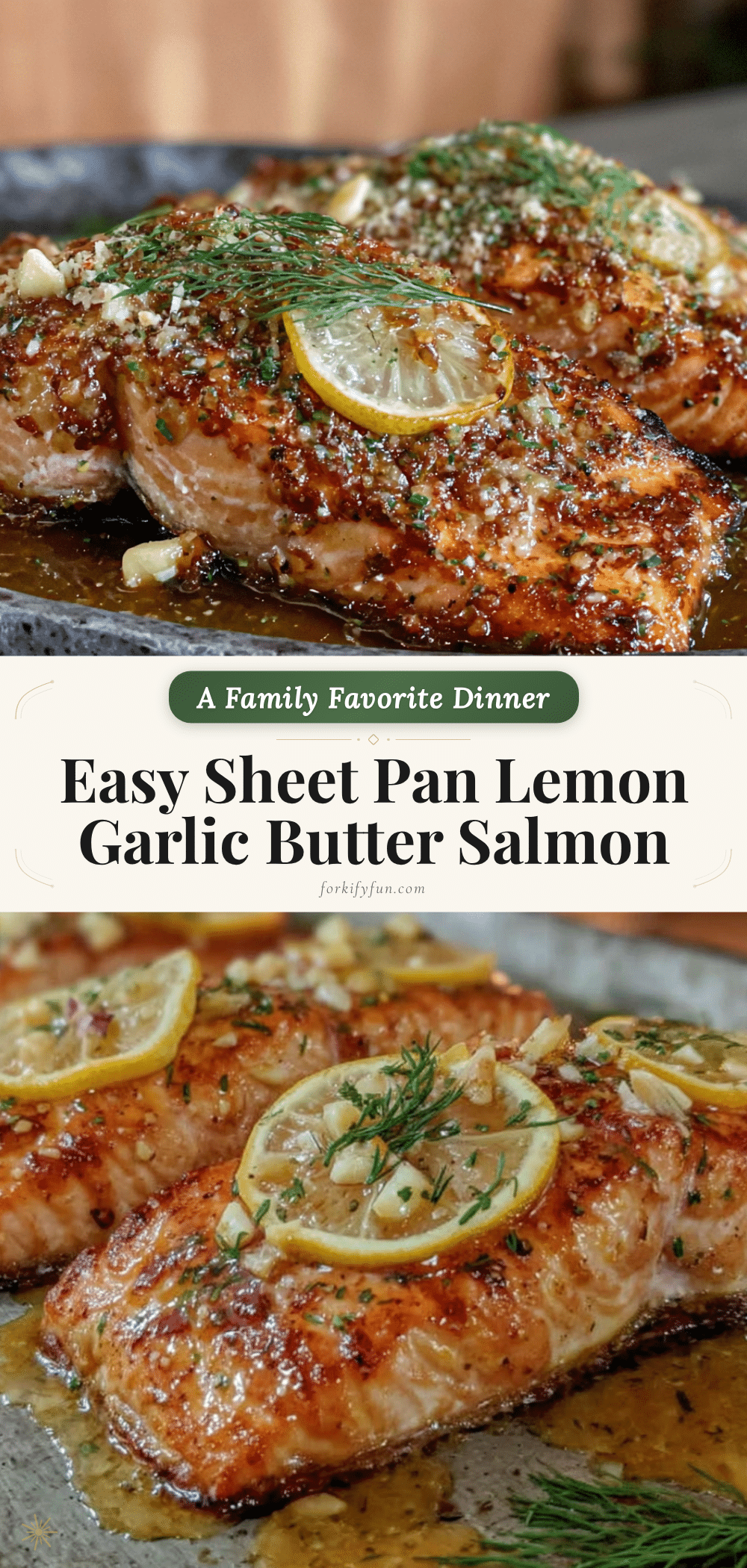
Easy Sheet Pan Lemon Garlic Butter Salmon

This Easy Sheet Pan Lemon Garlic Butter Salmon is a quick, family-friendly dinner that comes together in under 30 minutes with simple ingredients. The lemon garlic butter sauce keeps the salmon moist and flavorful, while the vegetables roast to perfection on one pan for easy cleanup.
- Prep Time: 10 minutes
- Cook Time: 15 minutes
- Total Time: 25 minutes
- Yield: 4 servings 1x
- Category: Main Course
- Cuisine: American
Ingredients
- 4 salmon fillets (about 6 ounces each)
- 4 tablespoons unsalted butter, melted
- 4 cloves fresh garlic, minced
- 2 tablespoons fresh lemon juice
- 1 teaspoon lemon zest
- 1 teaspoon Dijon mustard
- 1 tablespoon honey
- 2 tablespoons olive oil
- 1 bunch asparagus, trimmed
- 1 cup cherry tomatoes, halved
- Salt and black pepper to taste
- Fresh parsley or dill for garnish (optional)
- Red pepper flakes for heat (optional)
Instructions
- Preheat your oven to 400°F (200°C). Line a sheet pan with parchment paper or aluminum foil.
- Trim the woody ends off the asparagus and halve the cherry tomatoes. Place them on one half of the sheet pan, drizzle with 1 tablespoon olive oil, season with salt and pepper, and toss gently. Spread in a single layer.
- In a small bowl, whisk together melted butter, minced garlic, lemon juice, lemon zest, Dijon mustard, and honey until smooth. Reserve about 2 tablespoons for later.
- Pat the salmon fillets dry with paper towels. Place them skin-side down on the empty half of the sheet pan, leaving space between each. Season lightly with salt and pepper.
- Brush the salmon generously with the lemon garlic butter sauce, including the sides. Place 2-3 thin lemon slices on top of each fillet.
- Roast for 12-15 minutes, until the salmon flakes easily with a fork and reaches an internal temperature of 145°F (63°C). The asparagus should be tender-crisp and the tomatoes starting to burst.
- Optional: Broil for 1-2 minutes for caramelized edges. Watch carefully to avoid burning.
- Remove from the oven. Drizzle the reserved butter sauce over the salmon and vegetables. Garnish with fresh herbs and flaky sea salt if desired. Serve immediately.
Notes
For best results, pat the salmon dry and let it come to room temperature for 10-15 minutes before cooking. Don’t overcrowd the pan; use two pans if needed. Check for doneness early to avoid overcooking. Leftovers keep in the refrigerator for up to 3 days; reheat gently in a 300°F oven or skillet.
Nutrition
- Serving Size: 1 fillet with vegeta
- Calories: 420
- Sugar: 6
- Sodium: 480
- Fat: 26
- Saturated Fat: 10
- Carbohydrates: 12
- Fiber: 3
- Protein: 35
Keywords: sheet pan salmon, lemon garlic butter salmon, easy salmon recipe, family dinner, quick weeknight meal, healthy salmon, one pan meal