There used to be a tiny farm-to-table spot tucked away on a side street in Portland called The Gathered Table that made a butternut squash mac and cheese that haunted me. When they closed suddenly—like, papered-over-windows closed—I actually mourned it. I mean, I stood outside the locked door like a weirdo, peeking through the cracks, hoping they’d just been renovating. After twelve tries—some too watery, some too sweet, one that my husband politely called “aggressively orange”—I finally got it.
The secret, honestly, wasnt some fancy cheese blend or a complicated roux. It was roasting the squash until it got those caramelized brown spots and then pureeing it with a little sage-infused cream. That first bite when I got it right? I actually teared up. Not kidding. My neighbor Karen knocked on the door because she heard me yelling “YES!” from the kitchen.
This creamy butternut squash mac and cheese with crispy sage is that recipe. It’s the one I now make for every fall gathering, every holiday potluck, and honestly, for random Tuesdays when I need something that tastes like a hug. The squash makes the sauce velvety without needing a ton of heavy cream, and the crispy sage leaves on top? That’s the part that makes people close their eyes and go quiet. You know that feeling when something tastes exactly like a memory you didn’t realize you had? Yeah, that’s this dish.
Why You’ll Love This Recipe
Let me tell you why this particular version of mac and cheese is different from the dozens you’ve probably seen floating around the internet. I tested this thing seven times before I even let my family taste it. Seven. Times. And then I tested it three more times to make sure it was foolproof for you. Here’s why it works:
- It’s Actually Creamy Without Being Heavy : The roasted butternut squash creates this silky, velvety texture that coats every single noodle. You don’t need a whole block of cream cheese or a quart of heavy cream to get that luxurious mouthfeel.
- Simple Pantry Ingredients : No weird specialty cheeses or hard-to-find spices. You need a butternut squash, some good cheddar, pasta, and a few pantry staples. That’s it.
- Perfect for Fall Gatherings : This is the dish that shows up at Thanksgiving and gets devoured before the turkey even hits the table. It’s also incredible for cozy weeknight dinners when you want something that feels special but doesn’t require hours of work.
- Crowd-Pleaser for All Ages : Kids love the cheesy pasta part. Adults go crazy for the crispy sage and the subtle sweetness of the squash. Everyone wins.
- Unbelievably Delicious : The combination of nutty browned butter, crispy fried sage, sharp cheddar, and sweet roasted squash is honestly next-level. It’s comfort food that feels sophisticated without being fussy.
This recipe is the kind that makes you close your eyes after the first bite. It’s comfort food reimagined—healthier, faster, but with the same soul-soothing satisfaction. Perfect for impressing guests without stress, or turning a simple Tuesday into something memorable.
What Ingredients You Will Need
This creamy butternut squash mac and cheese uses simple, wholesome ingredients to deliver bold flavor and satisfying texture without the fuss. Most of these are pantry staples or easy fall finds.
For the Roasted Squash
- 1 medium butternut squash (about 2-2.5 lbs), peeled, seeded, and cubed into 1-inch pieces
- 2 tablespoons olive oil
- 1/2 teaspoon salt
- 1/4 teaspoon black pepper
- Pinch of nutmeg (freshly grated if you have it)
For the Pasta

- 1 pound (16 oz) cavatappi or elbow macaroni (I prefer cavatappi because the ridges hold the sauce beautifully)
- Salt for the pasta water (be generous—it’s the only chance to season the pasta itself)
For the Cheese Sauce
- 3 tablespoons unsalted butter
- 3 tablespoons all-purpose flour
- 2 cups whole milk (warm if you remember, cold is fine too)
- 1 cup roasted butternut squash puree
- 2 cups sharp cheddar cheese, freshly shredded (please shred your own—pre-shredded has anti-caking agents that mess with the texture)
- 1/2 cup Gruyere or fontina cheese, freshly shredded (adds incredible meltiness)
- 1/2 teaspoon Dijon mustard (trust me on this—it brightens the whole dish)
- 1/4 teaspoon smoked paprika
- Salt and pepper to taste
For the Crispy Sage Topping
- 3 tablespoons unsalted butter
- 12-15 fresh sage leaves
- 1/4 cup panko breadcrumbs (optional, but adds a lovely crunch)
- Flaky sea salt for finishing
Ingredient Tips: Look for a butternut squash that feels heavy for its size—that means it’s fresh and moist inside. I recommend Tillamook or Cabot for sharp cheddar; they melt beautifully and have great flavor. For the sage, fresh is non-negotiable here. Dried sage just won’t give you that crispy texture or the aromatic punch.
Substitution Guidance: Use gluten-free pasta and a 1:1 gluten-free flour blend if needed. For a dairy-free version, substitute the butter with vegan butter, use unsweetened oat milk, and choose a good melting vegan cheddar. The squash puree will still give you that creamy texture.
Equipment Needed
You don’t need a fancy kitchen to pull this off, but a few tools make the process smoother:
- Baking Sheet : A rimmed half-sheet pan works best for roasting the squash evenly. Line it with parchment for easy cleanup.
- Large Pot : For boiling the pasta. Go with a 5-6 quart pot so the pasta has room to move.
- Medium Saucepan or Dutch Oven : For making the cheese sauce. A Dutch oven is ideal because you can finish the whole dish in it if you’re doing a stovetop version.
- Food Processor or Blender : For pureeing the roasted squash. A high-speed blender will give you the silkiest texture, but a food processor works perfectly too.
- Box Grater : Please, for the love of all things cheesy, shred your own cheese. It takes 2 extra minutes and makes a huge difference.
- Small Skillet : For browning the butter and crisping the sage leaves. A nonstick or stainless steel pan works fine.
- 9×13 Baking Dish : If you’re baking the assembled mac and cheese (which I recommend for that golden top).
If you don’t have a food processor, you can mash the roasted squash with a potato masher or fork—it just won’t be as smooth. And honestly, a slightly rustic texture is charming too.
Preparation Method
- Roast the Squash (40 minutes) : Preheat your oven to 400°F (200°C). Toss the cubed butternut squash with olive oil, salt, pepper, and a pinch of nutmeg. Spread it in a single layer on your baking sheet. Roast for 35-40 minutes, flipping halfway through, until the squash is tender and has those gorgeous caramelized brown spots. Let it cool slightly, then transfer to your food processor or blender. Puree until completely smooth. You should have about 1 1/2 cups of puree—you’ll use 1 cup for the sauce and save the rest for another use (or just eat it with a spoon, no judgment).
- Cook the Pasta (10 minutes) : While the squash roasts, bring a large pot of generously salted water to a boil. Cook your pasta according to package directions until al dente—usually about 8-9 minutes for cavatappi. Drain well, but don’t rinse it. That starch on the pasta helps the sauce cling. Set aside.
- Make the Roux (5 minutes) : In your medium saucepan or Dutch oven, melt 3 tablespoons of butter over medium heat. Whisk in the flour and cook for 1-2 minutes, stirring constantly. You’re looking for a pale golden color—don’t let it brown. This step gets rid of the raw flour taste.
- Build the Sauce (5 minutes) : Slowly pour in the warm milk while whisking constantly to prevent lumps. Keep whisking until the mixture thickens, about 3-4 minutes. It should coat the back of a spoon. Now whisk in 1 cup of your roasted squash puree until fully incorporated. The sauce will turn a beautiful golden-orange color.
- Add the Cheese (3 minutes) : Reduce the heat to low. Add the shredded cheddar and Gruyere a handful at a time, stirring gently until each addition is fully melted before adding the next. Stir in the Dijon mustard, smoked paprika, and salt and pepper to taste. Taste it—yes, right now. Adjust seasoning if needed. The sauce should be creamy and slightly thick, but not gloppy.
- Combine Pasta and Sauce (2 minutes) : Add the cooked pasta to the cheese sauce and stir gently until every piece is coated. If the sauce seems too thick, add a splash of the reserved pasta water or a little warm milk to loosen it up.
- Make the Crispy Sage Topping (5 minutes) : In a small skillet, melt 3 tablespoons of butter over medium heat. Once it’s bubbling, add the sage leaves in a single layer. Cook for 30-60 seconds per side until they’re crisp and the butter starts to brown and smell nutty. Remove the sage leaves with a slotted spoon and drain on a paper towel. If using panko, add it to the browned butter and stir for 1-2 minutes until golden. Remove from heat.
- Bake (Optional but Recommended – 15 minutes) : Preheat your oven to 375°F (190°C). Transfer the mac and cheese to a greased 9×13 baking dish. Sprinkle the panko-butter mixture over the top if using. Bake for 15 minutes until bubbly and golden on top. If you skipped the panko, just bake until heated through, about 10 minutes.
- Finish and Serve (2 minutes) : Remove from the oven and let it rest for 5 minutes (this helps the sauce set slightly). Top with the crispy sage leaves and a sprinkle of flaky sea salt. Serve warm and watch it disappear.
Cooking Tips & Techniques
I learned most of these the hard way, so you don’t have to. Here’s what I wish someone had told me:
Don’t skip roasting the squash. I know it’s tempting to just boil it to save time, but roasting concentrates the sweetness and gives you that deep, caramelized flavor that makes this dish special. The difference is night and day. Trust me on this one.
Shred your own cheese. I cannot stress this enough. Pre-shredded cheese is coated in cellulose and potato starch to prevent clumping, which also prevents it from melting smoothly. Your sauce will be grainy instead of silky. Just buy a block and spend two minutes with a grater. Your future self will thank you.
Warm your milk. Cold milk added to a hot roux can cause lumps and seize up your sauce. Microwave it for 30-45 seconds before adding it. If you forget (I do, constantly), just add it slowly while whisking like your life depends on it. It’ll still work, just might take a little more elbow grease.
Watch your heat with the cheese. Cheese sauce should be made over low heat. High heat will cause the proteins to seize and your sauce will turn grainy or even separate. Patience is the secret ingredient here.
Make the sage leaves in batches. If you crowd the pan, they’ll steam instead of crisp. Give them room to breathe. And watch them carefully—they go from perfect to burnt in about 15 seconds.
My biggest failure? The first time I made this, I used pre-shredded cheese AND forgot to roast the squash. The result was a watery, grainy, sad orange mess that my kids refused to eat. My husband tried to be nice and said it was “interesting.” That’s code for “never make this again.” I almost gave up, but I’m stubborn. Now I know better.
Variations & Adaptations
This recipe is wonderfully flexible. Here are some ways to make it your own:
Make It Gluten-Free : Use gluten-free pasta (I like Banza chickpea pasta for extra protein) and swap the all-purpose flour for a 1:1 gluten-free flour blend or cornstarch slurry (2 tablespoons cornstarch mixed with 2 tablespoons cold water, added at the end). The texture will be slightly different but still delicious.
Add Some Protein : Stir in 2 cups of shredded rotisserie chicken, cooked crumbled sausage, or crispy bacon bits before baking. This turns it into a complete meal that’ll fill up even the hungriest eaters.
Try a Different Squash : No butternut squash? Use roasted kabocha, acorn squash, or even sweet potato. Each will give a slightly different flavor profile—sweet potato makes it a bit sweeter, while kabocha is nuttier and richer.
Spice It Up : Add 1/4 teaspoon cayenne pepper or a pinch of red pepper flakes to the cheese sauce for a subtle kick. Or stir in some roasted garlic cloves for an extra layer of savory depth.
Vegan Version : Use vegan butter, unsweetened oat milk, and a good melting vegan cheddar (I like Violife or Miyoko’s). The squash puree does a lot of the heavy lifting for creaminess, so this actually works surprisingly well.
My Personal Favorite Variation : I once added caramelized onions and crispy prosciutto on top instead of the sage. It was ridiculous. Like, ridiculous in the best way. The sweet onions and salty prosciutto with the creamy squash sauce? Chef’s kiss.
Serving & Storage Suggestions
Serving: Serve this mac and cheese hot, straight from the oven or stovetop. The crispy sage leaves should go on right before serving so they stay crunchy. I like to serve it in a big, shallow bowl with a simple green salad on the side dressed with lemon vinaigrette—the acidity cuts through the richness beautifully. A glass of crisp white wine or a dry cider pairs wonderfully too.
Storage: Leftovers keep beautifully in an airtight container in the refrigerator for up to 4 days. The flavors actually meld and deepen overnight, so it might taste even better the next day. To reheat, add a splash of milk or cream and warm gently on the stovetop or in the microwave in 30-second bursts, stirring between each. The sauce will thicken as it sits, so the extra liquid helps restore that creamy texture.
Freezing: This freezes well for up to 3 months. Assemble the mac and cheese in a freezer-safe dish, but don’t add the crispy sage topping yet. Cover tightly with foil and freeze. To serve, thaw overnight in the refrigerator, then bake at 350°F (175°C) for 25-30 minutes until hot and bubbly. Make fresh crispy sage for the top right before serving.
Make-Ahead Tip: You can roast the squash and make the sauce up to 2 days in advance. Store them separately in the fridge, then just cook the pasta, combine, and bake when you’re ready. This is a lifesaver for holiday entertaining.
Nutritional Information & Benefits
Per serving (based on 8 servings, without optional panko topping):
| Nutrient | Amount |
|---|---|
| Calories | 425 |
| Total Fat | 22g |
| Saturated Fat | 13g |
| Cholesterol | 60mg |
| Sodium | 520mg |
| Total Carbohydrates | 42g |
| Dietary Fiber | 4g |
| Sugars | 6g |
| Protein | 18g |
| Vitamin A | 180% DV |
| Vitamin C | 25% DV |
| Calcium | 35% DV |
| Iron | 10% DV |
This dish packs a serious nutritional punch thanks to the butternut squash. It’s loaded with vitamin A (great for eye health and immunity), vitamin C, fiber, and potassium. The squash also adds natural sweetness, which means you can use less cheese and still get incredible flavor. Plus, the sage isn’t just for show—it’s packed with antioxidants and has anti-inflammatory properties. So yes, you can feel good about eating this. It’s comfort food that actually does your body some favors.
Allergen note: Contains dairy and gluten. See variations section for substitutions.
Conclusion
This creamy butternut squash mac and cheese with crispy sage is the recipe I turn to when I want something that feels both indulgent and wholesome. It’s the dish that made me stop mourning The Gathered Table and start creating my own versions of the food I loved there. And honestly? I think mine might be better now. There, I said it.
I hope you make this recipe your own. Maybe you’ll add extra sage, or skip the panko, or throw in some roasted Brussels sprouts on top. The beauty of a good recipe is that it’s a starting point, not a rulebook. So play with it. Taste as you go. And please, don’t skip that flaky sea salt at the end—it makes everything sing.
If you try this recipe, I’d love to hear about it. Drop a comment below and tell me how it turned out, what you changed, or if you also stood outside a closed restaurant like a weirdo. No judgment here. And if you loved it, share it with a friend who needs a good food hug. We all do sometimes.
Happy cooking, friends. Go make something that makes you close your eyes.
Frequently Asked Questions
Can I use pre-cut butternut squash from the store?
Absolutely! Pre-cut squash saves time and works perfectly. Just look for pieces that are uniform in size so they roast evenly. You’ll need about 4-5 cups of cubed squash.
Why did my cheese sauce turn out grainy?
Grainy sauce usually means the heat was too high when you added the cheese, or you used pre-shredded cheese. Keep the heat on low and use freshly shredded cheese for the smoothest results. If it happens anyway, try whisking in a splash of warm milk—it can sometimes help smooth things out.
Can I make this without baking it?
Yes! This is actually delicious as a stovetop mac and cheese. Just skip the baking step and stir in the crispy sage and panko right before serving. It’ll be a little looser in texture, but still incredibly creamy and flavorful.
How do I know when the butternut squash is done roasting?
The squash is done when you can easily pierce a piece with a fork and it’s tender all the way through. Look for caramelized brown spots on the edges—that’s where the magic happens. It should smell sweet and nutty.
Can I freeze the leftovers?
You bet. Just leave off the crispy sage topping before freezing. Thaw overnight in the fridge, then reheat in the oven at 350°F until hot and bubbly. Make fresh crispy sage for the top—it only takes a few minutes and makes a huge difference.
Pin This Recipe!
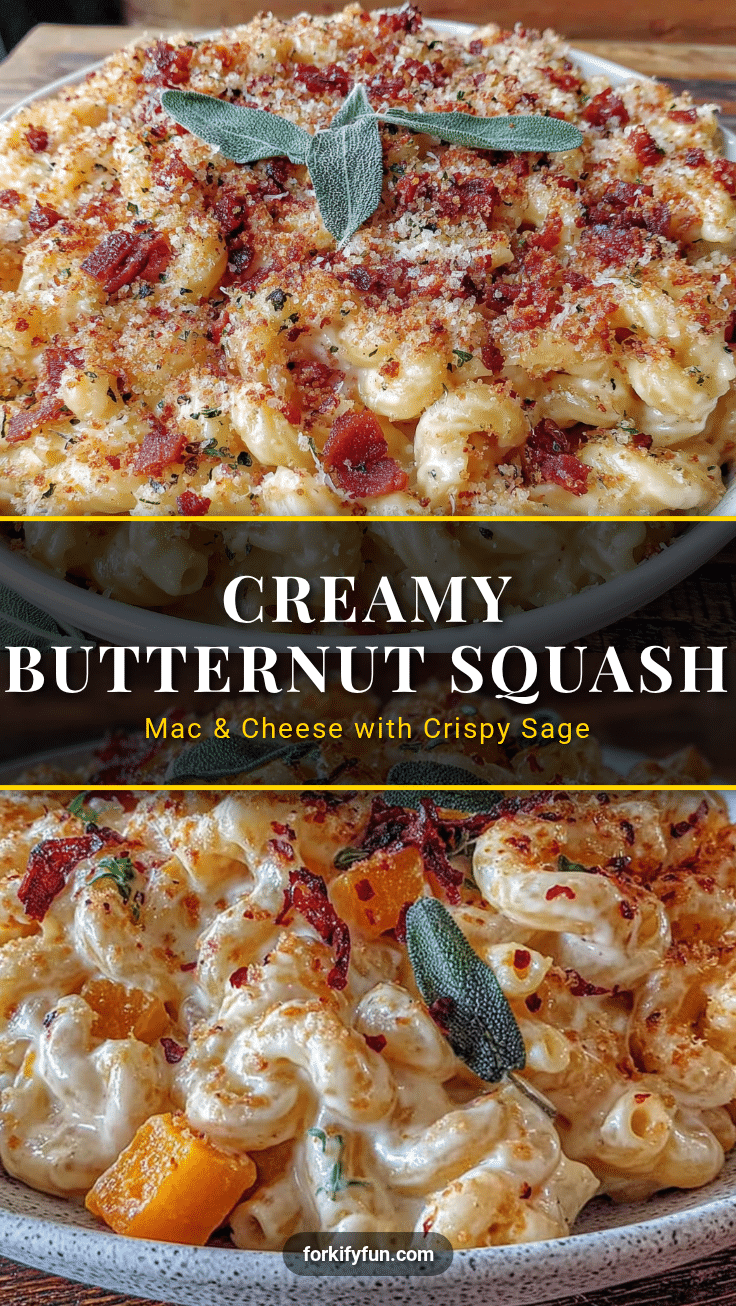
Creamy Butternut Squash Mac and Cheese with Crispy Sage

This creamy butternut squash mac and cheese with crispy sage is the ultimate fall comfort food. Roasted squash creates a velvety sauce without heavy cream, while crispy sage leaves add a savory crunch.
- Prep Time: 20 minutes
- Cook Time: 50 minutes
- Total Time: 1 hour 10 minutes
- Yield: 8 servings 1x
- Category: Main Course
- Cuisine: American
Ingredients
- 1 medium butternut squash (about 2–2.5 lbs), peeled, seeded, and cubed into 1-inch pieces
- 2 tablespoons olive oil
- 1/2 teaspoon salt
- 1/4 teaspoon black pepper
- Pinch of nutmeg (freshly grated if you have it)
- 1 pound (16 oz) cavatappi or elbow macaroni
- Salt for the pasta water
- 3 tablespoons unsalted butter
- 3 tablespoons all-purpose flour
- 2 cups whole milk (warm if you remember, cold is fine too)
- 1 cup roasted butternut squash puree
- 2 cups sharp cheddar cheese, freshly shredded
- 1/2 cup Gruyere or fontina cheese, freshly shredded
- 1/2 teaspoon Dijon mustard
- 1/4 teaspoon smoked paprika
- Salt and pepper to taste
- 3 tablespoons unsalted butter (for topping)
- 12–15 fresh sage leaves
- 1/4 cup panko breadcrumbs (optional)
- Flaky sea salt for finishing
Instructions
- Roast the Squash (40 minutes): Preheat your oven to 400°F (200°C). Toss the cubed butternut squash with olive oil, salt, pepper, and a pinch of nutmeg. Spread it in a single layer on your baking sheet. Roast for 35-40 minutes, flipping halfway through, until the squash is tender and has caramelized brown spots. Let it cool slightly, then transfer to your food processor or blender. Puree until completely smooth. You should have about 1 1/2 cups of puree—you’ll use 1 cup for the sauce and save the…
- Cook the Pasta (10 minutes): While the squash roasts, bring a large pot of generously salted water to a boil. Cook your pasta according to package directions until al dente—usually about 8-9 minutes for cavatappi. Drain well, but don’t rinse it. Set aside.
- Make the Roux (5 minutes): In your medium saucepan or Dutch oven, melt 3 tablespoons of butter over medium heat. Whisk in the flour and cook for 1-2 minutes, stirring constantly. You’re looking for a pale golden color—don’t let it brown.
- Build the Sauce (5 minutes): Slowly pour in the warm milk while whisking constantly to prevent lumps. Keep whisking until the mixture thickens, about 3-4 minutes. It should coat the back of a spoon. Now whisk in 1 cup of your roasted squash puree until fully incorporated.
- Add the Cheese (3 minutes): Reduce the heat to low. Add the shredded cheddar and Gruyere a handful at a time, stirring gently until each addition is fully melted before adding the next. Stir in the Dijon mustard, smoked paprika, and salt and pepper to taste. Adjust seasoning if needed.
- Combine Pasta and Sauce (2 minutes): Add the cooked pasta to the cheese sauce and stir gently until every piece is coated. If the sauce seems too thick, add a splash of the reserved pasta water or a little warm milk to loosen it up.
- Make the Crispy Sage Topping (5 minutes): In a small skillet, melt 3 tablespoons of butter over medium heat. Once it’s bubbling, add the sage leaves in a single layer. Cook for 30-60 seconds per side until they’re crisp and the butter starts to brown and smell nutty. Remove the sage leaves with a slotted spoon and drain on a paper towel. If using panko, add it to the browned butter and stir for 1-2 minutes until golden. Remove from heat.
- Bake (Optional but Recommended – 15 minutes): Preheat your oven to 375°F (190°C). Transfer the mac and cheese to a greased 9×13 baking dish. Sprinkle the panko-butter mixture over the top if using. Bake for 15 minutes until bubbly and golden on top. If you skipped the panko, just bake until heated through, about 10 minutes.
- Finish and Serve (2 minutes): Remove from the oven and let it rest for 5 minutes. Top with the crispy sage leaves and a sprinkle of flaky sea salt. Serve warm.
Notes
Don’t skip roasting the squash—it concentrates the sweetness and gives deep flavor. Shred your own cheese for a smooth sauce. Warm your milk before adding to the roux to prevent lumps. Watch the heat when melting cheese to avoid graininess. Make sage leaves in batches to ensure they crisp, not steam.
Nutrition
- Serving Size: 1 serving (about 1/8
- Calories: 425
- Sugar: 6
- Sodium: 520
- Fat: 22
- Saturated Fat: 13
- Carbohydrates: 42
- Fiber: 4
- Protein: 18
Keywords: butternut squash mac and cheese, creamy mac and cheese, fall comfort food, crispy sage, vegetarian mac and cheese, baked mac and cheese