The first serving dish came back to the kitchen completely empty. Not a single caramelized edge left behind, no stray candied pecan crumbs—just a glossy dish that looked like it had been licked clean. My mother-in-law actually texted me the next morning asking for the recipe. That never happens.
I wasn’t even sure this maple roasted butternut squash with candied pecans would work. I had been staring at a massive butternut squash on my counter for three days, the kind you buy with big intentions and then avoid because cutting it feels like a workout. But Thanksgiving was creeping up, and I needed a side dish that could stand next to the turkey without feeling like an afterthought.
Honestly, I threw this together out of pure stubbornness. I wanted something sweet but not cloying, savory enough to cut through the richness of gravy, and crunchy enough to keep things interesting. The first bite caught me off guard. The squash was tender in the middle, almost jammy, with edges that had turned into sticky, caramelized ribbons. And those pecans? Let’s just say I had to hide a handful so there’d be enough for the topping.
This isn’t just another roasted squash recipe. It’s the one that gets requested every single year now. The one that converts people who swear they don’t like squash. And the best part? It’s embarrassingly simple to make.
Why You’ll Love This Recipe
I’ve tested this maple roasted butternut squash with candied pecans about six different ways before landing on this version. I tried different temperatures, different maple syrup grades, even different nut combinations. This one won every single time.
- Quick & Easy : Ready in about 45 minutes with just 10 minutes of active prep. The oven does all the heavy lifting.
- Simple Ingredients : You probably have most of these in your pantry right now. No weird specialty items or expensive extracts.
- Perfect for Holidays : This dish fits right in at Thanksgiving, Christmas, or any fall gathering. It’s fancy enough for company but easy enough for a Tuesday.
- Crowd-Pleaser : I’ve served this to picky kids, health-conscious friends, and serious foodies. Everyone goes back for seconds.
- Unbelievably Delicious : The contrast between tender, maple-glazed squash and crunchy, spiced pecans is next-level comfort food.
What sets this apart from other squash recipes is the technique. I roast the squash at a high temperature to get those caramelized edges without turning the inside to mush. The pecans get their own moment in the pan with butter and sugar, creating a brittle-like coating that stays crunchy even after sitting on top of the warm squash. It’s not complicated, but the payoff is huge.
This is the kind of dish that makes you close your eyes after the first bite. It’s comfort food that happens to be packed with vitamin A and fiber. It’s impressive without stress. And honestly, it’s the side dish that steals the show every single time.
What Ingredients You Will Need
This recipe uses simple, wholesome ingredients to deliver bold flavor and satisfying texture. Most of these are pantry staples, which makes this dish accessible even on short notice.
For the Roasted Squash
- Butternut squash (1 large, about 3 pounds) — peeled, seeded, and cut into 1-inch cubes. Look for one that feels heavy for its size with firm, unblemished skin.
- Pure maple syrup (3 tablespoons) — use the real stuff, not pancake syrup. Grade A dark amber works beautifully here. (I prefer the deeper flavor of darker grades.)
- Olive oil (2 tablespoons) — helps the squash caramelize without burning. Avocado oil works too if that’s what you have.
- Unsalted butter (1 tablespoon, melted) — adds richness and helps the maple syrup stick to the squash.
- Kosher salt (½ teaspoon) — don’t skip this. It balances the sweetness perfectly.
- Black pepper (¼ teaspoon, freshly ground) — adds a subtle warmth.
- Cinnamon (¼ teaspoon) — optional but recommended. It complements the maple flavor beautifully.
For the Candied Pecans
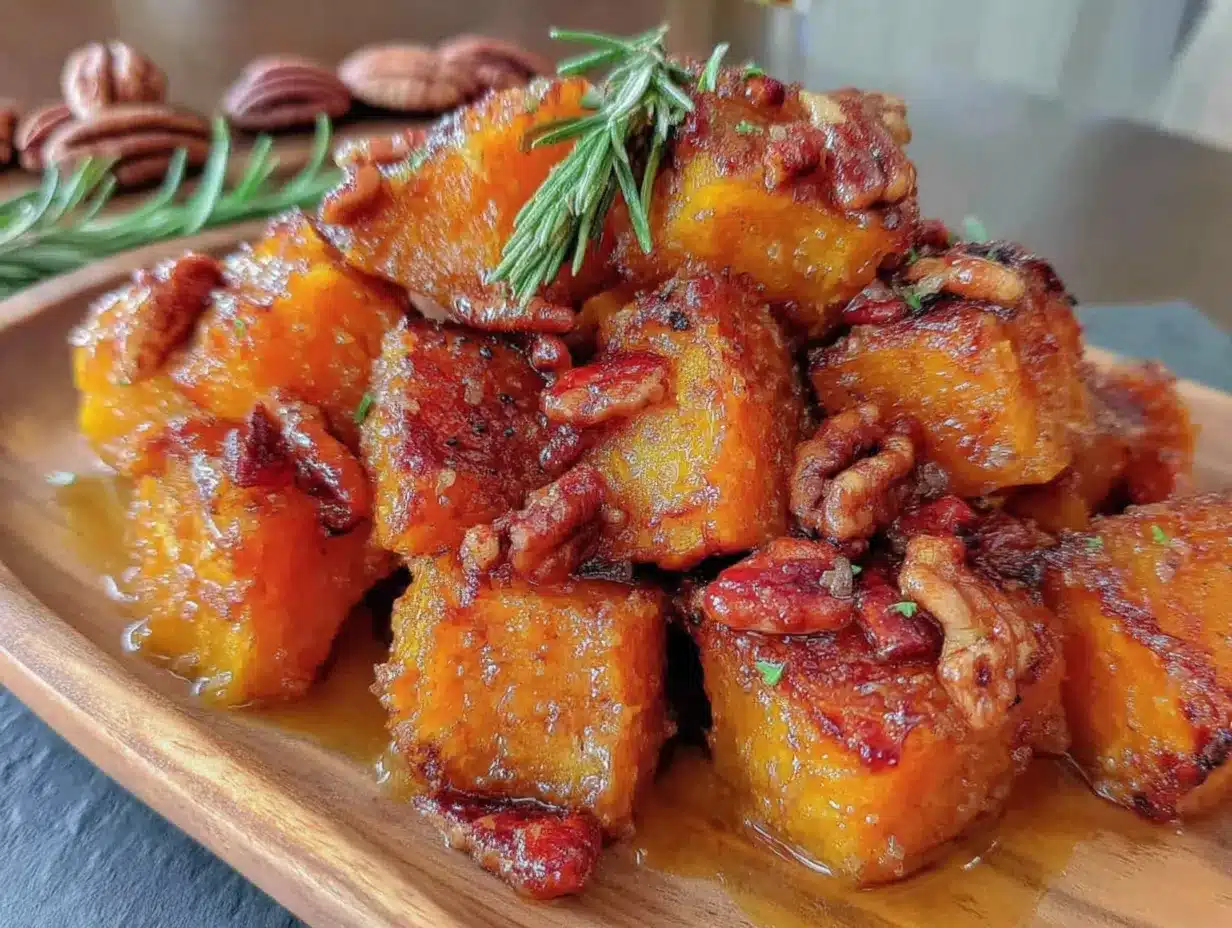
- Pecan halves (1 cup) — try to get fresh ones. Stale pecans will ruin the texture. I usually buy mine from the bulk section at Whole Foods.
- Unsalted butter (1 tablespoon) — for toasting the nuts and helping the sugar adhere.
- Brown sugar (2 tablespoons, packed) — light or dark both work. Dark brown sugar gives a deeper molasses flavor.
- Maple syrup (1 tablespoon) — ties everything together with the squash.
- Cinnamon (¼ teaspoon) — for that classic warm spice note.
- Sea salt (a pinch) — a tiny bit of flaky salt on top makes a huge difference.
For Garnish (Optional)
- Fresh thyme or rosemary (a few sprigs) — adds a savory pop of color and flavor.
- Flaky sea salt (like Maldon) — for finishing. It adds texture and brightness.
Substitution Tips: If you’re avoiding nuts, try pepitas (pumpkin seeds) instead of pecans. They toast up beautifully and add a similar crunch. For a dairy-free version, use coconut oil instead of butter. The flavor shifts slightly but still works wonderfully. And if you can’t find butternut squash, acorn or kabocha squash are excellent alternatives—just adjust the roasting time slightly since they cook a bit faster.
Equipment Needed
You don’t need a fancy kitchen to pull this off. Here’s what you’ll need:
- Large baking sheet (18×13 inches or similar) — rimmed is best to catch any sticky drips. I use my favorite Nordic Ware sheet pan for this.
- Parchment paper — prevents sticking and makes cleanup a breeze. Trust me on this one.
- Sharp chef’s knife — cutting butternut squash requires a sturdy blade. A dull knife is dangerous here.
- Vegetable peeler — for removing the tough skin. A Y-shaped peeler works best.
- Small skillet — for making the candied pecans. Non-stick works great.
- Mixing bowls — one large for the squash, one small for the pecans.
- Spatula or wooden spoon — for tossing the squash and stirring the pecans.
If you don’t have a rimmed baking sheet, a jelly roll pan works perfectly. You can also use a cast iron skillet for the pecans if you don’t have a small skillet—just watch the heat closely since cast iron retains heat well. And honestly, if you’re buying a new peeler just for squash, get a Kuhn Rikon. I’ve had mine for years and it still peels like a dream.
Preparation Method
Let me walk you through this step by step. I’ve included all the little details that make the difference between good squash and unforgettable squash.
Step 1: Prep the Squash
Preheat your oven to 400°F (200°C). Line your baking sheet with parchment paper.
Now, the part everyone dreads—cutting the butternut squash. Here’s my trick: microwave the whole squash for 2-3 minutes first. It softens the skin just enough to make peeling easier. Let it cool slightly, then cut off both ends. Use your vegetable peeler to remove the skin in long strips. Cut the squash in half where the narrow neck meets the bulbous bottom. Scoop out the seeds from the bottom half with a spoon. Cut both pieces into 1-inch cubes. Try to keep them uniform so they cook evenly.
This takes about 10 minutes the first time, but you’ll get faster. I promise.
Step 2: Season the Squash
In a large bowl, whisk together the maple syrup, olive oil, melted butter, salt, pepper, and cinnamon. Add the cubed squash and toss until every piece is coated. Don’t rush this—you want each cube to have a thin, even layer.
Spread the squash in a single layer on your prepared baking sheet. Make sure there’s space between the pieces. If they’re crowded, they’ll steam instead of caramelizing. If your sheet is too small, use two sheets or work in batches.
Step 3: Roast the Squash
Roast for 25 minutes, then flip each piece with a spatula. Roast another 15-20 minutes until the squash is tender when pierced with a fork and the edges are deep golden brown and slightly sticky. The exact time depends on your oven and how big your cubes are. Start checking at 35 minutes total.
Here’s what you’re looking for: the squash should be soft enough to squish slightly when pressed, but not falling apart. The caramelized edges should look almost jammy—dark amber and glossy. That’s where the magic happens.
Step 4: Make the Candied Pecans
While the squash roasts, make the pecans. Heat a small skillet over medium heat. Add the butter and let it melt until it starts to foam. Add the pecans, brown sugar, maple syrup, and cinnamon. Stir constantly for 3-4 minutes until the sugar melts and coats the nuts evenly. The mixture will bubble and look a bit scary—that’s normal. Keep stirring.
Spread the pecans on a separate piece of parchment paper to cool. Sprinkle with a tiny pinch of sea salt. Let them cool completely—they’ll harden as they cool. Break apart any clumps with your fingers.
Don’t walk away from the stove during this step. Burnt sugar happens fast and it’s not salvageable.
Step 5: Assemble and Serve
Transfer the roasted squash to a serving platter. Scatter the candied pecans over the top. Garnish with fresh thyme or rosemary if you’re feeling fancy. Serve warm or at room temperature.
The pecans will stay crunchy for a few hours, but if you’re making this ahead, store them separately and add them just before serving.
Cooking Tips & Techniques
I’ve made every mistake you can imagine with this dish so you don’t have to. Here’s what I’ve learned:
Don’t skip the high heat. 400°F is non-negotiable. Lower temperatures will cook the squash through but won’t create those caramelized edges. And those edges? That’s where all the flavor lives.
Watch your squash size. I once cut my cubes too small—about half an inch—and they turned to mush in 25 minutes. Too large—like 2 inches—and they were still crunchy in the middle while the edges burned. One inch is the sweet spot.
Use real maple syrup. I know it’s more expensive, but pancake syrup is basically corn syrup with artificial flavoring. It won’t caramelize the same way and the flavor is flat. Save the fake stuff for pancakes.
Toast your pecans first. If you’re short on time, you can skip the candying process and just toast the pecans in a dry pan for 3-4 minutes. They won’t be as sweet or crunchy, but they’ll still add texture. I’ve done this on busy weeknights and it works fine.
Multitask wisely. Start the pecans when the squash has about 10 minutes left. That way everything finishes around the same time and you’re not rushing at the end.
One more thing—don’t overcrowd the pan. I learned this the hard way when I tried to double the recipe on a single sheet. The squash steamed instead of roasted and I ended up with soggy, sad cubes. Use two sheets if you’re making a large batch.
Variations & Adaptations
This recipe is flexible. Here are some ways I’ve changed it up depending on what I have on hand or who I’m serving:
Savory Herb Version
Skip the cinnamon and add 1 teaspoon of fresh rosemary and ½ teaspoon of sage to the maple mixture. The herbs cut through the sweetness and make this perfect alongside roasted chicken or pork. I made this for a casual dinner party and my friend actually asked for the recipe before she finished her first serving.
Spicy Maple Version
Add ¼ teaspoon of cayenne pepper or red pepper flakes to the maple mixture. The heat sneaks up on you and pairs beautifully with the sweet squash. This is my husband’s favorite variation—he adds extra cayenne when I’m not looking.
Vegan Version
Use coconut oil instead of butter in both the squash mixture and the pecans. The coconut flavor is subtle and actually complements the maple nicely. I’ve served this to vegans and non-vegans alike and nobody complained.
Different Nuts
Walnuts, almonds, or even pumpkin seeds work in place of pecans. Just adjust the toasting time slightly—walnuts toast faster than pecans, so watch them closely. If you’re looking for another nut-forward recipe, my no-bake dark chocolate almond protein balls use a similar candying technique and are perfect for quick snacks.
Other Squash Options
Acorn squash, delicata squash, or even sweet potatoes work beautifully here. Delicata doesn’t even need peeling—just slice it into rings and roast. The cooking time varies slightly, so check for doneness at 30 minutes.
I once made this with a mix of butternut squash and sweet potatoes when I ran out of squash mid-prep. It was honestly better than the original. The sweet potatoes got even more caramelized than the squash and added a nice color contrast.
Serving & Storage Suggestions
This dish is versatile enough for both casual meals and holiday tables. Here’s how to make the most of it:
Serving Temperature: Serve warm, straight from the oven. But honestly, it’s also delicious at room temperature. The flavors actually meld together more as it cools. I’ve even eaten leftovers cold from the fridge and enjoyed them.
Presentation: Transfer the squash to a wide, shallow serving bowl or platter. Scatter the pecans on top rather than mixing them in—this keeps them crunchy. A few sprigs of fresh thyme or a sprinkle of flaky salt make it look restaurant-worthy.
Pairings: This squash is a natural side for roasted turkey, roast chicken, or pork tenderloin. It also works beautifully alongside a creamy roasted tomato basil soup for a cozy fall lunch. For a vegetarian main, serve it over quinoa or farro with a handful of arugula.
Storage: Store leftover squash and pecans separately in airtight containers in the refrigerator for up to 5 days. The pecans will lose their crunch if stored with the squash.
Reheating: Reheat the squash in a 350°F oven for 10-15 minutes until warmed through. The microwave works in a pinch but the texture won’t be as good. Add fresh pecans after reheating for maximum crunch.
Make Ahead: You can roast the squash up to 2 days ahead and reheat it before serving. Make the pecans fresh the day of—they’re quick and taste much better. If you’re hosting a big meal, this is a lifesaver. While you’re at it, you might also enjoy my honey ricotta crostini with fig jam and prosciutto for another easy entertaining option.
The flavors actually deepen after a day in the fridge. The maple syrup continues to permeate the squash, making it even more flavorful. I sometimes make a double batch just for leftovers.
Nutritional Information & Benefits
This dish is as nutritious as it is delicious. Here’s the rough breakdown per serving (about 1 cup):
- Calories: 280
- Total Fat: 16g
- Saturated Fat: 4g
- Carbohydrates: 34g
- Fiber: 5g
- Sugar: 18g
- Protein: 4g
- Vitamin A: 457% of the Daily Value
- Vitamin C: 49% of the Daily Value
Butternut squash is a powerhouse of nutrition. It’s loaded with vitamin A for eye health, vitamin C for immunity, and fiber for digestion. The pecans add healthy fats and magnesium. Even the maple syrup, while sugar, provides trace minerals like zinc and manganese.
This recipe is naturally gluten-free and can easily be made vegan. It’s also relatively low in calories for a side dish that feels indulgent. I feel good serving this to my family because it’s satisfying without being heavy.
One note: if you’re watching your sugar intake, you can reduce the maple syrup to 2 tablespoons and skip the brown sugar in the pecans. The squash will still caramelize nicely, just with less sweetness.
Conclusion
This maple roasted butternut squash with candied pecans has become my most-requested side dish for a reason. It’s simple enough for a Tuesday night but impressive enough for Thanksgiving. The combination of tender, caramelized squash and crunchy, spiced pecans is just… perfect.
I love that this recipe doesn’t require any fancy techniques or hard-to-find ingredients. It’s honest cooking that lets the natural flavors shine. And honestly, watching people’s faces light up when they take that first bite never gets old.
Please make this your own. Add more cinnamon if you love warm spices. Swap in walnuts if that’s what you have. Serve it alongside your favorite protein or eat it straight from the baking sheet (I won’t judge).
I’d love to hear how it turns out for you. Drop a comment below and let me know if you tried any variations. Did you add cayenne? Use a different squash? Share your creation—it might inspire someone else. And if you loved it, please share this recipe with a friend who needs a new go-to side dish.
Happy cooking, friend. Your table is about to get a whole lot more delicious.
Frequently Asked Questions
Can I use frozen butternut squash for this recipe?
You can, but I don’t recommend it. Frozen squash releases a lot of water as it thaws, which prevents caramelization. If you’re in a pinch, thaw the squash completely and pat it very dry with paper towels before tossing with the maple mixture. The texture won’t be quite as good, but it’ll still taste delicious.
How do I keep the candied pecans from getting soggy?
Store them separately from the squash until you’re ready to serve. If you’re making this for a holiday meal, I recommend making the pecans the morning of and keeping them in an airtight container at room temperature. They’ll stay crunchy for at least 2 days this way.
Can I make this recipe ahead of time?
Yes! Roast the squash up to 2 days ahead and store it in the fridge. Reheat it in a 350°F oven for 10-15 minutes before serving. Make the pecans fresh the day you plan to serve for the best texture. This is honestly my favorite way to handle holiday cooking—it frees up oven space and reduces stress.
What’s the best way to cut butternut squash safely?
Microwave the whole squash for 2-3 minutes first to soften the skin. Cut off both ends, then stand the squash upright on a stable cutting board. Use a sharp chef’s knife to slice it in half lengthwise. Scoop out the seeds, then peel each half with a vegetable peeler. Finally, cut into cubes. A sharp knife is non-negotiable—dull knives slip and that’s how accidents happen.
Can I double this recipe?
Absolutely. Just make sure to use two baking sheets and rotate them halfway through cooking. Don’t crowd the squash on a single sheet or it will steam instead of caramelizing. The pecans can be doubled easily in the same skillet—just stir constantly to prevent burning.
Pin This Recipe!
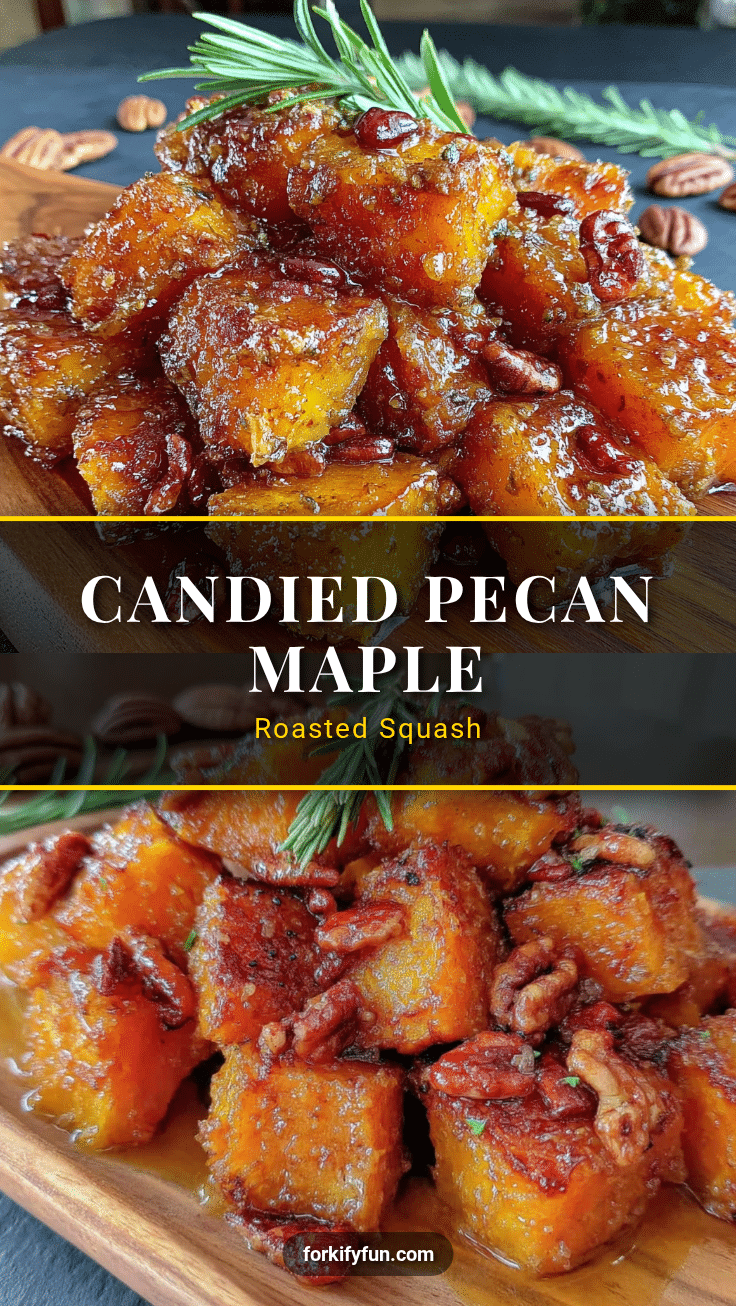
Easy Maple Roasted Butternut Squash with Candied Pecans
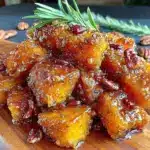
Tender, caramelized butternut squash roasted with maple syrup and topped with crunchy, spiced candied pecans. This simple yet impressive side dish is perfect for Thanksgiving, Christmas, or any fall gathering, and it’s ready in about 45 minutes.
- Prep Time: 10 minutes
- Cook Time: 35 minutes
- Total Time: 45 minutes
- Yield: 4 servings 1x
- Category: Side Dish
- Cuisine: American
Ingredients
- 1 large butternut squash (about 3 pounds), peeled, seeded, and cut into 1-inch cubes
- 3 tablespoons pure maple syrup
- 2 tablespoons olive oil
- 1 tablespoon unsalted butter, melted
- ½ teaspoon kosher salt
- ¼ teaspoon freshly ground black pepper
- ¼ teaspoon cinnamon (optional)
- 1 cup pecan halves
- 1 tablespoon unsalted butter
- 2 tablespoons packed brown sugar (light or dark)
- 1 tablespoon maple syrup
- ¼ teaspoon cinnamon
- A pinch of sea salt
- Fresh thyme or rosemary sprigs for garnish (optional)
- Flaky sea salt for finishing (optional)
Instructions
- Preheat oven to 400°F (200°C). Line a large baking sheet with parchment paper.
- Microwave the whole butternut squash for 2-3 minutes to soften the skin. Let cool slightly, then cut off both ends. Peel the skin with a vegetable peeler, cut the squash in half where the narrow neck meets the bulbous bottom, and scoop out the seeds. Cut both pieces into 1-inch cubes.
- In a large bowl, whisk together 3 tablespoons maple syrup, olive oil, melted butter, kosher salt, pepper, and ¼ teaspoon cinnamon. Add the cubed squash and toss until evenly coated.
- Spread the squash in a single layer on the prepared baking sheet, ensuring pieces are not crowded. Roast for 25 minutes, then flip each piece with a spatula. Roast another 15-20 minutes until tender and edges are deep golden brown and caramelized.
- While the squash roasts, make the candied pecans: Heat a small skillet over medium heat. Add 1 tablespoon butter and let it melt until foamy. Add pecan halves, brown sugar, 1 tablespoon maple syrup, and ¼ teaspoon cinnamon. Stir constantly for 3-4 minutes until the sugar melts and coats the nuts evenly.
- Spread the pecans on a separate piece of parchment paper to cool. Sprinkle with a tiny pinch of sea salt. Let cool completely—they will harden as they cool. Break apart any clumps with your fingers.
- Transfer the roasted squash to a serving platter. Scatter the candied pecans over the top. Garnish with fresh thyme or rosemary and a sprinkle of flaky sea salt if desired. Serve warm or at room temperature.
Notes
For best results, use real maple syrup (not pancake syrup) and fresh pecans. Store leftover squash and pecans separately in airtight containers in the refrigerator for up to 5 days. Reheat squash in a 350°F oven for 10-15 minutes. The pecans will stay crunchy for a few hours; if making ahead, add them just before serving. For a vegan version, use coconut oil instead of butter. For a savory twist, skip the cinnamon and add fresh rosemary and sage.
Nutrition
- Serving Size: 1 cup
- Calories: 280
- Sugar: 18
- Sodium: 300
- Fat: 16
- Saturated Fat: 4
- Carbohydrates: 34
- Fiber: 5
- Protein: 4
Keywords: maple roasted butternut squash, candied pecans, Thanksgiving side dish, fall recipe, roasted squash, holiday side dish, easy side dish