Standing in the middle of my kitchen, hands covered in cranberry juice, wondering if I’d finally lost it. The acorn squash sat there on the counter, looking at me like it knew I had no clue what I was doing. A bag of fresh cranberries had rolled off the counter and was now scattered across the floor like little red marbles. My dog was trying to help, which, let’s be honest, was not helpful at all.
I had promised to bring a side dish to Thanksgiving dinner, and I was supposed to be making something simple. But simple has never really been my style — not when I can complicate things. I wanted something that looked fancy but didn’t require a culinary degree. Something that said “I spent hours on this” when really I just needed a recipe that wouldn’t make me cry in the produce aisle.
That’s when the idea hit me — savory stuffed acorn squash. Those beautiful little squash halves just begging to be filled with something delicious. I grabbed the pecans from the pantry, found some dried cranberries I’d forgotten about, and started throwing things together. The first batch was a disaster (too dry, not enough seasoning, and I may have burned the pecans). But the second batch? That was the one.
The combination of tender roasted squash, tart cranberries, crunchy pecans, and savory herbs just works in a way that feels almost accidental. It’s the kind of dish that makes people close their eyes and go quiet for a second. And honestly, that’s the highest compliment you can get at a dinner table.
Why You’ll Love This Recipe
This savory stuffed acorn squash recipe has become my go-to for fall gatherings, and I think you’ll feel the same way once you try it. It’s one of those rare dishes that looks like you fussed, but secretly comes together without much drama.
- Looks Incredible : The presentation is gorgeous — those deep green and orange squash halves filled with a colorful stuffing make any table look like a magazine spread.
- Surprisingly Easy : Despite the fancy appearance, the steps are straightforward. Roast the squash, make the filling, stuff, and bake. That’s it.
- Perfect for Holidays : This dish fits right in at Thanksgiving, Christmas, or any fall dinner party. It’s vegetarian-friendly and can be made vegan with a few swaps.
- Naturally Gluten-Free : No breadcrumbs or flour in this recipe, so it works for gluten-free guests without anyone feeling left out.
- Make-Ahead Friendly : You can prep everything the day before and just pop it in the oven when you’re ready.
What makes this version different from others I’ve tried is the balance of flavors. Some recipes go too sweet with the cranberries and maple syrup, turning the whole thing into dessert. Others are so savory they forget the squash itself has natural sweetness. This recipe finds that sweet spot — the cranberries provide tart pops, the pecans add crunch, and the herbs keep everything grounded and savory. It’s the kind of dish that makes you wonder why you haven’t been stuffing squash your whole life.
What Ingredients You Will Need
This recipe uses simple, wholesome ingredients that come together to create something genuinely special. Most of these are pantry staples or easy to find at any grocery store this time of year.
For the Squash
- 2 medium acorn squash — Look for ones that feel heavy for their size and have no soft spots. The dark green ones with some orange patches are the sweetest.
- 2 tablespoons olive oil — For brushing the squash before roasting. It helps them caramelize beautifully.
- Salt and black pepper — To taste. Don’t be shy with the salt here; it balances the sweetness of the squash.
For the Savory Stuffing
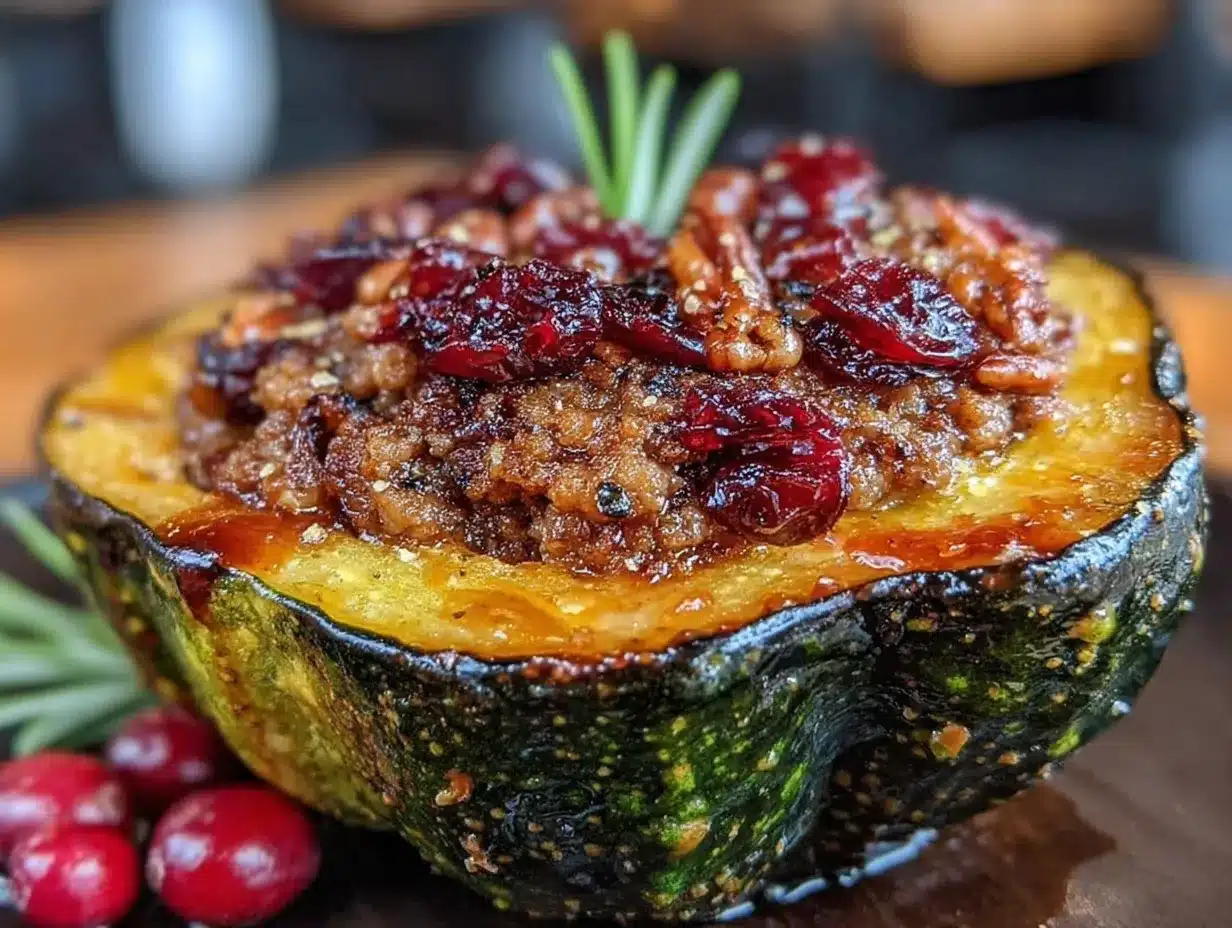
- 1 cup cooked quinoa — I use white or tri-color quinoa. Cook it according to package directions and let it cool slightly. (Leftover quinoa works great here!)
- 1/2 cup dried cranberries — Unsweetened or lightly sweetened works best. The tartness is key to balancing the dish.
- 1/2 cup pecans, roughly chopped — Toast them first if you have time. It makes a huge difference in flavor.
- 1 small shallot, finely diced — About 1/4 cup. Shallots are milder than onions and blend into the filling more seamlessly.
- 2 cloves garlic, minced — Fresh garlic only, please. The jarred stuff won’t give you the same punch.
- 2 tablespoons fresh sage, chopped — Sage and squash are a match made in heaven. Don’t skip this if you can help it.
- 1 tablespoon fresh thyme leaves — Or 1 teaspoon dried if that’s what you have.
- 1/4 cup vegetable broth — Adds moisture to the stuffing. Use low-sodium so you can control the salt level.
- 2 tablespoons maple syrup — Just enough to enhance the natural sweetness of the squash without making the dish sugary.
- 1/4 cup grated Parmesan cheese — Optional, but it adds a lovely salty, nutty note. Use a dairy-free alternative if needed.
- Salt and pepper — To taste.
I have a confession — I used to skip the sage because I thought it was too “earthy.” But one Thanksgiving, I forgot to leave it out, and everyone raved about the “secret ingredient.” Now I always include it. If you’re not a sage fan, try rosemary instead. It works beautifully too.
For the pecans, I usually buy them raw and toast them myself. It takes about 5 minutes in a dry skillet, and the flavor difference is night and day. If you’re in a rush, pre-toasted pecans work fine, just watch the salt content.
Equipment Needed
You don’t need a lot of fancy equipment for this recipe, which is part of what makes it so approachable.
- Large baking sheet — Rimmed is best to catch any juices that might drip from the squash.
- Sharp chef’s knife — Acorn squash can be tough to cut through. A good knife makes the job safer and easier.
- Cutting board — Preferably one that won’t slide around on your counter.
- Mixing bowls — One medium bowl for the stuffing mixture.
- Small skillet — For toasting the pecans and sautéing the shallots and garlic.
- Pastry brush — For brushing the olive oil onto the squash. A silicone one is easiest to clean.
- Measuring cups and spoons — Standard set works fine.
- Aluminum foil — For tenting the squash if the tops brown too quickly.
If you don’t have a pastry brush, just use a paper towel dipped in oil. It’s not pretty, but it gets the job done. And if you’re short on time, you can skip toasting the pecans — just know you’ll miss out on that deeper nutty flavor.
Preparation Method
Let’s get cooking. This recipe takes about an hour from start to finish, but most of that is hands-off oven time.
- Preheat your oven to 400°F (200°C). Position the rack in the middle of the oven. While it’s heating, prepare your squash.
- Cut the acorn squash in half. Using your sharpest knife, carefully slice each squash from stem to tip. Scoop out the seeds and stringy pulp with a spoon. (Save the seeds if you want to roast them later — they’re delicious!)
- Brush the squash with olive oil. Place the squash halves cut-side up on the baking sheet. Brush the cut sides and the inside cavities with olive oil. Season generously with salt and pepper.
- Roast the squash for 25 minutes. This par-roasts them so they’re tender but still hold their shape. You want them to be fork-tender but not mushy.
- While the squash roasts, make the stuffing. In a small skillet over medium heat, toast the chopped pecans for 2-3 minutes until fragrant. Keep them moving so they don’t burn. Transfer to a bowl.
- Sauté the aromatics. In the same skillet, add a drizzle of olive oil. Cook the diced shallot for 2-3 minutes until softened. Add the minced garlic and cook for 30 seconds more, until fragrant.
- Combine the stuffing ingredients. In a medium bowl, mix the cooked quinoa, dried cranberries, toasted pecans, sautéed shallot and garlic, fresh sage, thyme, vegetable broth, and maple syrup. If using Parmesan, stir it in now. Season with salt and pepper to taste.
- Stuff the squash. Once the squash halves are par-roasted, remove them from the oven. Carefully spoon the stuffing mixture into each cavity, mounding it slightly. Don’t pack it too tightly — you want some air pockets for even heating.
- Return to the oven. Bake the stuffed squash for another 20-25 minutes, until the filling is heated through and the tops are lightly golden. If the stuffing starts to brown too quickly, tent loosely with foil.
- Rest and serve. Let the squash rest for 5 minutes after baking. This allows the flavors to settle and makes the squash easier to handle. Serve warm, garnished with extra fresh herbs if desired.
A few things I’ve learned the hard way — don’t over-stuff the squash. I did that once and ended up with a mess of filling on the baking sheet. Also, if your squash is on the smaller side, you might have leftover stuffing. That’s a good problem to have. Just eat it with a spoon or use it as a filling for bell peppers the next day.
The squash should be tender enough that a fork slides in easily but not so soft that it collapses. If you’re unsure, test it at the 20-minute mark during the second bake.
Cooking Tips & Techniques
Over the years, I’ve made this savory stuffed acorn squash more times than I can count. Here are the things I wish someone had told me the first time.
- Microwave the squash for 2 minutes before cutting. This softens the skin just enough to make slicing through it much easier. Just poke a few holes with a fork first so it doesn’t explode.
- Don’t skip the par-roast. I tried once to stuff raw squash and bake everything together. The result was undercooked squash with burnt topping. Not good. The par-roast is non-negotiable.
- Toast your nuts. I know, I keep saying this, but raw pecans in the stuffing just don’t deliver the same crunch and flavor. A few minutes in a dry pan changes everything.
- Season in layers. Salt the squash before roasting, season the stuffing mixture, and add a pinch of flaky salt at the end. This builds depth of flavor that you can’t get from seasoning at just one stage.
- Use fresh herbs if possible. Dried herbs work in a pinch, but fresh sage and thyme really shine here. The difference is noticeable, especially if you’re serving this for a special occasion.
One of my biggest failures with this recipe happened when I tried to rush the process. I didn’t par-roast the squash long enough, and the filling was done long before the squash was tender. Everything went back in the oven, the topping burned, and I ended up scraping off charred bits while muttering things I won’t repeat here. Learn from my mistakes — give the squash the time it needs.
Variations & Adaptations
This recipe is wonderfully flexible. Here are some ways to make it your own.
Make It Vegan
Skip the Parmesan or use a vegan alternative. Nutritional yeast also works — add about 2 tablespoons for that cheesy, nutty flavor without the dairy.
Add Protein
Cooked sausage (turkey or chicken), crumbled bacon, or even leftover rotisserie chicken can be mixed into the stuffing. For a vegetarian protein boost, add 1/2 cup cooked lentils or chickpeas.
Switch Up the Grains
Don’t have quinoa? Use cooked farro, wild rice, or even brown rice. Each brings a different texture. Farro has a nice chewiness that works well with the tender squash.
Seasonal Twist
In the summer, swap dried cranberries for fresh cherries or chopped apricots. In the winter, add a pinch of cinnamon or nutmeg to the stuffing for extra warmth. I once made a version with dried figs and goat cheese that was absolutely incredible — it reminded me of that savory fig and goat cheese flatbread I love making.
Nut-Free Option
Replace pecans with toasted pumpkin seeds or sunflower seeds. They still give you that crunch without the allergens.
My personal favorite variation involves adding a drizzle of balsamic glaze right before serving. The tangy sweetness plays beautifully with the roasted squash and tart cranberries. It’s a small addition that feels fancy without any extra work.
Serving & Storage Suggestions
This dish is best served warm, straight from the oven. The contrast between the tender squash and the slightly crunchy topping is at its peak right after baking.
For presentation, place each stuffed squash half on a plate and garnish with a few fresh sage leaves or a sprinkle of chopped parsley. A drizzle of balsamic glaze or a dollop of Greek yogurt on the side adds a nice finishing touch.
This savory stuffed acorn squash pairs beautifully with roasted chicken, turkey, pork tenderloin, or even a hearty lentil soup. If you’re building a holiday menu, try serving it alongside creamy potato leek soup for a cozy, elegant meal.
Storage
Leftovers keep well in an airtight container in the refrigerator for up to 4 days. The squash will soften over time, but the flavors actually meld and deepen, making day-two leftovers almost better than the first serving.
Reheating
Reheat in a 350°F oven for 10-15 minutes, or until warmed through. The microwave works in a pinch but will make the squash even softer. If reheating from frozen, thaw overnight in the refrigerator first.
Freezing
You can freeze the stuffed squash (before or after baking). Wrap each half tightly in plastic wrap, then foil, and freeze for up to 3 months. To serve, thaw overnight and bake as directed.
Nutritional Information & Benefits
This dish is surprisingly nutritious for how indulgent it tastes. Here’s a rough breakdown per serving (one stuffed squash half):
- Calories: Approximately 320-350
- Protein: 8-10 grams
- Carbohydrates: 45-50 grams
- Fiber: 8-10 grams
- Fat: 14-16 grams (mostly from healthy pecans and olive oil)
- Sugar: 14-16 grams (natural from squash and cranberries, plus a touch of maple syrup)
Acorn squash is packed with vitamin A, vitamin C, and potassium. The quinoa adds complete protein and fiber, while pecans provide healthy fats and antioxidants. Cranberries offer a dose of vitamin C and are known for their anti-inflammatory properties.
This recipe is naturally gluten-free, vegetarian, and can easily be made vegan. It’s also relatively low in added sugars compared to many holiday side dishes. If you’re watching your sodium, use low-sodium broth and go easy on the added salt.
Conclusion
This savory stuffed acorn squash has become my signature dish for fall gatherings, and I think it’s time it became yours too. It’s the kind of recipe that makes people ask for the recipe before they’ve even finished eating — and that’s always a good sign.
The beauty of this dish is how forgiving it is. You can swap ingredients, adjust seasonings, and make it your own without worrying about ruining it. The first time I made it, I was convinced I’d messed something up. But that imperfect version was still delicious, and every batch since has only gotten better.
I’d love to hear how yours turns out. Did you try a variation? Swap in a different nut or grain? Leave a comment below and let me know — your tweaks might inspire someone else’s dinner table. And if you’re looking for more cozy fall recipes, don’t miss our creamy roasted tomato basil soup or brown butter snickerdoodle blondies for dessert.
Happy cooking, friends. Your table is about to get a whole lot more interesting.
Frequently Asked Questions
Can I make this savory stuffed acorn squash ahead of time?
Absolutely. You can roast the squash and prepare the stuffing up to 2 days in advance. Store them separately in the refrigerator. When you’re ready to serve, stuff the squash and bake as directed. You may need to add 5-10 minutes to the second bake since the ingredients will be cold.
Can I use a different type of squash?
Yes! Butternut squash works well — just cut it in half lengthwise and scoop out the seeds. Delicata squash is also great and has edible skin, which saves you a step. Cooking times may vary slightly depending on the size and density of the squash.
How do I prevent the stuffing from drying out?
Make sure you add enough vegetable broth to the stuffing mixture. The quinoa should be moist but not soggy. Also, don’t over-bake the stuffed squash. Keep an eye on it during the second bake and tent with foil if the top starts looking too brown.
Can I use frozen cranberries instead of dried?
I wouldn’t recommend it for this recipe. Frozen cranberries release a lot of liquid as they cook, which can make the stuffing soggy. Dried cranberries hold their shape and provide that concentrated tartness that balances the dish so well.
Is this recipe suitable for meal prep?
Definitely. The components can be prepped separately and assembled when needed. The fully cooked dish also reheats well, making it a great option for weekly meal prep. Just store the stuffing and squash separately until you’re ready to reheat to maintain the best texture.
Pin This Recipe!
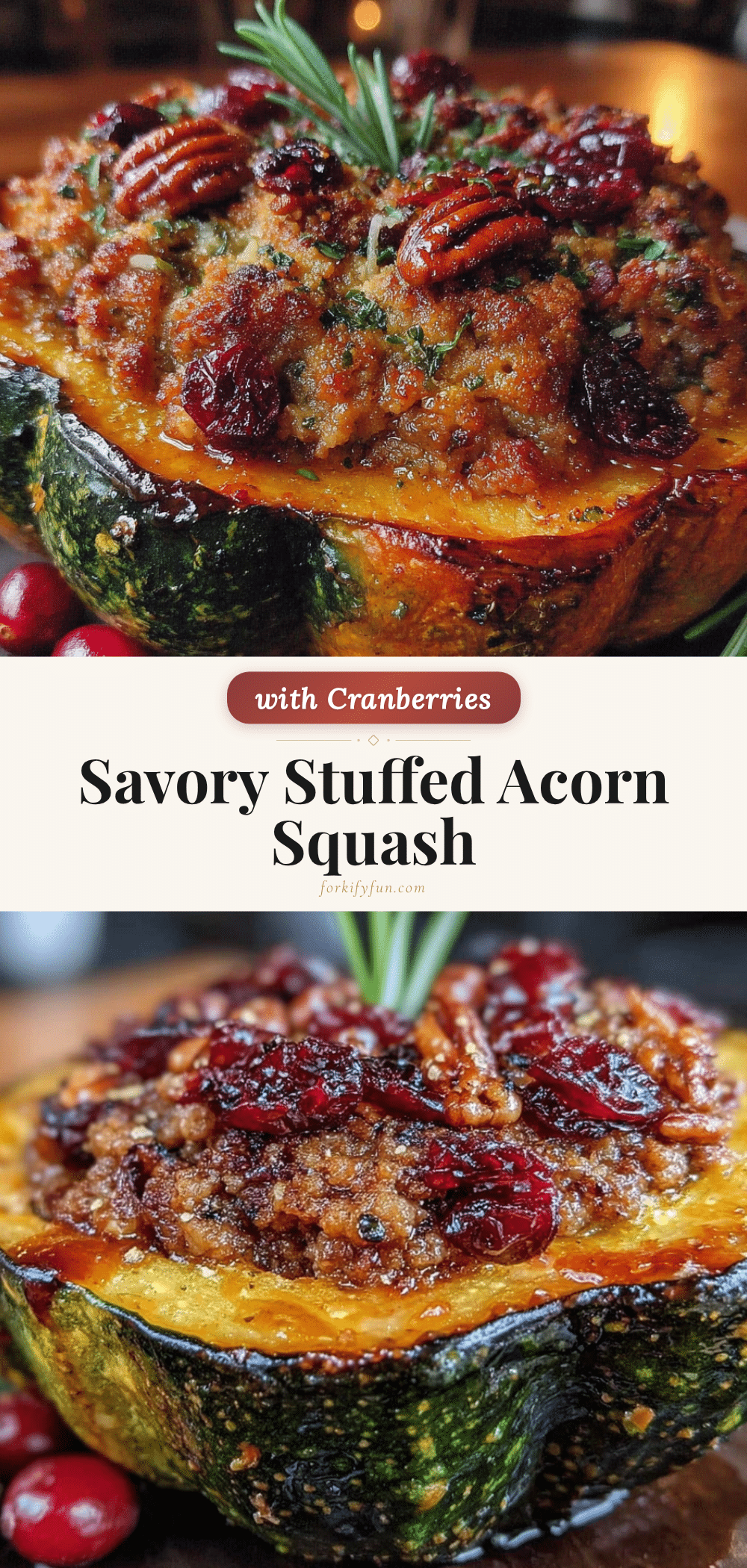
Savory Stuffed Acorn Squash: Easy Holiday Side Dish

Tender roasted acorn squash halves filled with a savory stuffing of quinoa, dried cranberries, toasted pecans, and fresh herbs. This elegant yet easy side dish is perfect for Thanksgiving, Christmas, or any fall gathering.
- Prep Time: 15 minutes
- Cook Time: 45 minutes
- Total Time: 1 hour
- Yield: 4 servings 1x
- Category: Side Dish
- Cuisine: American
Ingredients
- 2 medium acorn squash
- 2 tablespoons olive oil
- Salt and black pepper to taste
- 1 cup cooked quinoa
- 1/2 cup dried cranberries
- 1/2 cup pecans, roughly chopped
- 1 small shallot, finely diced (about 1/4 cup)
- 2 cloves garlic, minced
- 2 tablespoons fresh sage, chopped
- 1 tablespoon fresh thyme leaves (or 1 teaspoon dried)
- 1/4 cup vegetable broth (low-sodium)
- 2 tablespoons maple syrup
- 1/4 cup grated Parmesan cheese (optional)
- Salt and pepper to taste
Instructions
- Preheat your oven to 400°F (200°C). Position the rack in the middle of the oven.
- Cut the acorn squash in half. Using your sharpest knife, carefully slice each squash from stem to tip. Scoop out the seeds and stringy pulp with a spoon.
- Brush the squash with olive oil. Place the squash halves cut-side up on a baking sheet. Brush the cut sides and the inside cavities with olive oil. Season generously with salt and pepper.
- Roast the squash for 25 minutes until fork-tender but still holding their shape.
- While the squash roasts, make the stuffing. In a small skillet over medium heat, toast the chopped pecans for 2-3 minutes until fragrant. Transfer to a bowl.
- In the same skillet, add a drizzle of olive oil. Cook the diced shallot for 2-3 minutes until softened. Add the minced garlic and cook for 30 seconds more, until fragrant.
- In a medium bowl, mix the cooked quinoa, dried cranberries, toasted pecans, sautéed shallot and garlic, fresh sage, thyme, vegetable broth, and maple syrup. If using Parmesan, stir it in now. Season with salt and pepper to taste.
- Once the squash halves are par-roasted, remove them from the oven. Carefully spoon the stuffing mixture into each cavity, mounding it slightly. Don’t pack it too tightly.
- Return to the oven and bake for another 20-25 minutes, until the filling is heated through and the tops are lightly golden. If the stuffing starts to brown too quickly, tent loosely with foil.
- Let the squash rest for 5 minutes after baking. Serve warm, garnished with extra fresh herbs if desired.
Notes
Microwave the squash for 2 minutes before cutting to soften the skin. Don’t skip the par-roast step. Toast nuts for best flavor. Season in layers. Use fresh herbs if possible. Leftovers keep in the refrigerator for up to 4 days. Can be frozen for up to 3 months.
Nutrition
- Serving Size: 1 stuffed squash hal
- Calories: 335
- Sugar: 15
- Sodium: 180
- Fat: 15
- Saturated Fat: 2
- Carbohydrates: 47
- Fiber: 9
- Protein: 9
Keywords: stuffed acorn squash, savory squash, holiday side dish, vegetarian, gluten-free, quinoa stuffing, cranberry pecan squash