I figured making a fire cider would be a straightforward process of chopping, steeping, and waiting. It took about two weeks for that assumption to fall apart completely — and I mean that in the best way possible.
The first time I made this Zesty Fire Cider Immune Tonic with Fresh Ginger, I was skeptical. Could a simple mixture of apple cider vinegar, horseradish, and garlic really do anything beyond making my kitchen smell like a pickling factory? I followed the recipe loosely, used whatever I had in the crisper drawer, and tucked the jar away in a dark cabinet. Honestly, I forgot about it for three weeks.
When I finally pulled it out, the transformation was stunning. The vinegar had mellowed into something almost sweet, the ginger and turmeric had bled into a golden sunset, and the garlic had softened its bite into a warm hum. I took a tiny sip (more of a wince, really) and my sinuses cleared instantly. That first burn — the kind that travels up your nose and down your throat at the same time — was oddly satisfying. It felt like my body was waking up.
I started taking a shot of it every morning that winter, and I noticed I wasn’t catching every cold that floated through my kid’s classroom. Coincidence? Maybe. But I kept making it anyway. It became a ritual — something sharp and alive to start the day with, a little reminder that good things come from patience and a little bit of heat.
This is that recipe. It’s not fancy, but it works.
Why You’ll Love This Recipe
This Zesty Fire Cider Immune Tonic with Fresh Ginger isn’t just another wellness trend you’ll forget about in a month. It’s a traditional folk remedy that has been around for generations, and for good reason. Here is why this version stands out:
- Simple Ingredients : You don’t need a specialty health food store. Everything on this list — fresh ginger, garlic, horseradish, onions, turmeric, and cayenne — is available at your regular grocery store or farmers market.
- Easy to Make : There is no cooking involved. No simmering, no canning, no complicated steps. You chop, you fill a jar, you wait. That is the entire process.
- Cost-Effective : A single batch costs a fraction of what you would pay for a small bottle at a health food store. Plus, you control the quality of every ingredient.
- Customizable Heat : You can dial the spice up or down depending on your tolerance. More ginger for warmth, more cayenne for a serious kick, or less horseradish if you prefer a milder tonic.
- Long Shelf Life : Stored properly in the refrigerator, this tonic keeps for months. The flavors actually deepen and improve over time, so you can make a big batch and forget about it until you need it.
- Versatile Use : Beyond taking it as a daily wellness shot, you can use it in salad dressings, marinades, or even as a tangy addition to soups and stews.
What makes this recipe different from others is the balance. I spent a few batches dialing in the ratio of ginger to turmeric, the right amount of horseradish for bite without tears, and the perfect steeping time. The result is a fire cider that is potent enough to feel effective but approachable enough that you actually want to take it every day. It’s the kind of tonic that makes you feel like you are doing something good for yourself — without it feeling like a chore.
What Ingredients You Will Need
This Zesty Fire Cider Immune Tonic with Fresh Ginger relies on a handful of powerful, whole-food ingredients. Each one plays a specific role, from adding heat to providing immune support. Here is what you need and why each ingredient matters.
For the Base
- Raw apple cider vinegar — 4 cups (960 ml), preferably with the mother. I recommend Bragg’s or a local unfiltered brand. The mother contains beneficial bacteria and enzymes that support gut health, which is directly linked to immune function.
- Fresh ginger root — 1/2 cup, thinly sliced (no need to peel, just scrub it clean). Ginger adds warmth, anti-inflammatory compounds called gingerols, and a pleasant zing. Fresh is non-negotiable here; dried ginger won’t give you the same depth.
- Fresh turmeric root — 1/4 cup, thinly sliced. Turmeric is the golden star of anti-inflammatory herbs. It pairs beautifully with ginger and gives the cider its warm amber color. If you can’t find fresh, use 1 tablespoon of dried turmeric powder.
- Horseradish root — 1/4 cup, peeled and chopped. This is the ingredient that clears your sinuses and adds serious bite. Fresh horseradish can be hard to find, but it is worth seeking out. Prepared horseradish works in a pinch (use about 3 tablespoons).
- Garlic cloves — 10 to 12 cloves, smashed. Garlic is a powerhouse of allicin, a compound known for its antimicrobial properties. Smashing the cloves releases more of the beneficial compounds than slicing does.
- Yellow onion — 1 medium, roughly chopped. Onions are rich in quercetin, a flavonoid that supports immune health. They also add a subtle sweetness that balances the acidity.
For Heat and Flavor
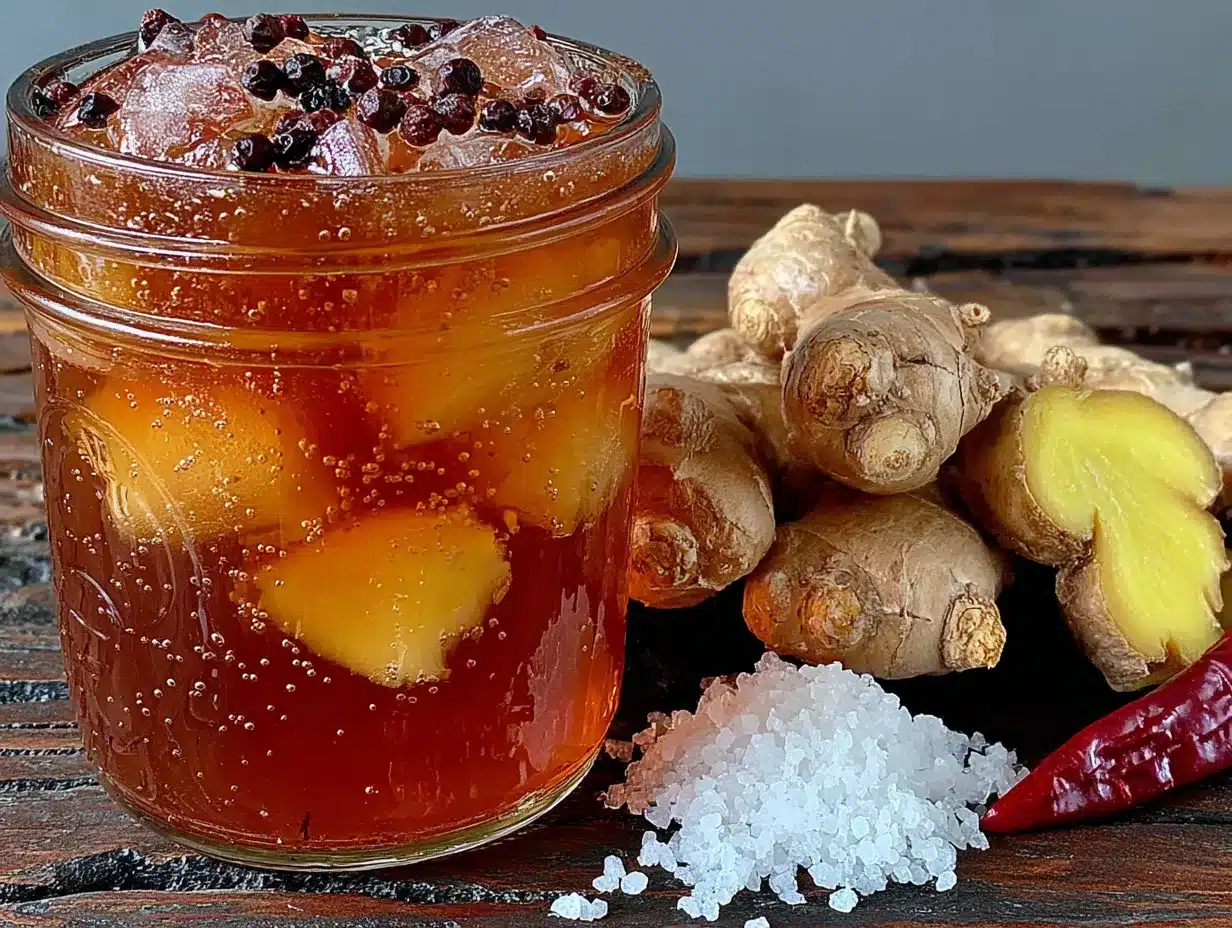
- Fresh jalapeño or serrano pepper — 1 small, sliced (seeds included if you want extra heat). This adds a different kind of heat than the horseradish — more of a slow burn.
- Cayenne pepper — 1 teaspoon (or 1 whole dried cayenne pepper). Cayenne contains capsaicin, which can help boost circulation and metabolism. Adjust this based on your heat tolerance.
For Aromatics and Balance
- Fresh rosemary sprig — 1 (about 4 inches long). Rosemary adds an earthy, pine-like note that complements the sharpness of the vinegar. It is also rich in antioxidants.
- Fresh thyme sprigs — 3 to 4 sprigs. Thyme has natural antiseptic properties and adds a subtle floral note.
- Whole black peppercorns — 1 teaspoon. Black pepper increases the bioavailability of curcumin from turmeric, so don’t skip it.
- Raw honey — 2 to 3 tablespoons (optional, for sweetness). Adding honey after the steeping period mellows the acidity and adds its own antimicrobial benefits. Use local raw honey for added immune support.
That is it. No weird extracts, no expensive powders, nothing you can’t pronounce. Just real food doing what real food does best.
Equipment Needed
You don’t need a fully stocked kitchen to make this Zesty Fire Cider Immune Tonic with Fresh Ginger. Here is what you will need:
- A large glass jar — 1-quart (32-ounce) size with a tight-fitting lid. A wide-mouth mason jar works perfectly. Avoid plastic, as the acidity of the vinegar can leach chemicals over time.
- A cutting board and sharp knife — For prepping the ginger, turmeric, horseradish, onion, and garlic. A good knife makes the job faster and safer.
- A vegetable peeler — Optional, but helpful if you prefer to peel the ginger and turmeric. I usually skip peeling and just scrub them well.
- A wooden spoon or chopstick — For pressing down the ingredients and releasing any air bubbles after you add the vinegar.
- A fine-mesh strainer or cheesecloth — For straining the finished cider. Cheesecloth gives you a clearer liquid, but a fine-mesh strainer works just fine.
- A funnel — Makes transferring the strained cider into smaller bottles much cleaner and less wasteful.
- Dark glass bottles or smaller jars — For storing the finished tonic. Amber or cobalt blue bottles protect the cider from light degradation.
I have made this recipe using nothing but a mason jar and a butter knife when I was traveling, and it still turned out great. Don’t overthink the equipment.
Preparation Method
Making this Zesty Fire Cider Immune Tonic with Fresh Ginger is more about patience than skill. The active time is about 15 minutes. The waiting time is 3 to 4 weeks. Here is how to do it.
Step 1: Prep Your Ingredients
Wash all produce thoroughly. Scrub the ginger and turmeric with a vegetable brush — no need to peel. Slice the ginger and turmeric into thin rounds (about 1/8 inch thick). Thin slices increase the surface area, which means more flavor extraction. Peel and chop the horseradish into small chunks. Smash the garlic cloves with the flat side of your knife to release their oils. Roughly chop the onion. Slice the jalapeño into rings, seeds and all if you want more heat.
Step 2: Layer Ingredients in the Jar
Start by adding the ginger and turmeric slices to the bottom of your clean glass jar. Then add the horseradish, garlic, onion, and jalapeño. Tuck in the rosemary and thyme sprigs. Add the whole black peppercorns and cayenne pepper. Pack everything in fairly tightly — you want the jar to be about three-quarters full. Do not fill it completely; you need room for the vinegar.
Step 3: Add the Vinegar
Pour the raw apple cider vinegar over the ingredients until they are completely submerged. Leave about 1/2 inch of headspace at the top. Use a wooden spoon or chopstick to gently press down the ingredients and release any trapped air bubbles. You will see small bubbles rising — that is normal. Wipe the rim of the jar clean, then screw the lid on tightly.
Step 4: Shake and Store
Give the jar a good shake to distribute the ingredients. Label it with the date. Store it in a cool, dark place — a kitchen cabinet works perfectly. Shake the jar every day for the first week to keep the ingredients moving and prevent mold from forming on top. After the first week, you can shake it every few days.
Step 5: Taste and Wait
After 2 weeks, start tasting the cider. Use a clean spoon to sample a small amount. It should be pungent, spicy, and tangy. If you want it stronger, let it steep longer — up to 4 weeks is ideal. The longer it steeps, the more intense the flavor and the more beneficial compounds are extracted.
Step 6: Strain and Sweeten
Once the cider reaches your desired strength, strain it through a fine-mesh strainer lined with cheesecloth into a large bowl or measuring cup. Press on the solids to extract as much liquid as possible. Discard the solids (or compost them). If you are adding honey, stir it into the strained cider while it is still at room temperature. Taste and adjust the sweetness — start with 2 tablespoons and add more if needed.
Step 7: Bottle and Store
Use a funnel to transfer the finished fire cider into dark glass bottles or smaller jars. Seal tightly and store in the refrigerator. It will keep for up to 6 months, though the potency may start to fade slightly after 3 months.
Cooking Tips & Techniques
I have made this Zesty Fire Cider Immune Tonic with Fresh Ginger about a dozen times, and I have learned a few things the hard way. Here are some tips to save you from my mistakes.
Don’t skip the daily shake. I forgot to shake my first batch for a whole week, and a small patch of mold developed on the top layer of onion. I had to scoop it out and start over. The vinegar’s acidity usually prevents mold, but shaking ensures the ingredients stay submerged and aerated.
Use a wide-mouth jar. The first time I made this, I used a narrow-neck bottle and spent 20 minutes trying to cram ginger slices through the opening. A wide-mouth mason jar makes layering and removing ingredients infinitely easier.
Label everything. I cannot tell you how many times I have found a mysterious jar in the back of my cabinet and had no idea when I made it. Write the date and contents on the lid with a permanent marker.
Trust your nose and tongue. Recipes give you a timeline, but your senses are the best judges. If the cider smells sharp and tastes potent after 3 weeks, it is ready. If it still smells like plain vinegar, give it another week.
Be careful with the horseradish. Fresh horseradish fumes are no joke. When you chop it, do it near an open window or under the stovetexhaust fan. I learned this after chopping horseradish in a closed kitchen and spending 10 minutes with streaming eyes.
Don’t toss the solids immediately. The strained ginger, turmeric, and garlic are still flavorful. You can chop them finely and add them to stir-fries, soups, or salad dressings. They will have a vinegary tang, but they add a nice punch to savory dishes.
Start with less cayenne. You can always add more heat later by steeping an extra pepper or adding cayenne powder to your daily dose. You cannot take heat out once it is in.
Variations & Adaptations
One of the best things about this Zesty Fire Cider Immune Tonic with Fresh Ginger is how adaptable it is. Here are some variations I have tried and loved.
Milder Version for Sensitive Stomachs
If you have a sensitive digestive system, reduce the horseradish to 2 tablespoons and skip the jalapeño entirely. Use only 1/2 teaspoon of cayenne. The ginger and garlic will still provide plenty of immune support without the intense burn. I made this version for my mother-in-law, and she actually enjoys taking it daily now.
Extra-Hot “Firefighter” Version
For those who love heat, double the horseradish, add 2 whole habanero peppers (sliced), and increase the cayenne to 1 tablespoon. Let it steep for a full 4 weeks. This version is not for the faint of heart, but it will absolutely clear your sinuses and make you feel alive. I take this version when I feel a cold coming on.
Herbal Infusion Version
Add 2 tablespoons of dried echinacea root, 1 tablespoon of dried elderberries, and a few slices of dried astragalus root alongside the fresh ingredients. These herbs are traditional immune boosters and add a slightly earthy, bitter complexity to the cider. I steep this version for 5 weeks to fully extract the dried herbs.
Citrus Twist Version
Add the zest and juice of 1 lemon and 1 orange to the jar before adding the vinegar. The citrus brightens the flavor and adds vitamin C. I make this version in the winter when citrus is at its peak. It pairs beautifully with the ginger and turmeric.
Low-Sodium Version
Fire cider is naturally low in sodium, but some store-bought versions add salt. Skip any added salt entirely. The vinegar and spices provide plenty of flavor on their own.
Serving & Storage Suggestions
This Zesty Fire Cider Immune Tonic with Fresh Ginger is incredibly versatile. Here is how I use and store mine.
How to Take It
The most common way is as a daily wellness shot. Take 1 to 2 tablespoons (15 to 30 ml) straight, first thing in the morning. Hold it in your mouth for a few seconds before swallowing to let the beneficial compounds absorb through your mucous membranes. If the taste is too intense, dilute it in a small glass of warm water or add it to green tea with a teaspoon of honey.
You can also use it as a tangy salad dressing base. Whisk 2 tablespoons of fire cider with 1/4 cup of olive oil, a pinch of salt, and a dash of mustard for a quick vinaigrette. It works especially well on hearty greens like kale or arugula. I also drizzle it over roasted vegetables or use it as a marinade for chicken or tofu.
Storage Instructions
Store the finished fire cider in dark glass bottles in the refrigerator. The cold temperature slows down any fermentation and preserves the potency. It will keep for up to 6 months. After that, the flavor may start to mellow, but it will still be safe to consume as long as no mold develops.
If you notice any sediment settling at the bottom, that is normal. Just give the bottle a gentle shake before using. The sediment is mostly fine particles of ginger and turmeric that made it through the strainer.
How Flavors Develop
The cider will taste its sharpest and most pungent right after straining. Over the next few weeks in the refrigerator, the flavors will mellow and meld together. The vinegar’s acidity softens, the ginger’s heat becomes more rounded, and the honey (if added) integrates fully. I actually prefer the cider after it has sat in the fridge for a month — it tastes more balanced and less aggressive.
Nutritional Information & Benefits
While this Zesty Fire Cider Immune Tonic with Fresh Ginger is not a meal replacement, it packs a surprising amount of nutritional value into each small dose.
Estimated per 1-tablespoon serving (15 ml):
- Calories: 5-8
- Carbohydrates: 1-2g
- Sugar: 0-1g (from honey, if added)
- Sodium: 1-2mg
- Vitamin C: 1-2% DV (from onion and pepper)
- Manganese: 1% DV (from ginger)
- Iron: 1% DV (from turmeric)
Key health benefits:
- Ginger contains gingerols, which have anti-inflammatory and antioxidant properties. It is also well-known for soothing digestive discomfort.
- Turmeric provides curcumin, a potent anti-inflammatory compound. Combined with black pepper, its absorption is significantly enhanced.
- Garlic is rich in allicin, which has been studied for its antimicrobial and immune-supporting effects.
- Horseradish contains glucosinolates, compounds that may support detoxification pathways in the liver.
- Raw apple cider vinegar with the mother provides beneficial probiotics and acetic acid, which can support healthy blood sugar levels.
Dietary considerations: This recipe is naturally gluten-free, vegan (if you skip the honey or use maple syrup), dairy-free, and paleo-friendly. It contains no common allergens beyond potential sensitivity to nightshades (cayenne pepper). If you are on blood-thinning medication, consult your doctor before consuming large amounts of ginger and turmeric regularly.
FAQs
Can I use dried herbs instead of fresh?
Yes, but the flavor will be different. Dried herbs are more concentrated, so use about half the amount. For example, use 1 tablespoon of dried ginger powder instead of 1/2 cup fresh. However, fresh ingredients provide a brighter, more complex flavor and higher levels of beneficial compounds.
How long does fire cider last?
Stored in the refrigerator in a sealed glass bottle, fire cider lasts 6 to 9 months. After that, the potency and flavor will gradually decline, but it will remain safe to consume as long as no mold or off-odors develop. Always use clean utensils when dispensing to avoid contamination.
Can I make this without horseradish?
Absolutely. Horseradish adds a distinctive sinus-clearing heat, but you can substitute it with an equal amount of fresh daikon radish or simply leave it out. The ginger and cayenne will still provide plenty of warmth and immune support.
Is it safe for children?
In small amounts, yes. Start with 1/2 teaspoon diluted in water or juice for children over 2 years old. The heat can be intense, so use the milder version (less cayenne and horseradish) for kids. Always consult your pediatrician before introducing any herbal remedy to children.
Can I reuse the strained solids?
Yes! The strained ginger, turmeric, garlic, and onion still have plenty of flavor. Chop them finely and add them to stir-fries, soups, or grain salads. They will have a vinegary tang, so adjust your seasoning accordingly. I like to mix them into cream cheese for a savory spread.
Conclusion
This Zesty Fire Cider Immune Tonic with Fresh Ginger has become a staple in my kitchen for one simple reason: it works. It is not a magic cure, and I won’t pretend it is. But it is a delicious, affordable, and empowering way to support your immune system using ingredients that have been trusted for centuries. There is something deeply satisfying about making your own medicine from whole foods — it connects you to the process and reminds you that good health often starts in the kitchen.
I encourage you to play with the ingredients. Make it spicier, milder, sweeter, or more herbal. This recipe is a starting point, not a rulebook. The best fire cider is the one that you actually enjoy taking every day.
If you give this recipe a try, I would love to hear how it turned out. Did you add something unexpected? Did you find a new favorite way to use it? Drop a comment below and share your version. And if you enjoyed this post, consider sharing it with a friend who could use a little extra immune support this season. Stay well, and keep cooking with intention.
Pin This Recipe!

Zesty Fire Cider Immune Tonic with Fresh Ginger

This Zesty Fire Cider Immune Tonic with Fresh Ginger is a traditional folk remedy made with simple, whole-food ingredients like apple cider vinegar, ginger, turmeric, horseradish, and garlic. It’s an easy, no-cook recipe that supports immune health and can be customized to your preferred level of heat.
- Prep Time: 15 minutes
- Cook Time: 0 minutes
- Total Time: 3 to 4 weeks (includes steeping time)
- Yield: Approximately 4 cups (32 servings of 1 tablespoon each) 1x
- Category: Wellness Tonic
- Cuisine: American
Ingredients
- 4 cups (960 ml) raw apple cider vinegar, preferably with the mother
- 1/2 cup fresh ginger root, thinly sliced (no need to peel, just scrub clean)
- 1/4 cup fresh turmeric root, thinly sliced (or 1 tablespoon dried turmeric powder)
- 1/4 cup horseradish root, peeled and chopped (or 3 tablespoons prepared horseradish)
- 10 to 12 garlic cloves, smashed
- 1 medium yellow onion, roughly chopped
- 1 small fresh jalapeño or serrano pepper, sliced (seeds included for extra heat)
- 1 teaspoon cayenne pepper (or 1 whole dried cayenne pepper)
- 1 fresh rosemary sprig (about 4 inches long)
- 3 to 4 fresh thyme sprigs
- 1 teaspoon whole black peppercorns
- 2 to 3 tablespoons raw honey (optional, for sweetness)
Instructions
- Wash all produce thoroughly. Scrub the ginger and turmeric with a vegetable brush (no need to peel). Slice the ginger and turmeric into thin rounds (about 1/8 inch thick). Peel and chop the horseradish into small chunks. Smash the garlic cloves with the flat side of a knife. Roughly chop the onion. Slice the jalapeño into rings, seeds and all if you want more heat.
- Layer the ingredients in a clean 1-quart (32-ounce) wide-mouth glass jar. Start with the ginger and turmeric slices, then add the horseradish, garlic, onion, and jalapeño. Tuck in the rosemary and thyme sprigs. Add the whole black peppercorns and cayenne pepper. Pack everything in fairly tightly, filling the jar about three-quarters full.
- Pour the raw apple cider vinegar over the ingredients until they are completely submerged, leaving about 1/2 inch of headspace at the top. Use a wooden spoon or chopstick to gently press down the ingredients and release any trapped air bubbles.
- Wipe the rim of the jar clean, screw the lid on tightly, and give the jar a good shake. Label it with the date. Store in a cool, dark place (like a kitchen cabinet). Shake the jar every day for the first week, then every few days after that.
- After 2 weeks, start tasting the cider using a clean spoon. It should be pungent, spicy, and tangy. For a stronger flavor, let it steep for up to 4 weeks.
- Once the cider reaches your desired strength, strain it through a fine-mesh strainer lined with cheesecloth into a large bowl or measuring cup. Press on the solids to extract as much liquid as possible. Discard the solids (or compost them). If using honey, stir it into the strained cider while it is at room temperature. Taste and adjust sweetness as needed.
- Use a funnel to transfer the finished fire cider into dark glass bottles or smaller jars. Seal tightly and store in the refrigerator. It will keep for up to 6 months.
Notes
Shake the jar daily during the first week to prevent mold. Use a wide-mouth jar for easier layering. Label the jar with the date. Fresh horseradish fumes can be strong; chop near an open window. Start with less cayenne; you can always add more heat later. The strained solids can be chopped and used in stir-fries, soups, or salad dressings. For a milder version, reduce horseradish to 2 tablespoons, skip the jalapeño, and use only 1/2 teaspoon cayenne. For an extra-hot version, double the horseradish, add 2 habanero peppers, and increase cayenne to 1 tablespoon. For an herbal version, add 2 tablespoons dried echinacea root, 1 tablespoon dried elderberries, and a few slices of dried astragalus root. For a citrus twist, add the zest and juice of 1 lemon and 1 orange.
Nutrition
- Serving Size: 1 tablespoon (15 ml)
- Calories: 58
- Sugar: 1
- Sodium: 12
- Carbohydrates: 12
Keywords: fire cider, immune tonic, ginger, turmeric, apple cider vinegar, homemade remedy, wellness shot, anti-inflammatory, natural remedy