I ruined this flatbread three times before I figured out what I was doing wrong. The first time, I used fresh figs that were too ripe—they turned into sugary mush that slid right off the dough. The second time, I went heavy-handed with the goat cheese, thinking more is always better. It wasn’t. The third attempt? I forgot the balsamic glaze entirely, and honestly, I almost served it that way because I was tired of starting over. But something felt missing, and that missing piece was the whole reason I wanted to make this in the first place.
That tart-sweet balsamic drizzle cutting through the creamy goat cheese and jammy figs? That’s the magic. Without it, you’ve just got bread with stuff on top. With it, you’ve got the kind of appetizer that makes people pause mid-conversation and ask, “Wait—what is this?”
I kept coming back to this recipe because it felt like it should be simple. And it is, once you stop overthinking it. The trick is treating each ingredient with a little respect—not too much heat, not too heavy a hand. Just enough to let them shine together. This savory fig and goat cheese flatbread with balsamic glaze became my go-to for fall gatherings, lazy Sunday afternoons, and those moments when you want to serve something that feels fancy without spending all day in the kitchen. It’s honest food that looks like you tried harder than you did.
And honestly? That’s my favorite kind of cooking.
Why You’ll Love This Recipe
This isn’t just another flatbread recipe. I’ve tested this version more times than I care to admit, tweaking temperatures and ratios until everything clicked. Here’s why this one works:
- Ready in under 30 minutes — From fridge to table in about 25 minutes flat. Perfect for last-minute guests or when you need something impressive fast.
- Simple, everyday ingredients — No specialty grocery runs required. Dried figs work beautifully when fresh aren’t in season, and basic store-bought flatbread or pizza dough does the job.
- Perfect for entertaining — This flatbread disappears fast at parties. I’ve watched people hover near the cutting board, waiting for seconds.
- Crowd-pleaser across the board — Even folks who claim they don’t like goat cheese end up reaching for another slice. Something about the pairing just works.
- Unbelievably balanced flavors — You get sweet from the figs, tangy from the cheese, peppery from arugula, and that signature balsamic bite tying it all together. It’s the kind of combo that makes you close your eyes after the first bite.
What sets this apart from other flatbread recipes is the layering technique. Most versions pile everything on at once and hope for the best. I spread the goat cheese first, then add the figs, then drizzle the glaze after baking. That order matters more than you’d think. The cheese melts into a creamy base, the figs caramelize slightly without burning, and the glaze stays bright and distinct rather than cooking into something muddy.
This is comfort food with a little sophistication—the kind of dish that makes a Tuesday night feel like a dinner party.
Ingredients Needed
This recipe uses simple, high-quality ingredients that work together to create something greater than the sum of their parts. Most of these are pantry staples or easy to find at any grocery store.
For the Flatbread Base
- 1 large flatbread or pre-made pizza dough (about 12 inches) — I prefer Naan or store-bought pizza dough for convenience. If using pizza dough, let it rest at room temperature for 20 minutes before stretching.
- 2 tablespoons olive oil — Use good quality extra virgin here. It adds flavor and helps the crust get golden.
- 1 clove garlic, minced — Optional but recommended. Rub it on the crust before adding toppings for a subtle garlic undertone.
For the Toppings
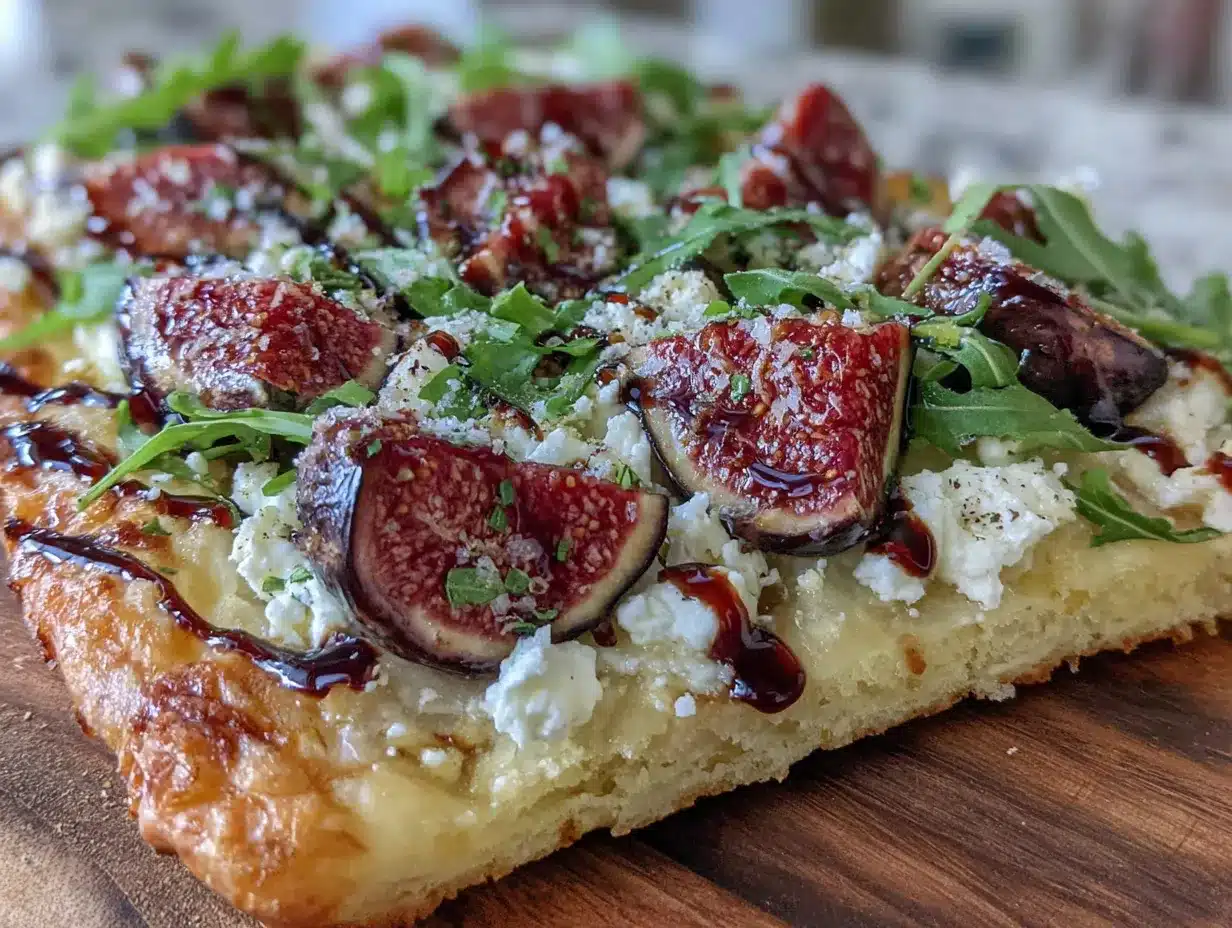
- 4 ounces goat cheese, softened — Let it sit out for 15 minutes before spreading. Cold goat cheese is stubborn and tears the dough. I like [brand name] for its creamy texture.
- 6-8 fresh figs, stems removed and quartered — Or ½ cup dried figs, rehydrated in warm water for 10 minutes and sliced. Fresh figs are best when in season (late summer through fall), but dried work beautifully year-round.
- 1 cup fresh arugula — Adds a peppery freshness that cuts through the richness. Baby arugula works best.
- ¼ cup balsamic glaze — Store-bought is fine, but I’ll share my quick homemade version below. Look for one that’s thick like syrup, not watery.
- ¼ cup crumbled feta or shaved Parmesan (optional) — For extra salty bite. I sometimes skip this if the goat cheese is already salty enough.
- Flaky sea salt and cracked black pepper — Don’t skip the salt. It makes the figs and cheese pop.
For Homemade Balsamic Glaze (if making your own)
- ½ cup balsamic vinegar — Use a decent quality one, not the cheapest bottle. It makes a difference.
- 1 tablespoon honey or brown sugar — Balances the acidity and helps it thicken.
Substitution notes: If you’re dairy-free, use a plant-based cream cheese or cashew cheese instead of goat cheese. For gluten-free, use a gluten-free flatbread or cauliflower crust. The flavors still work beautifully. If figs aren’t available, try sliced pears or even caramelized onions for a different but equally delicious twist.
Equipment Needed
You don’t need much for this recipe, which is part of why I love it. Here’s what you’ll want:
- Baking sheet or pizza stone — A pizza stone gives you a crispier bottom crust, but a regular baking sheet works perfectly. Just preheat it in the oven for 5 minutes before placing the flatbread on it.
- Parchment paper — Makes cleanup effortless and prevents sticking. I never bake flatbread without it.
- Pastry brush — For brushing olive oil on the dough. A silicone brush works better than bristle for this; it doesn’t shed.
- Sharp knife or pizza cutter — For slicing the figs and cutting the finished flatbread. A dull knife will squish the figs.
- Small saucepan — Only needed if you’re making the balsamic glaze from scratch. Use a heavy-bottomed one to prevent burning.
- Cutting board and serrated knife — For serving. A serrated knife cuts through the crust without crushing it.
If you don’t have a pizza stone, don’t run out and buy one just for this. I used a regular baking sheet for years before upgrading. The flatbread still came out great—just a little less crispy on the bottom. You can also use a cast iron skillet if that’s what you have. Just watch the cooking time, as cast iron retains heat differently.
Preparation Method
Let’s get cooking. This comes together fast, so have everything prepped before you start.
- Preheat your oven to 425°F (220°C). Place your baking sheet or pizza stone inside while it heats. A hot surface means a crispier bottom crust. Don’t skip this step—I learned the hard way that cold pans lead to soggy middles.
- Make the balsamic glaze (if using homemade). Combine ½ cup balsamic vinegar and 1 tablespoon honey in a small saucepan. Bring to a gentle simmer over medium heat, then reduce to low. Let it bubble away for 8-10 minutes, stirring occasionally, until it coats the back of a spoon. It should reduce by about half. Watch it carefully toward the end—it goes from perfect to burnt quickly. Remove from heat and let it cool. It will thicken more as it sits.
- Prep your figs. If using fresh figs, gently rinse them and pat dry. Trim off the tough stem end, then quarter each fig lengthwise. If using dried figs, place them in a bowl and cover with warm water for 10 minutes. Drain, pat dry, and slice into thin rounds.
- Stretch or roll your dough. On a lightly floured surface, stretch your flatbread or pizza dough into an oval or rectangle about 12 inches long and 8 inches wide. Don’t stress about perfection—rustic shapes look better anyway. Aim for even thickness, about ¼ inch.
- Transfer to parchment paper. Carefully move the dough onto a sheet of parchment paper. This makes transferring to the hot baking sheet a breeze.
- Brush with olive oil and garlic. Mix the minced garlic into the olive oil, then brush it evenly over the entire surface of the dough. Get the edges too—that’s where you want the golden, crispy bits. Season with a pinch of salt and pepper.
- Spread the goat cheese. Using a small spatula or the back of a spoon, spread the softened goat cheese evenly over the dough, leaving a ½-inch border around the edges for the crust. Don’t spread it too thin—you want little pockets of creamy cheese throughout.
- Arrange the figs. Distribute the fig pieces evenly over the goat cheese. Press them in gently so they stick. Don’t overcrowd; you want each bite to have a piece of fig, not a solid layer of fruit.
- Bake for 12-15 minutes. Carefully slide the parchment paper onto the preheated baking sheet or pizza stone. Bake until the crust is golden brown and the edges are crispy. The goat cheese should be melted and slightly browned in spots. Check at the 12-minute mark—ovens vary.
- Add the fresh arugula. Remove the flatbread from the oven and immediately scatter the fresh arugula over the hot surface. The residual heat will wilt it slightly, which is exactly what you want. If you prefer fully wilted arugula, pop it back in the oven for 1 minute.
- Drizzle with balsamic glaze. Using a spoon or a squeeze bottle, drizzle the balsamic glaze generously over the flatbread. Don’t be shy—this is where the flavor lives. Add the crumbled feta or Parmesan if using.
- Finish with flaky salt and pepper. A final sprinkle of flaky sea salt and cracked black pepper makes everything sing. Let it rest for 2 minutes before slicing.
- Slice and serve. Use a serrated knife or pizza cutter to slice into squares or wedges. Serve warm or at room temperature.
Sensory cues: The crust should sound crisp when you cut through it. The goat cheese should be soft and spreadable, not rubbery. The figs should be tender but still hold their shape. The arugula should be just barely wilted, still bright green. And that balsamic glaze? It should catch the light and smell sweet-tart, like summer concentrated into syrup.
Cooking Tips & Techniques
I’ve made this flatbread more times than I can count, and I’ve messed it up in almost every way possible. Here’s what I’ve learned:
Don’t overload the flatbread. I know it’s tempting to pile on the toppings, but less really is more here. Too much goat cheese makes the flatbread soggy and heavy. Too many figs and they release too much moisture. Think of it as a canvas—you want each ingredient to have its moment.
Room temperature ingredients matter. Cold goat cheese straight from the fridge is a nightmare to spread. It tears the dough and leaves lumpy patches. Let it sit out for 15-20 minutes before you start. Same goes for the dough if you’re using refrigerated pizza dough—let it rest on the counter for 20 minutes so it stretches easily without snapping back.
Watch the balsamic glaze carefully. If you’re making it from scratch, keep an eye on it during the last few minutes. It can go from perfectly syrupy to burnt caramel in about 30 seconds. I’ve ruined more than one batch by walking away to check on something else. The glaze should coat the back of a spoon and leave a clear trail when you run your finger through it.
Preheat your pan. This is non-negotiable for a crispy bottom crust. A hot baking sheet or pizza stone gives the dough immediate heat, which creates steam and leads to a lighter, crispier texture. I place my baking sheet in the oven while it preheats and slide the flatbread onto it using parchment paper.
Let it rest before slicing. I know you’ll want to dig in immediately, but waiting 2-3 minutes makes a difference. The cheese sets slightly, the glaze absorbs into the crust, and the flatbread holds together better when you cut it. Slice too soon and everything slides off.
Multitasking strategy: While the flatbread bakes, prep the arugula and get the balsamic glaze ready. If you’re making the glaze from scratch, start it before you prep the figs so it has time to cool and thicken while the flatbread bakes. Everything comes together in about 25 minutes if you work efficiently.
Variations & Adaptations
This recipe is endlessly adaptable. Here are some of my favorite twists:
Seasonal fruit swap: When figs aren’t in season, try sliced pears or apples. The sweetness pairs beautifully with goat cheese and balsamic. In summer, grilled peaches or nectarines work wonderfully. I once made a version with fresh grilled peach caprese salad inspiration in mind, swapping the figs for grilled peaches and adding fresh basil. It was incredible.
Savory add-ins: Try adding caramelized onions, crispy prosciutto, or toasted walnuts. The salty crunch of prosciutto and the earthy sweetness of caramelized onions take this flatbread to another level. I sometimes add a handful of toasted pine nuts for texture.
Herb variations: Fresh thyme, rosemary, or basil all work beautifully with these flavors. Sprinkle chopped fresh herbs over the flatbread right before serving. The heat releases their oils and fills your kitchen with the most amazing aroma.
Dairy-free option: Use a plant-based cashew cheese or dairy-free cream cheese instead of goat cheese. The flavor profile changes slightly, but it’s still delicious. I’ve tested this with a cashew-based spread and it worked surprisingly well.
Gluten-free adaptation: Use a gluten-free flatbread or cauliflower crust. Adjust the baking time according to the package instructions, as gluten-free crusts often bake faster. The toppings work exactly the same way.
Spicy kick: Drizzle a little honey mixed with red pepper flakes over the finished flatbread for a sweet-heat combo that’s addictive. The heat cuts through the richness of the goat cheese beautifully.
Protein boost: Add shredded rotisserie chicken or crispy bacon bits for a heartier version that works as a main dish. I’ve served this for dinner with a side salad and it was perfect.
Serving & Storage Suggestions
This flatbread is best served warm, straight from the oven, when the cheese is still melty and the crust is at its crispiest. But it’s also surprisingly good at room temperature—the flavors actually meld together more as it sits.
Serving temperature: Serve warm or at room temperature. If serving at a party, I often bake it just before guests arrive and let it rest on the counter. It stays delicious for about an hour.
Presentation: Slice into squares or wedges and arrange on a wooden board or platter. Garnish with extra fresh arugula and a final drizzle of balsamic glaze. A sprinkle of flaky sea salt right before serving makes it look (and taste) professional.
Complementary dishes: This flatbread pairs beautifully with a light green salad dressed with lemon vinaigrette. For a full appetizer spread, serve alongside BLT pasta salad with sun-dried tomatoes or a creamy dill cucumber salad. For drinks, a crisp Sauvignon Blanc or a dry rosé complements the tangy goat cheese and sweet figs.
Storage: Store leftover flatbread in an airtight container in the refrigerator for up to 3 days. The crust will soften, but the flavors will still be delicious. To reheat, place slices on a baking sheet in a 350°F (175°C) oven for 5-7 minutes until warmed through. Avoid the microwave—it turns the crust rubbery and the arugula into sad, wilted mush.
Freezer instructions: You can freeze the baked flatbread (without the arugula and glaze) for up to 2 months. Wrap tightly in plastic wrap and then foil. To serve, thaw overnight in the refrigerator, then reheat in a 375°F (190°C) oven for 8-10 minutes. Add fresh arugula and balsamic glaze after reheating.
Flavor development: The flavors actually deepen overnight. The balsamic glaze soaks into the crust, and the goat cheese and figs meld together. Some people prefer day-old flatbread for this reason. I’m not one of them—I like it fresh—but I understand the appeal.
Nutritional Information & Benefits
This flatbread is indulgent but not over-the-top. Here’s a rough estimate per serving (based on 4 servings):
| Nutrient | Amount per Serving |
|---|---|
| Calories | 320-380 |
| Protein | 12g |
| Carbohydrates | 35g |
| Fat | 16g |
| Saturated Fat | 7g |
| Fiber | 4g |
| Sugar | 14g |
| Sodium | 480mg |
Health benefits: Figs are packed with fiber, potassium, and antioxidants. They’re great for digestion and heart health. Goat cheese is lower in lactose and calories than cow’s milk cheese, making it easier to digest for some people. Arugula is a powerhouse of vitamins A, C, and K, plus calcium and iron. The olive oil provides healthy monounsaturated fats.
Dietary considerations: This recipe is vegetarian and can be made gluten-free and dairy-free with the substitutions mentioned above. It’s not suitable for vegans as written, but the dairy-free version works well. Figs are naturally sweet, so this flatbread satisfies dessert cravings without added refined sugar (aside from the balsamic glaze).
Potential allergens: Contains dairy (goat cheese), gluten (flatbread), and possible traces of tree nuts depending on your flatbread brand. Check labels if you have allergies.
I love that this flatbread feels like a treat but uses whole, real ingredients. It’s the kind of food that satisfies without weighing you down—perfect for a light lunch or appetizer that doesn’t derail your healthy eating goals.
Conclusion
This savory fig and goat cheese flatbread with balsamic glaze has become my secret weapon for entertaining. It looks like I spent hours in the kitchen, but honestly? It comes together in under 30 minutes with ingredients I usually have on hand. The combination of sweet figs, tangy goat cheese, peppery arugula, and that glossy balsamic glaze is just magic.
What I love most about this recipe is how forgiving it is. You can swap in different fruits, change up the cheese, add protein or keep it vegetarian—it always works. It’s the kind of recipe that makes you look like a culinary genius without the stress.
I hope you give this flatbread a try, whether for a fancy dinner party or just a Tuesday night when you want something special. And if you come up with your own variation, I’d love to hear about it. Drop a comment below and share your twist on this recipe. Did you add prosciutto? Swap in pears? Drizzle with honey? Tell me all about it.
Until next time, happy cooking—and don’t forget that balsamic glaze. Trust me on this one.
Frequently Asked Questions
Can I use dried figs instead of fresh?
Absolutely. Dried figs work beautifully, especially when fresh figs aren’t in season. Just rehydrate them in warm water for 10 minutes before slicing, and pat them dry so they don’t make the flatbread soggy. The flavor is actually more concentrated with dried figs, which can be a nice bonus.
What’s the best way to reheat leftover flatbread?
The oven is your friend here. Place slices on a baking sheet in a 350°F (175°C) oven for 5-7 minutes. The crust crisps back up and the cheese gets melty again. Avoid the microwave—it makes the crust rubbery and the arugula sad. If you’re in a hurry, an air fryer at 350°F for 3-4 minutes works great too.
Can I make this flatbread ahead of time?
You can prep the components ahead, but I recommend baking just before serving. The figs release moisture as they sit on the baked flatbread, which can make the crust soggy. If you need to prep ahead, make the balsamic glaze and wash the arugula up to 2 days in advance. Store the glaze in a jar at room temperature.
Is this flatbread gluten-free?
Not as written, but it’s easy to adapt. Use a gluten-free flatbread or cauliflower crust instead of regular dough. Just adjust the baking time according to the package instructions, as gluten-free crusts often bake faster. The toppings work exactly the same way.
What can I substitute for goat cheese?
If goat cheese isn’t your thing, try feta, ricotta, or even burrata. Feta adds a saltier, brinier flavor. Ricotta is milder and creamier. Burrata is indulgent and oozy—perfect if you want something extra decadent. For a dairy-free option, use cashew cheese or a plant-based cream cheese.
Can I add meat to this flatbread?
Definitely. Crispy prosciutto, crumbled bacon, or shredded rotisserie chicken all work beautifully. Add the meat after baking so it stays crispy (for prosciutto or bacon) or warm it through if using chicken. This turns the flatbread from an appetizer into a satisfying main dish.
Pin This Recipe!
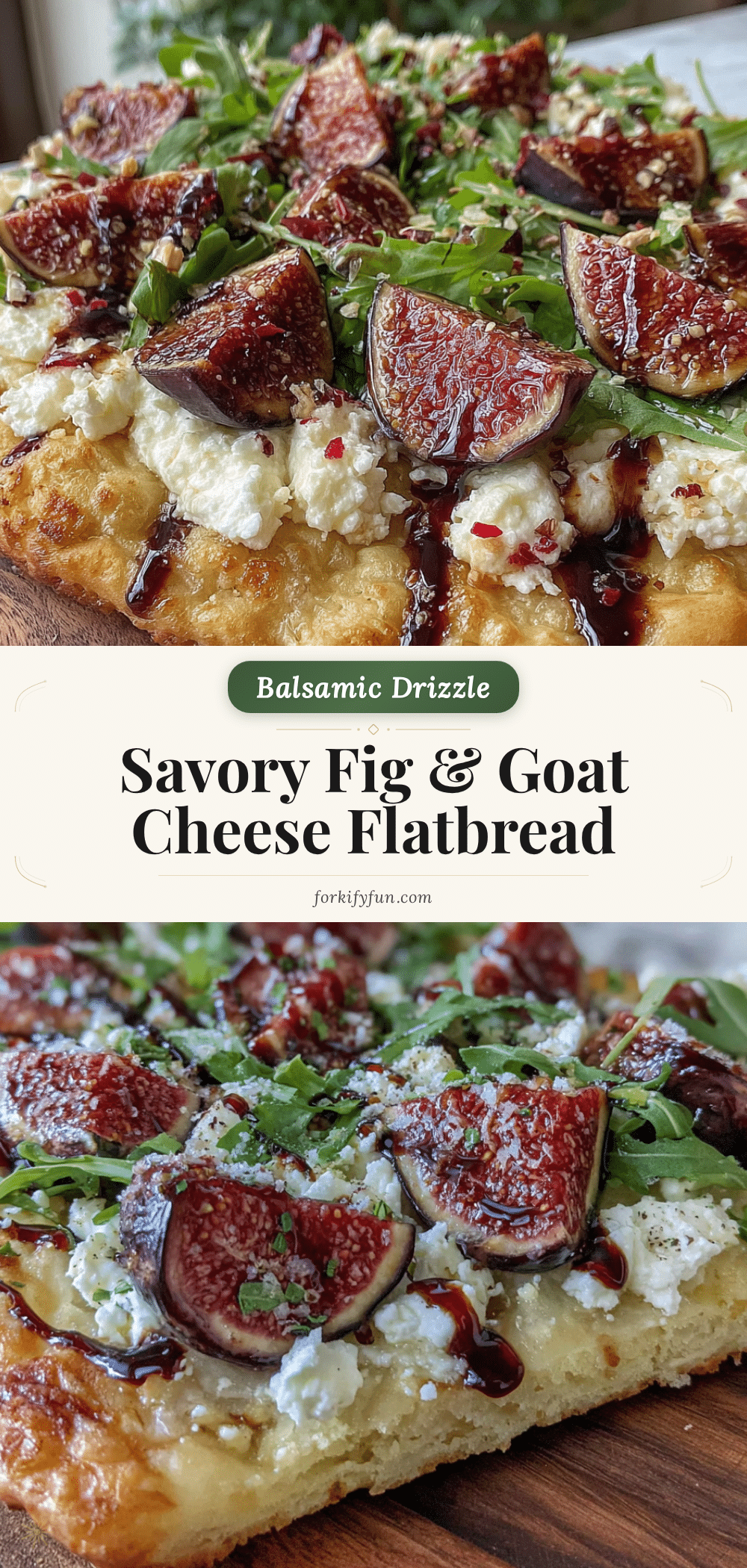
Easy Savory Fig & Goat Cheese Flatbread with Balsamic Glaze

A quick and impressive flatbread featuring sweet figs, tangy goat cheese, peppery arugula, and a glossy balsamic glaze. Ready in under 30 minutes, it’s perfect for fall gatherings or a fancy weeknight treat.
- Prep Time: 10 minutes
- Cook Time: 15 minutes
- Total Time: 25 minutes
- Yield: 4 servings 1x
- Category: Appetizer
- Cuisine: Mediterranean
Ingredients
- 1 large flatbread or pre-made pizza dough (about 12 inches)
- 2 tablespoons olive oil
- 1 clove garlic, minced
- 4 ounces goat cheese, softened
- 6–8 fresh figs, stems removed and quartered (or ½ cup dried figs, rehydrated and sliced)
- 1 cup fresh arugula
- ¼ cup balsamic glaze
- ¼ cup crumbled feta or shaved Parmesan (optional)
- Flaky sea salt and cracked black pepper to taste
- For homemade balsamic glaze: ½ cup balsamic vinegar, 1 tablespoon honey or brown sugar
Instructions
- Preheat your oven to 425°F (220°C). Place your baking sheet or pizza stone inside while it heats.
- If making homemade balsamic glaze, combine ½ cup balsamic vinegar and 1 tablespoon honey in a small saucepan. Bring to a gentle simmer over medium heat, then reduce to low. Let it bubble for 8-10 minutes, stirring occasionally, until it coats the back of a spoon. Remove from heat and let cool.
- Prep the figs: If using fresh figs, gently rinse, pat dry, trim stems, and quarter lengthwise. If using dried figs, place in a bowl, cover with warm water for 10 minutes, drain, pat dry, and slice into thin rounds.
- On a lightly floured surface, stretch or roll the flatbread or pizza dough into an oval or rectangle about 12 inches long and 8 inches wide, about ¼ inch thick.
- Transfer the dough to a sheet of parchment paper.
- Mix the minced garlic into the olive oil, then brush evenly over the entire surface of the dough, including the edges. Season with a pinch of salt and pepper.
- Spread the softened goat cheese evenly over the dough, leaving a ½-inch border around the edges.
- Distribute the fig pieces evenly over the goat cheese, pressing them in gently.
- Carefully slide the parchment paper onto the preheated baking sheet or pizza stone. Bake for 12-15 minutes, until the crust is golden brown and the edges are crispy.
- Remove the flatbread from the oven and immediately scatter the fresh arugula over the hot surface.
- Drizzle the balsamic glaze generously over the flatbread. Add crumbled feta or Parmesan if using.
- Finish with a sprinkle of flaky sea salt and cracked black pepper. Let rest for 2 minutes before slicing.
- Slice into squares or wedges using a serrated knife or pizza cutter. Serve warm or at room temperature.
Notes
Don’t overload the flatbread with toppings. Use room temperature ingredients for best results. Preheat the pan for a crispy bottom crust. Let the flatbread rest before slicing. The balsamic glaze can be made ahead and stored at room temperature.
Nutrition
- Serving Size: 1 serving (1/4 of fl
- Calories: 350
- Sugar: 14
- Sodium: 480
- Fat: 16
- Saturated Fat: 7
- Carbohydrates: 35
- Fiber: 4
- Protein: 12
Keywords: fig flatbread, goat cheese flatbread, balsamic glaze, easy appetizer, fall recipe, vegetarian flatbread